
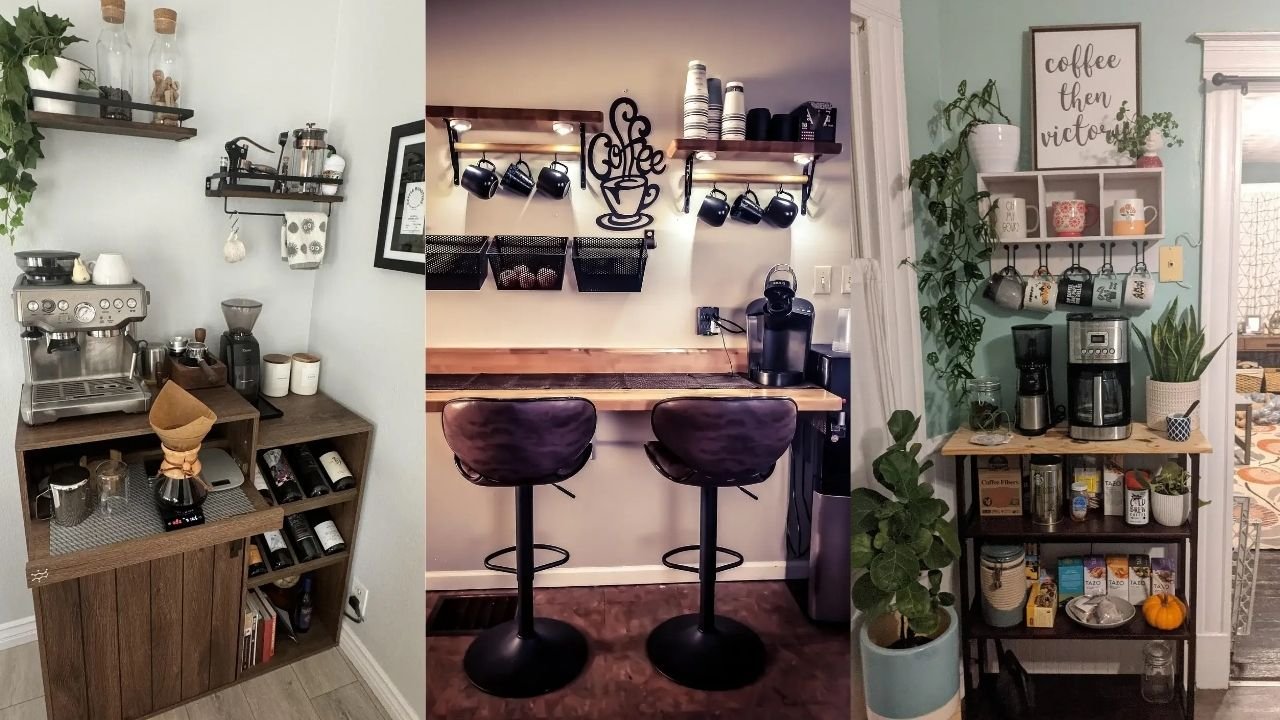
Your kitchen counter keeps shrinking, but your coffee obsession keeps growing. I’ve spent years watching people try to solve this exact problem, and the truth is simple: you don’t need a massive kitchen to have a functional coffee station that actually works for your daily routine.
I’ve gathered 15 real setups from people who figured out how to make small coffee bar ideas work in spaces that seemed impossible. These aren’t staged photos from design magazines. They’re practical solutions from homes where counter space is precious and every inch matters. You’ll see exactly what works, what doesn’t, and how to adapt these ideas to whatever space you’re working with right now.
Wall-Mounted Station with Built-In Storage and Beverage Cooler
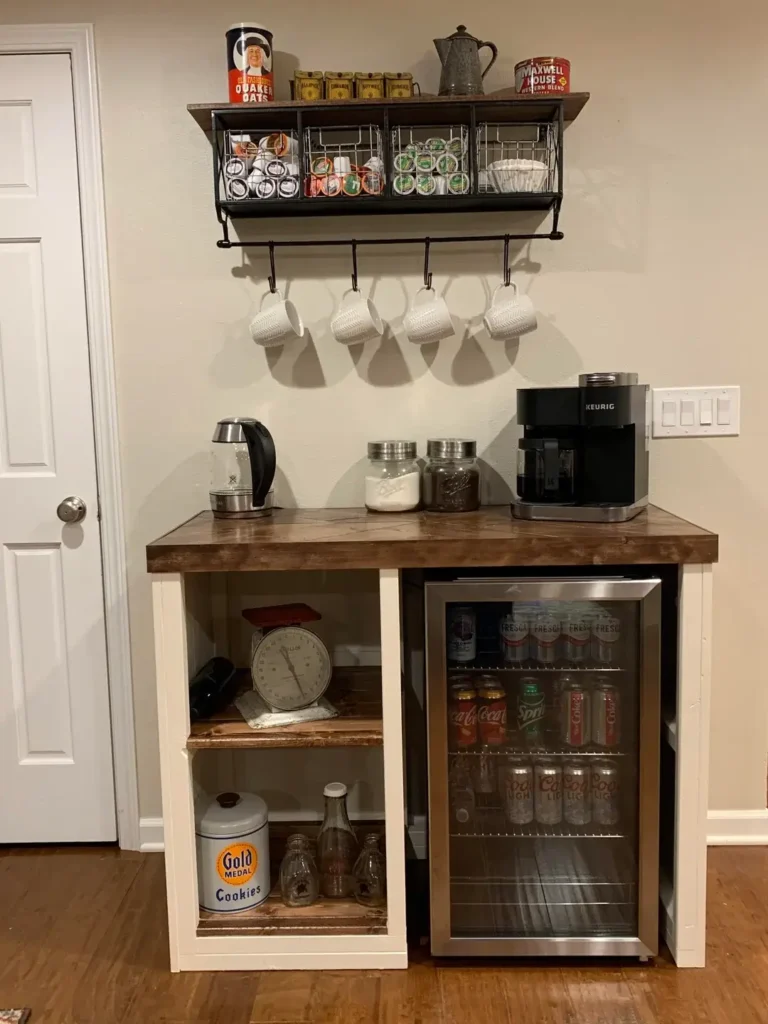
This setup solves two problems at once: where to make coffee and where to store everything else. The custom-built cabinet provides a dedicated workspace without sacrificing floor space.
r/Piss_pissedofferson built this entire unit to fit a specific wall section, incorporating both a beverage cooler and open shelving above. The wood countertop creates a warm contrast against the cream-colored cabinet, while the dark stain on the top shelf adds visual weight. Notice how the K-cups are displayed in clear containers behind the sliding door, making them visible but contained. The white mugs hanging from hooks below the shelf stay dust-free and accessible.
What makes this particularly effective is the beverage cooler integration. Most people don’t think about keeping cold brew or alternative milks right at their coffee station, but having them within arm’s reach changes your morning workflow entirely. The vintage cookie jar and scale on the open shelving add personality without cluttering the actual prep surface.
If you’re considering something similar, measure your appliances first and build around them. The countertop height here accommodates a standard kettle and Keurig, but you’ll need different dimensions if you’re housing an espresso machine. Leave at least three inches between your tallest appliance and the bottom of any overhead storage.
Live-Edge Bar Table with Vertical Floating Shelves
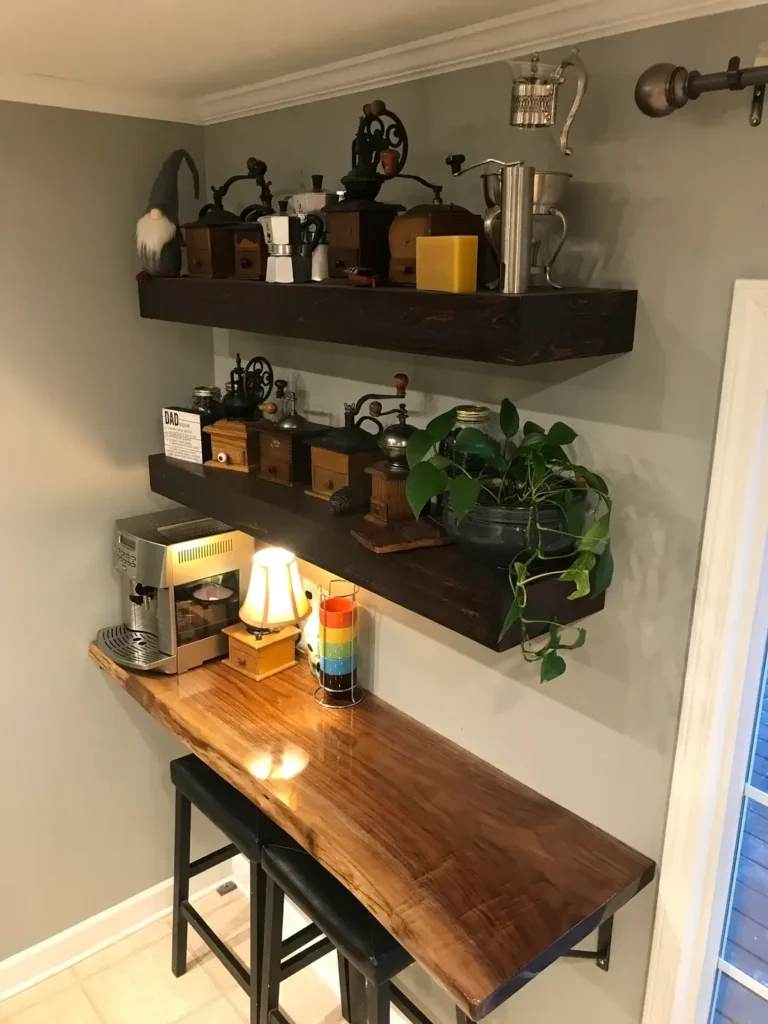
Corners often get wasted in small spaces, but this approach turns an awkward wall into a fully functional coffee bar. The combination of floating shelves and a narrow table creates distinct zones for display and preparation.
The live-edge wood table here is barely 14 inches deep, which r/michaelhpichette paired with two simple bar stools to create an actual sitting area. Above, three dark-stained floating shelves hold an impressive collection of vintage coffee equipment and manual grinders. The espresso machine sits on the table surface alongside a colorful rainbow-striped tumbler and a small table lamp, which adds crucial task lighting for early mornings.
This setup works because of the vertical thinking. Instead of spreading items across a long counter, everything stacks upward. The pothos plant trailing down from the top shelf softens the industrial feel of the metal equipment. Those vintage grinders aren’t just decoration—they’re conversation pieces that reflect genuine interest in coffee culture.
The seated element matters more than you might think. Having a place to actually sit and drink your coffee transforms this from a functional station into a destination spot in your home. If you’re replicating this, make sure your table height works with standard bar stools (30 inches is typical).
Narrow Corner Build-Out with Ladder Shelf Organization
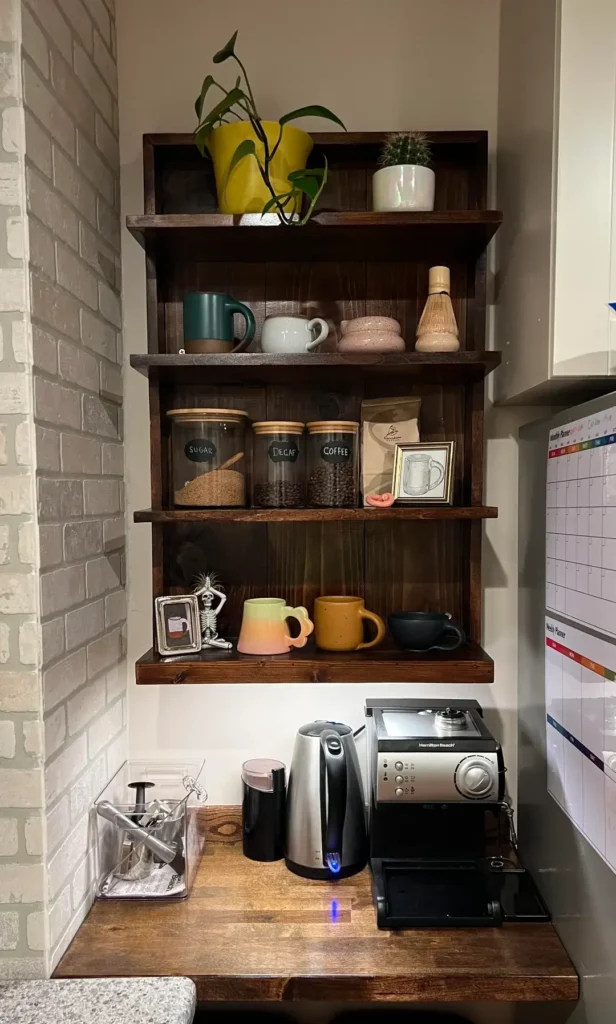
Tight corners demand creative solutions, and this coffee bar proves that “narrow” doesn’t mean “non-functional.” The vertical emphasis here maximizes a footprint that’s probably less than 18 inches wide.
r/lithigos installed a custom backsplash of painted gray brick behind dark wood shelving, creating depth in a small space through contrasting textures. The ladder-style shelf unit holds coffee essentials organized by frequency of use: sugar, decaf, and coffee canisters with wooden lids occupy the most accessible shelf, while decorative mugs in coral, mustard, and navy live below. The countertop houses the essential trinity—kettle, coffee maker, and toaster—while a small skeleton figurine adds unexpected personality.
The genius here is in the restraint. Every item serves a purpose or brings joy, but nothing feels crowded. The cork countertop provides a durable, warm surface that handles hot pots and wet spills without damage. Those labeled canisters aren’t just organizational tools—they create a visual rhythm that makes the whole setup feel intentional rather than thrown together.
When working with this little horizontal space, stack your most-used items between hip and eye level. Anything you need daily should be grabbable without bending or stretching. Reserve the very top and very bottom shelves for things you use weekly or items that are primarily decorative.
Also Read: Coffee Table Decor Ideas: 15 Simple Styling Tricks Designers Always Use
Built-In Cabinet Niche with Integrated Lighting
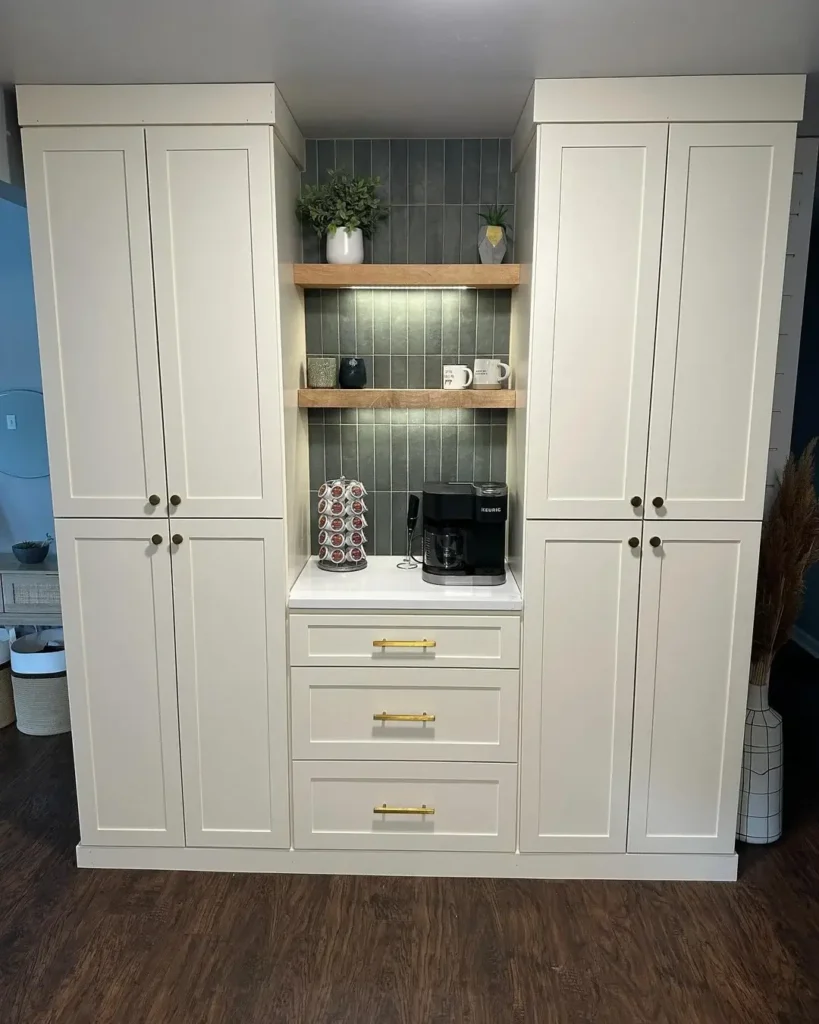
Sometimes the best small coffee bar ideas involve permanent modifications rather than freestanding furniture. This built-in approach creates a coffee station that looks like it was always part of the home’s design.
The center section houses the coffee maker on a white countertop, flanked by tall pantry cabinets that provide hidden storage for less photogenic necessities. r/ThatBuilderDude added three drawers with brass pulls below the countertop for coffee supplies, filters, and accessories. The vertical tile backsplash in sage green runs from counter to ceiling, creating a focal point that draws your eye upward. Two floating wood shelves with integrated LED strip lighting hold white mugs and decorative elements, while a K-cup carousel sits ready on the counter.
The lighting transforms this from good to great. Those LED strips aren’t just aesthetic—they provide task lighting exactly where you need it when you’re measuring coffee at 6 AM. The recessed niche creates architectural interest without requiring any floor space, and the flanking cabinets offer storage capacity that most coffee carts can’t match.
If you’re building something similar, wire your lighting during construction rather than adding it later. Make sure your countertop depth accommodates your largest appliance plus six inches—you need space to actually work, not just display equipment. The tile backsplash extends cleanup area and protects your walls from splashes that are inevitable with any beverage station.
Compact Metal Cart with Tiered Open Storage
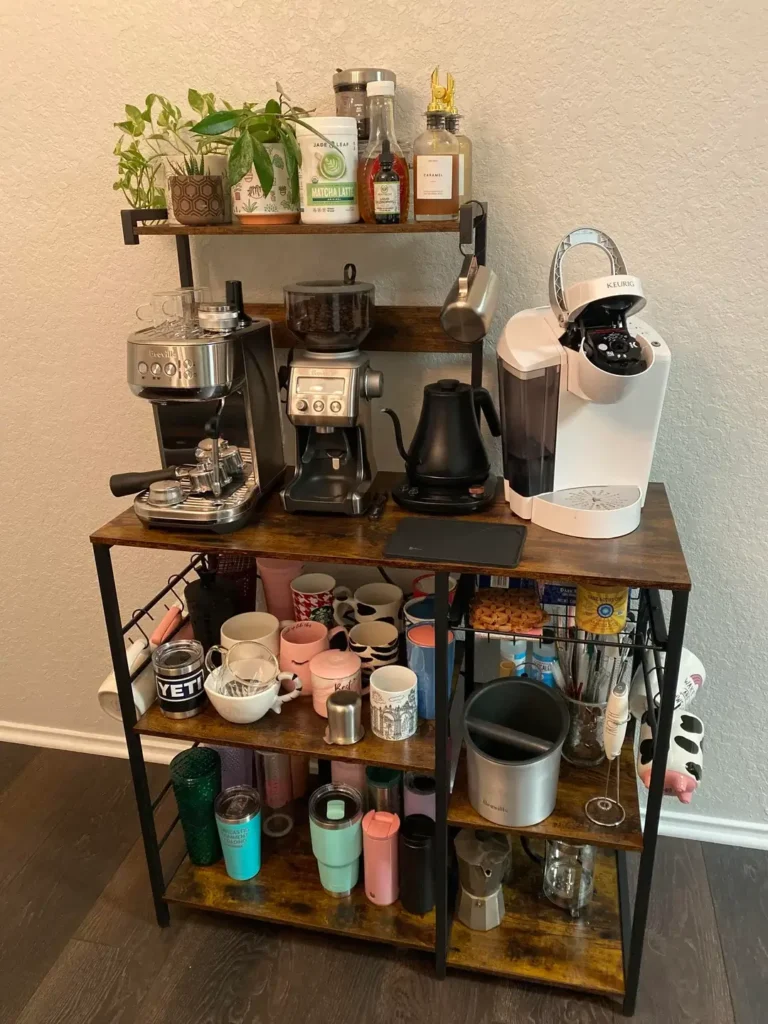
Not everyone wants permanent installations, and this metal cart proves you can create a comprehensive coffee bar on a truly portable piece of furniture. The industrial aesthetic works in modern, farmhouse, or eclectic spaces.
This three-tiered cart maxes out every shelf with intentional organization. r/Caramelkiss97 arranged the top tier with a Breville espresso machine, a Fellow electric kettle, a Baratza grinder, and a white pod machine—serious equipment for someone who takes coffee preparation seriously. The middle shelf holds matcha powder, coffee bags, and various bottles of syrups and flavor enhancers, while cups and tumblers in coordinating pastels create visual cohesion. The bottom tier stores bulk items like a YETI tumbler, additional coffee bags, and a milk frother.
What I appreciate here is the honesty of it. This isn’t a minimalist Instagram fantasy—it’s a functional workspace for someone who makes different types of coffee drinks throughout the week. The mix of equipment handles everything from espresso to pour-over to K-cup convenience. Yes, it looks busy, but every item gets used regularly.
The wood-tone shelves warm up the black metal frame, preventing the industrial look from feeling cold. If you’re using a cart like this, add a small tray or mat under your equipment to catch drips and protect the shelf surface. Group items by type (all cups together, all coffee bags together) rather than by color—function matters more than aesthetics when you’re half-awake.
Professional-Grade Countertop Setup with Custom Shelving
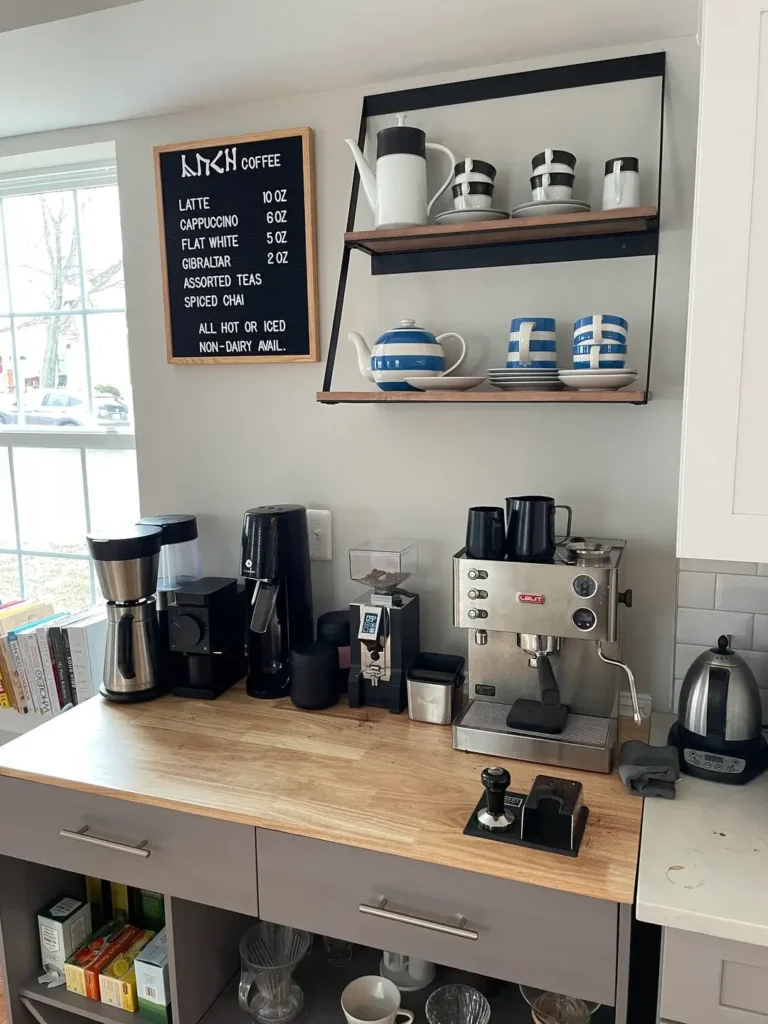
This setup doesn’t pretend to be minimal. It’s designed for someone who wants coffee shop capability at home and has the counter space to support it.
The wood countertop supports multiple brewing methods simultaneously: a thermal carafe system, a black espresso machine, what appears to be a high-end grinder, and a Lelit espresso machine taking center stage. r/joe_sausage installed two floating shelves with black metal brackets above, creating a striking focal point with blue-and-white striped ceramics. A chalkboard menu on the left lists actual drinks with sizes and prices, adding café authenticity. The cohesive blue-and-white color scheme extends from the teapot to the mugs to the wall art, creating visual organization despite the equipment density.
The white subway tile backsplash is practical—those are easy to wipe down when you’re dealing with coffee splatter from grinding and steaming. Open shelving below keeps backup supplies visible and accessible. The tamping station integrated into the counter edge shows this was designed by someone who understands espresso workflow.
If you’re investing in this level of equipment, make sure your counter depth is at least 24 inches. Professional-grade machines need room behind them for ventilation and access to water reservoirs. The coordinated ceramics aren’t just pretty—using a limited color palette prevents visual chaos when you have this many items on display.
Curved Console Table with Floating Shelf Storage
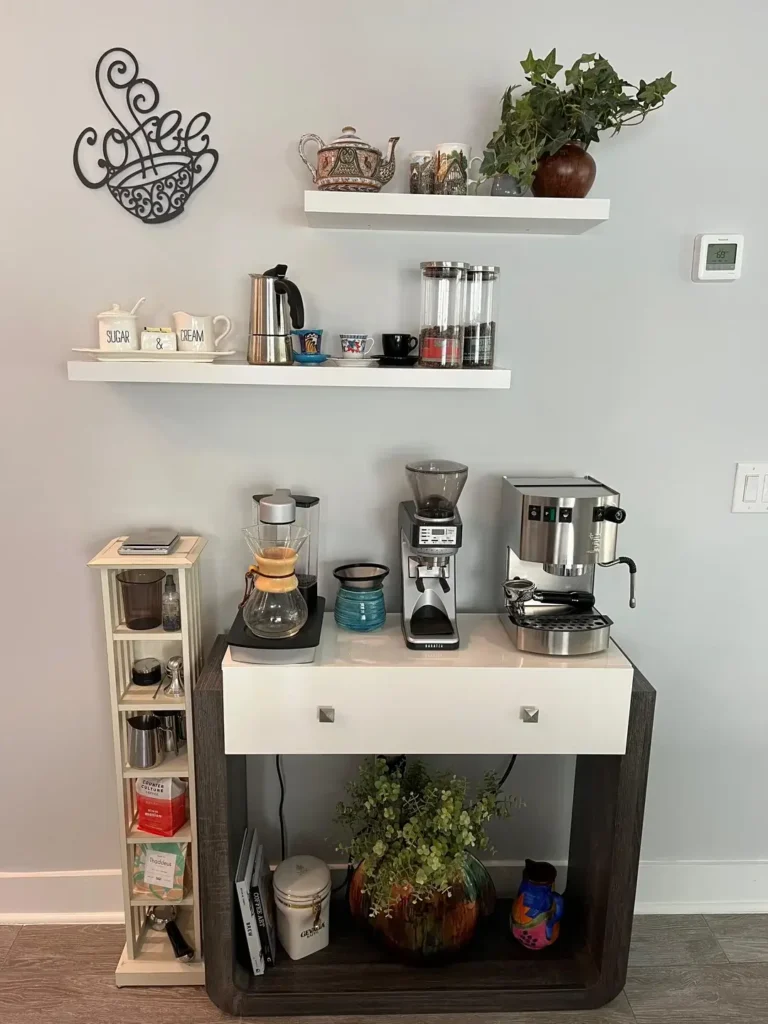
This approach works beautifully in narrow hallways, dining room walls, or anywhere you have vertical space but limited depth. The curved table creates a softer profile than angular furniture.
The white floating shelves above hold decorative elements and practical items in equal measure: a copper teapot, matching mugs, a tropical plant arrangement, and coffee-themed artwork. r/CoffeeCave chose a console table with a single drawer and open shelving below, keeping the coffee maker and espresso machine on top while storing supplies, additional containers, and a large vase arrangement underneath. The metal coffee cup wall art adds thematic focus without requiring shelf space.
The curved front of this table matters more than you’d think. In tight walkways, rounded edges mean fewer bruised hips when you’re navigating past. The light wood finish keeps the setup feeling airy rather than heavy. That tall plant on the lower shelf draws your eye down, creating visual balance with the items displayed above.
The drawer is crucial—it hides the mess of coffee filters, measuring spoons, cleaning supplies, and all the small items that make a coffee station functional but not photogenic. If you’re using a console table for this purpose, make sure it’s deep enough to accommodate your coffee maker and allow at least four inches of space behind it for cord management and ventilation.
Compact Custom Cabinet with Mug Display and Pet Station
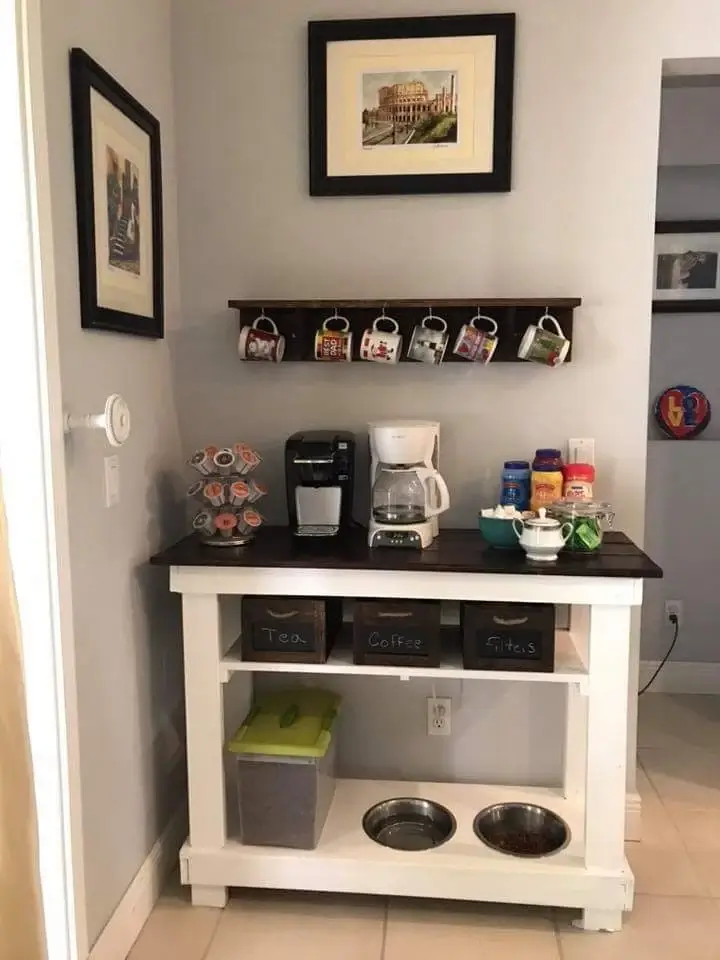
Multi-functional furniture makes sense in small spaces, and this piece handles coffee duties while also serving pets. The white-painted wood construction keeps everything feeling clean and intentional.
The top features a black wood countertop that provides contrast and durability for daily coffee-making. r/mcrunner849 mounted a shelf above with hooks for hanging decorative mugs in various patterns—floral, graphic, and vintage designs that add personality. A K-pod carousel and stirrer container sit ready beside the Keurig and drip coffee maker. The chalkboard-labeled bins below store tea, coffee, and filters in an organized system. The bottom shelf incorporates two metal bowls for pets, making efficient use of space that often goes unused.
The framed art on the walls transforms this from purely functional to decoratively integrated. This setup acknowledges reality—most people need to store multiple items at their coffee station, and those chalkboard labels make it easy to find things when your brain isn’t fully online yet.
What really works here is the height. This appears to be standard countertop height (36 inches), making it comfortable for coffee prep while keeping the pet bowls at the right level for medium-sized dogs or cats. The white paint reflects light, important in spaces without abundant natural light. If you’re building or buying something similar, add rubber feet to protect your flooring and make the piece easy to move for cleaning.
Floating Shelves with Mixed Beverage Station
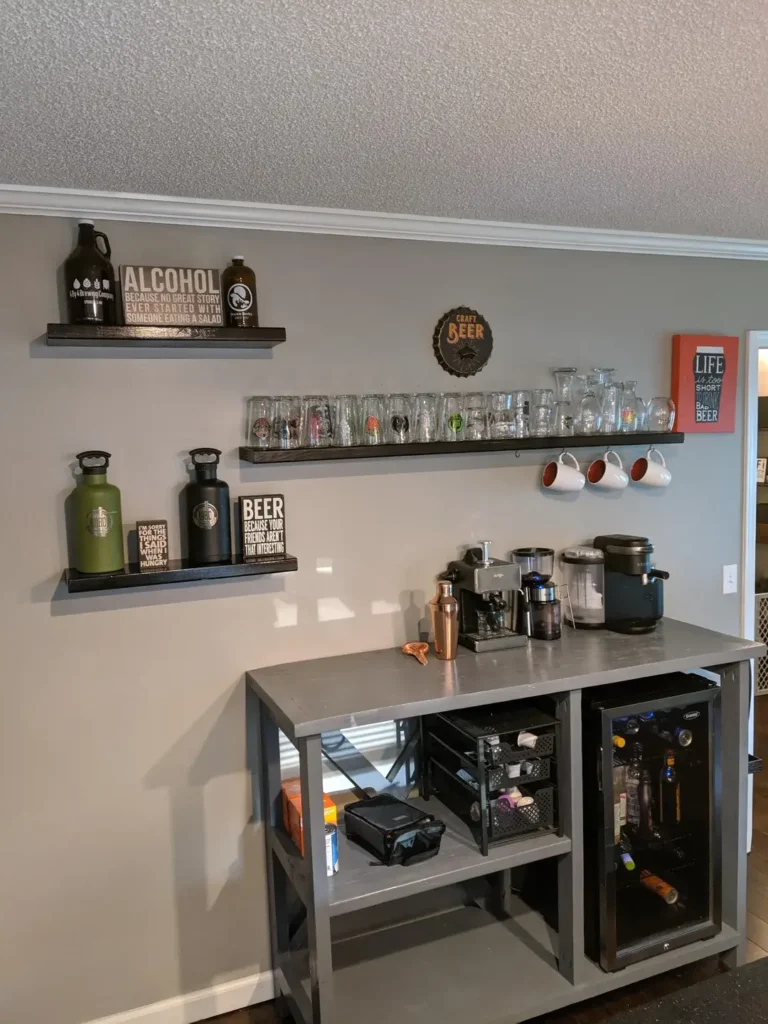
Not every coffee bar needs to be only about coffee. This setup embraces the reality that many households want a complete beverage center.
The gray walls provide a neutral backdrop for black floating shelves arranged in an asymmetrical pattern. r/evilncarnate82 created distinct zones: one shelf for beer growlers and humorous signs about alcohol, another long shelf displaying an impressive pint glass collection, and a lower level for coffee equipment. The espresso machine and grinder sit on a gray countertop beside a beverage cooler built into the cabinet below. Hooks hold coffee mugs separate from the beer glassware above.
This mixed-use approach makes sense if you entertain regularly or just want one designated beverage area instead of spreading coffee, beer, and cocktail supplies throughout your kitchen. The humor in the signage (“ALCOHOL: Because no great story ever started with someone eating a salad”) reflects the owner’s personality, making this space feel personal rather than catalog-perfect.
The built-in beverage cooler provides cold storage for beer, cold brew, or milk alternatives—whatever your morning or evening drink requires. The open shelving means everything stays visible, which works if you keep your collection curated and organized. Make sure your shelves are rated for the weight they’re holding, especially that long shelf supporting dozens of full pint glasses.
White Cabinets with Glass Doors and Under-Cabinet Lighting
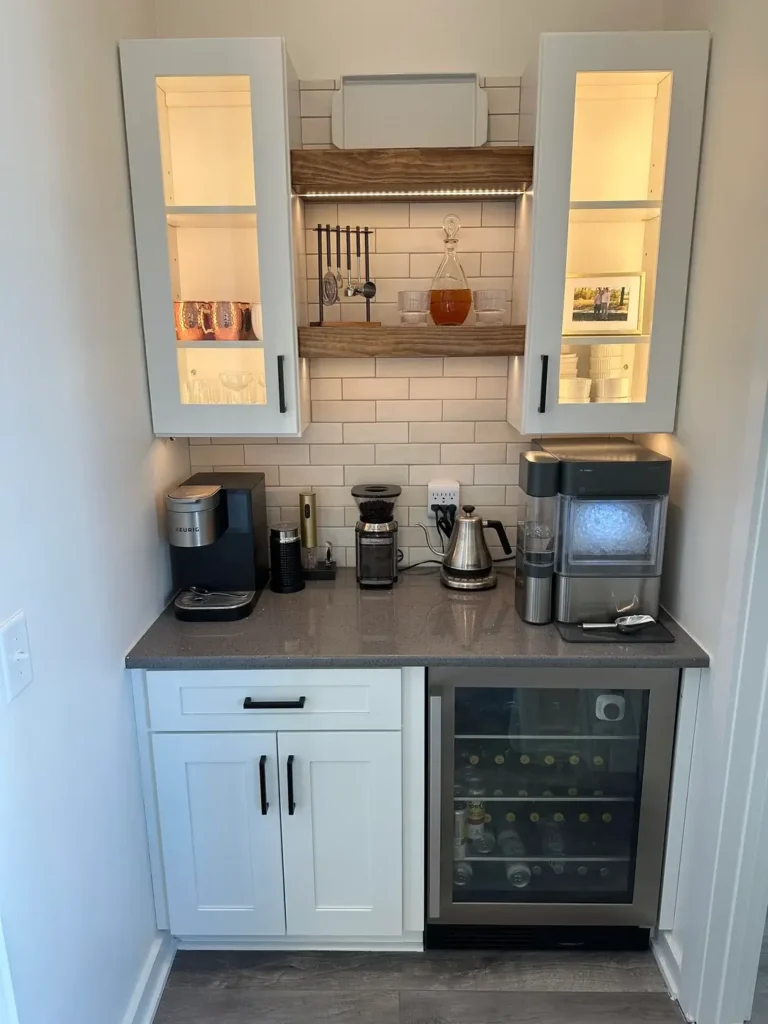
This setup brings symmetry and polish to a small coffee bar area, using cabinetry to create a built-in look without requiring major construction.
The white shaker-style cabinets feature glass doors that r/RoundUnhappiness fitted with interior lighting, turning everyday coffee supplies into a display. The center section holds the coffee maker and related equipment on a gray quartz countertop, with a built-in wine cooler below providing refrigeration. Two floating wood shelves mounted on white subway tile create storage between the upper cabinets, holding copper mugs, a coffee decanter, and decorative items. The wood grain on the shelves and upper cabinet fronts adds warmth to the predominantly white palette.
The under-cabinet lighting makes a significant difference. It illuminates your work surface for early morning prep and creates ambiance in the evening. Those lit glass cabinets show off your favorite mugs while keeping them dust-free—a practical advantage over open shelving if you live in a dusty climate or have pets.
The wine cooler integration is clever for anyone who wants both morning and evening beverage stations in one location. The subway tile backsplash extends from counter to upper shelves, creating a cohesive finished look. If you’re installing glass-front cabinets, keep what’s inside them intentional—only display items you genuinely like looking at.
Two-Tone Cabinetry with Professional Equipment Display
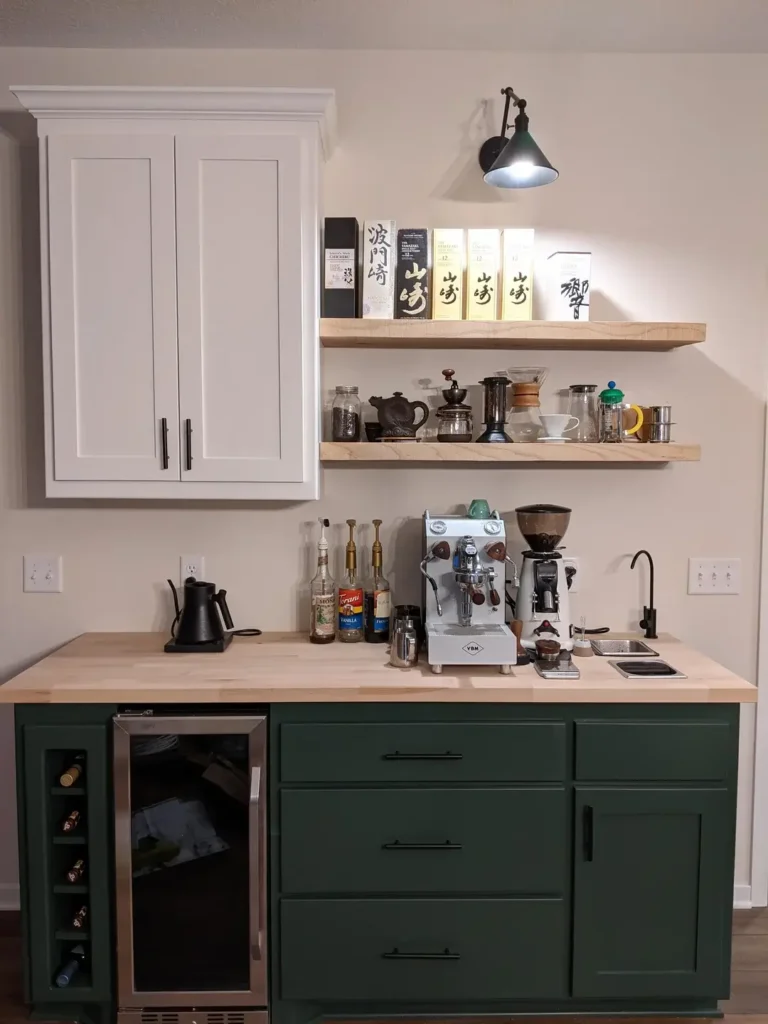
Color blocking creates visual interest while delineating different functional zones. This setup uses green lower cabinets to ground the space while white uppers keep things feeling open.
The blonde wood countertop provides a neutral transition between the white and green sections. r/nguye569 mounted two floating wood shelves above displaying tea packages, coffee brewing equipment, and a small grinder. A black vintage wall sconce adds task lighting that feels more intentional than typical under-cabinet strips. The VBM espresso machine dominates the countertop alongside a quality grinder, pour-over setup, and gooseneck kettle. The green cabinets below house a built-in wine cooler on the left and generous drawer storage.
The two-tone approach works because the proportions are right—roughly two-thirds white to one-third color creates balance without the green overwhelming the space. Those brass hardware pulls on the green cabinets add a touch of warmth that connects to the wood tones. The professional-grade equipment suggests this person takes their coffee seriously, and the variety of brewing methods means they’re not locked into one approach.
If you’re considering colored lower cabinets, choose a shade you can live with long-term. Trends change, but cabinet paint jobs are time-intensive. That floating shelf arrangement creates practical storage without the visual weight of upper cabinets, keeping the space feeling more open while still providing function.
Corner Cabinet with Wine Storage and Espresso Setup
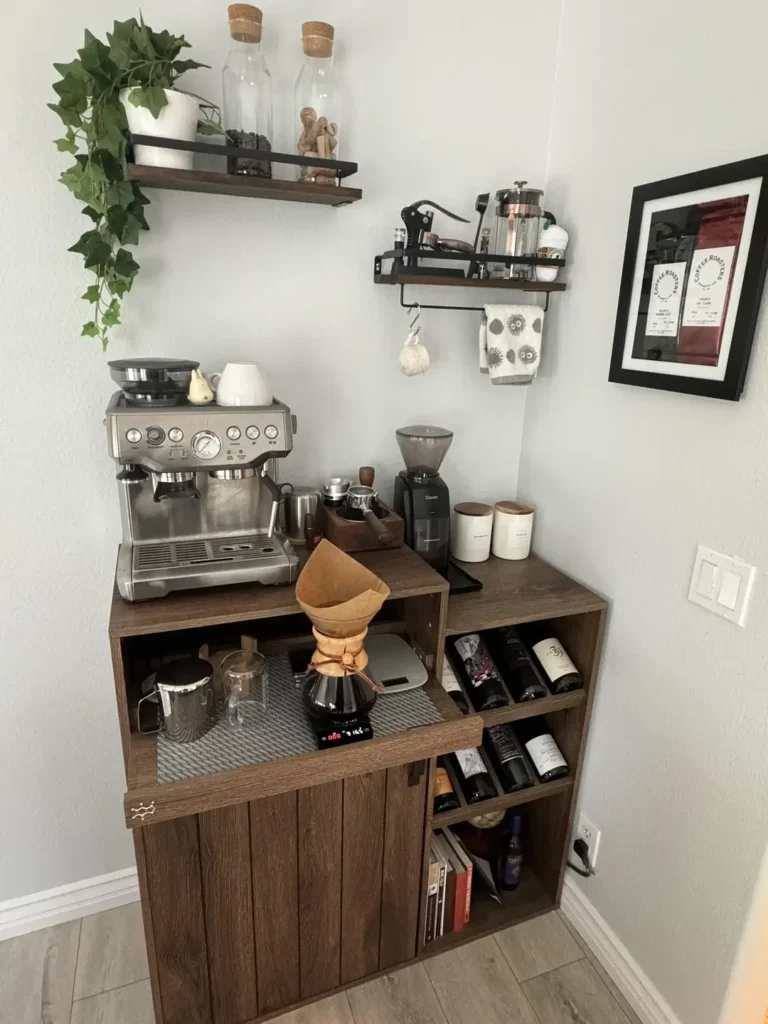
Dedicated coffee bars can double as wine stations with the right planning. This corner unit maximizes an often-awkward space by going vertical with storage.
The dark wood cabinet features open shelving configured for wine bottle storage, with some sections holding coffee bags and accessories instead. r/ed_423 positioned a Breville espresso machine prominently on the light wood countertop, flanked by a manual grinder and various pour-over equipment. Two floating shelves above display brewing accessories, French press, and storage canisters. A Chemex sits on the lower shelf alongside a knock box and other essentials. The trailing pothos plant adds life without requiring counter space.
The wine and coffee combination isn’t as random as it might seem—both require similar storage conditions (away from direct sunlight, moderate temperatures) and both benefit from having everything consolidated in one location. The dark cabinet grounds the corner while the light wood countertop keeps the actual work surface from feeling too heavy.
That specific corner placement means this setup doesn’t consume valuable wall space that might be needed for other purposes. The open shelving design means you can see at a glance what supplies you have, which matters when you’re deciding whether to make espresso or pour-over on any given morning. Make sure any corner placement still allows comfortable access—you need to be able to stand in front of the machine and operate it without contorting yourself.
Wall-Mounted Floating Shelves with Coffee Bar Counter and Seating
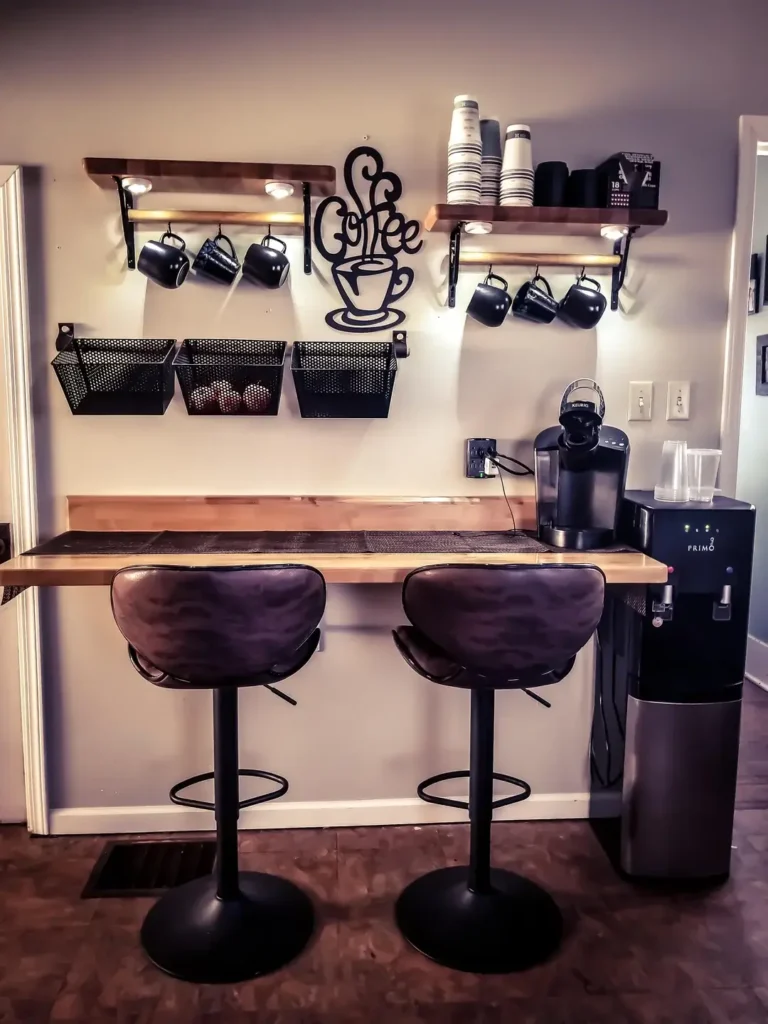
This setup turns coffee preparation into a social activity by incorporating seating directly into the station. The wall-mounted approach keeps the floor clear while creating substantial storage.
Two shelves with integrated lighting provide both ambient glow and functional task lighting. r/endorphiend2517 designed the upper shelves with hooks for mug storage, keeping six matching black cups ready for immediate use. A decorative metal coffee cup silhouette centers the wall, reinforcing the space’s purpose. Three black metal mesh baskets mounted below create storage for K-cups, filters, and other supplies that benefit from air circulation. The wood-topped counter sits at bar height with two leather bar stools tucked underneath, making this a genuine gathering spot. A Keurig and water dispenser handle the coffee duties.
The lighting strips mounted under the shelves create a coffee shop atmosphere without requiring professional installation—many LED strips are adhesive-backed and run on batteries or USB power. The coordinated black mugs simplify morning decisions while creating visual cohesion. Those mesh baskets prevent the clutter that often accumulates at coffee stations while keeping contents visible.
The seating element transforms this from utilitarian to intentional. You can drink your coffee here, invite someone to join you, or just perch while you wait for the brew cycle to complete. If you’re creating something similar, make sure your counter overhang is at least 12 inches to provide proper knee clearance for seated guests.
Narrow Corner Unit with Vertical Shelving and Plant Integration
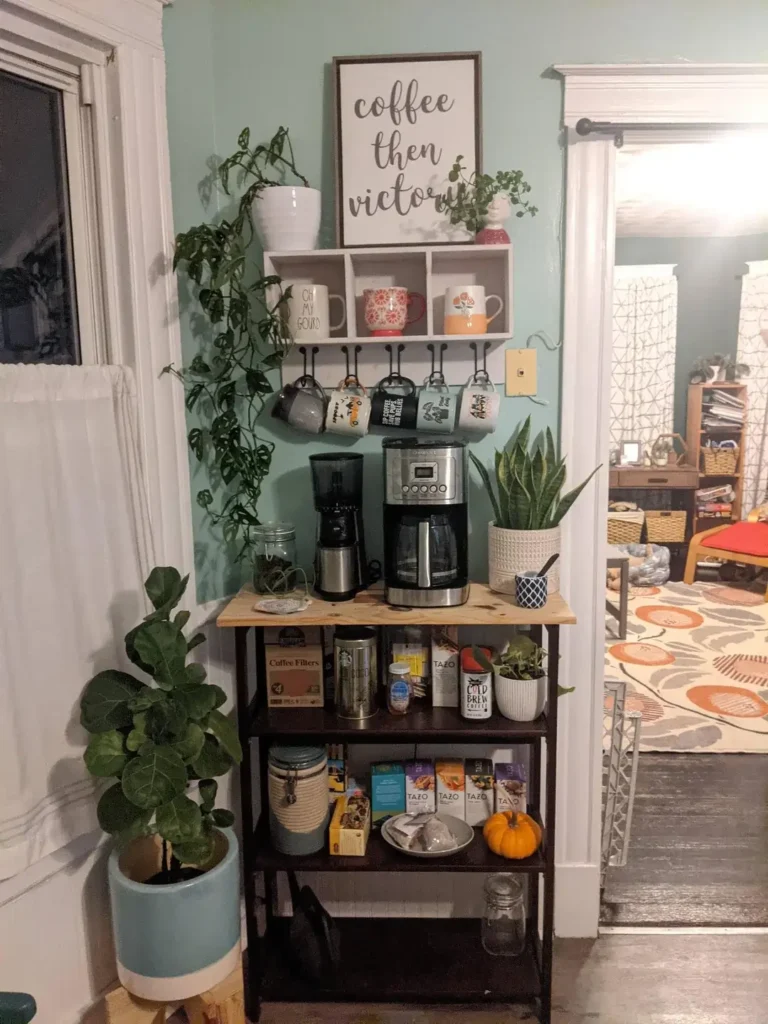
Corners that interrupt otherwise usable wall space become assets with the right furniture. This setup uses a slim bookshelf paired with a standing table to create maximum function in minimal square footage.
The narrow light wood ladder-style shelf holds coffee supplies organized by frequency of use: frequently needed items like coffee bags at eye level, while backup equipment and supplies occupy lower shelves. r/wakeupslow1 positioned a compact wooden table with one open shelf against the wall perpendicular to the bookshelf, creating an L-shaped configuration. The table holds a Chemex, espresso machine, grinder, and Sugar & Cream canisters on its white countertop. A white floating shelf above displays teapot, mugs, and decorative items alongside the coffee-themed wall art. The large snake plant in a turquoise pot softens the setup and occupies floor space that couldn’t accommodate furniture anyway.
This demonstrates how mixing furniture pieces can solve layout challenges that single units can’t address. The narrow bookshelf wouldn’t provide adequate counter space on its own, and the table alone wouldn’t offer enough storage—but together they create a complete system. The light wood keeps things feeling open rather than crowded.
That vertical tower of supplies means you can keep significant inventory without spreading across multiple locations. The plant isn’t decorative filler—it occupies the corner’s dead space while contributing to the room’s air quality and aesthetic. When mixing furniture pieces like this, keep finishes cohesive (all light woods here) to maintain visual unity.
Compact Rolling Cart with Farmhouse Wall Decor
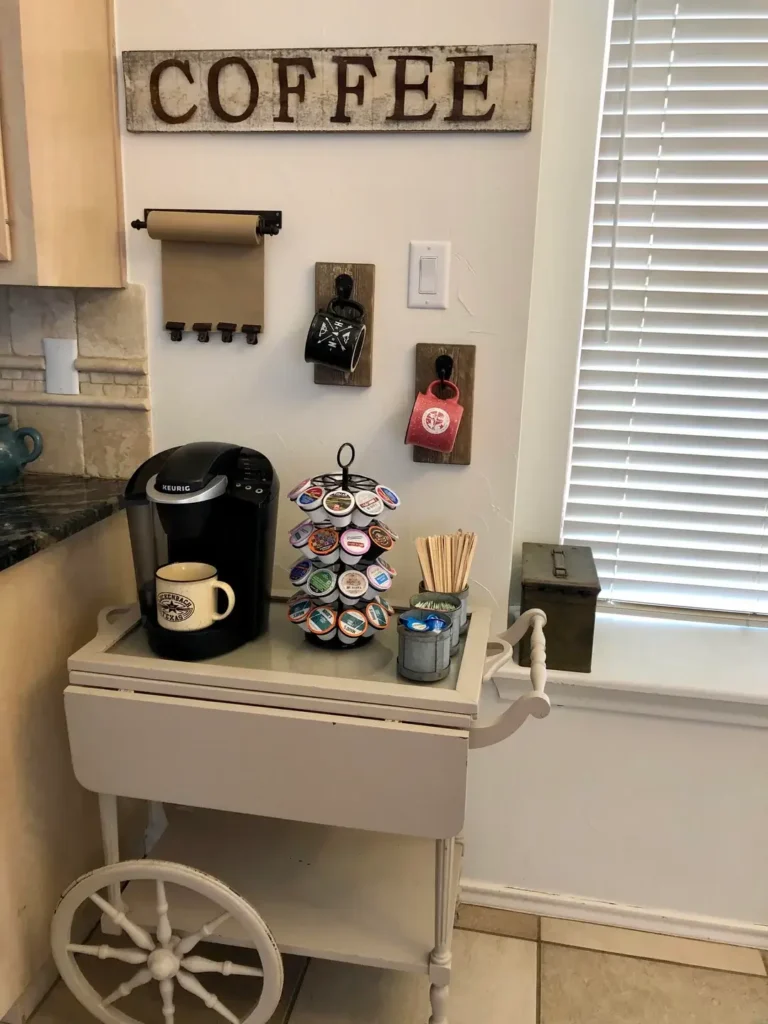
This proves you can create a complete coffee station with furniture that costs less than your espresso machine. The rolling cart approach offers maximum flexibility for renters or anyone who likes rearranging.
The white-painted wood cart features a leaf-shaped handle detail and appears to be repurposed furniture rather than purpose-built coffee storage. r/lostinreddit4ever mounted a large distressed metal “COFFEE” sign above, establishing the station’s purpose. A paper towel holder and mug hooks attached to the wall keep frequently used items accessible without consuming cart space. The Keurig sits on the cart’s top surface beside a K-pod carousel, napkin holder, and condiment containers. The cart drawer probably stores coffee supplies while the lower shelf holds a trash bin and additional storage.
This setup costs a fraction of custom built-ins while providing surprising functionality. The cart’s wheels mean you can roll it aside when you need floor space for other purposes, a flexibility permanent installations can’t offer. The farmhouse aesthetic works in many home styles—rustic, traditional, or eclectic spaces all accommodate this approach.
The wall-mounted elements supplement the cart’s limited surface area without requiring additional floor space. Those wooden mug holders keep favorite cups at hand while adding vertical visual interest. If you’re using a small cart, choose one with at least one drawer or cabinet to hide the messy necessities that make coffee stations work but don’t look great on display.
Small Coffee Bar Ideas: Which Setup Matches Your Space?
The best small coffee bar ideas share common principles even when they look completely different: they store everything needed for daily use, they keep the most-used items within easy reach, and they integrate into the home’s existing aesthetic rather than fighting against it.
| Setup Type | Best For | Space Required | Budget Range |
|---|---|---|---|
| Wall-Mounted Cabinet | Permanent installations, homeowners | 36″ wide minimum | $$$ |
| Floating Shelves + Table | Corners, narrow walls | 24″ x 24″ floor space | $$ |
| Metal Cart | Renters, frequent movers | 20″ x 30″ floor space | $ |
| Built-In Niche | Renovations, new construction | Built into existing cabinetry | $$$$ |
| Console Table | Multi-purpose spaces, hallways | 12″ x 36″ floor space | $$ |
Your space constraints matter less than your willingness to think vertically. Nearly every successful small coffee bar idea I’ve seen maximizes wall space rather than spreading across counters. The setups that work best acknowledge what equipment you actually use rather than trying to accommodate every possible brewing method.
Think about your morning routine specifically. Do you make one type of coffee or several? Do you prep the night before or start from scratch each morning? Do other household members need access, or is this primarily your personal station? Those answers determine whether you need a simple single-serve setup or something that handles multiple brewing methods and users.
The difference between a coffee station that gets used daily and one that becomes a cluttered catch-all often comes down to whether you planned for the unglamorous necessities: where used pods go, where you store backup supplies, where cleaning supplies live, and whether you have adequate task lighting for pre-dawn operation.
Start with the equipment you already own. Measure it accurately, including the space behind and above each piece for ventilation and operation. Then find or build the smallest footprint that accommodates those dimensions plus minimal workspace. You can always expand later, but starting too big means your coffee bar consumes space needed for other purposes.