
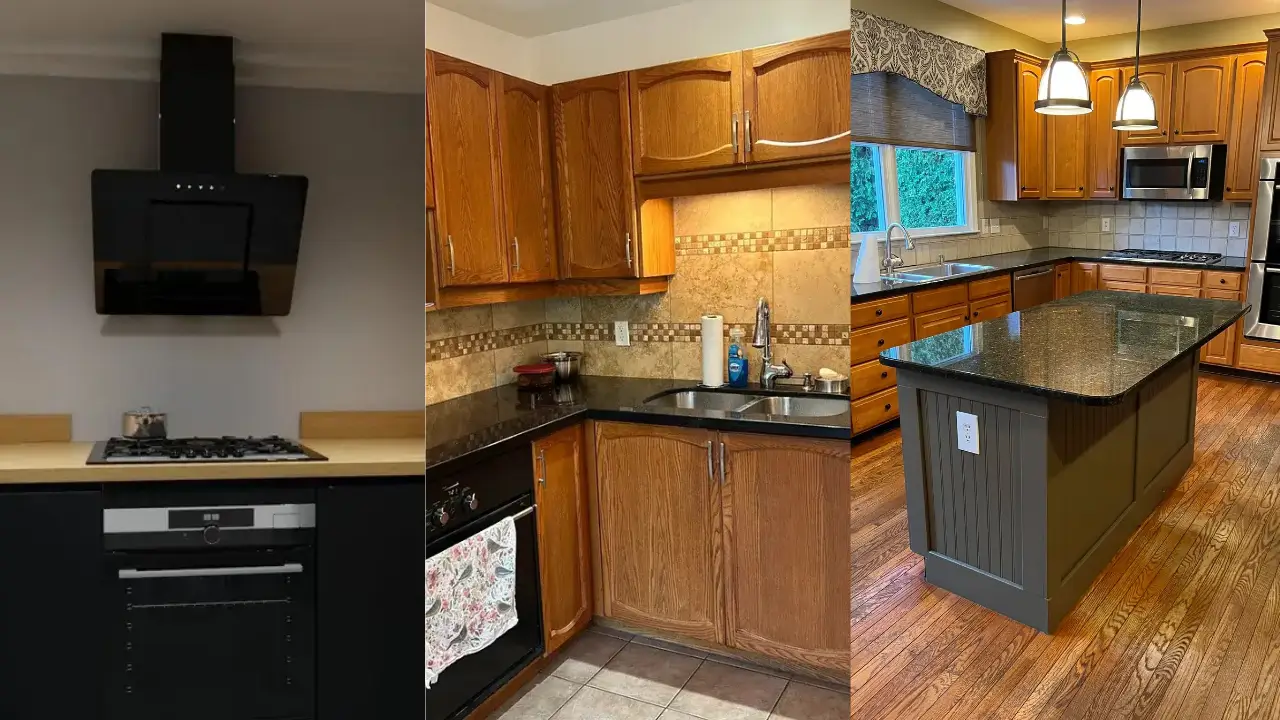
You spend a lot of time searching for kitchen inspiration that doesn’t look like every other kitchen on the internet. Black and wood combinations solve a problem most people don’t realize they have: how to create a space that feels both modern and inviting without tilting too far in either direction.
I’ve gathered 15 real examples of black and wood kitchen ideas that actually work in everyday homes. These aren’t staged showrooms or impossible-to-maintain fantasies. Each one demonstrates a specific approach to balancing dark cabinetry with natural wood tones, and I’ll show you exactly what makes each setup effective.
1. Honey Oak Cabinets with Dark Gray Island
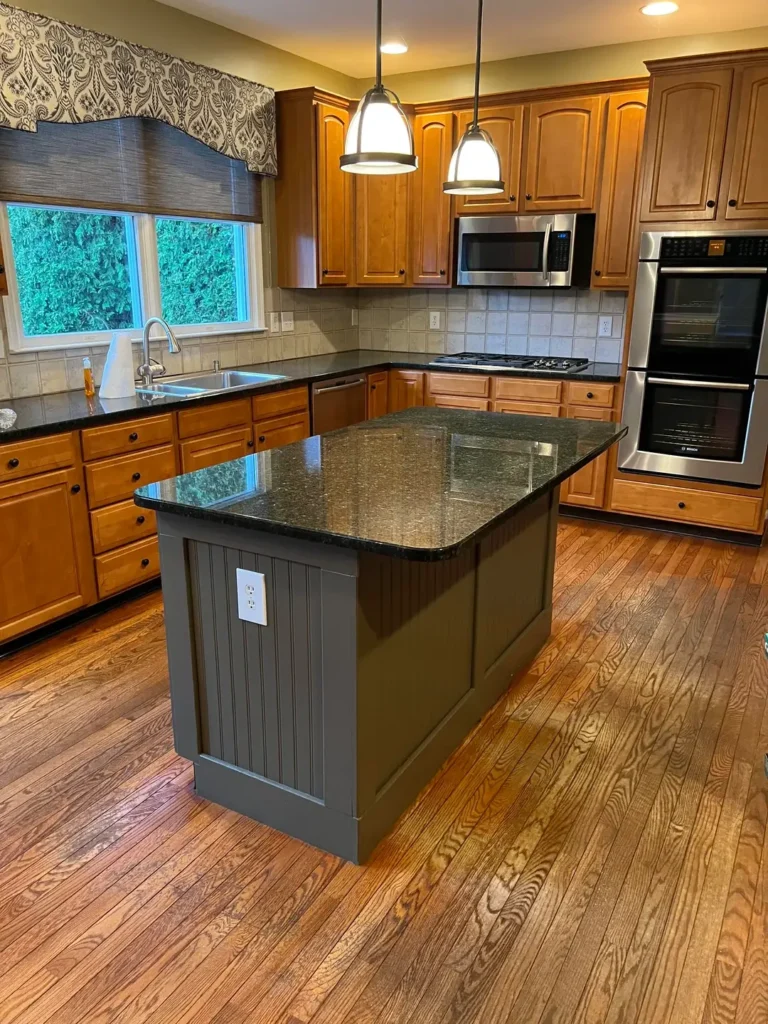
Not every wood needs to be trendy walnut or that washed-out maple you see everywhere. This kitchen keeps the original honey oak upper cabinets (yes, the ones most people rush to paint) and introduces a painted gray island that smartly bridges the gap between warm wood and black granite countertops.
Why it works: The dark color stays limited to the island instead of taking over everything. The beaded paneling on the island adds texture so the gray doesn’t look flat and sad. Black granite countertops run across both the perimeter and the island, which ties the whole thing together visually even though you’ve got two different cabinet colors happening.
The medium oak tone brings enough warmth to keep things cozy, while the dark counters and gray island stop it from drifting into that dated, overly golden territory. You know the look. It’s giving 1997 kitchen in a good neighborhood.
Pro tip: If you’ve got oak cabinets you’re not ready to replace, just update what surrounds them. Swap brass hardware for matte black, go darker on the countertops, and consider painting only the island or lower cabinets in charcoal or deep gray. Big visual impact, fraction of the cost.
2. Light Wood with Black Accents and Skylight
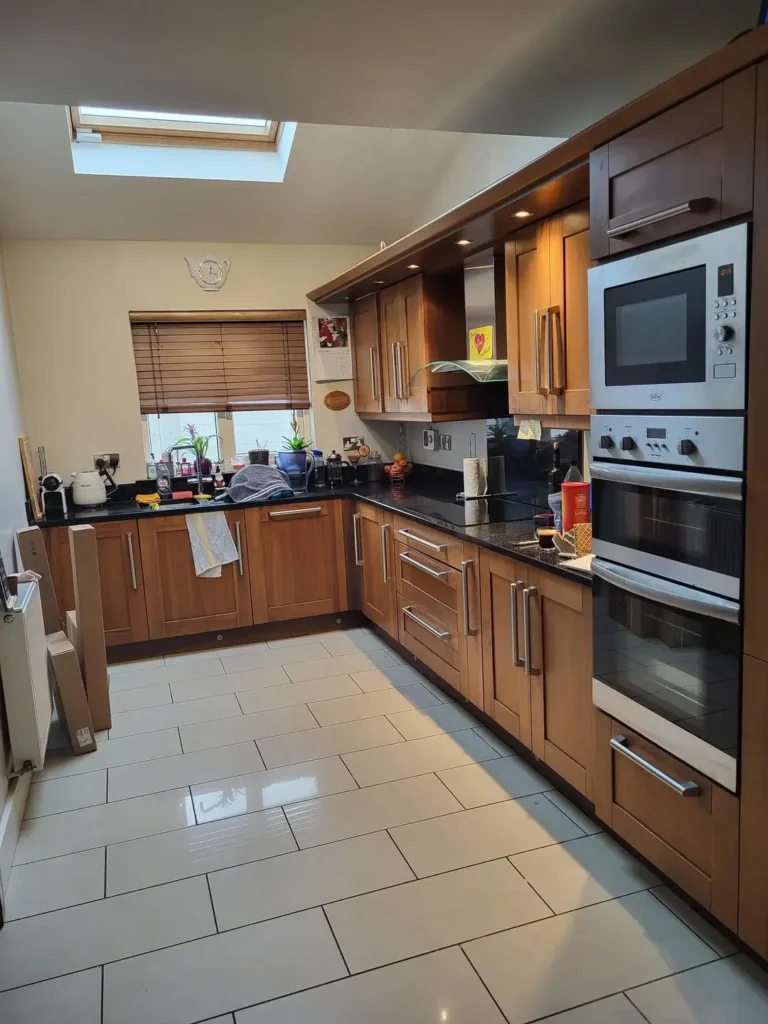
Dark cabinets in a windowless kitchen? That’s a recipe for a space that feels like a cave. This design gets it right by installing a large skylight directly over the main work zone.
Medium-toned wood cabinets run along two walls, black granite countertops provide contrast, and white subway tile on the backsplash reflects light back into the room so the dark counters don’t swallow everything. Stainless steel appliances add another bounce surface.
The key balance here: The countertops are black, but they’re narrow slabs. The majority of what your eyes land on is warm wood and white walls. Black is the seasoning, not the whole meal.
Here’s the honest truth: natural light changes everything when you’re working with dark materials. If your kitchen has one sad little window, adding black cabinets will shrink the room visually. Fix your lighting situation first, or keep the dark elements minimal.
3. Light Maple Cabinets with Black Quartz
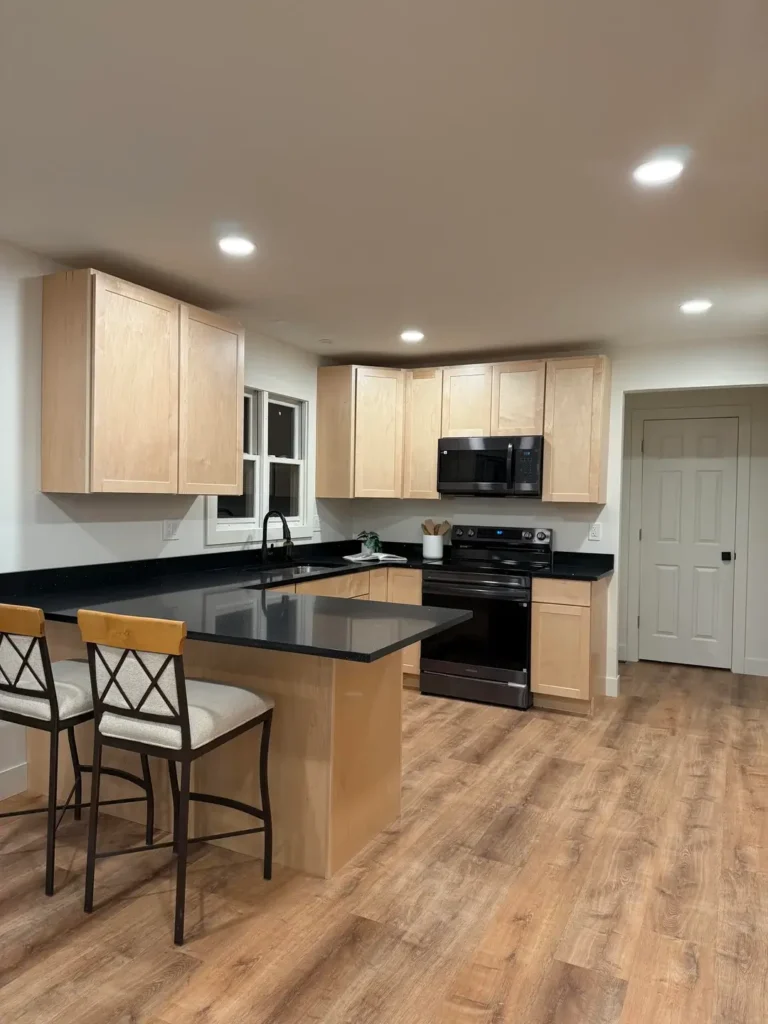
Maple has that naturally pale, almost blonde look that creates serious contrast against dark surfaces. Paired with solid black quartz and a matching peninsula, this kitchen feels clean and contemporary without trying too hard.
Flat-panel cabinet doors keep the whole thing modern rather than traditional. Black bar stools with light upholstered seats echo the wood tone, which connects the two main materials without being obvious about it. Wood-look luxury vinyl flooring picks up the warmer tones without competing with the cabinetry.
FYI: Black quartz is actually one of the more low-maintenance dark materials you can choose. It doesn’t show water spots or fingerprints nearly as readily as black granite or soapstone. If you’re nervous about upkeep, quartz is your friend.
When you’re pairing very light wood with very dark counters, keep the backsplash simple. White, light gray, or a marble look will let the two hero materials shine without adding unnecessary noise.
Also Read: How to Build a Rustic Farmhouse Kitchen – 12 Ideas That Feels Authentic, Not Themed
4. Matte Black Cabinets with Wood Waterfall Counters
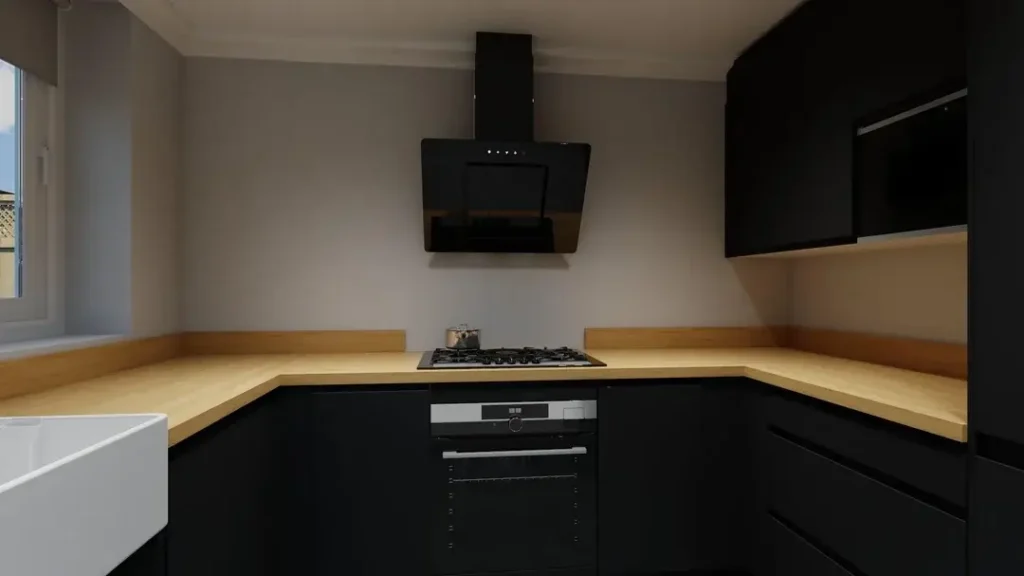
This one flips the usual formula completely. Instead of wood cabinets with dark accents, you get matte black lower cabinets with a continuous blonde wood countertop that extends up the wall as the backsplash.
The wood wraps the corner in a waterfall edge, which creates a sculptural moment that genuinely stops you in your tracks. Light maple or birch with straight grain keeps things clean and modern. An integrated sink maintains the sleek profile without interrupting the flow.
What makes this brilliant: Wood becomes the feature material, not just the supporting actor. The continuous surface removes visual breaks that make small kitchens feel choppy. Matte black cabinets are also more forgiving than glossy finishes because they don’t show fingerprints as harshly and don’t reflect light in ways that reveal every little imperfection.
One heads up though: this approach needs precise fabrication. The wood functioning as both counter and backsplash must be sealed properly with multiple coats of polyurethane or a specialized food-safe finish. Don’t cut corners on this part.
5. Charcoal Shaker Cabinets with Butcher Block Island
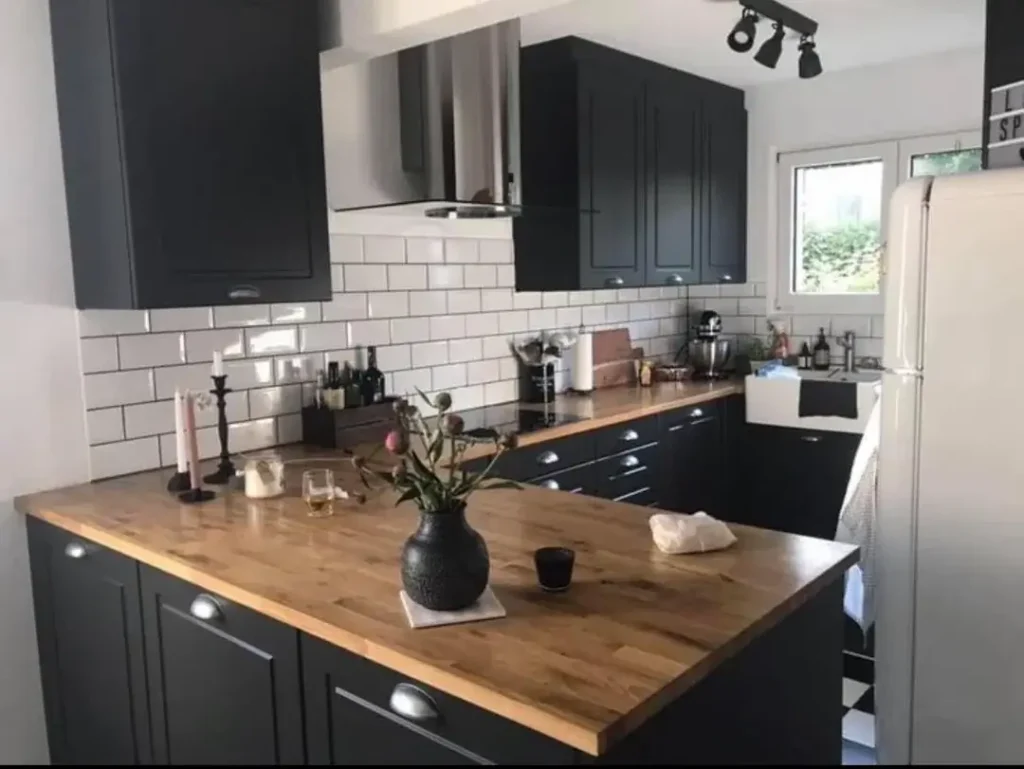
Butcher block brings a kind of warmth that no painted surface can replicate. This kitchen uses charcoal gray shaker-style cabinets on the perimeter with wood countertops throughout, then adds a butcher block island top for extra texture and character.
The subway tile backsplash uses dark grout that ties into the cabinet color, but it doesn’t create a heavy solid black wall. Stainless steel appliances and fixtures keep the palette from going too monotone.
What really stands out: There are actually two different wood tones in play here. The island butcher block runs warmer and more golden, while the perimeter counters read slightly cooler. That layering creates depth without introducing completely different materials.
Butcher block gets a bad reputation for being high-maintenance, but honestly? It’s more forgiving than people think. Yes, you need to oil it regularly and occasionally sand out deep cuts, but it develops character over time rather than just deteriorating. Reserve butcher block for the island if you’re worried, and use a tougher material on your main prep zones.
6. Oak Cabinets with Black Galaxy Granite
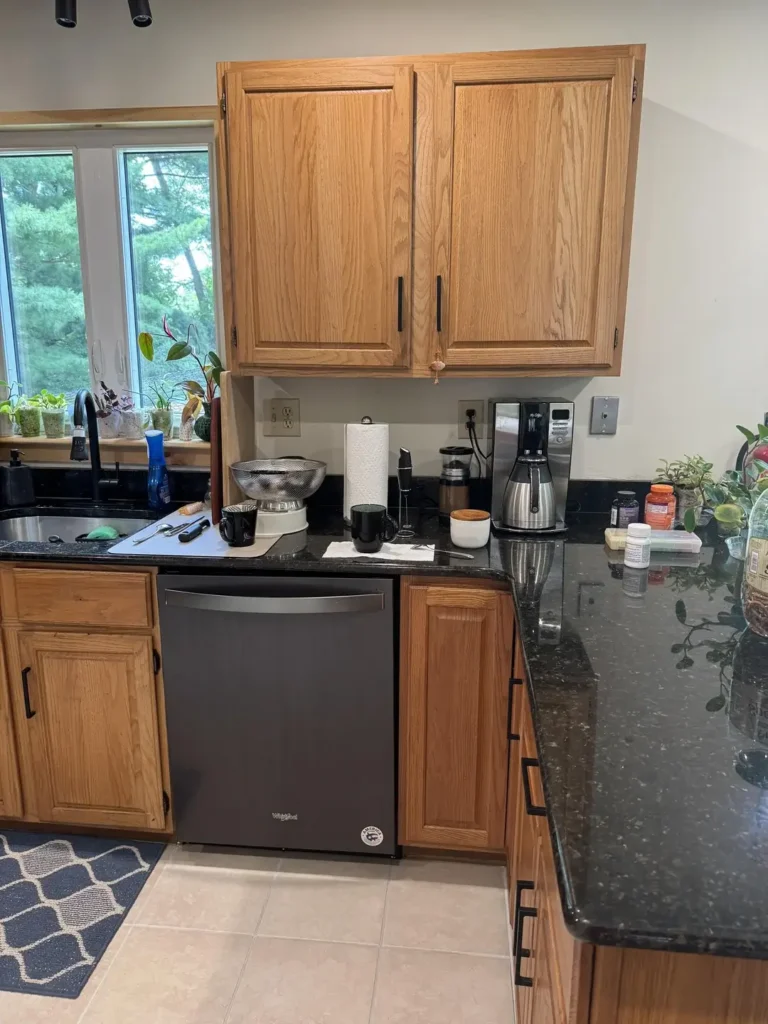
Solid black counters can sometimes feel heavy. Black Galaxy granite solves that by including gold and silver flecks that catch light and prevent the surface from absorbing everything around it.
Natural oak cabinets pair with this granite beautifully, and a decorative tile backsplash with earth tones acts as the bridge between warm wood and cooler black granite. A black dishwasher integrated into the oak cabinetry sneaks in a subtle dark accent without requiring you to paint a single cabinet.
Real talk about oak: Oak doesn’t look dated because it’s oak. It looks dated because of the orange-toned stain finishes from the 90s and the brass hardware that came with them. A natural oak finish with simple black hardware looks completely current and fresh.
If you’re working with existing oak cabinets, changing the countertops makes a bigger visual impact than painting the cabinets. Black granite in particular can completely transform the atmosphere while still honoring the warmth of the wood.
Also Read: The Ultimate Backyard Upgrade: 10 Real-Life Outdoor Kitchen Designs to Steal
7. Honey Oak with Decorative Backsplash and Black Counters
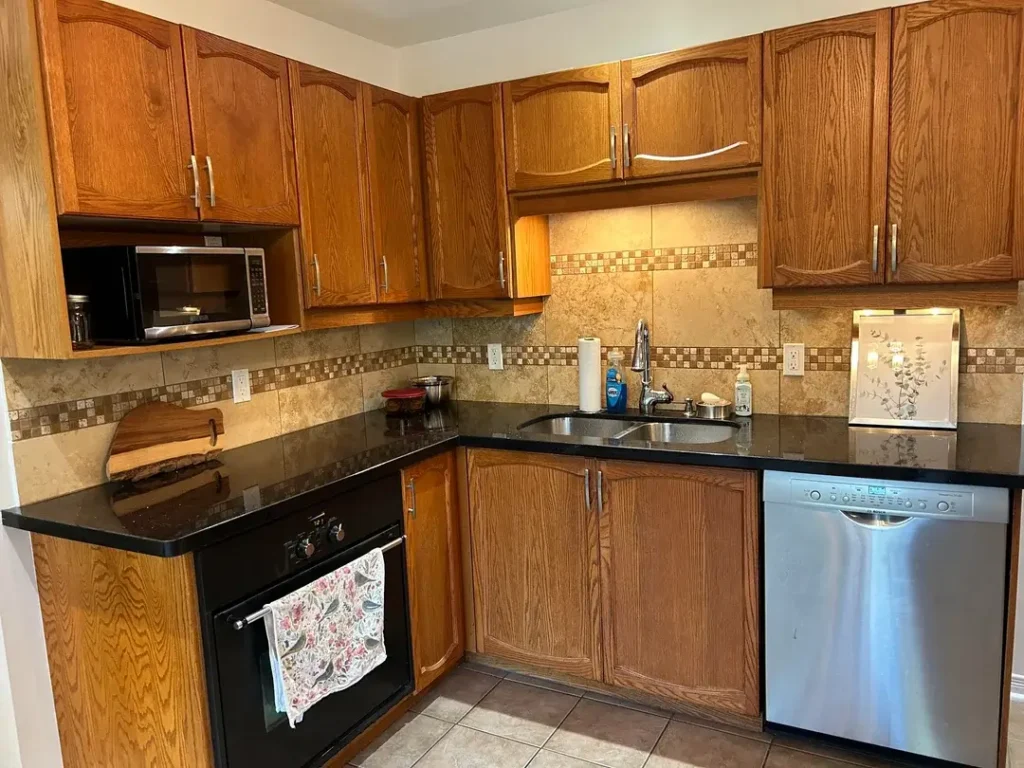
A great backsplash can act as a translator between two materials that might otherwise feel disconnected. This kitchen features honey oak raised-panel cabinets with black granite counters and a glass-and-stone mosaic backsplash that pulls in brown, gold, and black tones all at once.
The tile covers the entire wall rather than just a small strip behind the cooktop, which makes it feel intentional and designed rather than like a budget afterthought. Stainless steel appliances add neutral metal tones that don’t compete with either the wood or the black.
This approach is genuinely smart for renovators: A statement backsplash draws attention toward the overall composition rather than fixating on the cabinets. The black granite grounds the space, and the backsplash handles the visual bridging for you.
When you’re choosing backsplash materials, look for tiles that contain colors from both your cabinets and your counters. That one design move makes your whole kitchen look like it was planned by someone who knows what they’re doing, even if you figured it out at the tile store on a Saturday afternoon.
8. Cherry Cabinets with Black Granite and Mosaic Detail
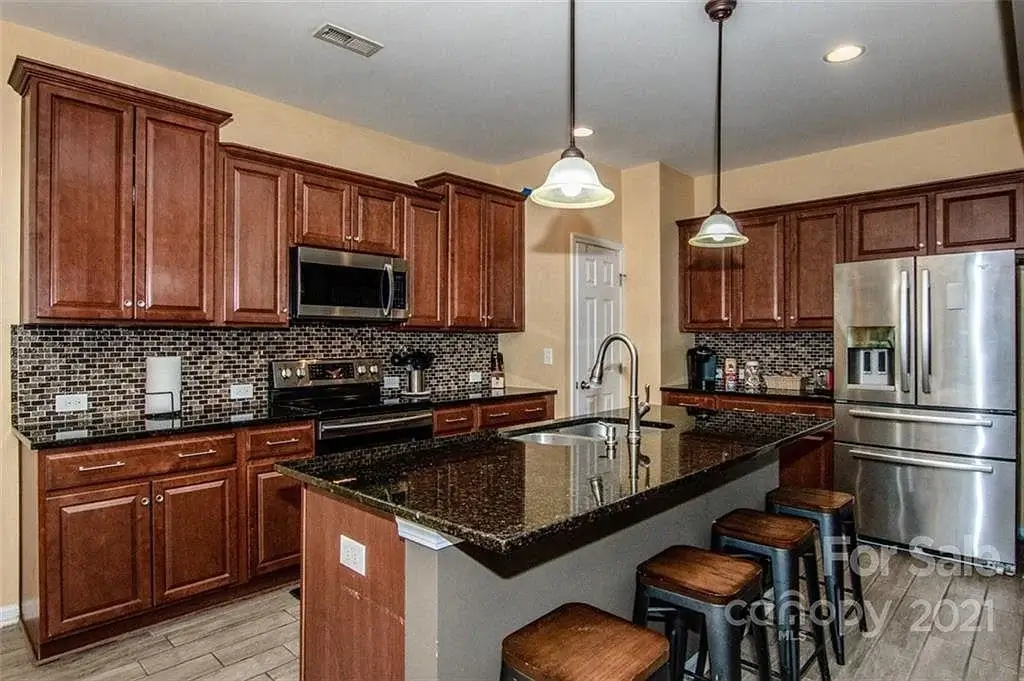
Cherry wood darkens over time, which is actually a feature, not a bug. Because it gets richer with age, it can handle the visual weight of black countertops without looking washed out or overwhelmed.
This traditional kitchen pairs rich cherry cabinets with crown molding and polished black granite. A mosaic backsplash with black, brown, and metallic tiles creates a middle ground between the dark counters and the reddish-brown cabinets. Pendant lights over the island cast focused light on the work surface so the black granite doesn’t turn into a dark void at the center of the room.
Styling note: Cherry cabinets are a deliberate aesthetic choice that leans traditional. If that’s your vibe, black granite is genuinely your best partner here. Lighter materials would create too much contrast and make the rich wood look muddy rather than luxurious.
Polished black granite does need regular sealing, so plan to have it resealed every year or two depending on how hard you cook. Wipe up spills quickly and use coasters. Basic stuff, but worth mentioning.
9. Natural Oak Upper Cabinets with Glass-Front Display
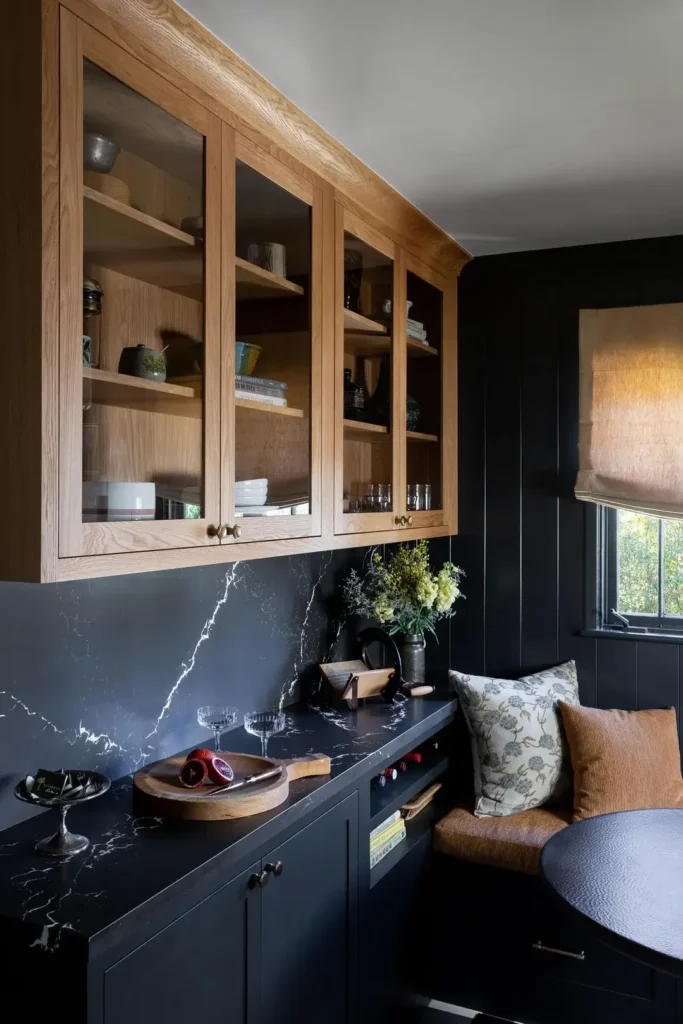
Glass-front cabinets fundamentally change the energy of a kitchen by showing what’s inside rather than presenting a solid wall of material. This setup pairs natural oak upper cabinets with glass doors and open shelving against black lower cabinets and black marble-look counters.
The wood stays at eye level, which keeps natural warmth where you interact with it most. Glass fronts on the wall cabinets lighten their visual weight while still providing closed storage. The cabinet interiors are painted white, which makes the displayed dishes look clean rather than cluttered. Oak floating shelves extend the wood theme without adding more solid cabinetry.
Black marble-look countertops with white veining create movement that solid black surfaces simply can’t offer. Those white veins echo the white cabinet interiors and white walls, pulling the whole room together without any extra effort.
If you go this route, curate what lives behind the glass. Mismatched dishes can look charming if that’s your intention, but if you want the polished version, white dishes and simple glassware create the cleanest backdrop for wood and black materials to do their thing.
Also Read: 15 Sage Green Kitchen Ideas That’ll Make You Grab a Paintbrush
10. Navy Blue Cabinets with Natural Wood Accent Drawers
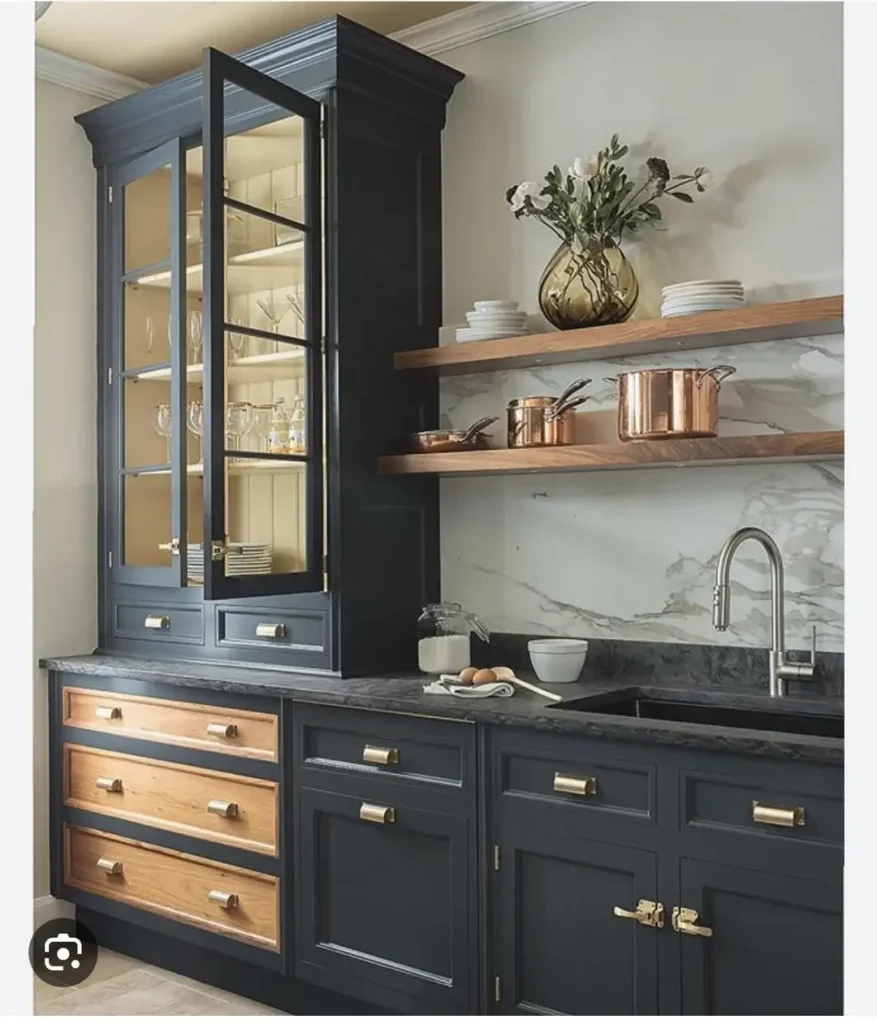
Navy reads almost like black at first glance but carries more warmth and personality. This kitchen uses dark navy painted cabinets with natural wood drawer fronts that create horizontal stripes across the lower section, giving the whole thing a custom, built-in feel.
Brass hardware bridges the gap between warm wood and painted navy beautifully. A marble backsplash and open wood shelving add more natural material toward the top of the space, which stops the navy from feeling oppressive. Glass-front upper cabinets with interior lighting break up the solid wall of dark color and let your dishes become part of the display.
The budget-friendly move here: Using wood fronts on just the drawers is considerably more affordable than replacing entire cabinet boxes. It creates a custom look that you genuinely won’t see in every other kitchen, and it adds warmth where your hands actually touch the cabinets most often.
This works best in kitchens with decent natural light. The navy creates drama and depth while the wood accents provide warmth. It’s a pairing that feels sophisticated without being stuffy.
11. Light Oak Cabinets with Black Island and Open Shelving
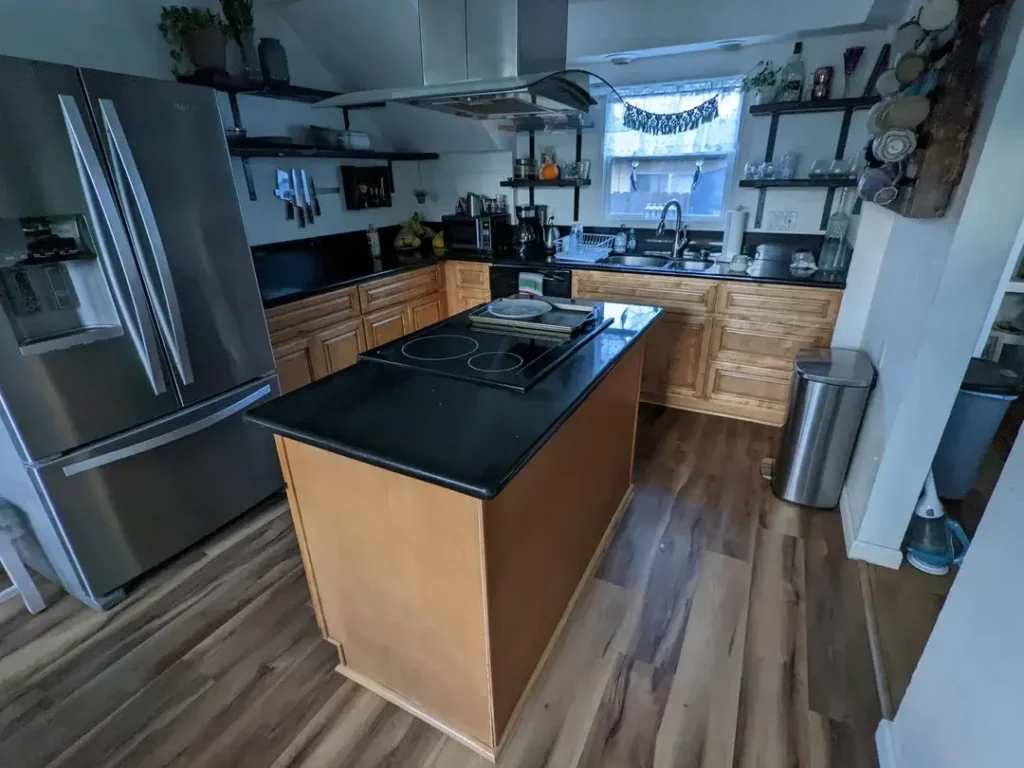
A black island in a light wood kitchen becomes an instant focal point. This design uses light natural oak cabinets on the perimeter with open black shelving above and a black island with integrated cooktop at the center of the room.
The black island becomes the clear functional center while the light oak perimeter handles most of the storage. Open shelving in black metal with wood shelves combines both materials in a single element, which is a neat design trick. Wood-look flooring carries the cabinet tone through the space and ties the whole room together.
On the practical side: Black islands are actually more forgiving than white ones. Darker colors hide scuffs and everyday marks far better, and the contrast clearly defines the island as the work zone. If you’re adding an island to an existing kitchen, painting it black creates instant drama without touching the original cabinets at all.
The proportion balance here is worth noting. The island is substantial enough to anchor the room but doesn’t steamroll the lighter perimeter cabinets. That proportion is everything.
12. Matte Black Cabinets with Marble and Leather Bar Stools
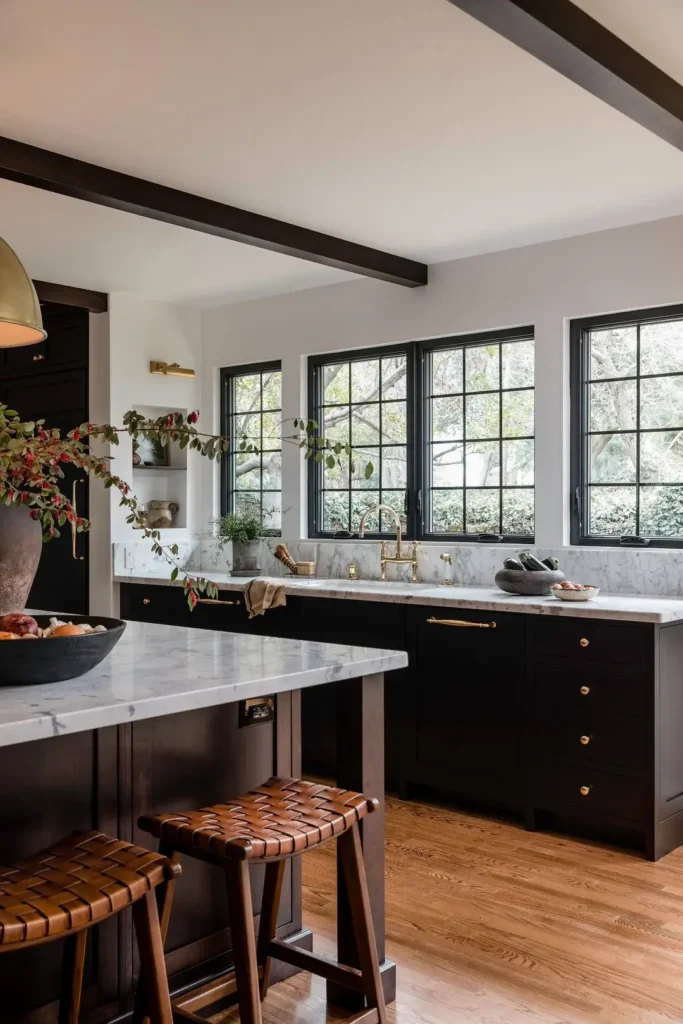
Black-framed windows make an architectural statement that honestly demands you commit to it throughout the rest of the space. This kitchen features floor-to-ceiling black steel-frame windows that led directly to the choice of matte black lower cabinets and white marble countertops.
Natural oak wood ceiling beams bring warmth from above while woven leather bar stools add texture and a lighter wood tone at the island. White marble with gray veining connects the white walls and the black cabinets in one material. A gold faucet and matching hardware warm up what would otherwise be a pretty cool palette.
The exposed wood beams are the non-negotiable element here. Without that wood overhead, this kitchen would feel stark and cold regardless of how beautiful the marble is. The beams draw your eye upward and give the room its soul.
If you’re considering black-frame windows during a build or renovation, commit fully. The wood elements can come from floors, ceilings, open shelving, or furniture rather than from the cabinets themselves. Just make sure they’re present.
13. Black Lower Cabinets with Wood Floating Shelves and Live Edge Table
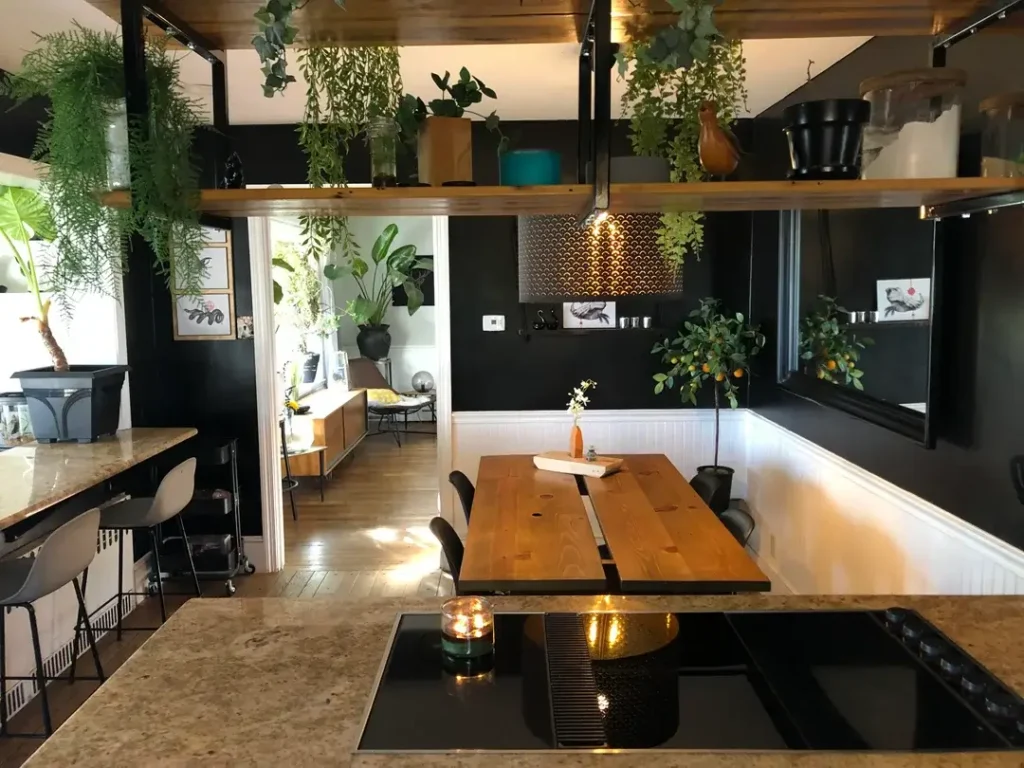
Removing upper cabinets entirely is a bold move that pays off when you do it right. This kitchen replaces upper cabinets with thick floating shelves made from natural wood, creating a completely different atmosphere than you get with solid cabinetry on every wall.
Black walls and lower cabinets create a dramatic backdrop that makes the wood shelves and live-edge dining table pop in a way that simply wouldn’t happen against white walls. Extensive greenery on the shelves and hanging from a wood-slat ceiling softens all that black and brings actual life into the space. Under-cabinet and accent lighting ensures things don’t go too dark despite the bold wall color.
The live-edge dining table is the star of this kitchen, with natural edges and grain patterns that contrast beautifully against the sleek black cabinetry. This works best in open-concept layouts where the kitchen flows into a dining area.
One honest consideration: removing upper cabinets means you need storage elsewhere. This works well if you have a pantry or genuinely don’t need excessive dish storage. The payoff is an airy, gallery-like feel that makes cooking feel less like a chore and more like an experience.
14. Black Soapstone with Wood Plank Walls and Cabin Aesthetic
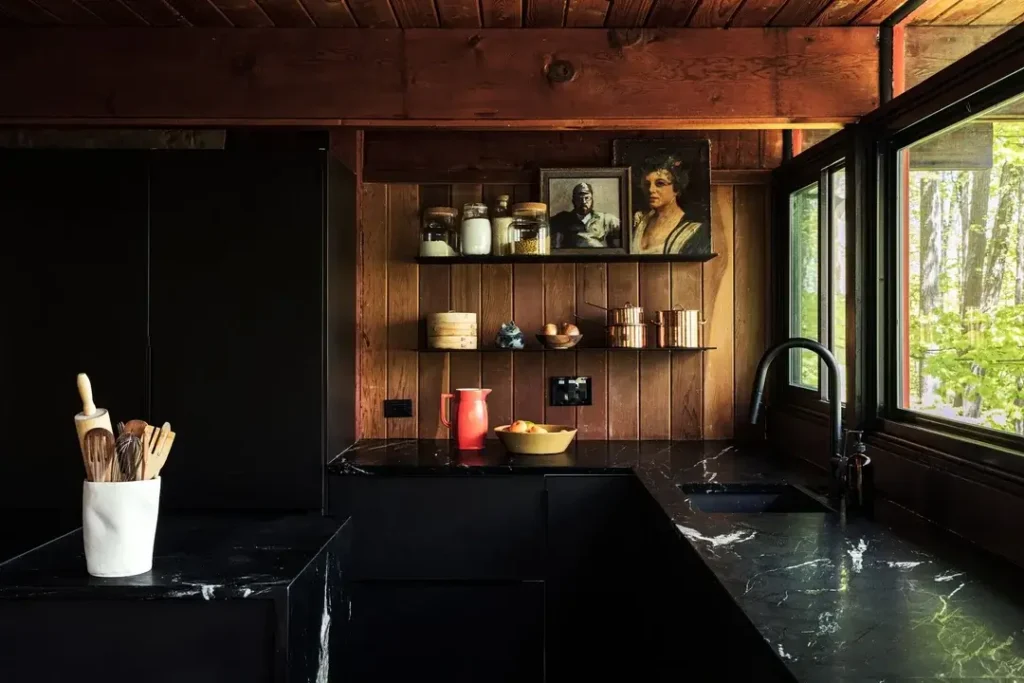
Cabin kitchens don’t have to sacrifice sophistication. This space features black cabinets and black soapstone counters against walls clad in natural wood planks with a warm, aged appearance, and somehow the whole thing feels both rustic and intentional.
The wood ceiling and walls provide so much natural material that the black elements read as contrast rather than coldness. The wood is left unstained, which allows natural variation and patina to show through authentically. Black window frames tie into the cabinetry, and vintage artwork with copper kettles adds warmth without clutter.
A word on soapstone: It develops a patina over time that adds character rather than just showing wear. It’s softer than granite but tougher than marble, and the matte finish doesn’t broadcast fingerprints or water spots the way polished black granite does. IMO, it’s genuinely underrated for rustic kitchen applications.
This aesthetic requires real commitment though. You need enough wood surface to balance the black, which means walls, ceilings, or substantial furniture pieces, not just a wood floor. Half-measures will feel confused rather than intentional.
15. Walnut Cabinets with Black Frame Details and Mesh Inserts
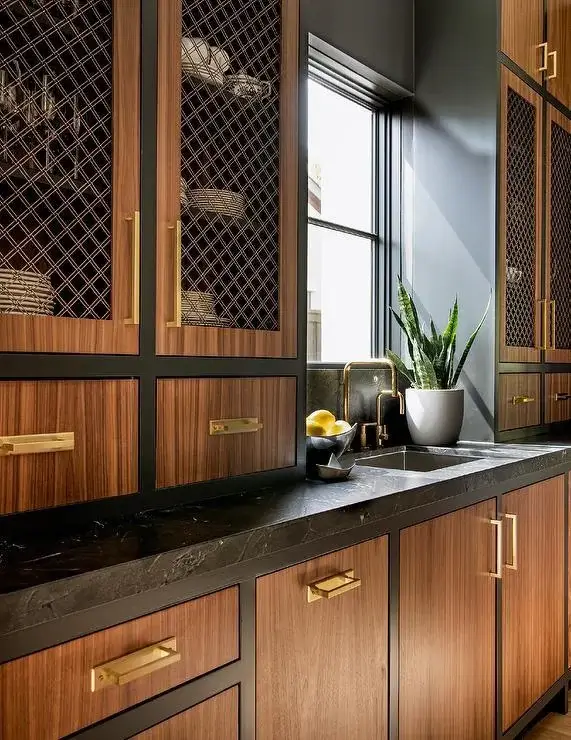
Mixed materials create custom details that take ordinary cabinet boxes somewhere interesting. This kitchen uses horizontal-grain walnut veneer on the cabinet doors with black metal frames and mesh inserts on the upper cabinets.
Black countertops with subtle veining continue the dark accents without letting black take over the room. Brass hardware catches the warmer tones in the walnut while the mesh inserts create visual texture without the cleaning demands of glass fronts. A black faucet ties the whole fixture story together.
The horizontal grain direction on the walnut makes the cabinets read as distinct, layered panels rather than a solid wall of wood. That directional choice gives the kitchen a contemporary edge that pairs naturally with the black metal detailing.
Custom mesh inserts and metal frames add to the budget, but they create a genuinely unique look that you won’t find in a catalog. If budget is tight, you can get a similar effect with black hardware on walnut-stained cabinets and swap a few solid doors for glass fronts. Same energy, more accessible price point.
Comparing Black and Wood Kitchen Approaches
Different combinations of black and wood create distinct moods and practical considerations. This table summarizes the key approaches.
| Cabinet Style | Best For | Maintenance Level |
|---|---|---|
| Wood cabinets with black counters | Traditional to transitional homes | Medium |
| Black cabinets with wood counters | Modern and contemporary spaces | Medium to High |
| Two-tone (wood upper, black lower) | Balanced traditional-modern look | Medium |
| Black cabinets with wood accents | High-contrast contemporary design | Medium |
| Wood cabinets with black island | Focal point in open layouts | Medium |
How to Make Black and Wood Actually Work in Your Kitchen
Three things determine whether a black and wood kitchen looks intentional or just expensive and confusing: proportions, lighting, and finish quality.
You need enough of each material to justify its presence. Black that shows up in only one tiny element can look like an accident. Wood that gets reduced to a single shelf looks like a compromise. Commit to both.
Natural light matters more with dark materials than with light ones. A kitchen with generous windows can confidently handle black cabinets and counters. A kitchen with limited light needs to use black sparingly or invest seriously in artificial lighting sources that compensate.
Wood quality affects everything about how the finished space reads. Cheap laminate wood cabinets won’t deliver the same warmth and richness as real wood veneer or solid wood doors. Builder-grade black granite and a higher-quality stone look noticeably different, and that difference compounds over time as materials age.
Start with what you’ve actually got. Good bones, decent light, and a budget for quality materials? Black and wood combinations will give you a kitchen that feels both dramatic and genuinely comfortable to spend time in.
Final Thoughts
Black and wood isn’t a trend. It’s a design principle that’s been working for centuries because contrast and warmth are two things humans are just naturally drawn to. These 15 kitchens each demonstrate a slightly different version of that balance, from subtle to bold, from traditional to ultra-modern.
Pick the version that matches your existing conditions and your personality. Don’t feel pressure to do the dramatic all-black-walls version if what actually speaks to you is honey oak with a dark granite counter. Both are valid. Both work.
Start small if you’re nervous. A black island. A dark countertop. Some matte black hardware. See how it feels. You might surprise yourself with how much personality a little contrast can add. Give it a shot, and remember that the best kitchen is the one you actually enjoy being in every single day.
