
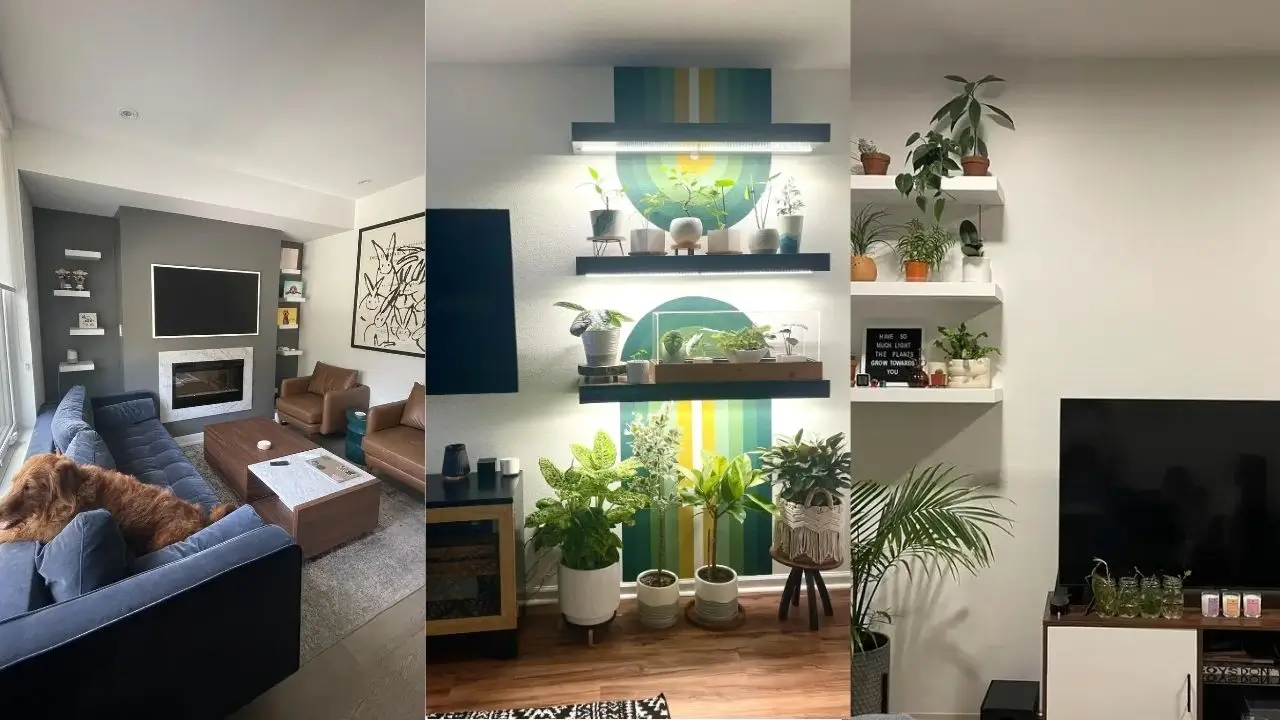
You know that awkward feeling when you stare at blank living room walls and think “something needs to go here, but what?” Same. Built-ins cost a fortune, and drilling a million holes for something you might hate in six months feels like commitment issues waiting to happen.
Here’s where floating shelves swoop in like the hero we didn’t know we needed. They give your walls purpose, look intentional AF, and won’t make you cry when you check your bank account.
I’ve pulled together 15 real-life examples from actual homes (not those annoyingly perfect showroom photos where nobody actually lives). These people figured out how to make floating shelves work without looking like they overthought it or raided a HomeGoods during a clearance sale blackout.
You’ll find styling tricks, shelf setups that play nice with fireplaces and TVs, and solutions for those weird architectural quirks that make you question the original builder’s life choices.
Flanking Built-In Style Shelves Around Stone Fireplace
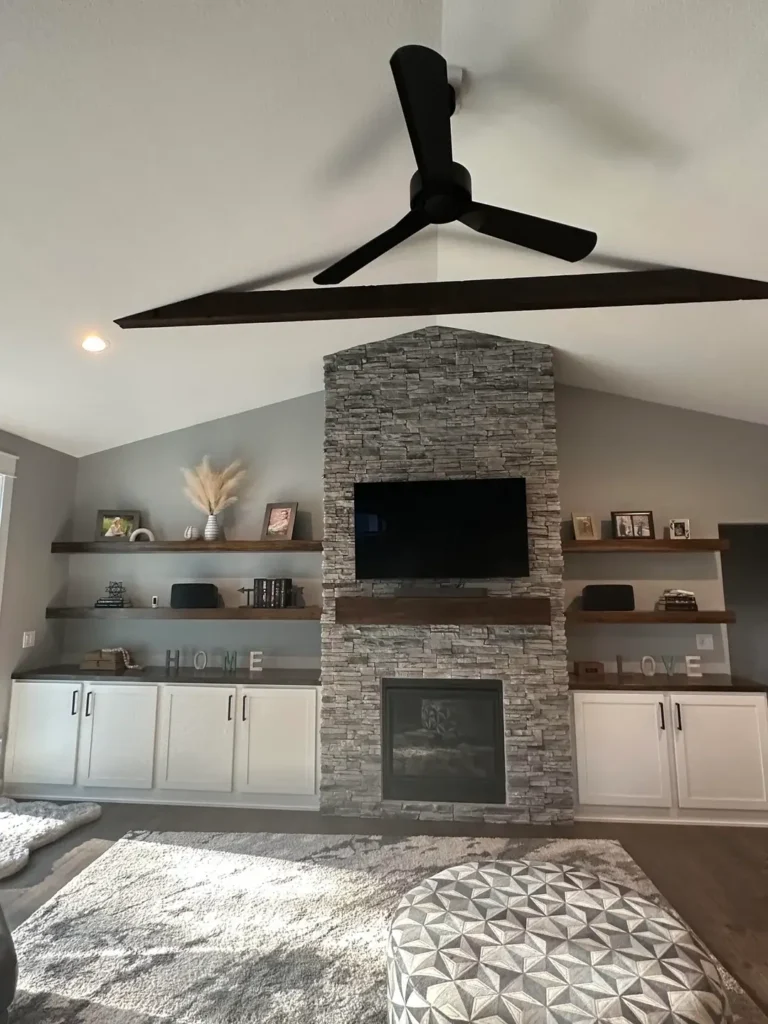
This setup turns a basic fireplace wall into something that screams custom without the eye-watering price tag. The walnut-toned floating shelves create perfect symmetry on both sides of that stacked stone chimney.
These shelves work with the existing white cabinetry below, which is smart because you get storage that actually stores stuff while keeping the pretty things at eye level. The gray walls give enough contrast to make those wood shelves pop without fighting with the stone texture.
Notice how the items vary in height? Pampas grass in a vase, framed photos, small decorative bits, and books laid flat. This height variation is what keeps your eye moving instead of getting bored.
The spacing between upper and lower shelves gives everything room to breathe. Cram them too close together and it looks like a cluttered mess. This distance lets each shelf shine while still feeling connected to the whole wall situation.
Pro tip: If you’ve got a fireplace wall, measure carefully before drilling anything. Your shelves should align with the fireplace edges or stone, not randomly float wherever. That alignment is what separates “I meant to do that” from “I eyeballed it and hoped for the best.”
Simple Corner Shelves in a Soft Neutral Space
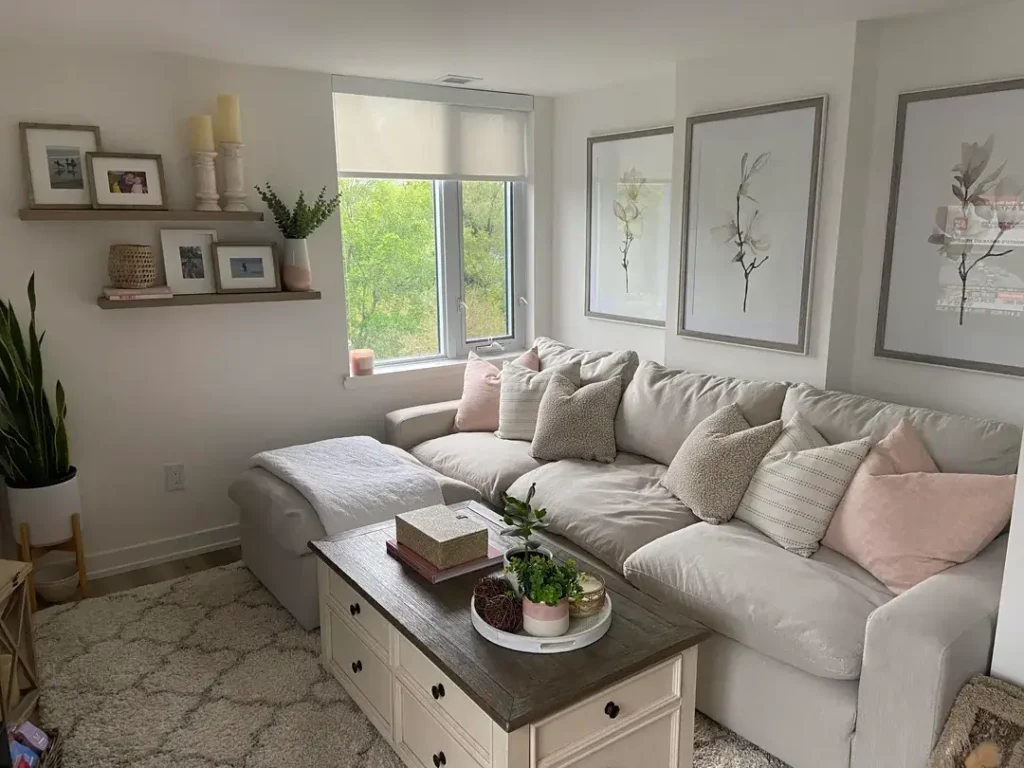
Corner walls get ignored more than middle children at family gatherings, but two modest floating shelves completely change that dynamic here. The light wood finish keeps everything feeling airy against the soft gray and white vibe.
Placing these shelves near the window was genius. Natural light hits the displayed items all day long, making even basic stuff like picture frames and a woven basket look intentional. The mix of framed photos, small plants, and a candle holder creates variety without crossing into clutter territory.
What makes this work is restraint. Each shelf holds four or five items max, with clear space between them. Your eye can actually rest on individual pieces instead of scanning a hot mess. The botanical prints above tie into the greenery without being matchy-matchy (which would be weird).
For corner arrangements: Keep your shelves relatively short (three to four feet works best). The corner becomes your focal point, and the shelves enhance it instead of trying to take over the entire room like an aggressive house guest.
Dark Accent Wall with Minimalist White Floating Shelves
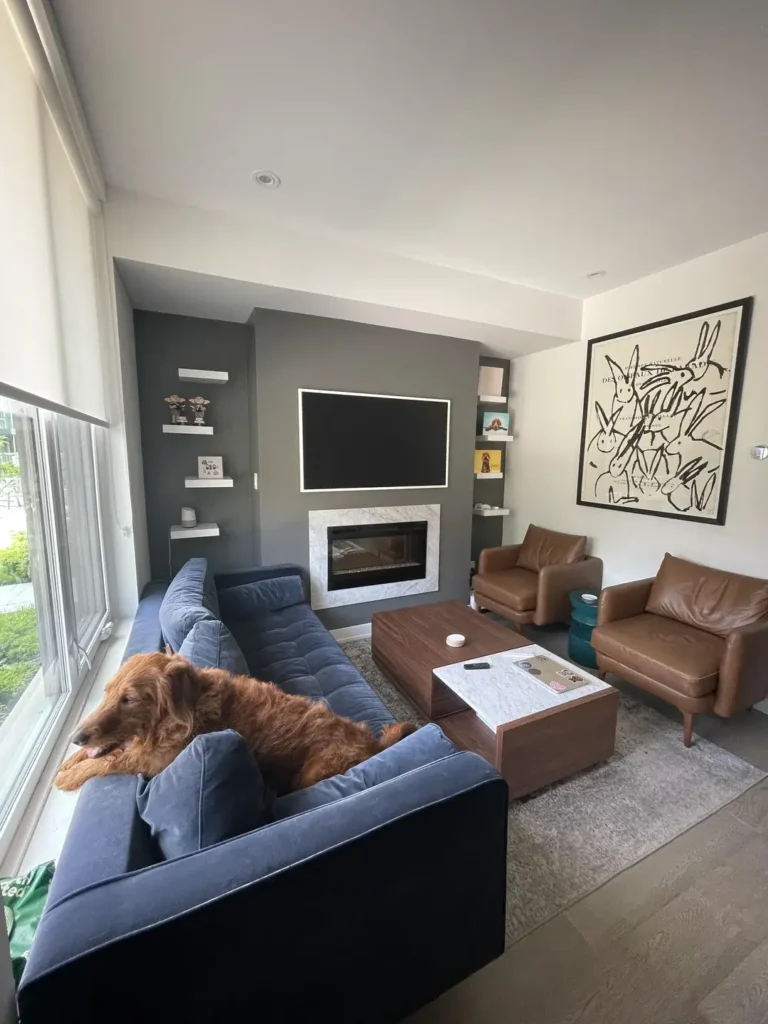
The charcoal accent wall behind this fireplace creates depth that white shelves cut through with clean lines. This is what happens when you pair dark and light correctly. Neither element disappears into the void.
These narrow white shelves sit in the alcoves flanking the marble-surround fireplace, and the placement feels natural because the architecture already created those recessed spaces. The shelves follow the vertical lines instead of fighting against them. Small white vases, picture frames, and minimal decor keep the modern aesthetic without adding visual weight.
The key detail? Scale. These shelves are thin (probably six inches deep max) because the alcoves are shallow. Trying to cram chunky shelves into tight spaces makes everything look forced and uncomfortable.
The combo of navy sectional, brown leather chairs, and that bold artwork keeps the room from feeling sterile despite the minimal shelf styling. You don’t need to overload floating shelves when the rest of your room already has personality.
Also Read: 18 Living Room Decor Ideas That Actually Work in Real Homes
Holiday-Ready Floating Shelves with Dark Wood Finish
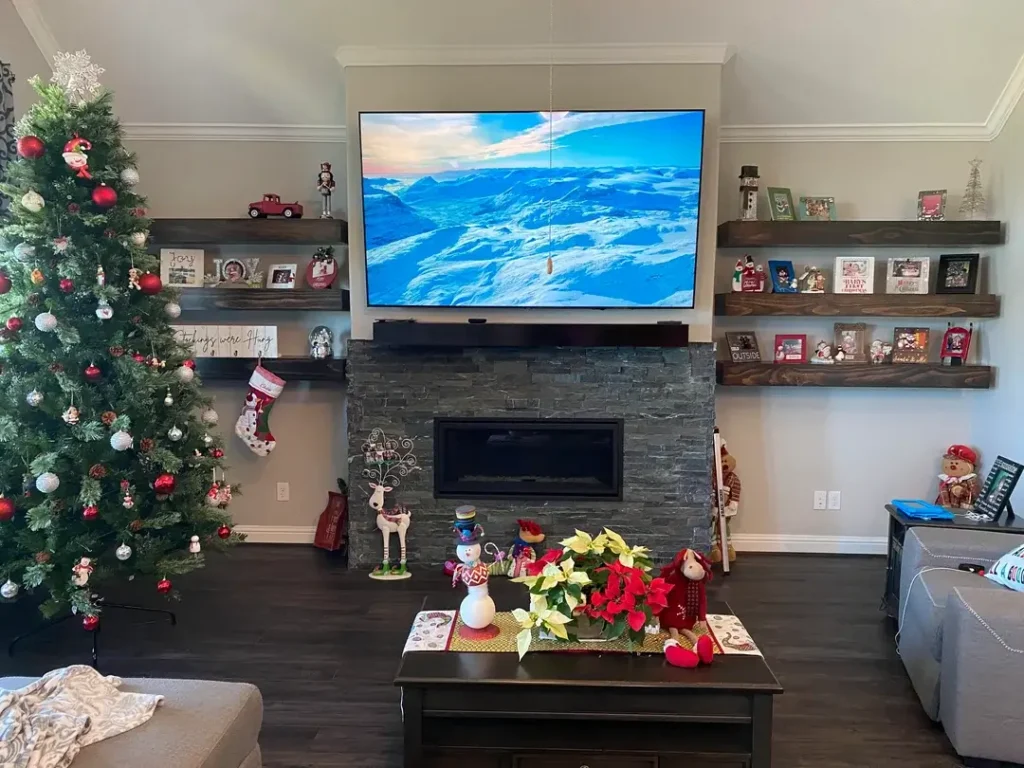
Seasonal decorating is the ultimate test of whether your shelves actually work. These dark walnut shelves handle Christmas decor without looking like a department store threw up on your wall.
These shelves flank a stone fireplace, and you can see how the dark wood matches the floor while contrasting with light walls. During the holidays, the shelves hold framed photos mixed with seasonal items (wooden signs, small decorative pieces, festive figures). The arrangement changes throughout the year, but the shelves provide consistent structure.
The spacing matters big time. Three shelves on each side at regular intervals create a grid your eye can follow. Even when the decor gets busy during holidays, that underlying structure prevents total chaos. Notice how some shelves hold more items than others? That variation prevents the monotony of perfectly symmetrical styling.
Planning to change decor seasonally? Choose shelf spacing that accommodates taller items. Nothing sucks more than realizing your favorite vase doesn’t fit because you mounted shelves too close together and now you’ve got commitment regret.
Backlit Floating Shelves with Colorful Art Backdrop
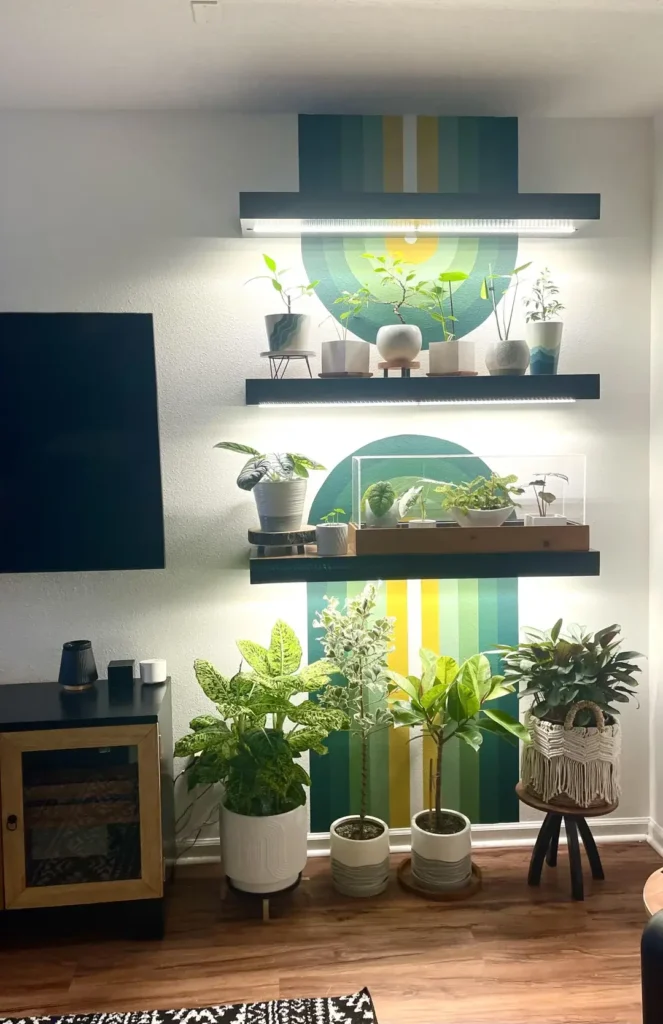
This setup takes floating shelves beyond basic storage by adding integrated lighting underneath each shelf. The LED strips create a gallery vibe that makes displayed plants and pottery look intentional even at night.
The geometric pattern behind the shelves uses teal, yellow, and green tones that complement the black shelving without overwhelming it. The pattern gives your eye something interesting to follow while the shelves stay clean and minimal. Each shelf holds potted plants in white ceramic containers, small decorative objects, and what looks like a propagation station for plant cuttings.
The lighting transforms this from wall storage to a living art installation. During the day, the colorful backdrop does the heavy lifting. At night, the backlit shelves become the star. That dual functionality means you get visual interest 24/7 instead of shelves that disappear when the sun goes down.
Want to try this? Plan your lighting before you mount the shelves. Running power afterwards is possible but super annoying. Battery-operated LED strips work if you’re cool with replacing batteries, but hardwired options give you consistent brightness without maintenance headaches.
Asymmetric Floating Shelves on Tall Vaulted Wall
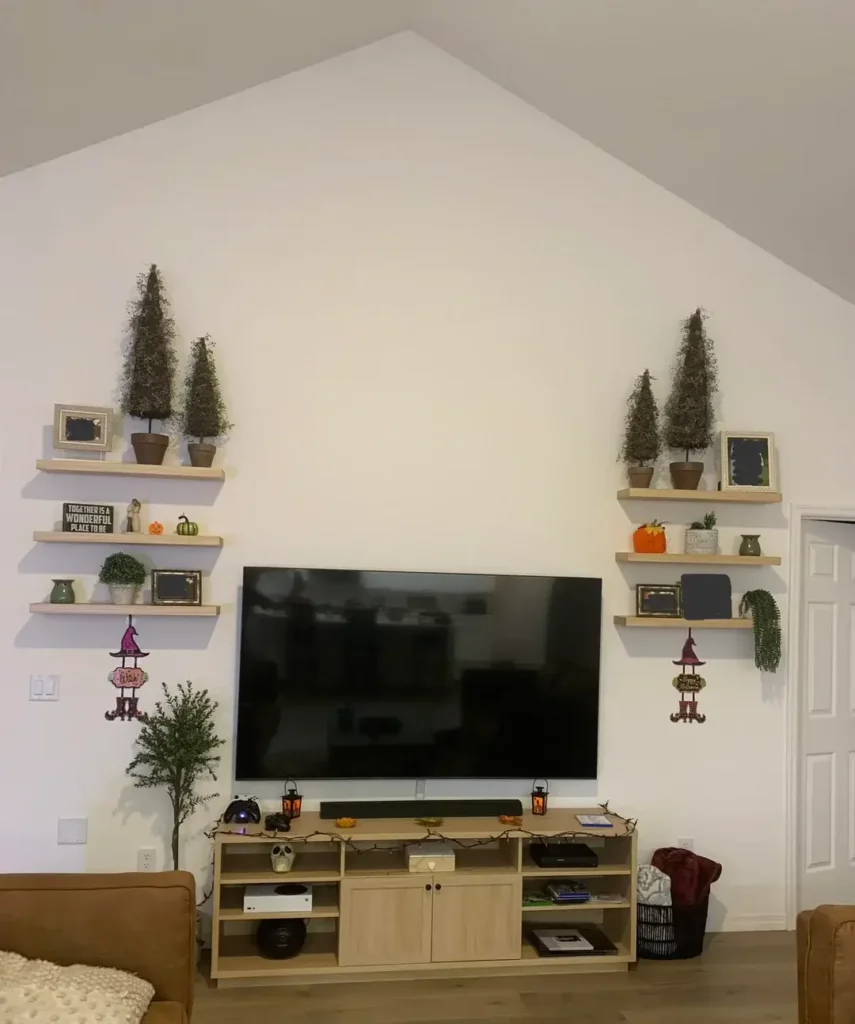
Not every room has standard eight-foot ceilings, and this vaulted space proves floating shelves can handle vertical challenges. The light wood shelves arranged in an asymmetric pattern follow the roofline instead of fighting against it.
The shelves stagger at different heights, with shorter shelves flanking the TV and taller placements following the wall’s angle upward. The mix of small potted trees, decorative birdhouses, string lights, and seasonal items gives the arrangement a playful cottage vibe. Notice how the shelves end before reaching the ceiling peak? Going all the way up would make the wall feel overly busy.
The natural wood console below anchors everything and provides closed storage for stuff that doesn’t need public display. This combo of open shelving and closed storage keeps the room functional without sacrificing decorative impact.
Working with vaulted or angled ceilings? Embrace asymmetry. Trying to force perfect symmetry on walls that aren’t symmetrical just highlights the mismatch. Let the architecture guide your shelf placement instead of imposing a rigid grid that fights the space.
Also Read: 15 Small Space Living Room Ideas Ideas That Actually Work in Tight Spaces
Minimal Gallery Wall Integration with Natural Wood Shelves
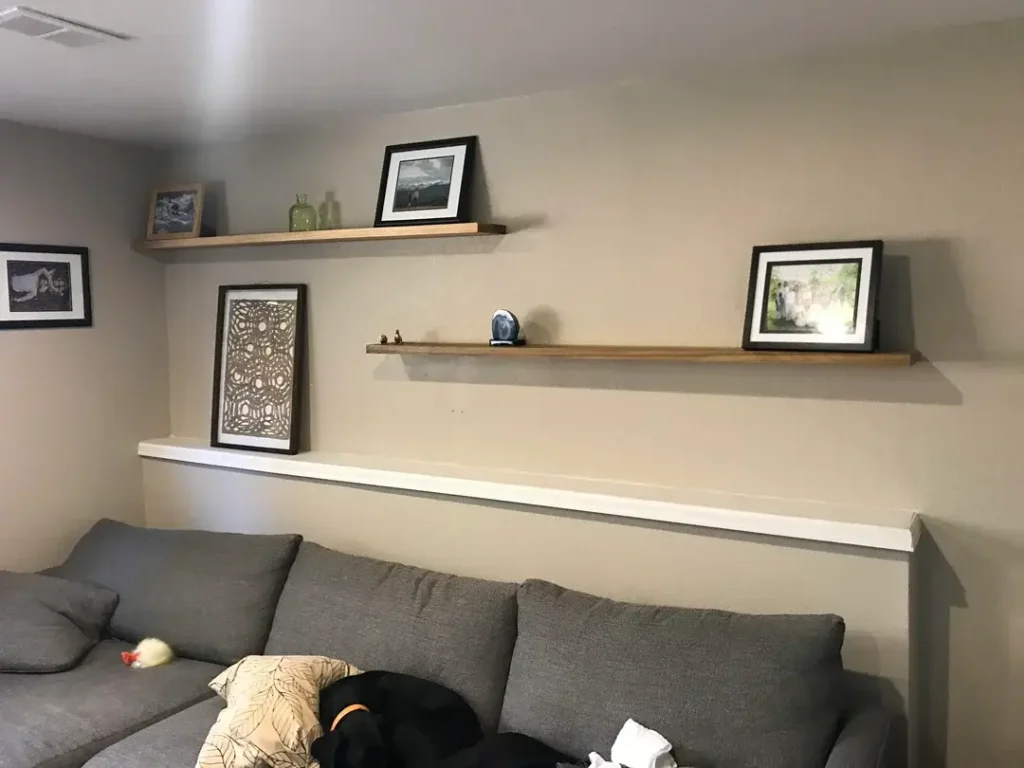
These light wood floating shelves blend seamlessly with a gallery wall of black-framed prints, creating layers of visual interest without obvious boundaries between art and shelving.
Three shelves sit at irregular intervals that correspond to the spacing of wall-mounted frames. The top shelf holds a large framed print propped casually against the wall along with small decorative objects and a vase. The middle and bottom shelves continue the same approach with a mix of leaning frames and freestanding decor. This relaxed styling makes the shelves feel collected over time rather than designed in one frantic IKEA-fueled afternoon.
The neutral color palette (grays, whites, blacks, and warm wood tones) lets you play with arrangement without worrying about color clashes. When your base palette stays this restrained, you can move items around frequently without disrupting the overall aesthetic.
For gallery walls with integrated shelves: Start with the largest frames first and fill in around them. The shelves should support the gallery wall concept, not compete with it for attention. Think of them as horizontal breaks in the vertical arrangement of frames.
Light Wood Shelves Above Dark Leather Sofa
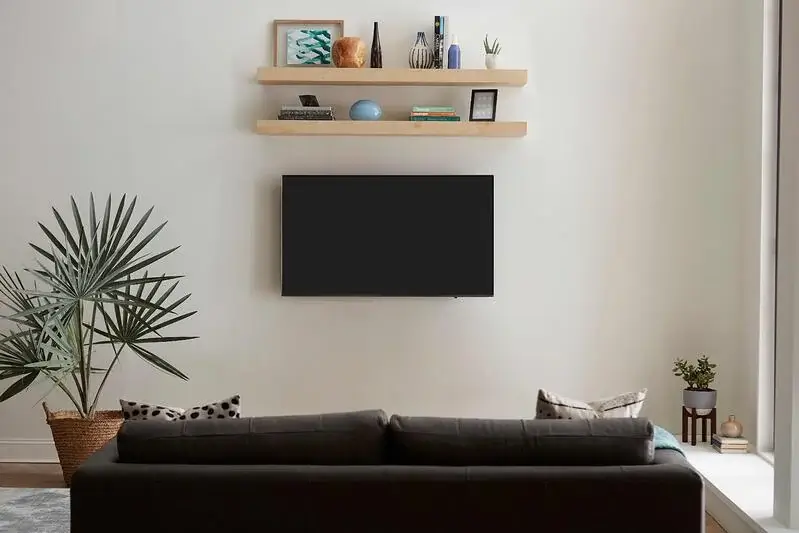
The contrast between chunky light wood floating shelves and a charcoal gray sectional creates clear visual definition in this space. Two simple shelves positioned above the sofa hold a carefully curated collection without overwhelming the seating area.
The styling stays minimal with decorative pieces, books, and small plants spaced with plenty of room between each item. The long horizontal lines of the shelves echo the sofa lines below, creating visual harmony between the two elements. The botanical prints flanking the shelves add vertical interest that balances the strong horizontal emphasis.
This demonstrates an important principle: your floating shelves don’t need to be packed with stuff to justify existing. The empty space does as much work as the objects themselves by giving your eye places to rest. That negative space makes the items you do display feel more important.
Mounting shelves above a sofa? Position them high enough that people won’t bonk their heads when sitting or standing, but low enough that you can actually reach items without a stepladder. Eighteen to twenty-four inches above the sofa back usually works perfectly.
Hex-Tile Fireplace with Built-In Shelf Alcove
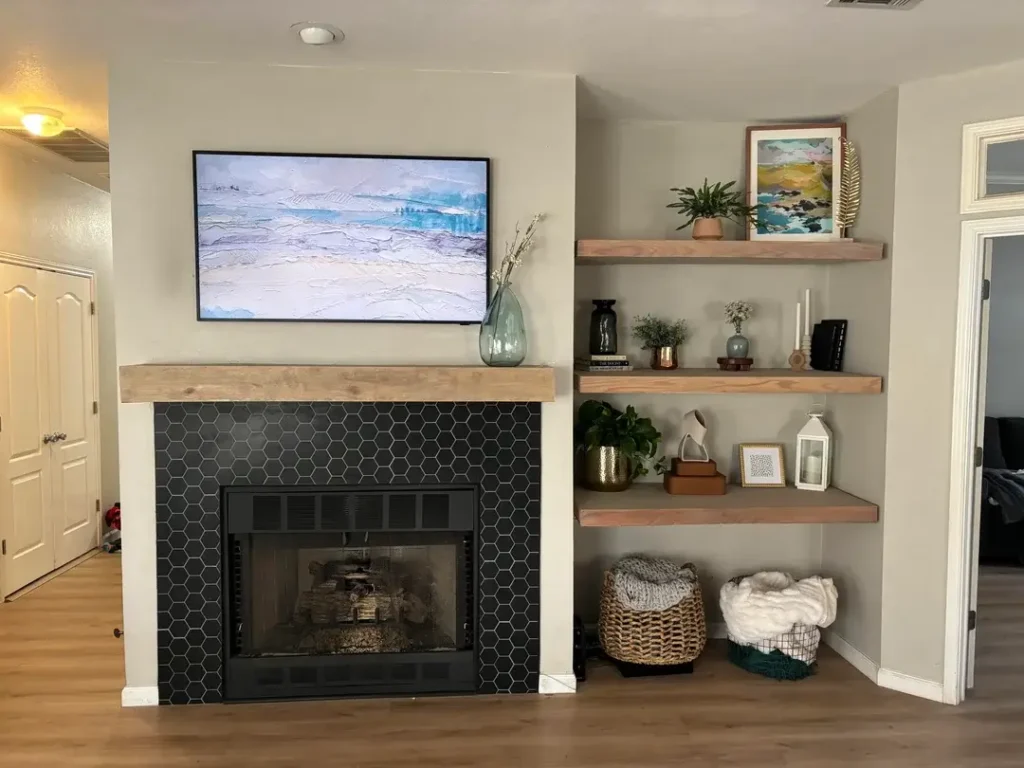
The built-in alcove next to this black hexagonal tile fireplace was practically begging for floating shelves, and these three natural wood shelves answer that call perfectly. The warm wood contrasts beautifully with matte black tile and soft gray-green walls.
The display graduates from top to bottom: art and small plants on top, candles and decorative objects in the middle, and practical woven baskets on the bottom shelf for actual storage. This top-to-bottom transition from purely decorative to functional makes sense both visually and practically. The largest items sit at the bottom where they’re easier to access and less likely to feel top-heavy.
The watercolor art mounted above the fireplace picks up blue tones scattered throughout the shelving display, creating a cohesive color story. The live plants add life and movement that static decor alone can’t provide.
Styling shelves in a built-in alcove? Remember that the architecture already created a frame around your display. You don’t need to fight for attention because the space itself does half the work. Keep your styling cohesive and let the architectural detail shine.
Also Read: Small Farmhouse Living Room Ideas: 15 Beautiful Ways to Use Small Space
Black Floating Shelves with Eclectic Personal Collections
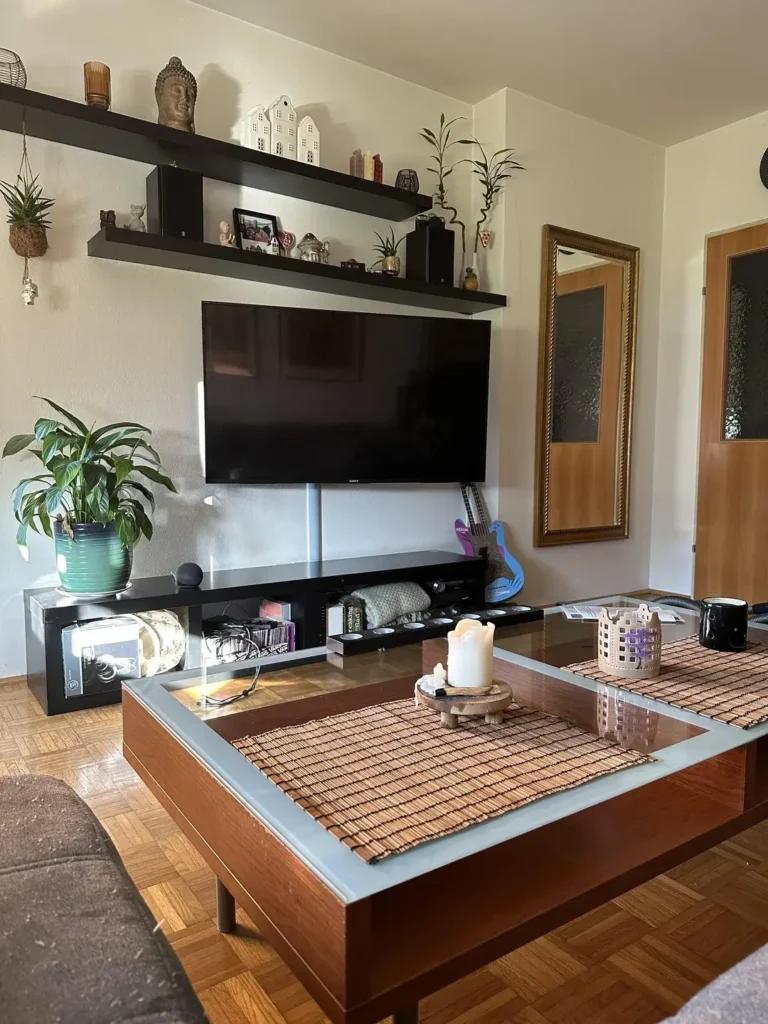
Black shelves make a bold statement, especially when loaded with personality like these. Two shelves positioned above the TV hold an eclectic mix of items that clearly mean something to whoever lives here.
These shelves pack in small figurines, air plants, photo frames, and decorative pieces that create a collected, personal vibe. The black shelves recede against the white wall, letting the colorful and varied objects take center stage. The Buddha statue, ceramic houses, and trailing plants give the display an international, well-traveled feeling.
This approach won’t work for everyone. It requires confidence to display this many small objects without apology. But for people whose living rooms should reflect actual interests rather than looking like a West Elm catalog, this level of personal curation makes a space feel lived-in and authentic. The large mirror on the adjacent wall expands perceived space and reflects some of the shelf display back into the room.
Going for an eclectic, maximalist shelf display? Commit fully. Don’t apologize for it or try to rein it in halfway. The power of this approach comes from confident curation.
Full Wall of White Floating Shelves for Book Display
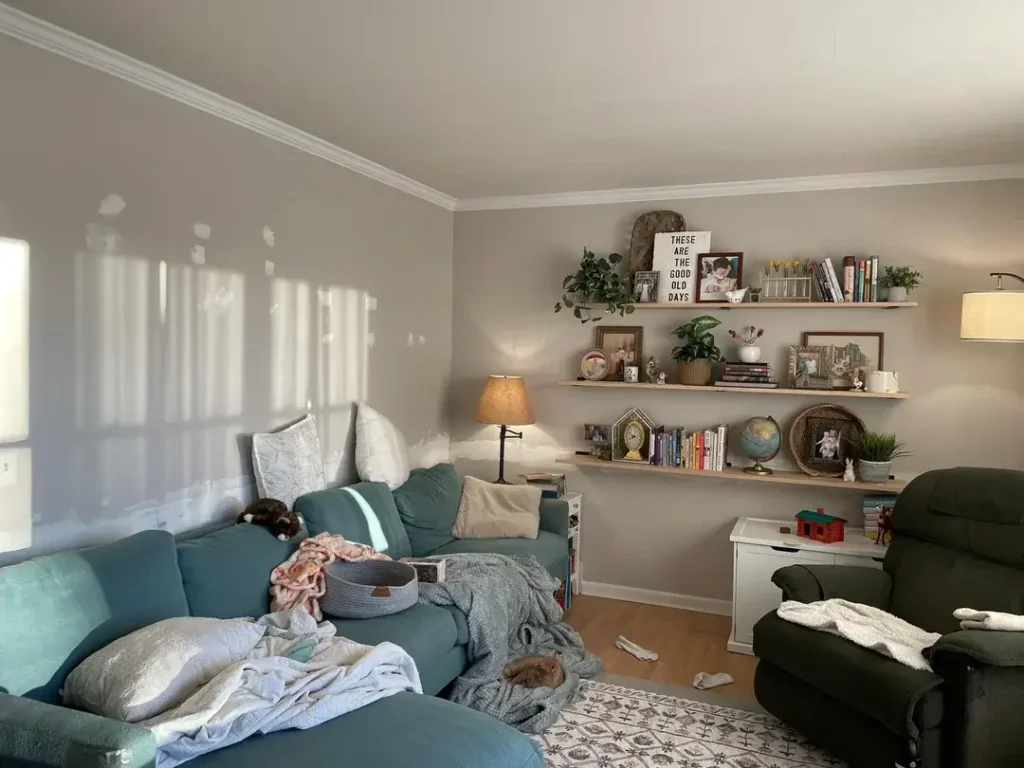
When you need actual storage for a book collection, floating shelves can create a library wall without the expense of custom built-ins. These white shelves spanning an entire corner wall transform what could be empty space into functional, attractive storage.
These shelves sit where natural light from the window illuminates book spines and decorative items throughout the day. The shelves are long enough to hold substantial collections while remaining visually light because of the white finish. Small plants, framed photos, and decorative objects break up rows of books, preventing that packed-library feeling. The soft gray walls and teal sectional create a calm backdrop that doesn’t compete with the visual activity of the shelves.
The “These Are The Good Old Days” lightbox sign adds a personal touch that makes the wall feel like more than just book storage. This kind of meaningful text element can anchor a display and give it personality.
Planning a full wall of shelves? Invest in a good stud finder and proper mounting hardware. Book weight adds up insanely fast, and you need those shelves securely attached. Don’t cut corners on installation just to save an hour of work. Trust me on this.
Corner Plant Sanctuary with White Floating Shelves
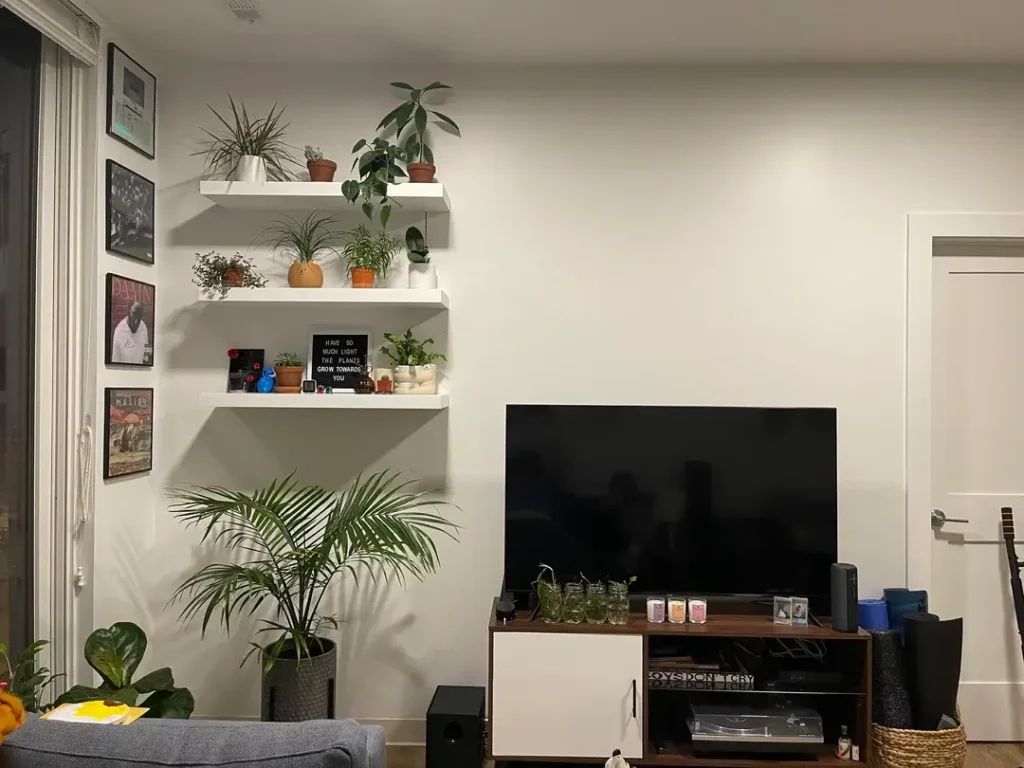
These crisp white floating shelves transform an awkward corner into a dedicated plant display area that feels like an indoor garden. Three shelves mounted in the corner alcove create tiered levels for plants of different sizes and growth habits.
The shelves hold almost exclusively potted plants in terracotta and white ceramic containers, with just a few small decorative items and a letter board for variety. The plants range from trailing varieties that cascade over shelf edges to upright specimens that add vertical interest. The mix of plant types creates texture and movement that keeps the display from feeling static.
The framed botanical and music posters on the adjacent wall connect thematically with the plant focus, creating a cohesive corner vignette. The large palm on the floor anchors the vertical arrangement and makes the transition from floor to shelves feel natural rather than abrupt.
Creating a plant-focused shelf display? Consider light exposure carefully. These shelves sit near a bright window, which is essential for plant health. Placing plant shelves in a dim corner just because you have empty wall space is setting yourself up for disappointment and dying greenery. Nobody wants that sad brown leaf situation.
Color-Blocked Book Shelves on Stairway Wall
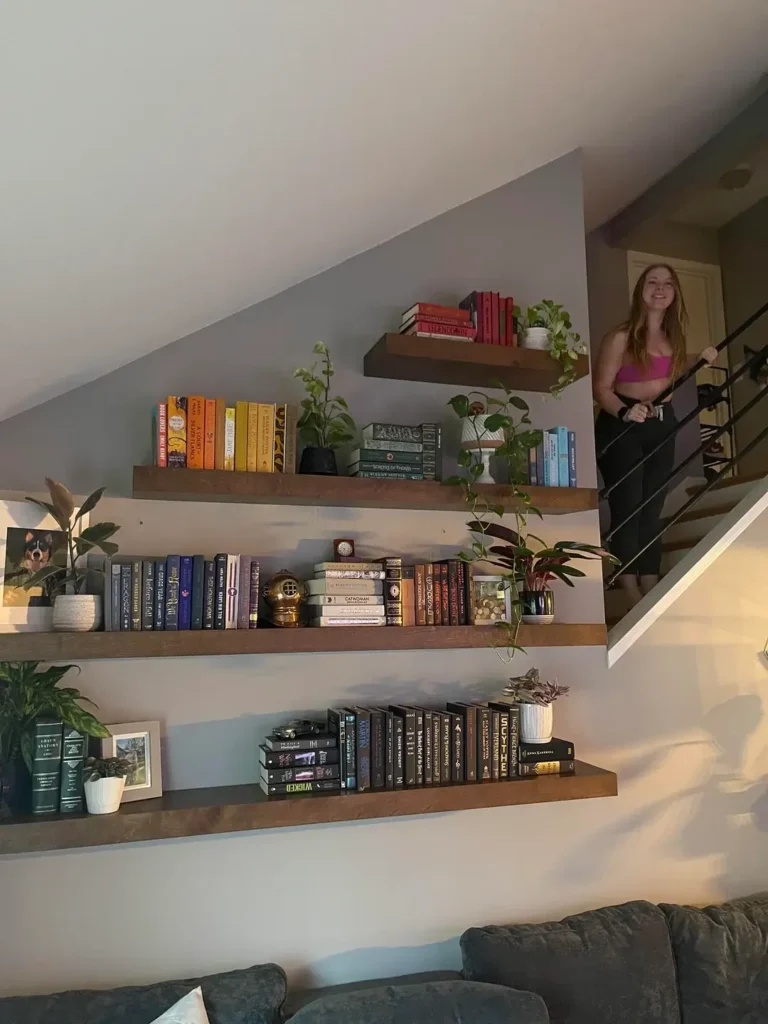
Floating shelves on a stairway wall require different thinking than standard room installations because of the angle and sight lines. These walnut-toned shelves follow the stairs’ diagonal line while creating a striking book display organized by spine color.
Books arranged in color-blocked sections (yellow and orange spines on one shelf, blue spines on another, dark spines elsewhere) create visual rhythm as you move up or down the stairs. Small potted plants interspersed between book stacks add organic shapes that contrast with rectangular book forms. The color-coding serves both aesthetic and practical purposes, making it easier to locate specific books while creating a cohesive display.
The white walls provide clean contrast that makes both the dark wood shelves and colorful book spines stand out. The black stairway railing creates interesting visual frames and adds another layer of architectural interest without cluttering the space.
Installing shelves along a stairway? Make sure you position them high enough that you won’t smack your head walking up or down. This seems obvious, but it’s surprisingly easy to misjudge when measuring from a different level. Test the placement before drilling any holes. Your forehead will thank you.
Earth-Toned Gallery Shelves with Botanical Art
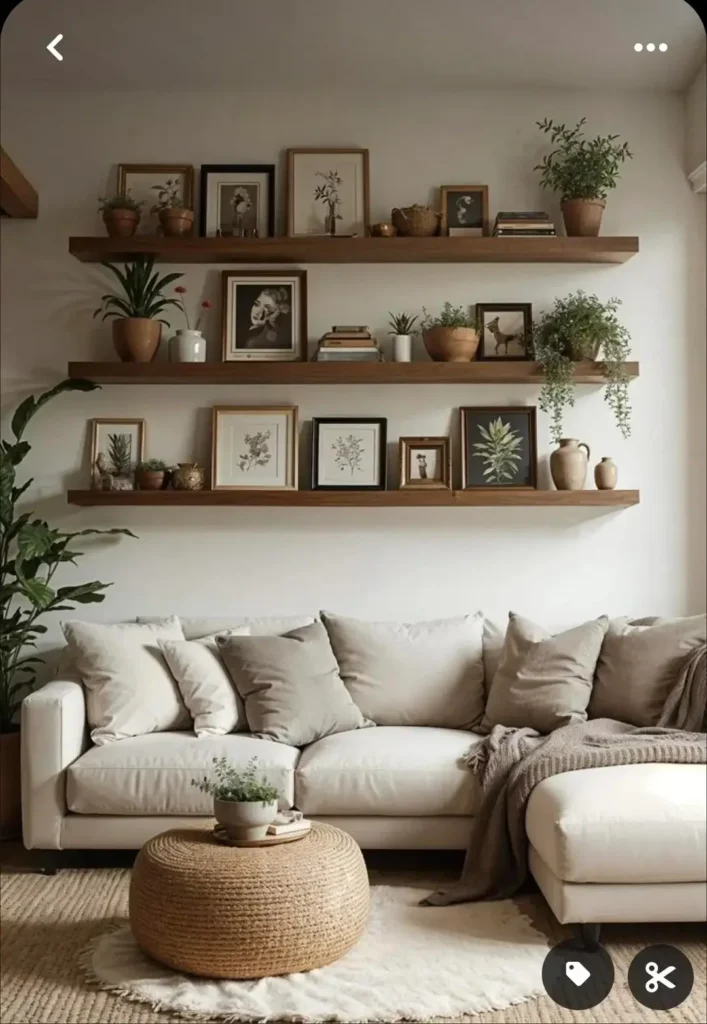
These warm wood floating shelves create a gallery display that feels organic and collected rather than perfectly staged. Three shelves mounted above a neutral sectional hold a carefully balanced mix of framed botanical prints, terracotta pottery, plants, and natural elements.
The commitment to an earth-toned palette (wood, terracotta, cream, and sage green) creates harmony across all three shelves. The framed pressed botanicals and vintage-style prints provide the largest visual elements on each shelf, with smaller items clustered around them. Trailing plants add movement and soften the straight shelf lines. The arrangement has clear structure without feeling rigid. Items group intentionally but with natural variation.
The large monstera plant barely visible at the edge creates a base for the entire composition and connects the shelving display to the rest of the room. The woven pouf ottoman on the coffee table echoes the natural material aesthetic established by the shelves.
Want this collected, organic look? Shop secondhand for vintage frames and pottery. New items often look too perfect and uniform. The slight variations in vintage pieces create visual interest that mass-produced decor can’t match.
Open-Back Floating Shelf Unit with Exposed Framework
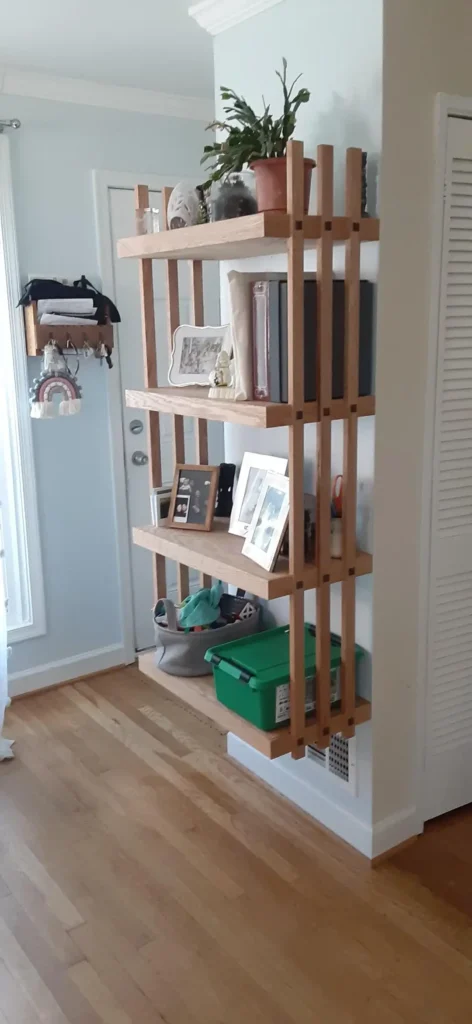
This floor-to-ceiling floating shelf unit breaks from traditional wall-mounted single shelves by creating a freestanding framework that appears to float against the wall. The natural wood construction with exposed vertical supports gives it an architectural quality that commands attention.
This unit sits in what looks like a corner or narrow wall space, maximizing vertical storage in a compact footprint. The open-back design with visible vertical slats keeps the unit from feeling heavy despite its floor-to-ceiling height. Items displayed include framed photos, potted plants with trailing vines, decorative objects, and practical storage bins on the bottom shelf. The exposed framework becomes part of the design rather than something to hide.
The unit works particularly well for renters or people who don’t want to drill multiple holes in their walls, since the entire structure likely attaches at just a few anchor points. The light wood finish keeps the large piece from overwhelming the room, and the open construction lets wall color show through, maintaining visual lightness.
This style bridges the gap between traditional floating shelves and bookcase-style storage. You get the visual lightness of floating shelves with the structural integrity of a floor-supported unit. For spaces where you need serious storage but want to maintain an airy feeling, this hybrid approach solves multiple problems at once.
How to Actually Make This Work in Your Space
The examples above show varied approaches to floating shelves, but certain principles apply across all of them. Here’s what actually matters when you’re ready to implement floating shelves in your own living room.
Installation Considerations That Matter
Floating shelves only work if you mount them properly. Find studs whenever possible. Drywall anchors have weight limits that books, plants, and pottery will exceed faster than you think. If your wall layout makes stud placement difficult, consider using heavy-duty shelf brackets rated for significant loads. The visible hardware might bug you initially, but sagging or collapsed shelves will bug you way more.
Shelf depth matters more than you think. Shelves that are too shallow can’t hold standard books or decor items securely. Shelves that are too deep protrude awkwardly into the room and collect dust at the back where you can’t easily reach.
For living room applications, eight to twelve inches deep works for most purposes. Go shallower only if space is extremely limited or you’re only displaying small, lightweight items.
Height placement affects both function and aesthetics. Shelves mounted too high become decorative only. You won’t actually use them for anything you need to access regularly. Shelves too low make the room feel crowded and create head-bonking hazards.
Good rule of thumb: The lowest shelf should sit at least twelve inches above any furniture below it, and the highest shelf should be reachable without a stepladder if you plan to change the display seasonally.
Material Choices Create Different Moods
The examples above show mostly wood shelves because wood adds warmth to living spaces and works with varied decor styles. But glass shelves create an ultra-minimal look, metal shelves skew industrial, and painted shelves can match your trim or wall color exactly.
Choose based on your room’s existing aesthetic rather than what’s currently trending in home magazines. Trends change. Your room needs to work for you long-term.
Display Techniques That Create Visual Impact
Looking at these fifteen examples reveals patterns in what makes floating shelf displays successful. Here are the approaches that show up repeatedly in spaces that actually work.
The Rule of Three Creates Stability
Groupings of three items create visual balance that feels satisfying without being obvious. This doesn’t mean every shelf needs exactly three objects, but within a larger display, items naturally cluster in threes more often than not.
A tall vase, a medium-sized frame, and a small plant form a complete visual unit. A stack of three books creates better vertical interest than two or four.
Height Variation Maintains Engagement
Shelves lined with items of the same height look like retail displays, not curated home decor. Your eye needs variety to stay engaged.
Tall candlesticks next to short bowls, stacked books next to single decorative objects. That height variation creates visual rhythm that draws the eye across the entire display.
Leaning Creates Casual Elegance
Several of these examples show framed art leaning against the wall rather than hanging with hardware. This casual approach makes spaces feel less formal and gives you flexibility to move things around without leaving nail holes.
It also solves the problem of hanging lightweight frames on smooth surfaces where Command strips might fail. Just make sure leaning frames stay stable and won’t slide off when someone walks heavily nearby.
Strategic Editing Amplifies Impact
The shelves that work best in these examples show restraint. They’re not packed corner to corner with objects fighting for attention. That negative space makes the items you do display feel important rather than cramped.
If you find yourself filling every square inch of shelf space, remove about a third of what you put up. The remaining items will have substantially more visual impact.
Quick Reference Guide
Minimal Style (2-4 items per shelf)
Best for modern, Scandinavian, or small spaces. Low maintenance with quick dusting. Budget-friendly.
Collected Style (mixed objects, personal items)
Best for eclectic, bohemian, or traditional spaces. Medium maintenance with more surfaces to clean. Moderate budget impact.
Plant-Focused Display
Best for spaces with good natural light. High maintenance with watering and plant care. Moderate budget impact.
Book Storage Wall
Best for dedicated reading spaces or home offices. Medium maintenance with occasional reorganizing. Higher budget impact.
Symmetrical Flanking Shelves
Best for fireplace walls or TV surrounds. Medium maintenance maintaining balance. Moderate budget impact.
Long-Term Success with Floating Shelves
Installation happens once. Living with your shelves happens every day. These final considerations determine whether your floating shelves stay satisfying or become a source of ongoing frustration.
Plan for Dust Accumulation
Horizontal surfaces collect dust. Multiple horizontal surfaces collect multiple layers of dust that become visible surprisingly quickly.
Before committing to extensive floating shelf installations, honestly assess whether you’ll maintain them. If you rarely dust existing surfaces, adding a dozen more won’t magically motivate you to start. Fewer, larger shelves are easier to maintain than many small ones.
Expect to Rearrange Multiple Times
The first arrangement you create probably won’t be the one you keep. Most people adjust their shelf displays multiple times before finding what actually works for their space and lifestyle.
Budget time for this trial and error rather than treating the initial styling as permanent and unchangeable. It’s totally normal to tweak things.
Seasonal Rotation Prevents Staleness
Several examples show holiday decor, but seasonal rotation doesn’t have to be that literal or elaborate. Swapping out just a few items quarterly keeps your shelves from becoming invisible background elements you stop noticing.
Lighter colors and fresh flowers in spring and summer, richer tones and warm textures in fall and winter. Small changes make a big difference.
Weight Distribution Affects Longevity
Floating shelves should be heavier toward the wall and lighter toward the front edge. This prevents the leverage effect that can gradually pull shelf brackets loose over time.
Stack books and heavier pottery against the wall, place lightweight decorative items and trailing plants toward the front edge. Physics matters here.
Final Thoughts
Floating shelves solve real problems in real living rooms. They add storage without eating floor space. They create display areas without permanent commitment or major renovation. They work with existing furniture rather than requiring a complete room redesign.
These fifteen examples prove that floating shelves living room decor ideas work across different styles, room sizes, and budgets. You don’t need professional installation or expensive materials to create something that genuinely improves your space.
You need proper mounting hardware, thoughtful placement, and the confidence to edit your display until it feels right. Start with one or two shelves, see how you like them, and build from there.
Your walls have potential they’re not currently meeting. Floating shelves might be exactly what closes that gap between empty space and intentional design. Give it a shot and see what happens. Worst case? You’ve got a few extra drill holes to spackle over. Best case? You’ve solved that nagging “my walls feel empty” problem that’s been bugging you for months.
What do you think? Ready to finally do something with those blank walls?