
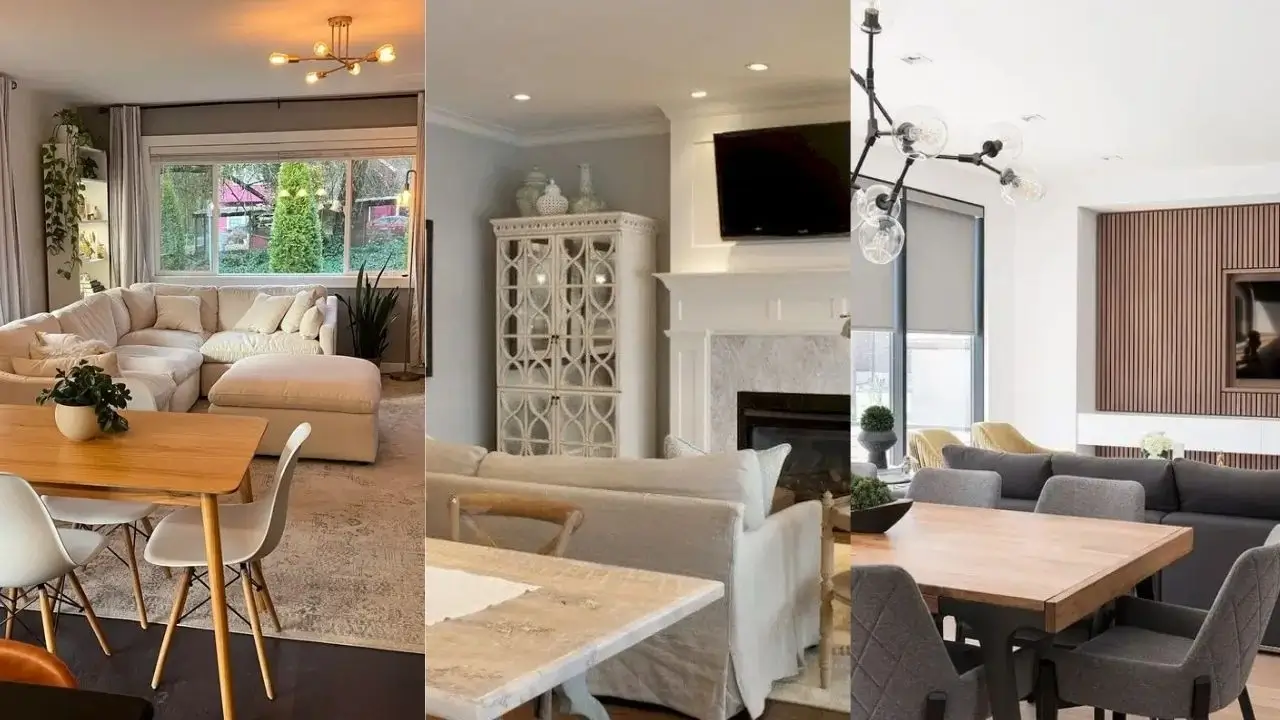
Your furniture arrived yesterday, and now everything sits in the middle of the room while you stand there wondering how people make these combo spaces look effortless. The sofa blocks the dining table, the TV has nowhere logical to go, and you’re starting to think separate rooms were invented for good reason.
I’ve gathered ten real examples from people who figured it out. These aren’t staged photos from furniture catalogs. They’re actual living and dining room combos where someone had to solve the same puzzle you’re facing right now. Each setup shows a different approach worth considering, whether you’re working with a narrow rectangle, an awkward L-shape, or just not much square footage.
Scandinavian Simplicity with Strategic Furniture Placement
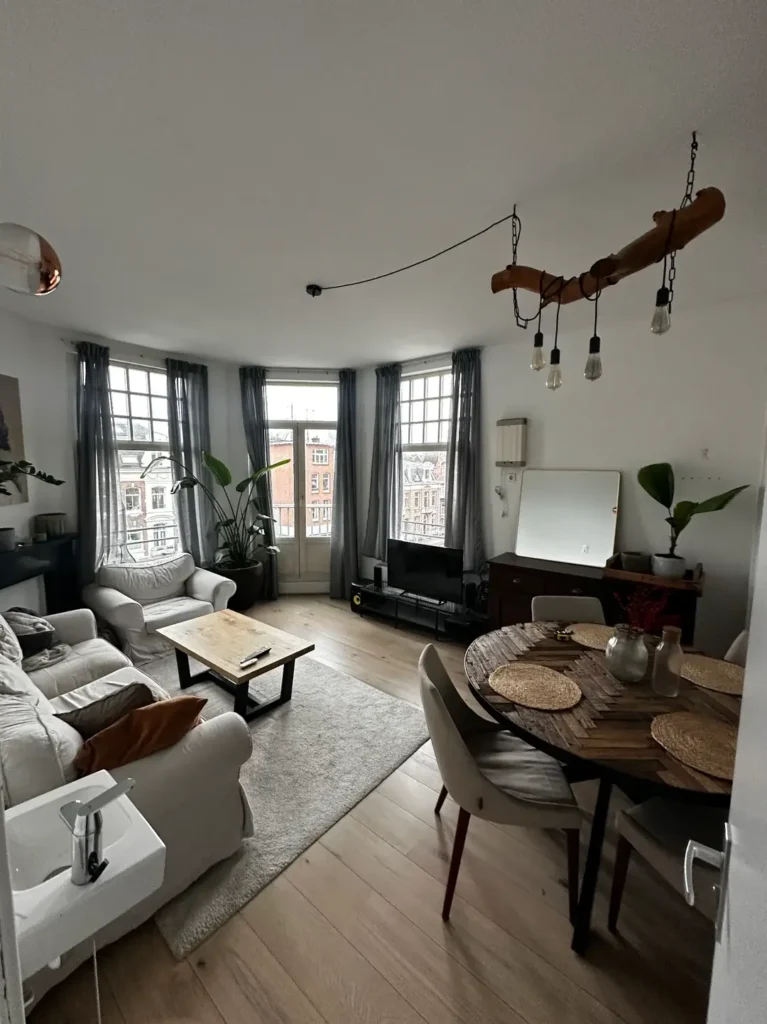
The pale wood floors set the foundation here, but what makes this work is how nothing fights for attention. Three windows flood the space with natural light, and the furniture respects that advantage instead of blocking it.
r/rattekoe positioned a light gray sectional facing the windows, creating a clear living zone that doesn’t wall off the dining area. The dining table sits to the right with woven placemats that add texture without visual weight. Notice the dark wood finish on both the coffee table and dining table—that repetition creates cohesion even though the pieces serve different functions.
The statement lighting fixture overhead draws your eye up, which is clever in a combo space. When you emphasize vertical elements, the room feels less crowded horizontally. The rustic wooden beam chandelier adds character without taking up floor space, and the plants throughout bring life without cluttering surfaces.
If you want this kind of flow, start with your largest piece of furniture and face it toward your best feature. Then build around that anchor point. Keep your color palette to three main tones, and let natural materials do the decorating work.
Stone Fireplace as a Natural Room Divider
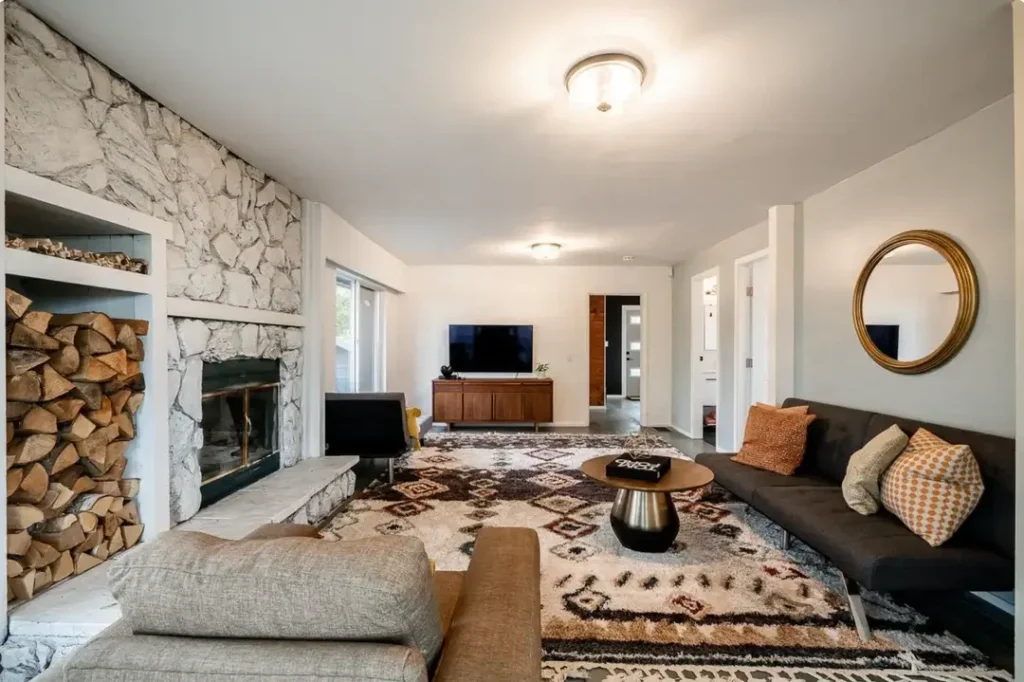
Some architectural features do the heavy lifting for you. This setup proves that a stone fireplace can define separate zones without cutting off sightlines or conversation.
The built-in firewood storage on the left side of the fireplace adds function while emphasizing the vertical line that separates living from dining. r/caroleecious placed a low-profile charcoal sofa parallel to the fireplace, which keeps the living area contained but not closed off. The geometric patterned rug anchors the seating arrangement and visually marks where the living space ends.
What stands out is the furniture scale. Everything sits low and streamlined, which prevents the space from feeling top-heavy. The round coffee table and sculptural side table introduce curves that soften all those straight lines from the fireplace stone and media console.
The dining area gets its own moment with darker walls creating a subtle backdrop. Warm wood cabinetry and a textured rug under the dining space give that zone its own personality while maintaining the overall neutral scheme.
This works because the fireplace acts as a functional wall without actually being one. If you have any architectural feature that naturally divides your space, work with it instead of against it. Place your furniture to respect those natural boundaries.
Cozy Corner Sectional with Integrated Dining
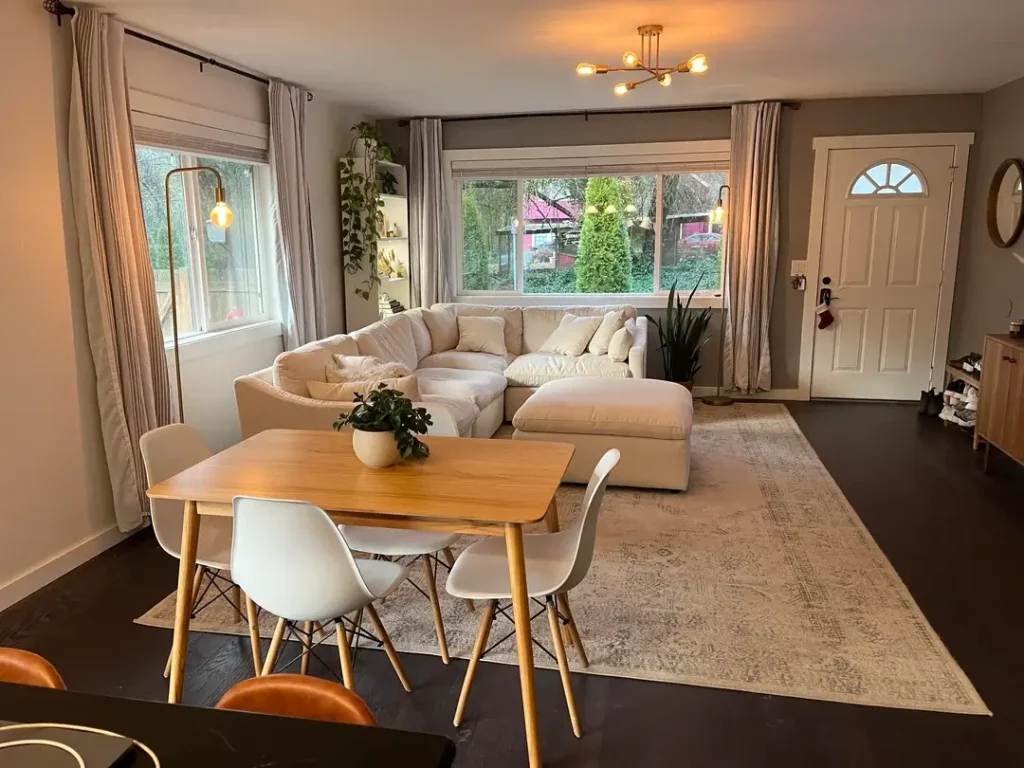
Corners get wasted in most combo spaces, but not here. Pushing a deep sectional into the corner maximizes seating while leaving the center of the room open for movement.
The cream-colored sectional fills the corner completely, and r/Popular-Designer-544 added a matching ottoman that can float or tuck in depending on what’s happening. The light wood dining table sits close enough to feel connected but maintains its own footprint with mid-century modern white chairs that keep things airy.
Gray walls create a sophisticated backdrop that lets the natural wood tones stand out. The brass accents in the pendant lights and circular mirror add warmth without introducing new colors. Plants in white pots continue that clean aesthetic while softening hard edges.
This layout works particularly well for rectangular rooms where you need to preserve a walkway. The sectional doesn’t protrude into the main traffic path, and the dining table placement leaves space to move around it comfortably. The single large rug under both zones unifies the areas while defining the shared living space.
For a similar effect, measure your corner first and find a sectional that fits snugly. Leave at least 36 inches between your dining table and any walls or furniture for chair clearance. One cohesive rug can tie separate functional areas together better than multiple smaller rugs.
Elegant Neutrals with Symmetrical Balance
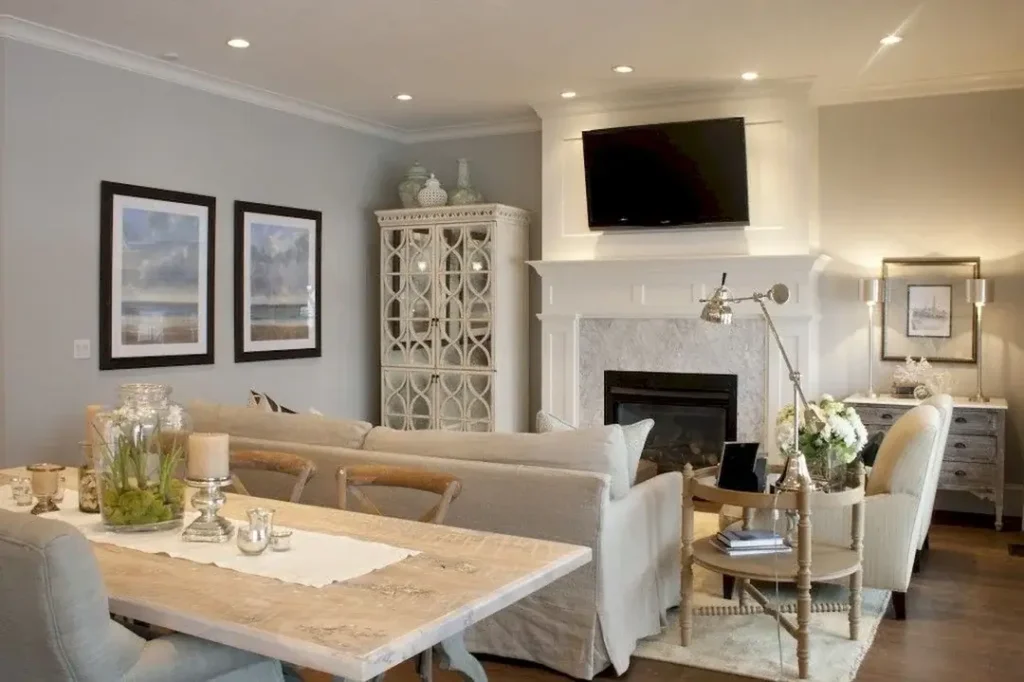
Symmetry brings calm to busy spaces, and this room demonstrates that principle beautifully. Two identical framed prints hang on the left wall, visually balancing the fireplace and media center on the right.
r/myhousedesigns123 chose a traditional approach with matching upholstered chairs flanking a neutral sofa. The weathered wood coffee table introduces rustic texture that prevents the space from feeling too formal. Notice the decorative china cabinet in the corner—it adds vertical interest and storage without overwhelming the room.
The dining table sits perpendicular to the living area with a light-colored runner that echoes the neutral palette. Crown molding and recessed lighting add architectural detail that elevates the entire space. The soft gray walls work with the cream and white furniture to create a monochromatic scheme that feels intentional rather than boring.
What makes this successful is the editing. Each piece of furniture serves a clear purpose, and nothing feels randomly placed. The arrangement creates distinct zones while maintaining visual flow from one area to the next.
If you prefer traditional styling, invest in quality upholstered pieces in neutral tones. Add character through wood finishes and decorative accessories rather than bold colors. Keep your layout symmetrical where possible to create a sense of order.
Modern Statement Wall with Open Layout
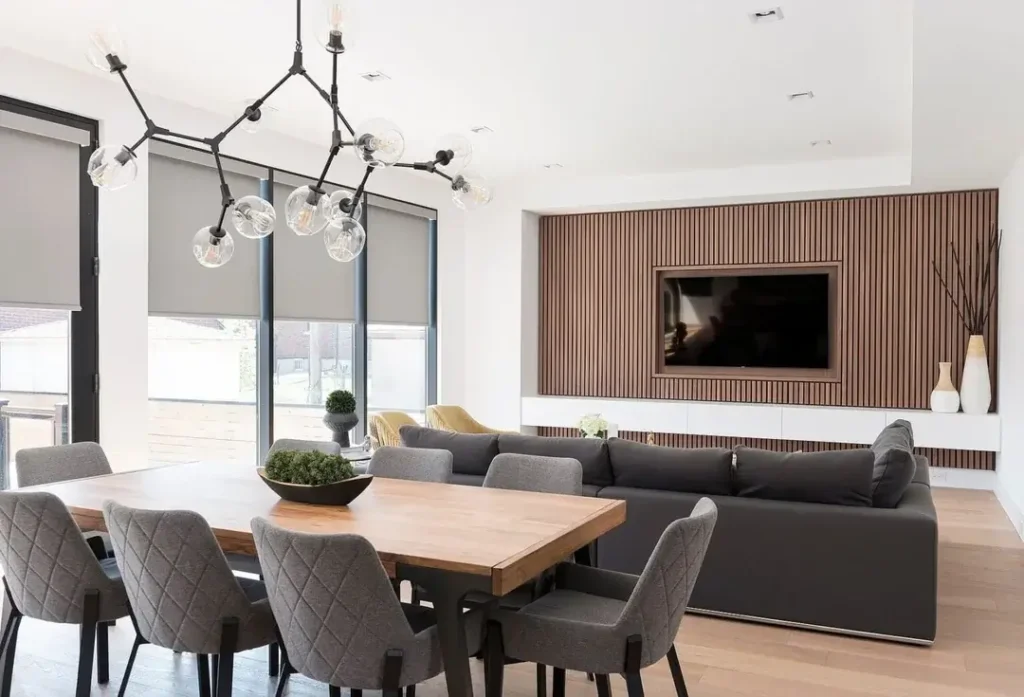
A vertical slat accent wall can transform a generic space into something memorable. The wood slat treatment behind the TV creates a focal point that defines the living area without physical barriers.
The charcoal sectional faces this architectural feature, and r/myhousedesigns123 wisely chose low-profile furniture that doesn’t compete with the dramatic wall treatment. The live-edge dining table brings organic texture that complements the linear precision of the slat wall. Gray upholstered dining chairs with quilted detailing add subtle luxury.
Natural light pours in through floor-to-ceiling windows with roller shades that can control brightness without blocking the view entirely. The modern chandelier above the dining table provides sculptural interest and adequate task lighting for meals.
The color palette stays disciplined—charcoal, natural wood, white, and touches of brass. This restraint lets the materials and textures create visual interest instead of relying on color. The wide-plank flooring grounds everything with warmth.
This layout works for open-concept spaces where you want definition without walls. The accent wall gives the TV a proper home and creates a backdrop that makes the living area feel intentional. The dining zone gets its own statement piece with the live-edge table.
To recreate this look, consider one bold architectural element rather than multiple competing features. Keep furniture silhouettes clean and let materials provide the texture. Make sure your lighting plan addresses both ambient and task needs.
Compact Charm with Multifunctional Pieces
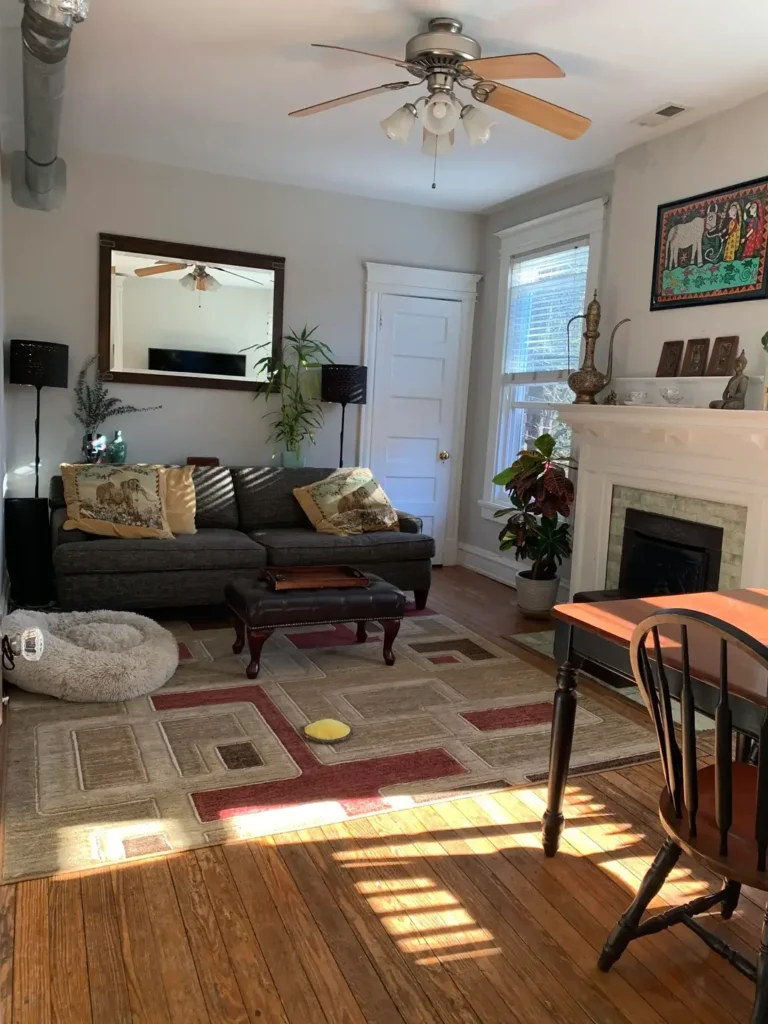
Small spaces demand furniture that works harder. This setup shows how choosing the right scale makes a significant difference in functionality and comfort.
The dark gray sofa includes a chaise extension that provides lounging space without requiring a separate ottoman. r/Exact-Barracuda4853 positioned it to face the fireplace while leaving the center of the room open. The oversized mirror above the mantel reflects light and makes the space feel larger than its actual dimensions.
Hardwood floors with visible grain add warmth, and the area rugs define zones without cutting the floor into disconnected pieces. The dining area sits near the door with a simple wooden table and black chairs that tuck in completely when not in use.
What I appreciate here is the personality. The patterned throw pillows, the decorative items on the mantel, and the floor lamp with a traditional base all add character without cluttering. The ceiling fan addresses practical comfort needs while maintaining the room’s proportions.
This works because every piece was chosen with dimensions in mind. The furniture fits the room rather than dominating it. Traffic flow remains clear, and both functions—living and dining—can happen simultaneously without feeling cramped.
For tight quarters, measure everything twice before buying. Look for furniture with exposed legs that creates visual space underneath. Use mirrors strategically to reflect light and expand sightlines. Choose multifunctional pieces that earn their square footage.
Relaxed Layout with Flexible Furniture Arrangement
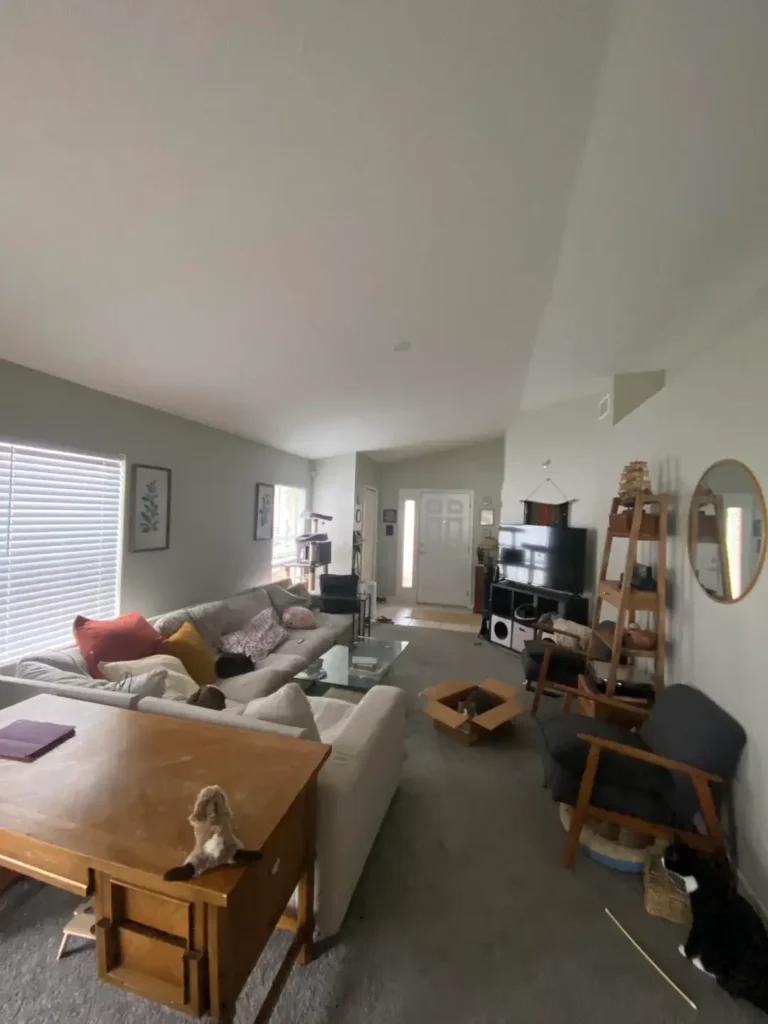
Not every combo space needs rigid structure. This more casual approach shows that comfort and function can coexist without formal zoning.
The gray L-shaped sectional sits at an angle, creating a relaxed living area that doesn’t follow the walls. r/supspace14 added a glass-top coffee table that maintains sightlines across the room. A wooden dining table with simple chairs sits perpendicular, close enough to the living area that someone could easily join both conversations.
The ladder shelf in the corner provides vertical storage without requiring a bulky bookcase. Botanical prints on the walls bring nature inside without competing for attention. The round mirror and oval wall hanging introduce curves that soften the rectangular furniture.
What works here is the looseness. The furniture arrangement feels lived-in rather than staged. The sectional placement creates intimacy in the seating area while leaving the dining space accessible. The neutral walls and carpet provide a blank canvas that accommodates different furniture arrangements as needs change.
This setup suits renters or anyone who wants flexibility. The furniture can shift without disrupting the overall aesthetic. Nothing is built-in or permanent, which means you can adapt as your life changes.
For a similar vibe, avoid pushing all furniture against walls. Float your seating to create conversation zones. Keep storage solutions lightweight and movable. Choose neutral backgrounds that work with various furniture arrangements.
Gallery Wall with Separated Rug Zones
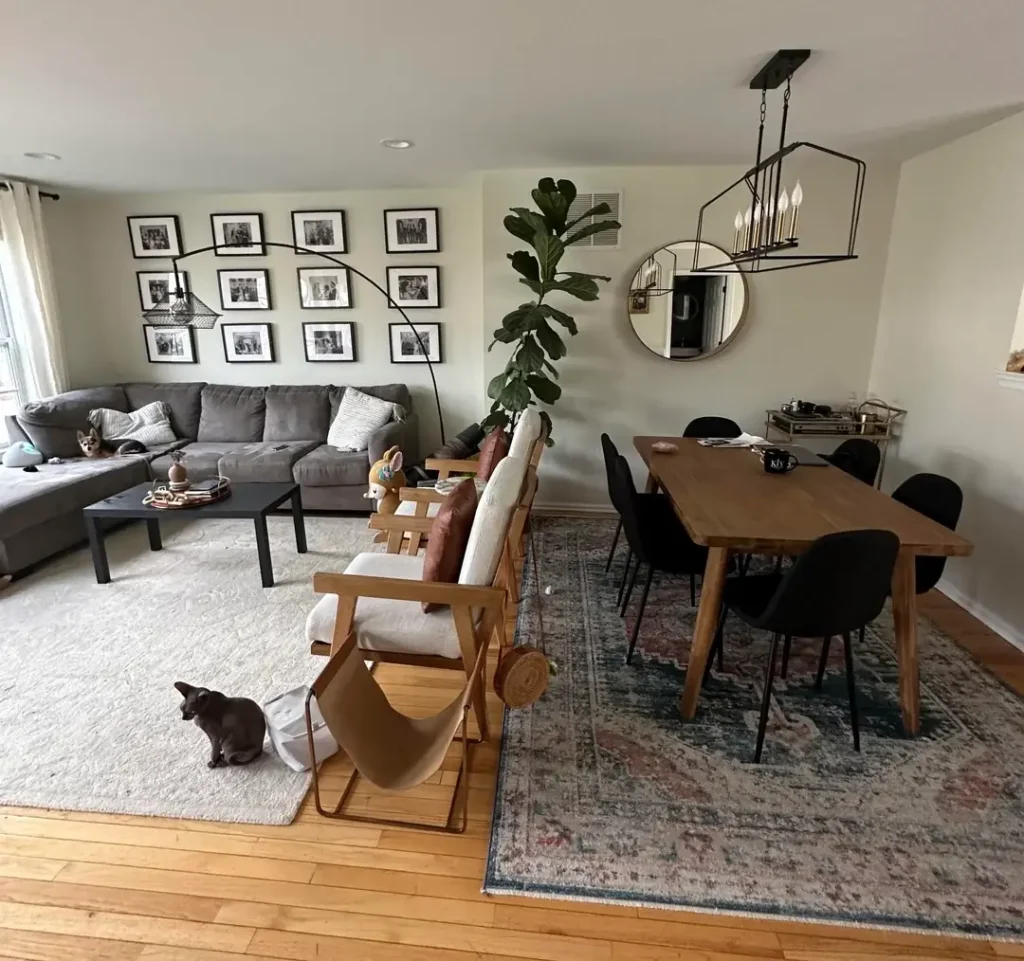
Sometimes distinct rugs work better than one large one, especially when your space has awkward proportions or natural divisions.
The gallery wall of twelve matching black frames creates a strong focal point that anchors the living area. r/girl_from_pluto arranged them in a perfect grid that brings order to the room. The gray sectional sits on a plush cream rug that defines the lounging zone, while the dining area has its own patterned rug in complementary colors.
The live-edge dining table adds organic character, and the mix of wooden accent chairs with black upholstered dining chairs shows thoughtful eclecticism rather than random mixing. The oversized floor lamp arcs over the seating area, providing reading light without requiring end table space.
The fiddle leaf fig in the corner adds height and life. The round mirror reflects light while breaking up the angular lines from the picture frames and furniture. Black and natural wood create the primary color story, with the gray sofa bridging between them.
This arrangement works because each zone has clear boundaries marked by rugs and furniture placement. The gallery wall provides visual weight that balances the dining area’s presence. The color palette stays consistent even as the zones remain distinct.
If you want defined areas, separate rugs can help. Create a gallery wall with identical frames for impact without chaos. Mix seating styles thoughtfully by connecting them through color or material. Use lighting to reinforce functional zones.
Smart Storage Solutions in a Compact Footprint
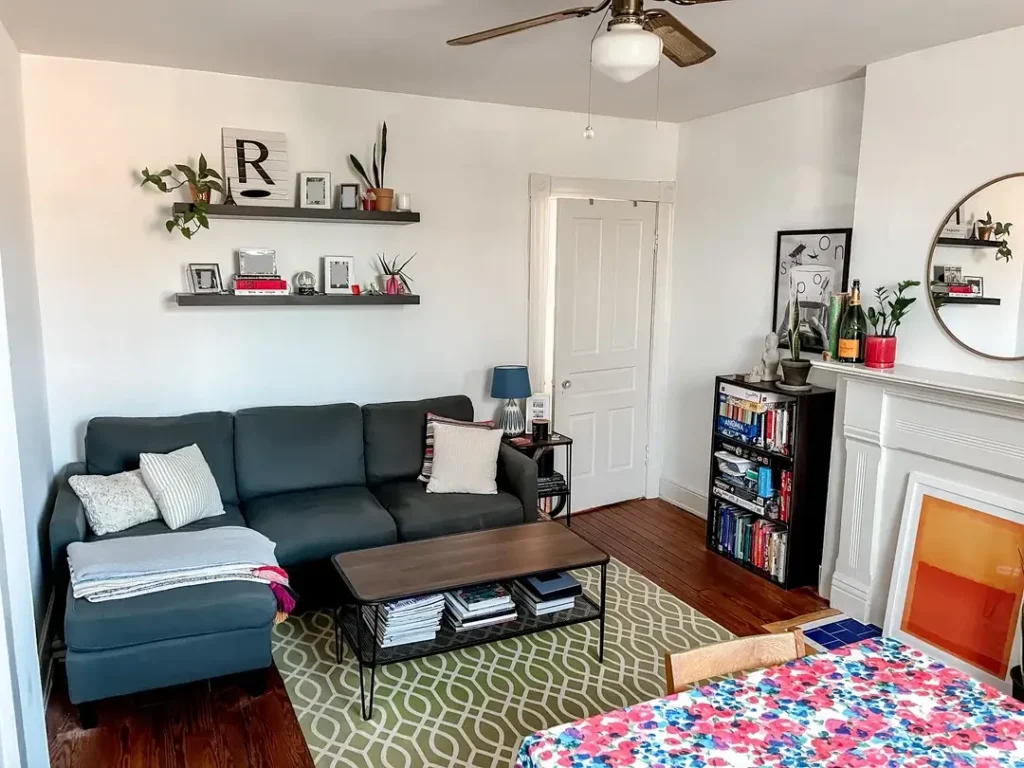
When floor space is limited, vertical storage becomes essential. This setup maximizes every available surface without creating clutter.
The dark teal sofa with a chaise provides seating that doesn’t require additional chairs. r/ShortSktLongJkt flanked it with floating shelves that hold books, plants, and personal items without needing floor space for a bookcase. The top shelf displays larger items like a monogram letter, while the lower shelf keeps frequently used items within reach.
The coffee table includes lower shelf storage for magazines and books. The dining area gets just enough space with a small table positioned near the door. The patterned rug in pink and blue tones adds personality, and the geometric green rug under the coffee table creates additional zoning.
The fireplace surround includes built-in shelving on one side and a spot for the television on the other. Dark wood floors throughout provide continuity, and the ceiling fan addresses comfort without compromising style.
This works because storage happens vertically and within furniture rather than spreading across the floor. The color palette includes deeper, richer tones that make the small space feel cozy rather than cramped.
For similar results, install floating shelves instead of floor bookcases. Choose furniture with built-in storage compartments. Embrace darker, saturated colors if making the space feel larger isn’t your only goal. Sometimes cozy and functional beats open and sparse.
Modern Urban with Playful Accent Wall
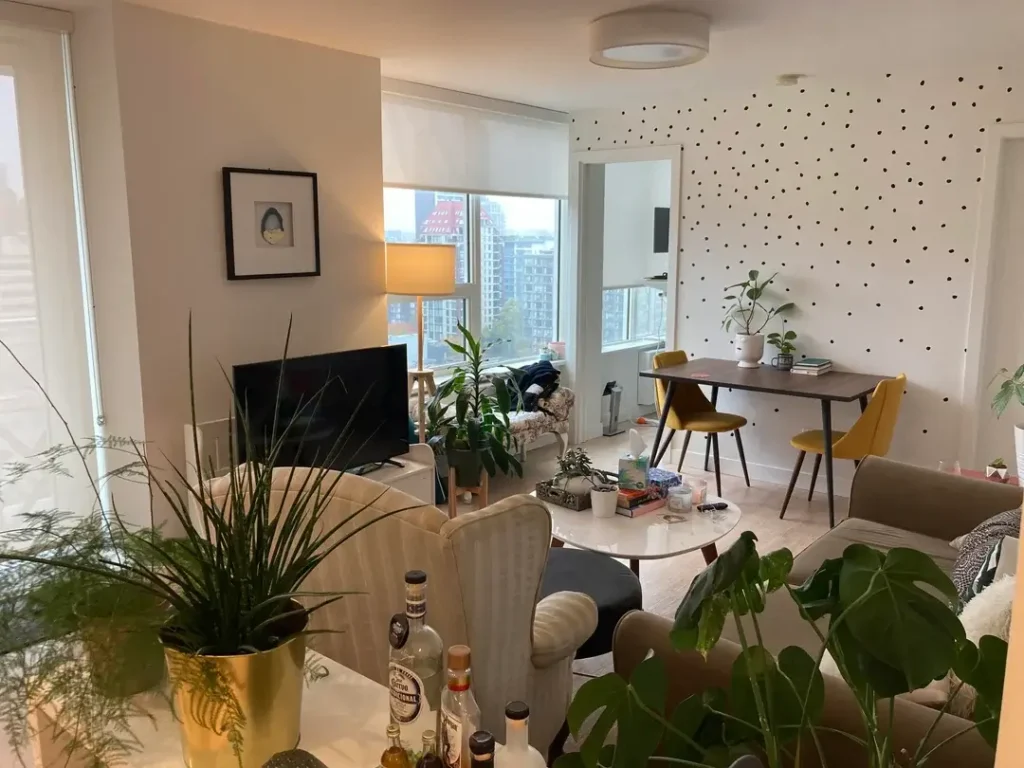
Accent walls don’t have to be paint or wallpaper. This polka dot wall creates whimsy and defines the dining zone with a permanent but playful feature.
The cream-colored seating faces away from the accent wall, creating a clear living zone. r/MichyDo added a white circular coffee table that maintains the curved theme introduced by the polka dots. The small dining table with yellow chairs sits directly against the accent wall, making that area feel intentional and designed.
Floor-to-ceiling windows bring abundant natural light, and the simple roller shades keep the window treatments minimal. Multiple plants throughout the space add greenery without requiring matching planters—each pot has its own character.
The television sits on a simple stand with vertical dividers that provide subtle separation between the living and sleeping areas. The overall palette stays neutral with white, cream, and natural wood, letting the yellow chairs and polka dots provide the personality.
This layout works for studio or one-bedroom apartments where the living and dining combo shares space with sleeping quarters. The accent wall creates a focal point that gives the dining area its own identity. The furniture scale remains appropriate for the square footage without leaving the room feeling empty.
To achieve something similar, consider a bold accent treatment for one wall. Keep furniture lightweight and appropriately scaled. Use color sparingly but intentionally. Choose statement chairs that can define a dining area without requiring a large table.
Comparing Small Living and Dining Room Combo Approaches
| Layout Style | Best For | Key Feature | Difficulty Level |
|---|---|---|---|
| Scandinavian Light & Airy | Rectangular rooms with good natural light | Pale woods and minimal color palette | Easy |
| Architectural Divider | Spaces with fireplaces or columns | Using existing features as zone markers | Easy |
| Corner Sectional | Square or near-square rooms | Maximizing seating in corners | Medium |
| Symmetrical Traditional | Formal spaces with architectural detail | Balanced furniture placement | Medium |
| Statement Wall | Open-concept layouts | Accent wall creates visual separation | Medium |
| Compact Multifunctional | Very small spaces under 300 sq ft | Furniture with dual purposes | Advanced |
| Flexible Casual | Renters or frequently changing needs | Movable, non-permanent arrangements | Easy |
| Separate Rug Zones | Irregular or L-shaped rooms | Multiple rugs define distinct areas | Medium |
| Vertical Storage Focus | Limited floor space | Wall-mounted and built-in storage | Medium |
| Accent Feature Dining | Studios or one-bedroom apartments | Bold wall treatment defines dining zone | Advanced |
Making Your Small Living and Dining Room Combo Work
The common thread through all these examples is intentionality. Each person made deliberate choices about what mattered most and arranged everything else around those priorities.
Some prioritized light and openness. Others needed maximum seating or serious storage. A few embraced bold design choices while others found comfort in neutral palettes. The right approach for your space depends entirely on how you actually live in it.
Start with your non-negotiables—the things you absolutely need this space to do. Then find examples that addressed those same challenges. Your combo might never look exactly like any of these, but understanding why each layout works helps you make better decisions for your specific situation.
The furniture you already own might work perfectly with a different arrangement. Or you might need one key piece that changes everything. Either way, you’re not starting from scratch anymore.