
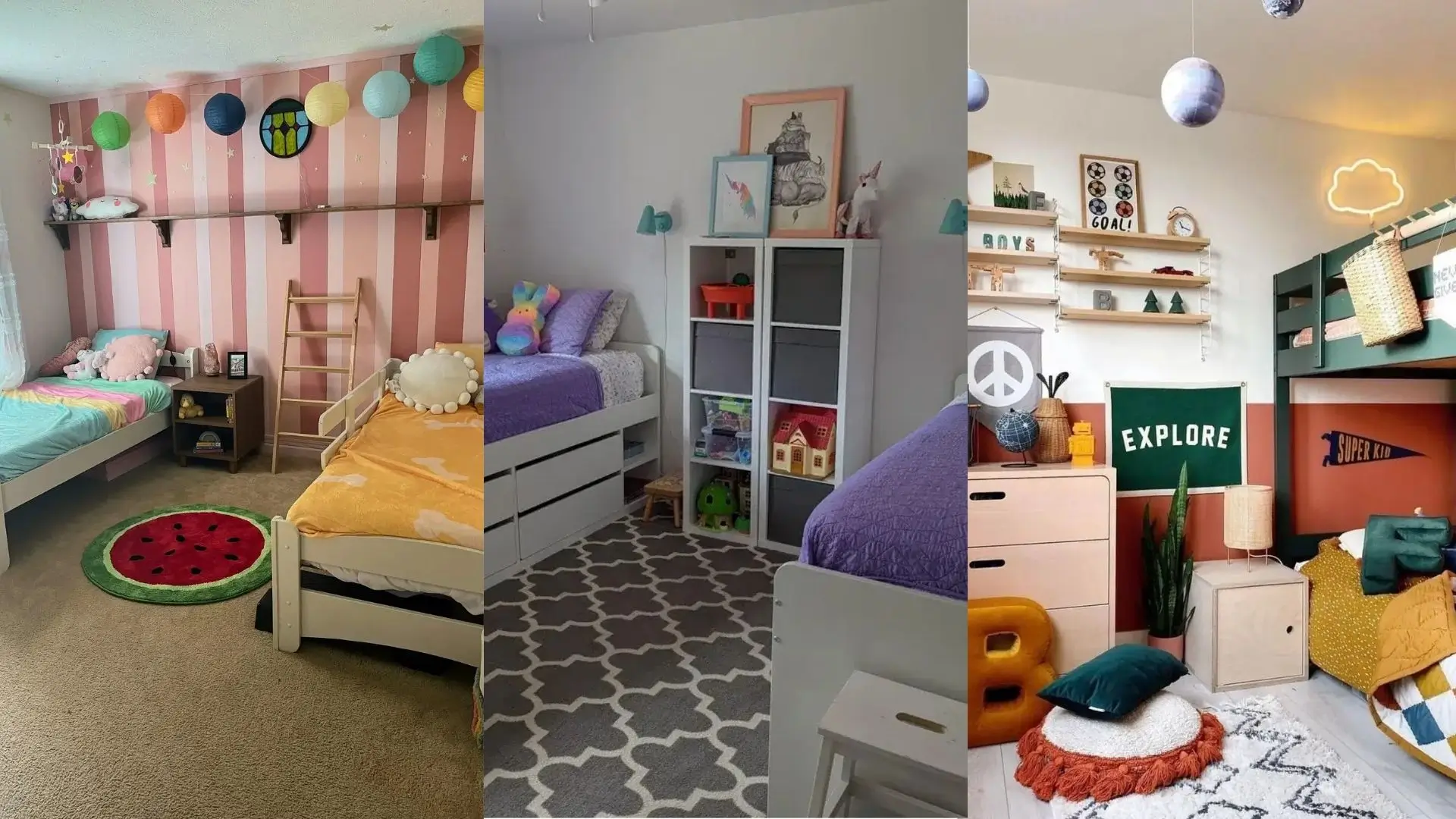
Two kids, one room, and a thousand decisions to make. If you’re staring at that bedroom wondering how to fit two personalities, two sleep schedules, and enough storage for what feels like two entire households into one space, you’re not alone.
I’ve gathered real examples from parents who’ve solved this puzzle in their own homes. These aren’t staged photos from designers with unlimited budgets. They’re actual shared kids bedroom ideas that work for families dealing with the same challenges you face right now. You’ll see how different approaches handle everything from bunk beds to color coordination, and how small changes can make a shared room feel less like a compromise and more like a space both kids actually want to be in.
Bold Retro Vibes with Bunk Beds and Color Blocking
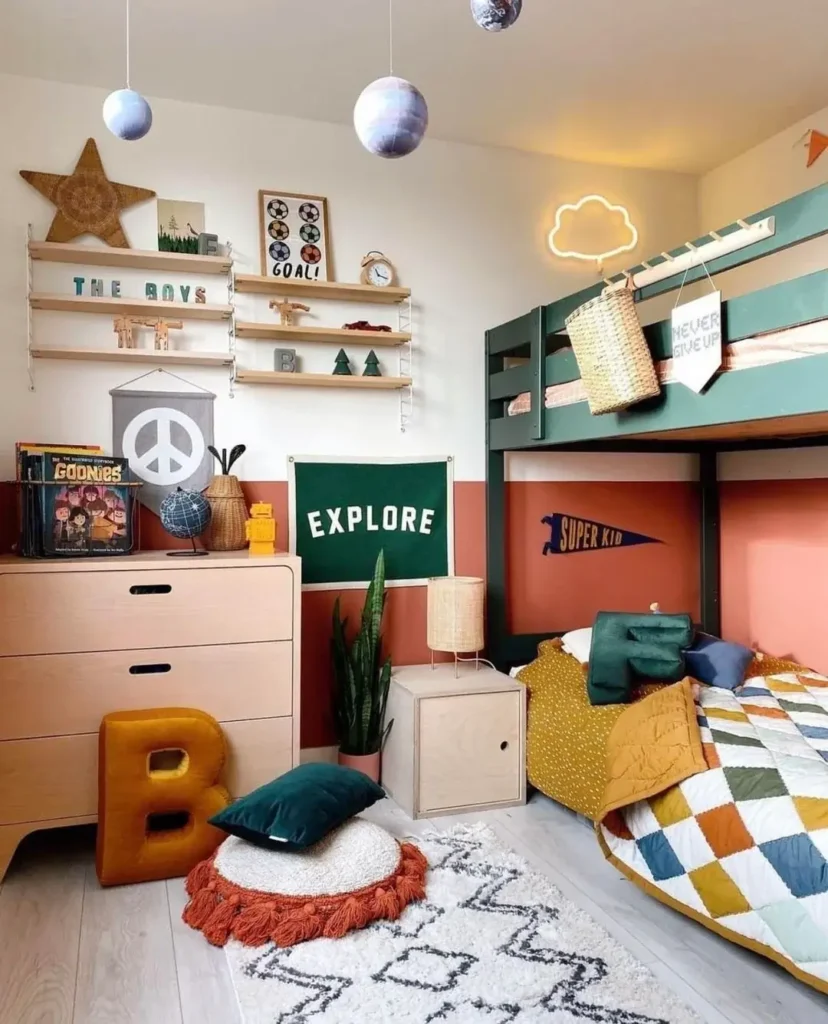
This room doesn’t apologize for its personality. The dark green and coral color blocking creates distinct zones without physical dividers, which is exactly what a shared space needs.
What r/Shadow_Fyres pulled off here is layering pattern and color without creating visual chaos. The silver disco balls hanging from the ceiling add playfulness, while the bunk bed painted in matching green anchors the sleeping area. Notice how the “EXPLORE” banner and personalized pennant flag give each child a sense of ownership within the shared space. The mustard yellow accents in the bedding and floor cushion tie the whole palette together.
The open shelving on the left wall serves double duty as storage and display. This is practical because kids can actually see their stuff, which means they’re more likely to put it back. The wicker basket hanging from the bunk adds functional storage without drilling more holes in the wall.
If you want this level of color confidence, start with one bold wall treatment and build from there. Paint is the cheapest way to create impact, and these blocked sections could easily shift to different colors as the kids grow.
Whimsical Road Map Theme with Twin Beds
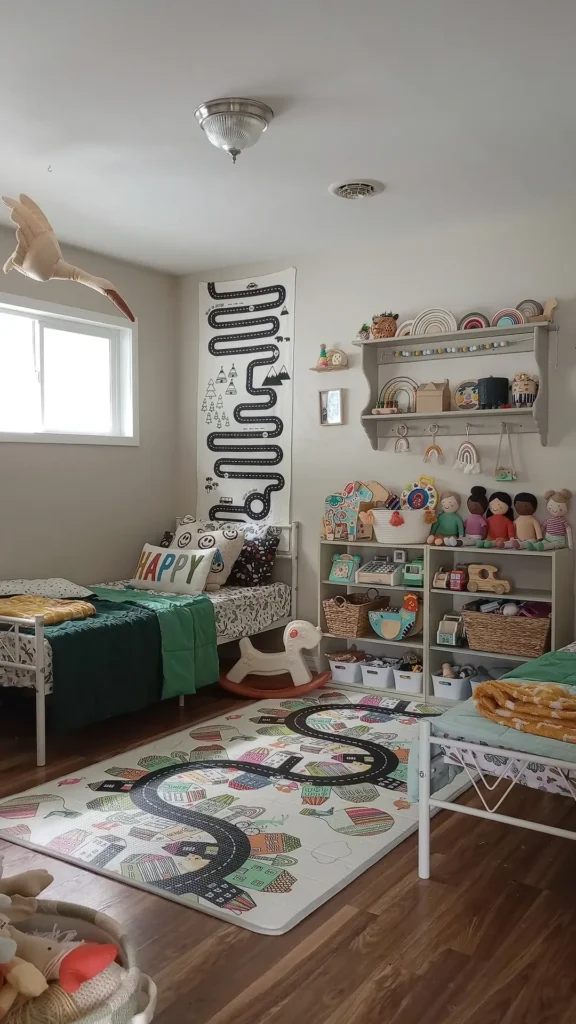
Sometimes the floor tells the whole story. That winding road rug transforms this neutral room into an adventure zone without permanently altering anything.
r/urprobationofficer chose simple white metal twin beds positioned on opposite walls, which maximizes floor space for play. The light gray walls keep the room from feeling dark, even with wood flooring. What catches my eye is the wall-mounted road track climbing vertically next to the beds. It’s creative, space-saving, and adds dimension to what could have been a flat wall.
The storage shelving between the beds houses colorful rainbows, small toys, and organized bins. This central location means both kids have equal access without one child dominating the storage. The vintage-style ceiling fixtures add character without taking up any precious real space.
Keep rugs with interactive designs in mind if you’re working with young kids who still play on the floor. They define the play zone clearly and can be rolled up or replaced as interests change.
Symmetrical Setup with Purple Beds and Central Storage
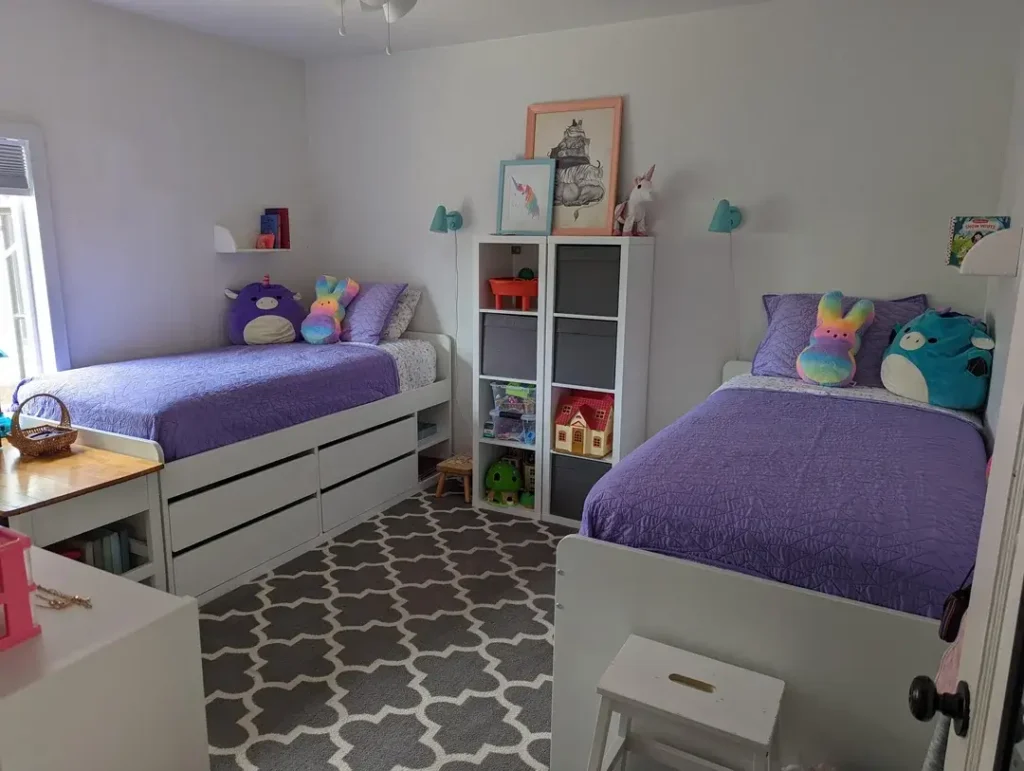
Perfect symmetry can actually reduce sibling conflict. When everything is identical, there’s less to fight about.
The two beds in this room mirror each other with matching purple quilts and gray patterned sheets. r/SecuretheSalt positioned them against opposite walls with a tall cube storage unit centered between them. This creates a natural divider while providing shared storage that’s equally accessible. The white furniture keeps the room bright, and those turquoise wall hooks add pops of color without overwhelming the calm palette.
What makes this work is the thoughtful personalization. Each bed has its own collection of stuffed animals and pillows that reflect individual tastes, despite the identical frames and bedding. The moroccan-pattern rug grounds the space and adds texture without competing with the other design elements.
If you’re furnishing on a budget, buying identical pieces means you can often get discounts. The symmetry also photographs well, which matters more than we’d like to admit.
Bunk Bed with Slide in Soft Peach Tones
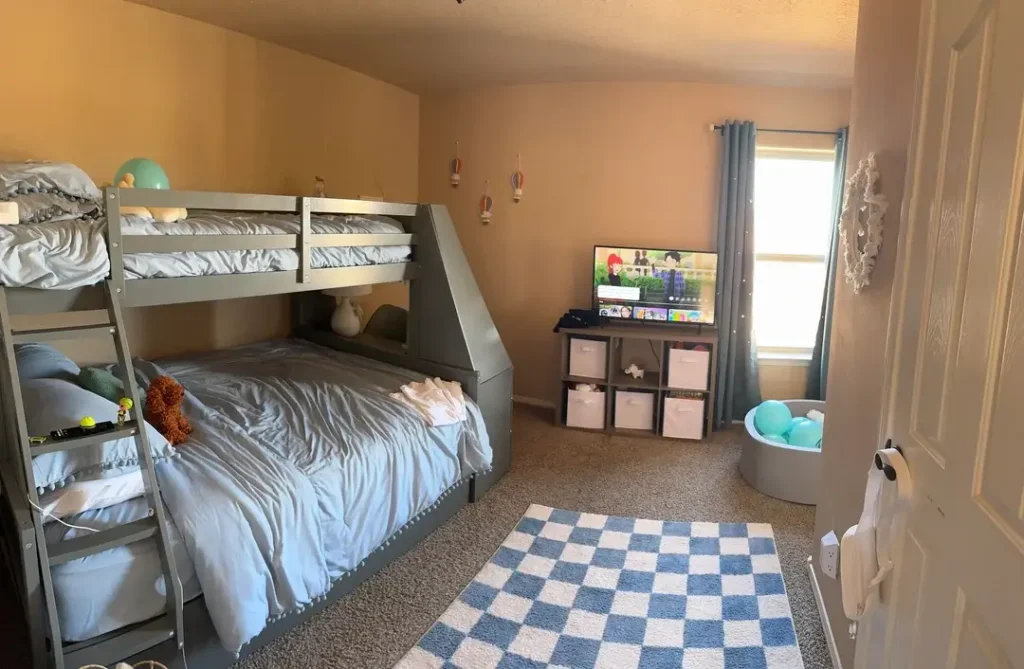
That slide makes me wish bunk beds had existed in this form when I was young. This is smart design that turns a necessity into a feature.
The peach and gray walls create warmth without going full-on pink, which gives this room flexibility as the kids age. r/angryxllama added a white bunk bed with a built-in slide, which saves floor space while adding an element of play. The TV and storage cubes along the wall provide entertainment and organization in a compact footprint. The blue and white checkered rug defines the central play area.
Notice the small hot air balloon decals on the peach wall. They’re subtle enough to feel sophisticated rather than babyish. The beige carpet throughout helps soften sound, which matters when kids are climbing, sliding, and playing in close quarters.
The genius here is making the bunk bed itself the main attraction. Kids are more willing to share a room when the sleeping arrangement feels special rather than like someone got relegated to the spare bed.
Perpendicular Bed Configuration with Playful Accents
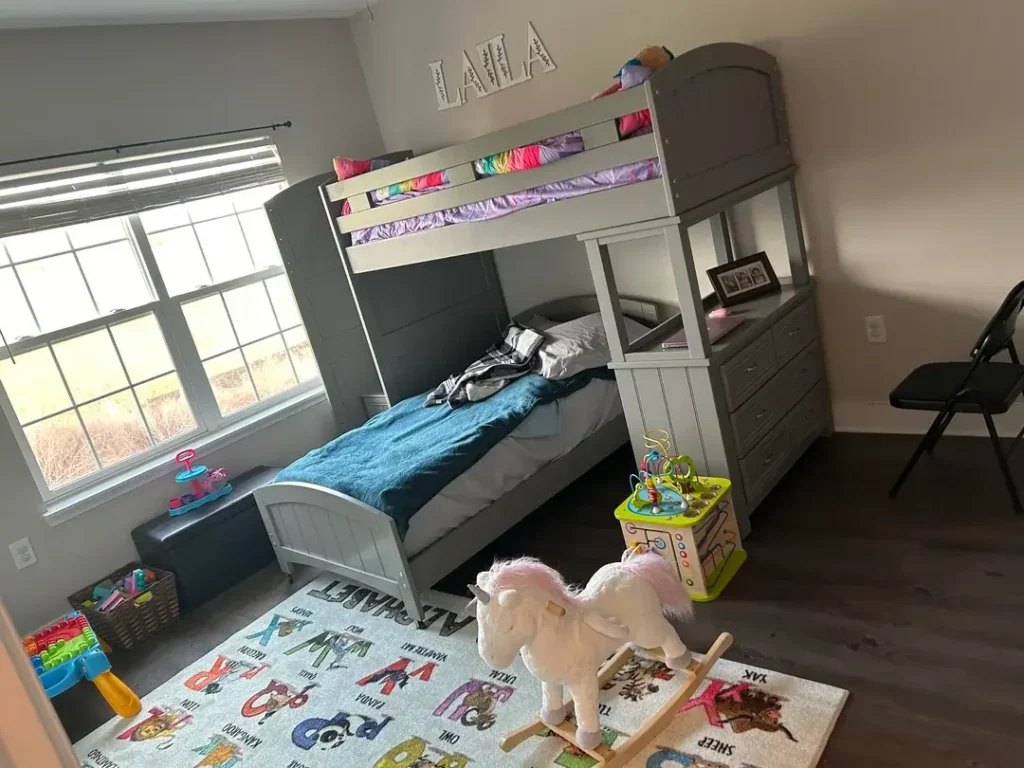
This layout breaks the parallel bed rule, and it works. The perpendicular arrangement creates an L-shape that opens up the center of the room.
r/Ok-Respond5276 chose a white bunk bed and a full bed positioned at a right angle. The gray accent wall behind the bunk bed adds depth without paint, and the simple wooden name sign keeps it personal. The rocking horse in the foreground adds a playful, classic touch that grounds all the modern elements.
What I find practical here is the open floor space this configuration creates. The action-figure themed rug can actually be used for play because it’s not crammed between two beds. The cube storage holds bins that are easily accessible to both kids, and the window provides natural light that makes the room feel larger than its footprint.
If you have a smaller room, consider how bed orientation affects traffic flow. Sometimes perpendicular beats parallel when you’re trying to maximize usable space.
Compact Room with Gray Bunk Bed and Rainbow Rugs
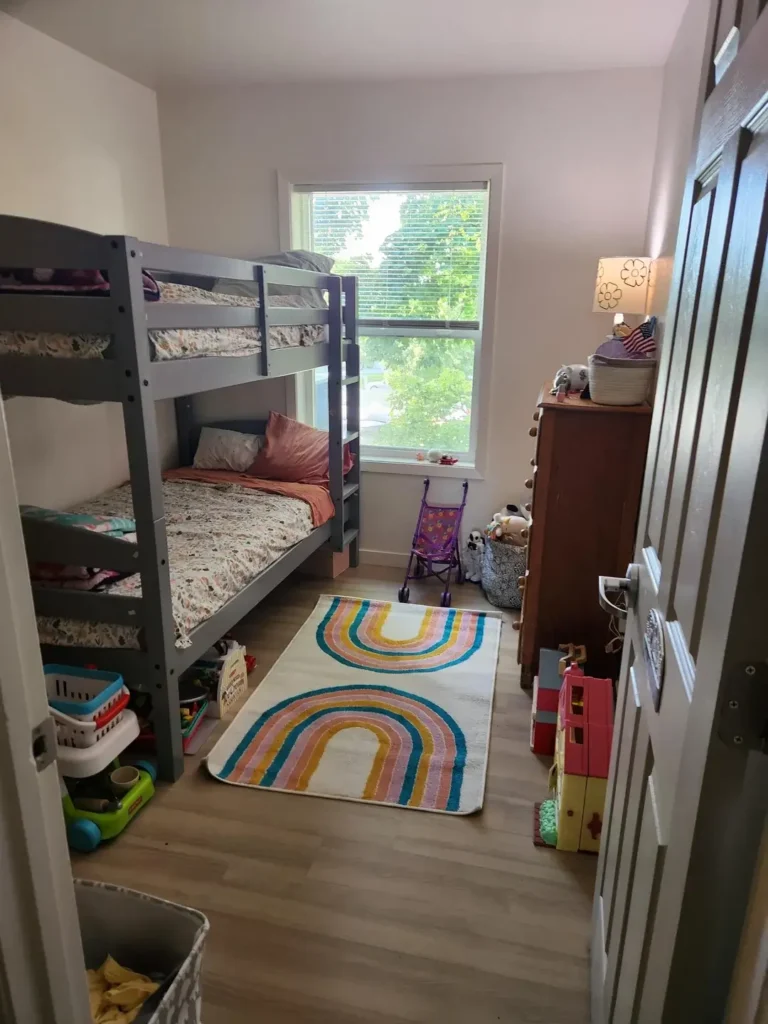
Small rooms require restraint, and this one shows it. The gray bunk bed keeps the palette neutral while those rainbow rugs inject personality.
The room is tight, but r/Professor-Sundae made smart choices. A simple gray bunk bed sits against the wall, flanked by a wood dresser that provides necessary storage without bulk. The two rainbow rugs on the floor add color and define separate zones within the small footprint. The window floods the space with light, which is critical in a room this size.
Notice the minimal decor. A couple of toys, a baby doll stroller, but nothing excessive. This is intentional. In a shared room with limited square footage, less clutter means more breathing room. The wood flooring throughout helps the space feel cohesive.
When you’re working with a small shared bedroom, every piece of furniture needs to earn its place. That dresser provides storage, acts as a visual anchor, and balances the bunk bed’s height on the opposite wall.
Reading Nook Integration with Low Bunk Bed
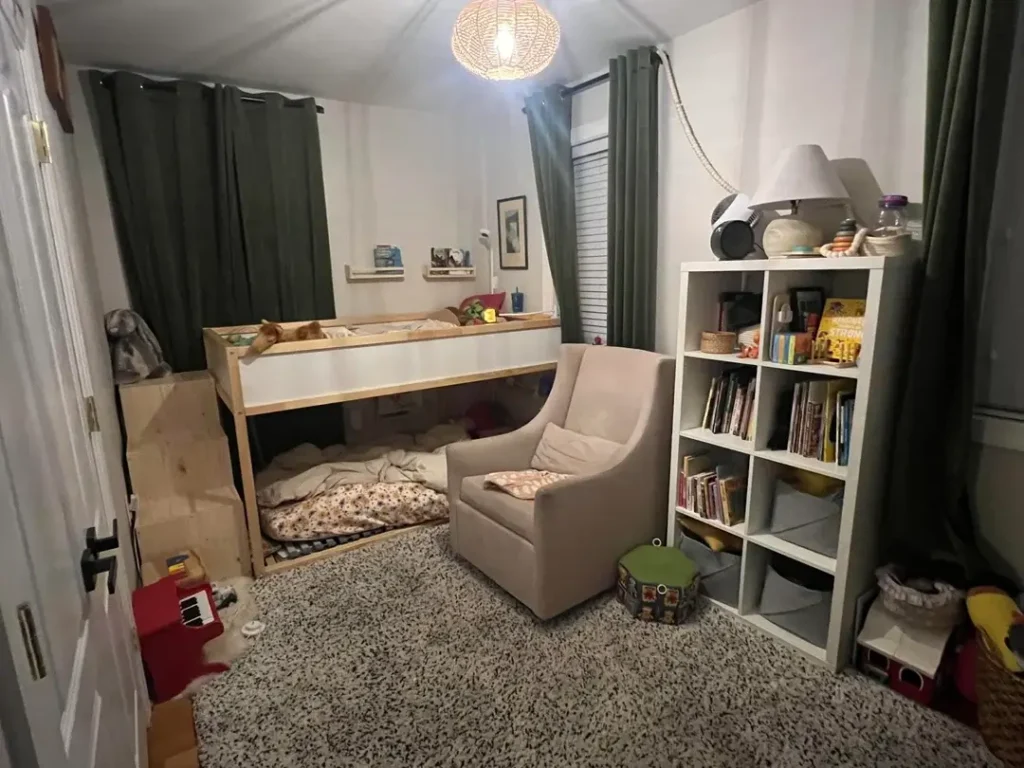
A reading chair in a kids’ room might seem like wasted space, but this setup proves otherwise. That beige armchair creates a quiet zone in a room designed for two.
r/hello-mango installed a low-profile bunk bed with natural wood accents and dark bedding. The chair sits between the bed and a tall white bookshelf, creating a dedicated reading corner that either child can use. The dark green curtains frame the space and add richness without overwhelming the neutral carpet and walls.
The bookshelf is packed with actual books, which tells me this family prioritizes reading. Having that comfortable chair makes the activity more appealing than just handing a kid a book and pointing to their bed. The woven pendant light adds texture and warmth above.
If your kids are readers, carve out a dedicated spot for it. The reading nook doesn’t have to be large, just intentional.
Floor Mattress Arrangement in Minimal Space
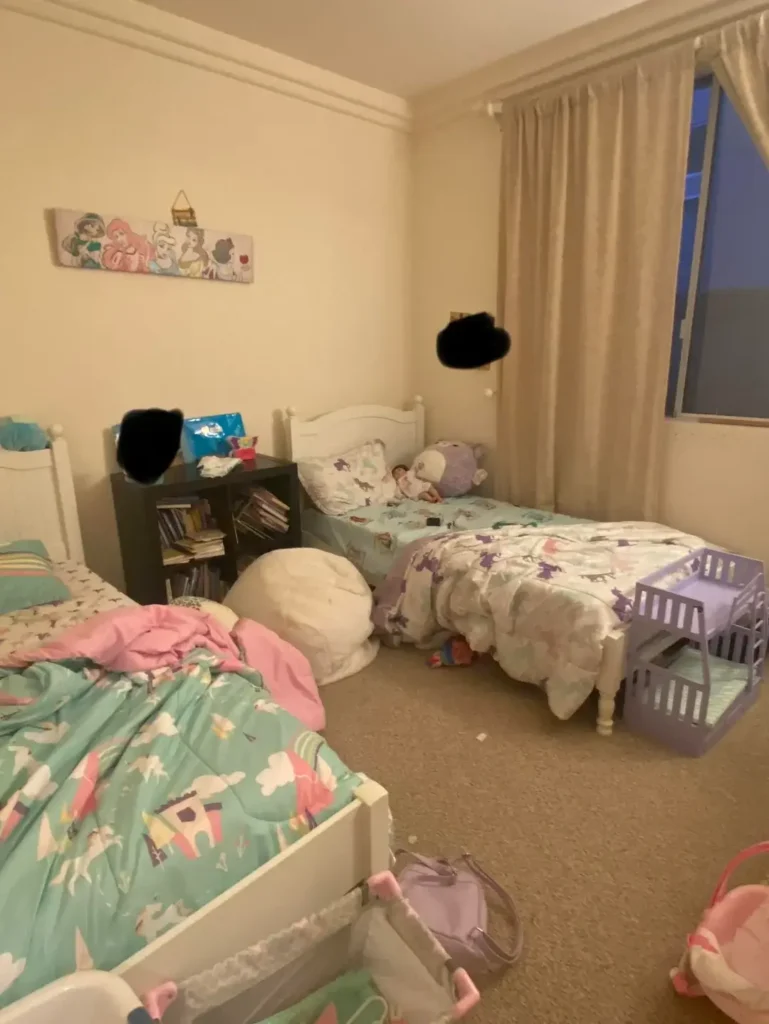
This room is lived-in, and that’s fine. Not every shared bedroom needs to look like a catalog photo.
What you’re seeing here is two floor mattresses positioned in a small room with beige carpet. r/Mundane_Trade_8390 used simple white bed frames without much height, which keeps sightlines open. The small wood bookshelf between the beds stores books and a few toys. The wall art adds personality, and the blackout-style curtains likely help with sleep.
The room feels accessible and functional rather than designed. The stuffed animals scattered around, the casual bedding, the practical approach to furniture—this is what a real shared kids bedroom looks like most days. The neutral walls and carpet mean updating the room as kids grow is as simple as changing bedding and swapping out a few accessories.
Sometimes simple is the right answer. If your kids are young and hard on their space, there’s no point investing in furniture they’ll outgrow or damage.
Multi-Age Sharing with Crib and Toddler Bed
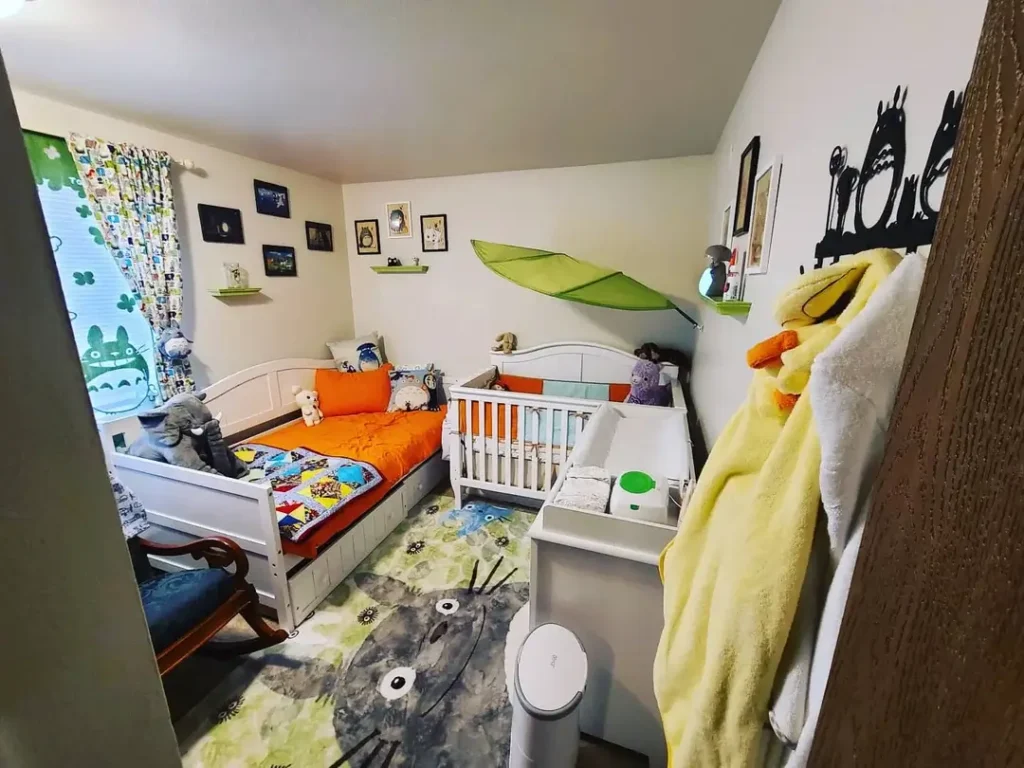
Sharing a room across age gaps requires flexibility. This setup handles a baby and an older sibling without feeling cramped.
The white crib sits in one corner while a toddler bed with an orange comforter occupies the opposite wall. r/corgarian added wall-mounted shelves, wall decals, and a small desk chair to personalize the space. The green kayak mounted on the wall is unexpected and adds character without taking up floor space. That oversized area rug featuring a road and scenery creates a designated play zone.
What makes this work is acknowledging that these kids have different needs. The crib is simple and functional. The toddler bed has more personality with that bright orange bedding. The room doesn’t try to make everything match, which would be forced given the age difference.
If you’re combining different age groups, focus on functionality over aesthetic perfection. The room will evolve as both kids grow, so flexibility matters more than a cohesive color scheme.
Statement Wall Stripes with Platform Beds
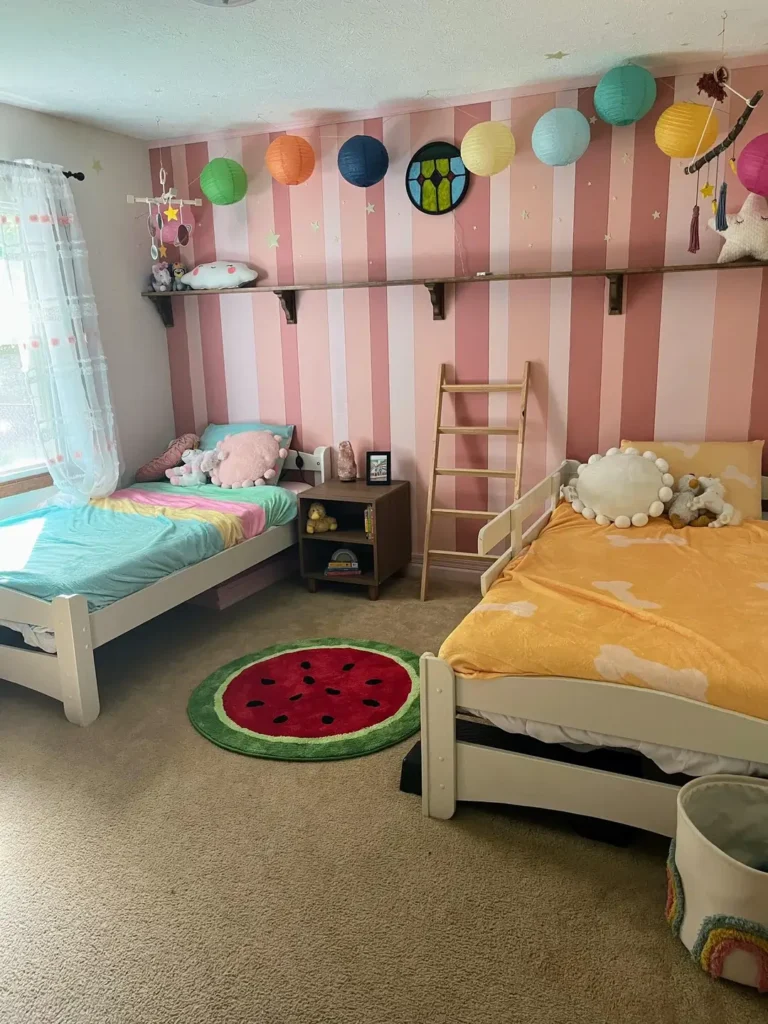
Those vertical stripes command attention. This is bold design that creates visual height and energy.
r/saltymapletree painted alternating pink and blush stripes across the main wall, immediately establishing the room’s personality. Two low platform beds sit below, one dressed in rainbow bedding and the other in sunny yellow. The paper lanterns strung across the ceiling add whimsy and color without permanent installation. That watermelon-shaped rug on the floor is playful and practical.
The small nightstand between the beds provides shared storage, and the ladder against the wall suggests access to a loft area not fully visible in the photo. The overall effect is cheerful and energetic, which works for younger kids who want their space to feel fun.
If you’re painting stripes, invest in good painter’s tape and measure carefully. Uneven stripes will bother you forever. The effort is worth it because paint is one of the most impactful changes you can make on a budget.
Floor-to-Ceiling Built-In Storage with Loft Bed
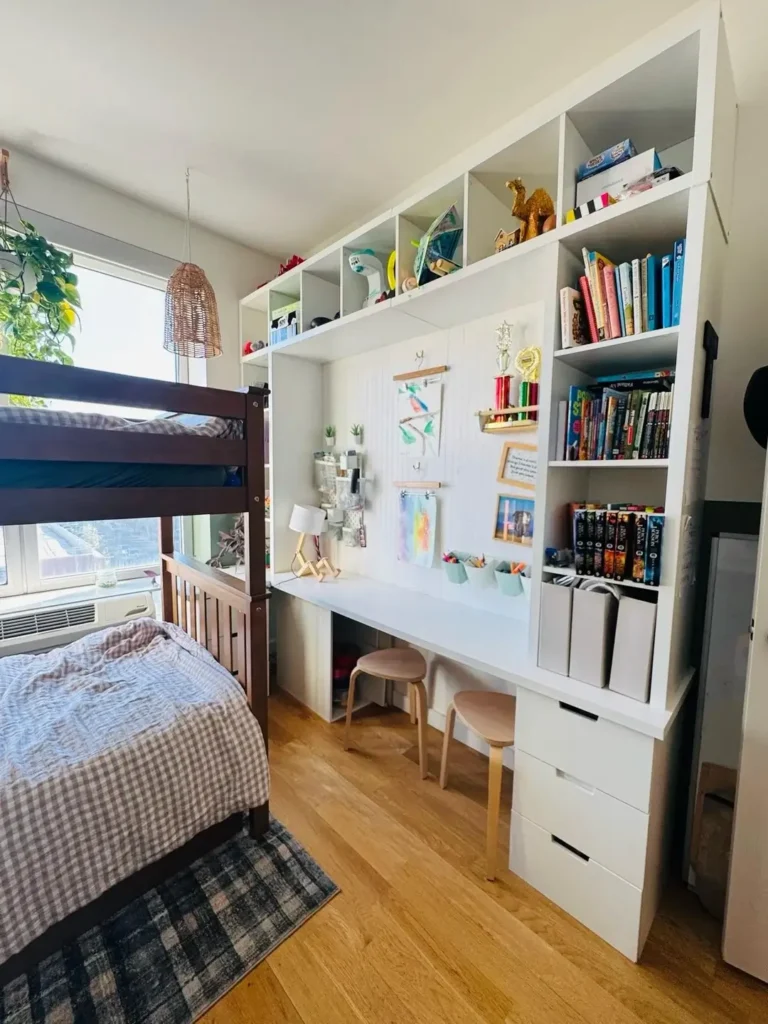
This is what maximizing vertical space looks like. The built-in unit dominates one wall and provides storage, workspace, and display in a single footprint.
The white shelving system rises from floor to ceiling, housing books, toys, baskets, and decorative items. r/mikefraietta integrated a desk area at the base with two small stools, creating workspace for both kids. The dark wood bunk bed sits perpendicular to the built-in, and the gingham bedding adds pattern without clutter. The woven pendant light and greenery bring natural elements into the room.
What I appreciate is the sheer amount of storage this provides. Shared rooms generate twice the stuff, and this system handles it without making the room feel like a warehouse. The desk area means homework and creative projects have a dedicated spot, reducing conflict over shared surfaces.
If you’re handy or willing to hire out, built-ins are an investment that pays off in functionality. They use space that would otherwise sit empty and can be customized to your exact needs.
Twin Beds with Underbed Storage Drawers
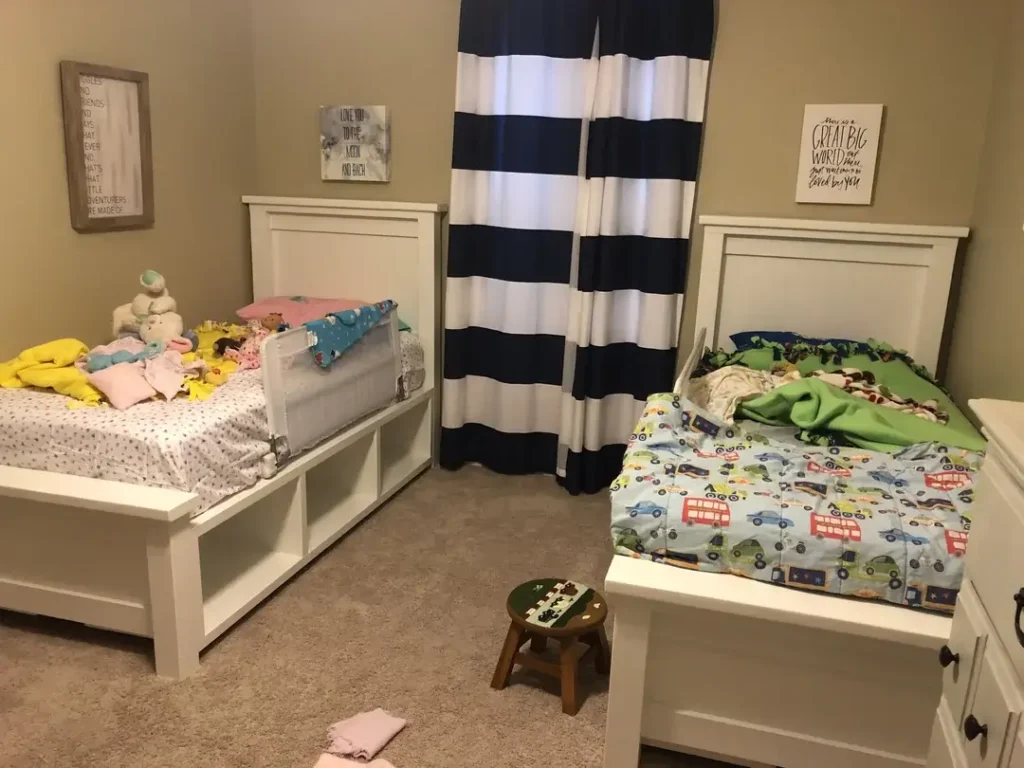
Storage beds are not new, but they’re still one of the smartest solutions for shared rooms. The drawers under these beds double the storage without increasing the room’s footprint.
r/Madcrazy10 chose matching white beds with storage drawers built into the base. The beds sit parallel against a soft taupe wall, with navy and white striped curtains adding graphic interest. The vehicle-themed bedding on one bed and polka dots on the other let each child express individuality within the matching frames. The small wood step stool between the beds is both functional and decorative.
The wall art above each bed provides personalization without taking up surface space. The overall palette is calm and coordinated, making the room feel intentional rather than chaotic. The beige carpet throughout softens the space and reduces noise.
When you’re shopping for kids’ beds, look for integrated storage. Drawers, shelves, or trundles mean you’re getting double duty from the same square footage.
Canopy Drama with White Bunk Beds
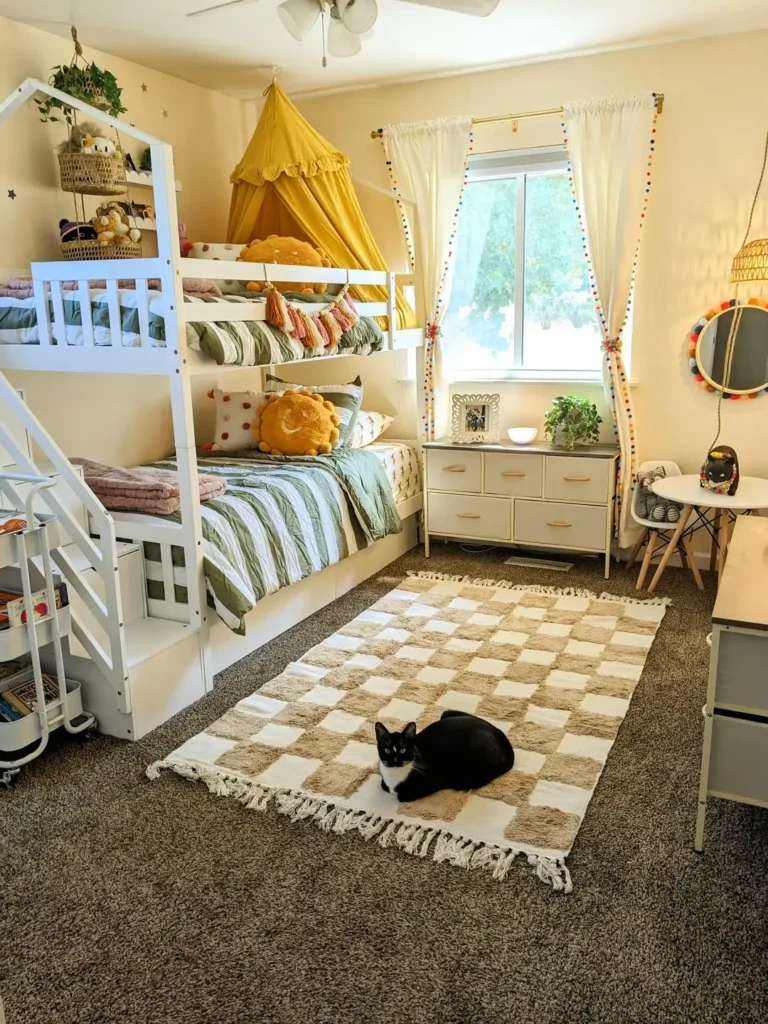
That golden yellow canopy creates a focal point that draws your eye immediately. This room uses height to add drama in a space that could have felt basic.
The white bunk beds feature safety rails and a traditional ladder design. r/CatsMatterMost draped a flowing yellow canopy from the top bunk, which adds softness and a sense of enclosure that many kids find comforting. The curtains with pom-pom trim pick up the yellow and add playful detail. The checkered area rug grounds the space, and the cat lounging on it suggests this room gets plenty of use.
The small dresser between the window and bunk bed provides storage without bulk. The wall-mounted shelves on the left hold baskets and toys within easy reach. The overall effect is warm, inviting, and shows that shared bedrooms can still feel special with thoughtful touches like that canopy.
Canopies are an easy add-on that creates impact. They’re also removable when interests change, making them a low-commitment way to add personality.
Sibling and Baby Sharing with Dual-Purpose Layout
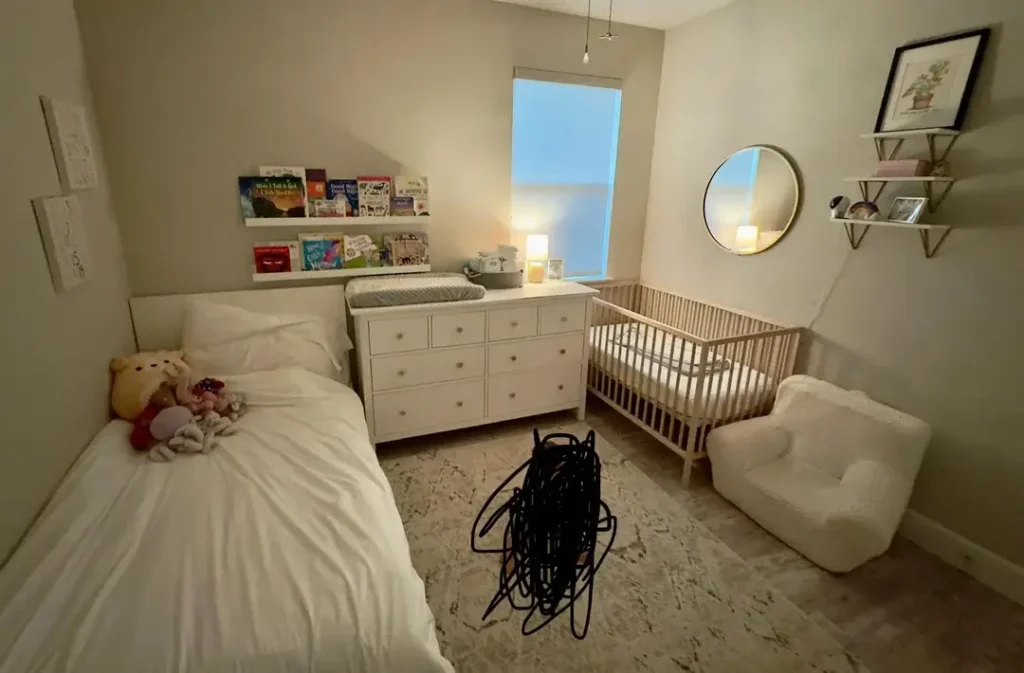
This room handles the delicate balance of a young child and an infant sharing space. The layout separates sleep zones while keeping the room functional.
A single bed sits along one wall while a crib occupies the corner. r/Mom-6608 added a changing station atop the dresser, complete with organized supplies and wall-mounted book ledges above. The round mirror on the wall reflects light and makes the space feel larger. The terrazzo-patterned rug adds modern style without competing for attention.
What works here is the clear division of function. The baby’s needs are concentrated in one corner with the crib, dresser, and changing area. The older child’s bed sits separately with its own space. The neutral walls and strategic furniture placement keep the room from feeling crowded despite serving two very different purposes.
When an older child shares with a baby, create distinct zones so the older kid still feels the room is partly theirs. Babies come with a lot of gear, and it can quickly overwhelm a space if you’re not intentional.
Lived-In Loft with Underbed Storage
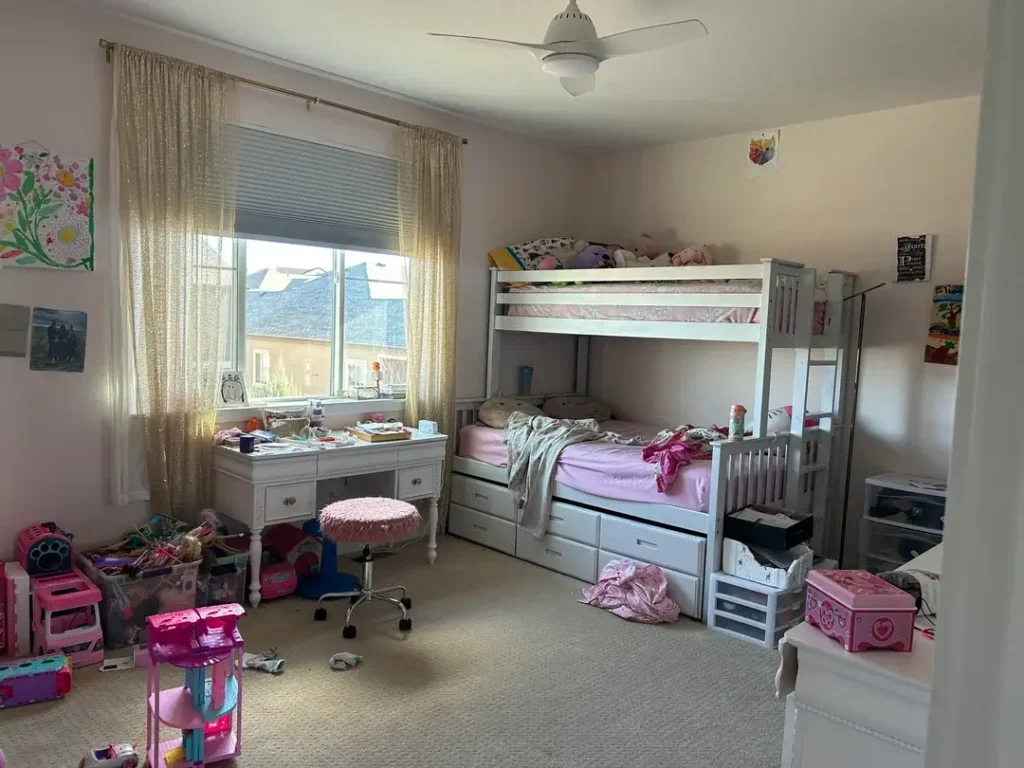
This is reality, not aspiration. The room shows clear signs of daily use, and that’s exactly what a shared bedroom should accommodate.
A white loft bed with storage drawers sits against the wall. r/Responsible_Tour_261 positioned a vanity desk near the window to capture natural light. The pink and white color scheme runs throughout, from the bedding to the fuzzy ottoman. The room has toys out, drawers visible, and the general lived-in quality of a space that gets used rather than styled.
The storage drawers under the loft bed are practical for a shared room where floor space is limited. The vanity gives one child a dedicated spot for getting ready or creative projects. The sparkle curtains add a touch of whimsy without permanently altering the space.
Don’t stress about perfection. Shared rooms get messy because they’re being used. Focus on systems that make cleanup easier rather than trying to maintain showroom conditions.
Key Considerations for Shared Kids Bedroom Ideas
After looking at these real examples, some patterns become clear. Certain approaches work consistently across different room sizes, ages, and styles.
Bed Configuration Matters
How you position the beds affects everything else. Parallel beds along opposite walls maximize floor space. Bunk beds work when vertical space is available but horizontal space is tight. Perpendicular arrangements can create interesting layouts in square rooms. Consider traffic flow and how each child will access their bed before committing to a layout.
Storage Needs to Double
Two kids means twice the clothes, toys, books, and miscellaneous stuff that accumulates. Under-bed storage, wall-mounted shelves, and multi-functional furniture help manage this without making the room feel like a storage unit. The best solutions keep items accessible to the kids themselves, which encourages them to maintain the space.
Personal Space Within Shared Space
Even in a shared room, each child needs something that’s just theirs. This might be their own bedding choice, a designated shelf, wall art above their bed, or a specific color within the larger palette. These small claims of territory reduce conflict and help kids feel the room belongs to them equally.
Color Strategy
You can go bold or stay neutral, but intentionality matters. Coordinated colors create visual calm. Distinct colors for each child’s area can help define zones. Neutral walls with colorful accents offer flexibility as tastes change. Whatever you choose, having a plan prevents the room from looking chaotic.
| Configuration Type | Best For | Space Efficiency | Privacy Level |
|---|---|---|---|
| Parallel Twin Beds | Medium to large rooms | Moderate | Low |
| Bunk Beds | Small rooms, limited floor space | High | Low to Moderate |
| L-Shaped Layout | Square rooms | Moderate | Moderate |
| Loft with Bed Below | Vertical space available | High | Moderate |
Making Shared Bedrooms Work Long-Term
The truth about shared kids bedroom ideas is that they need to evolve. What works for a toddler and baby won’t work for two teenagers. The best approaches build in flexibility from the start.
Choose furniture that can transition as kids grow. A simple bed frame works for a five-year-old and a fifteen-year-old. Modular storage systems can be reconfigured as needs change. Avoid theme-heavy permanent installations that will feel dated in two years.
The examples here prove that shared bedrooms can be functional, personal, and even enjoyable for the kids living in them. You don’t need a massive room or unlimited budget. You need a clear understanding of what each child needs, a realistic assessment of your space, and solutions that address both.
Your shared kids bedroom won’t look exactly like any of these examples, and that’s fine. Take the principles that resonate with your situation and adapt them to your specific challenges. The goal isn’t perfection. It’s creating a space where both kids can sleep, play, and grow without the room itself becoming a daily source of conflict.