
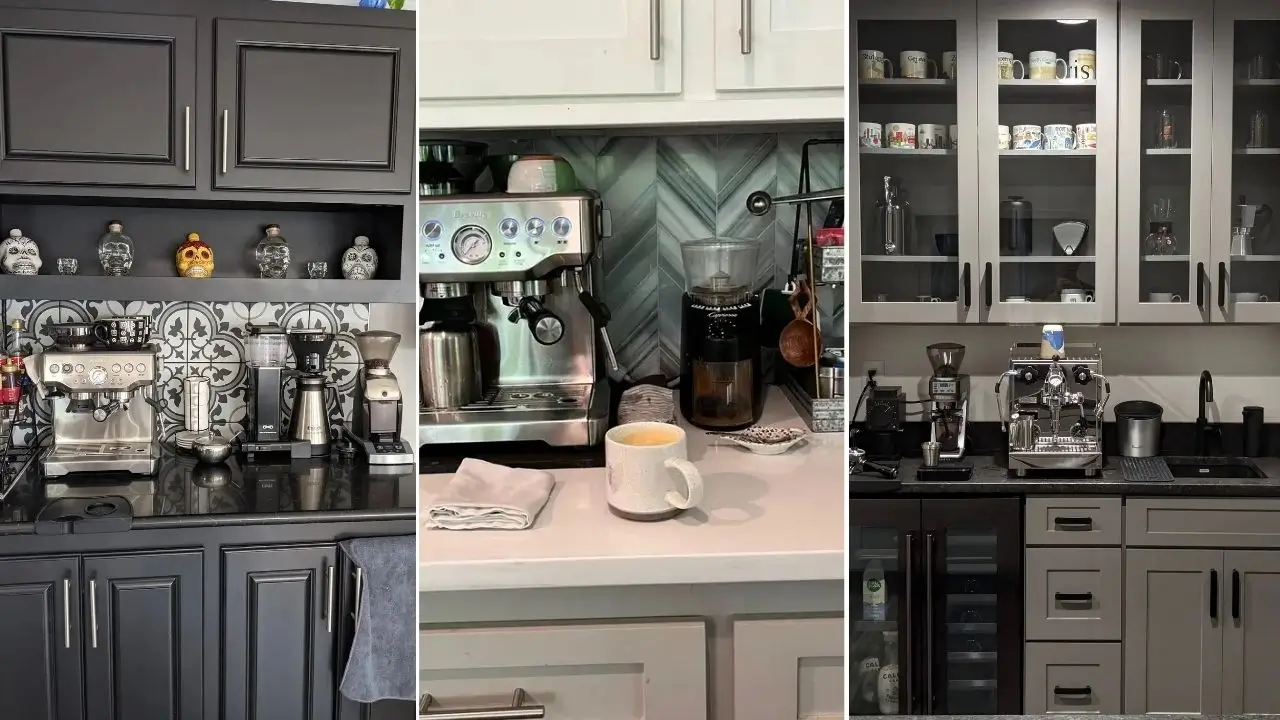
Your kitchen counter hosts the same cluttered mess every morning: coffee grounds scattered beside the machine, mugs stacked haphazardly, sugar packets stuffed in a drawer you can never quite close. There’s a better way to start your day.
I’ve gathered ten real kitchen coffee bar setups that solve the chaos without requiring a full renovation. These examples show how people with regular kitchens created dedicated coffee spaces that actually work. You’ll see what’s possible with the space you already have, from compact corners to full custom builds.
Herringbone Backsplash with Tiered Organization
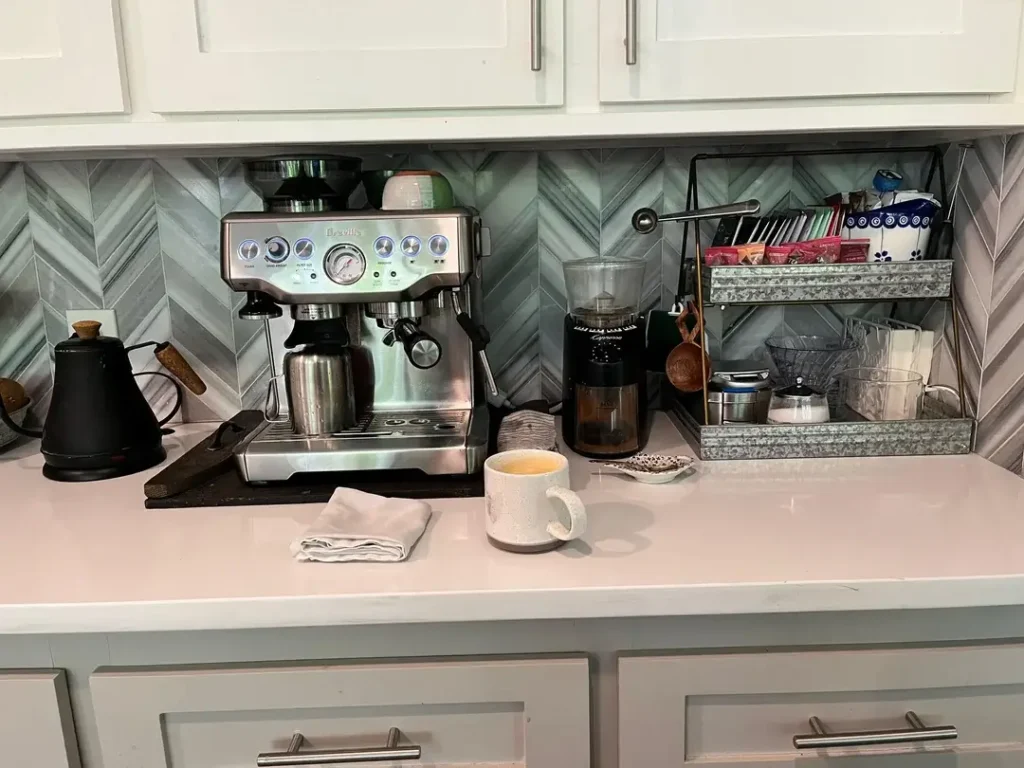
The right backsplash makes your coffee station feel intentional rather than accidental. This setup uses a gray herringbone tile pattern that draws your eye to the coffee area without overwhelming the space.
r/Visible_Boot6553 built this station around a Breville Barista Express, positioning it against the backsplash with a two-tier organizer on the right.
The organizer holds measuring spoons, cups, and accessories at eye level while keeping the counter clear for actual brewing. A black electric kettle sits to the left, and a French press waits in the middle, creating a triangle of brewing options.
What makes this work is the vertical storage strategy. Instead of spreading items across the counter, everything stacks upward. The speckled granite-style shelving unit provides multiple levels without taking up more footprint than a cutting board.
If you’re working with limited counter space, copy this approach. Choose one statement appliance, then build vertical storage around it. The herringbone pattern adds visual interest that justifies dedicating this corner exclusively to coffee.
Professional-Grade Setup with Bar Mat Foundation
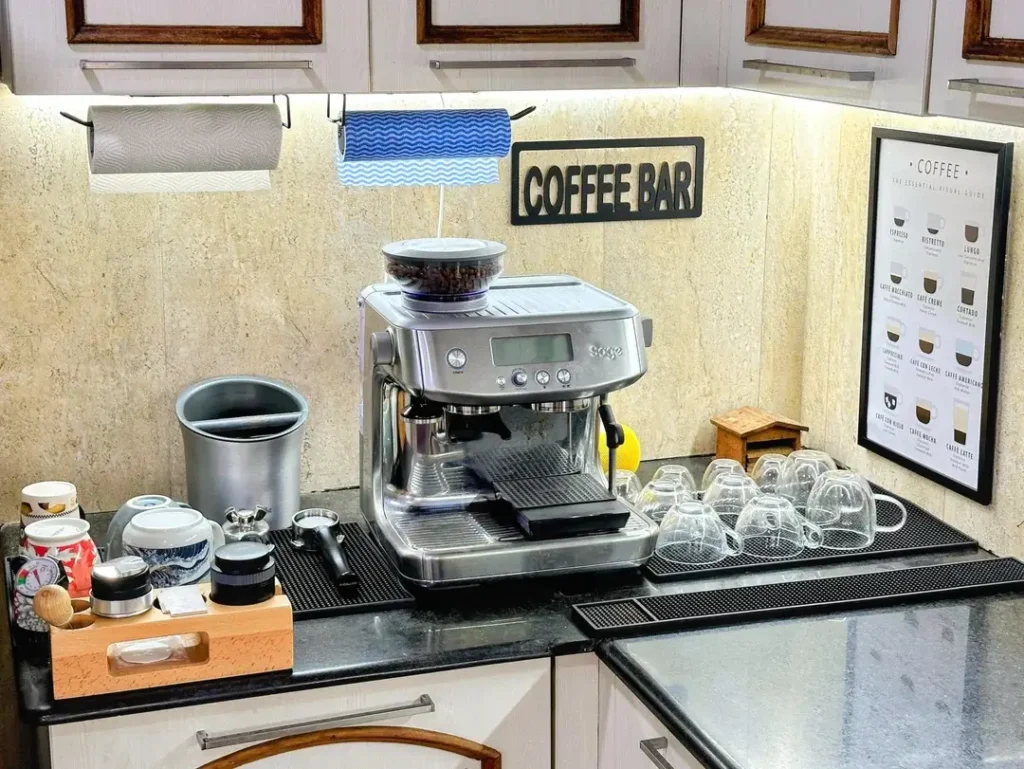
Some coffee enthusiasts treat their morning ritual like a craft, and their setup reflects that commitment. This station centers on a Sage espresso machine with an integrated grinder, flanked by professional accessories.
The black rubber bar mat underneath serves a practical purpose that r/DeaderThanElvis clearly understands from experience.
It catches drips, protects the granite counter, and defines the coffee zone boundaries. White cabinets above provide closed storage while wooden frames on the wall add warmth without taking up counter space.
Notice the knock box for espresso pucks, the lineup of glass cups ready for service, and the wooden organizer holding syrups.
Each item has a designated spot within arm’s reach of the machine. The coffee guide poster and “COFFEE BAR” sign aren’t just decoration; they establish this corner as a dedicated workspace.
This level of organization works because everything needed for espresso drinks lives in one compact footprint. The bar mat trick alone solves the biggest complaint about home espresso setups: the mess. Rubber mats cost less than ten dollars and make cleanup instant.
Bold Black Cabinetry with Patterned Tile Contrast
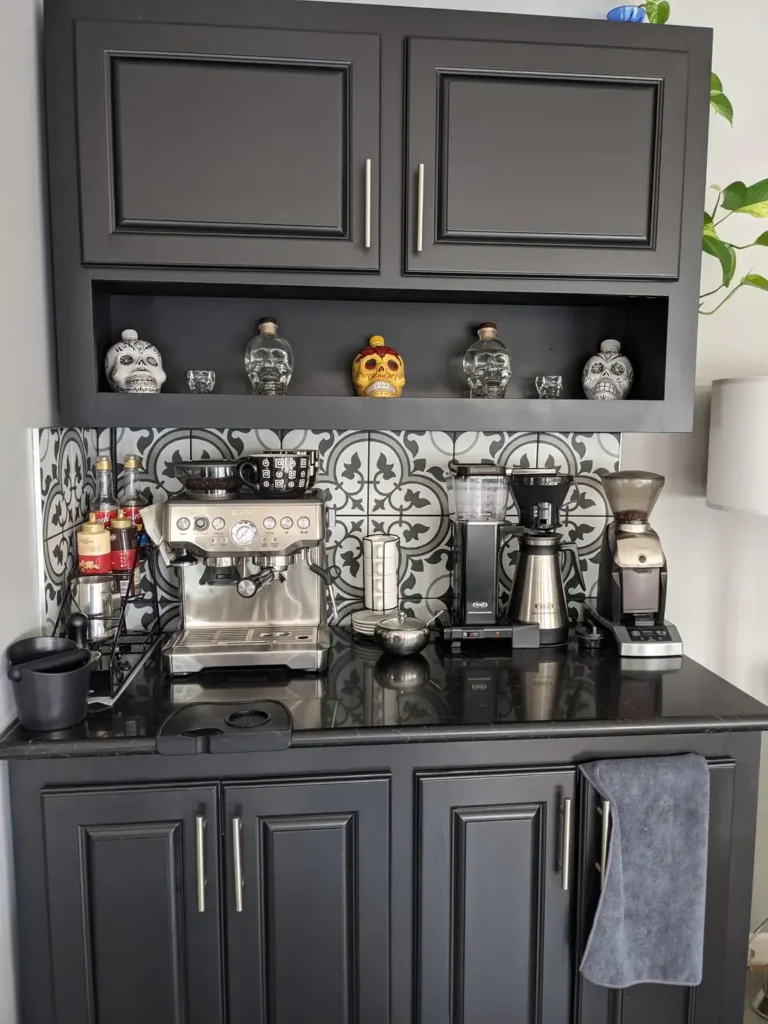
Black cabinets make a statement, especially when paired with geometric backsplash tile. This coffee bar uses charcoal gray cabinets from floor to ceiling, creating a moody backdrop for the stainless steel espresso equipment.
r/fallingd0wn installed a black open shelf between the upper and lower cabinets, displaying decorative skull bottles that add personality.
The real genius sits in the backsplash choice: black and white Moroccan-style tiles that create pattern without competing with the equipment. A Breville espresso machine anchors the counter alongside multiple grinders and a pour-over setup.
The monochromatic color scheme lets the brewing gear become the visual focus. Everything reads as deliberate: the towel hanging from the lower cabinet, the single plant adding life to the dark palette, the careful arrangement of bottles and accessories.
Dark cabinets work for coffee stations because they hide inevitable coffee stains better than white. The patterned backsplash adds dimension while maintaining the sophisticated feel.
This approach suits people who want their coffee corner to feel like a separate destination within the kitchen.
Natural Wood Shelving with Butcher Block Counter
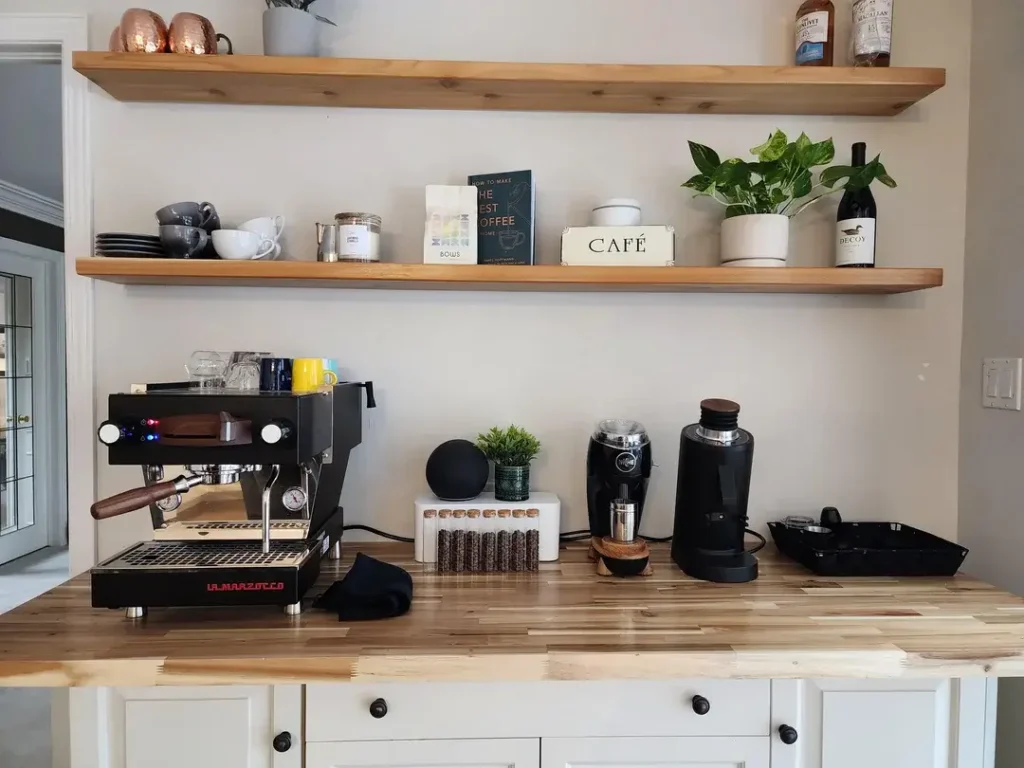
Wood brings warmth that stainless steel alone never achieves. This setup pairs light oak floating shelves with a thick butcher block countertop, creating a Scandinavian-inspired coffee nook.
The two floating shelves hold different functions. r/hraklis_1 uses the top shelf for decorative items and coffee beans, while the middle shelf displays mugs and a framed coffee print.
Below, a black La Marzocco espresso machine sits on the butcher block beside a matching black grinder. The white lower cabinets keep the look bright while providing closed storage.
Butcher block counters make sense for coffee stations because they’re naturally water-resistant and develop character over time.
The wood also softens the industrial look of espresso equipment. Notice how the wooden shelves echo the countertop material, creating cohesion.
The color palette here white, black, and natural wood works because it’s simple. Each element serves a purpose without fighting for attention. The small potted plant and minimal shelf styling keep the focus on functionality.
Built-In Hutch with Mug Collection Display
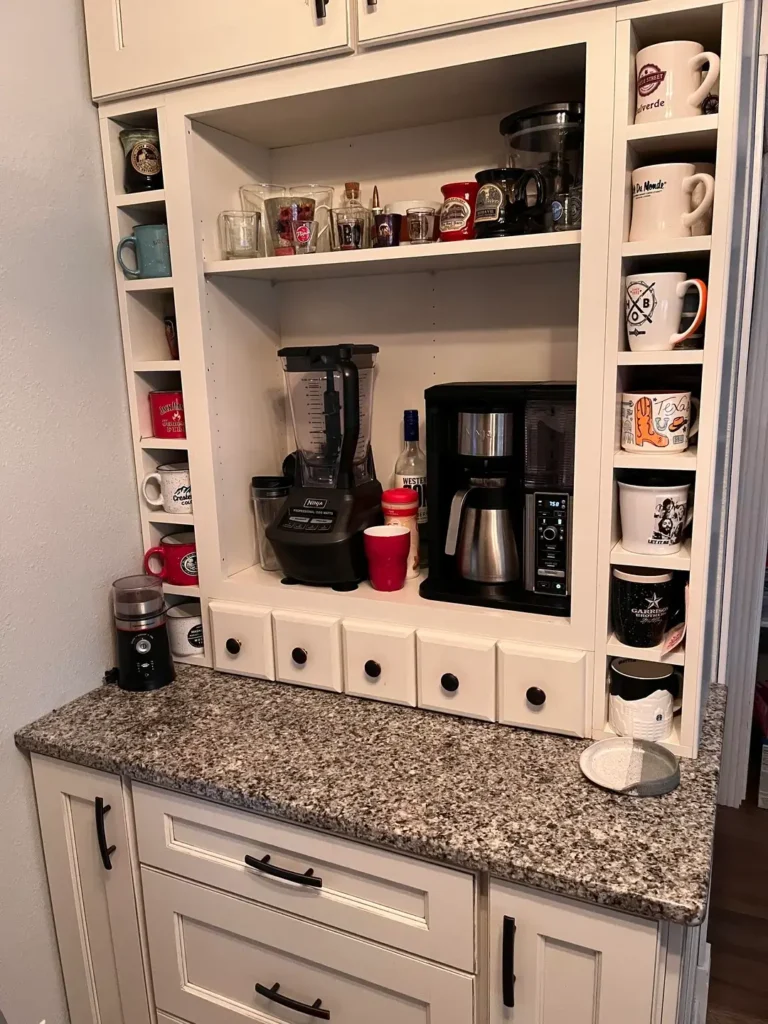
Converting existing cabinetry into a coffee bar saves money while adding functionality. This built-in hutch transforms a standard cabinet section into a dedicated coffee station with personality.
What r/bb_69_dd did here is maximize vertical space in a clever way. The upper shelves display a collection of coffee mugs from various shops and locations, turning everyday items into conversation pieces.
The middle shelf holds the coffee maker and blender, while the lower shelf stocks beans and supplies. Narrow side columns provide additional mug storage, and the granite counter below offers prep space.
The white cabinetry keeps everything feeling open despite the amount of items on display. Those small drawers beneath the counter likely hold filters, stirrers, and other small accessories that would otherwise create counter clutter.
This setup proves you don’t need to build new furniture. If you have a hutch or cabinet unit in your kitchen, you already have the bones of a coffee bar. The mug collection approach works especially well if you enjoy variety in your coffee routine.
Sage Green Custom Cabinet with Butcher Block Top
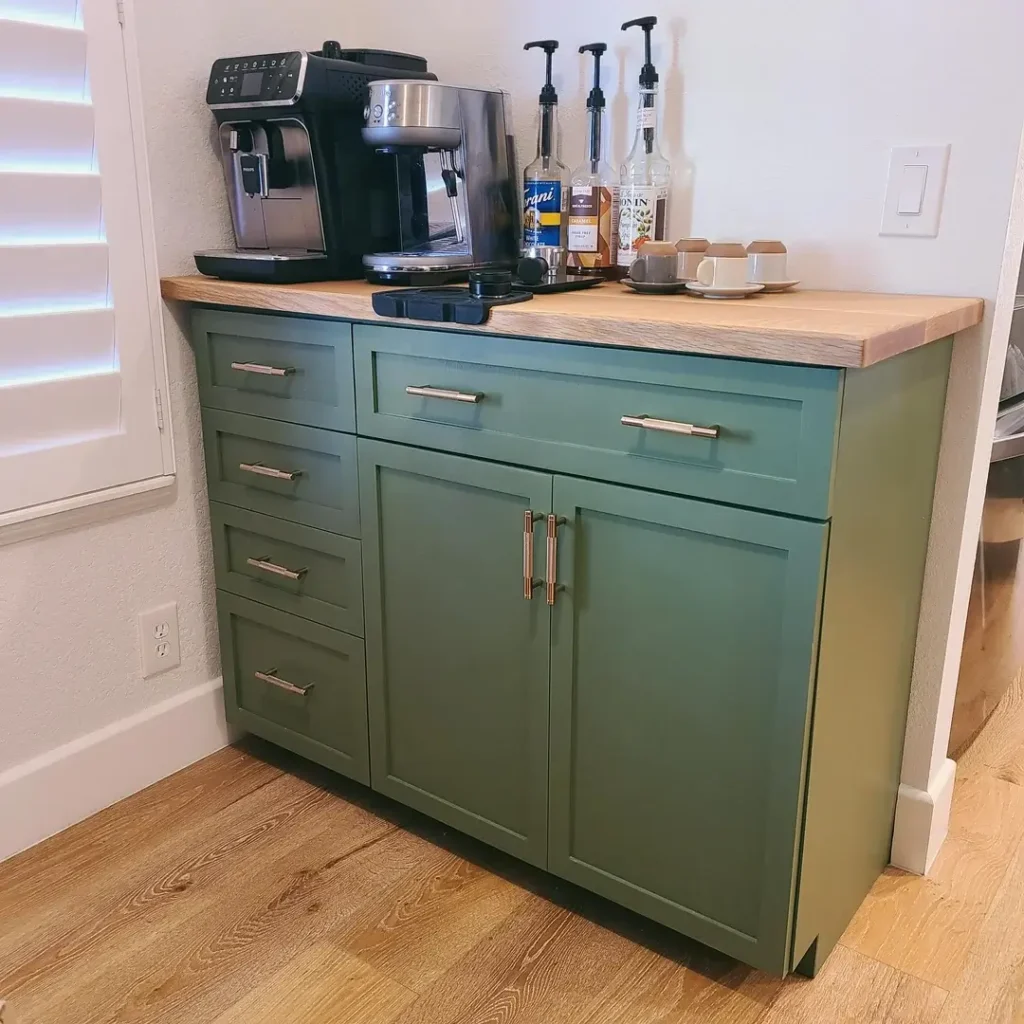
Custom cabinetry doesn’t have to mean bland white boxes. This sage green cabinet brings color while maintaining sophistication, topped with a warm oak butcher block counter.
r/arroyobass clearly invested in a custom build here. The cabinet features multiple drawers on the left and double doors on the right, providing serious storage beneath the counter.
Brushed nickel hardware adds a modern touch against the muted green. On top, a super-automatic espresso machine handles the brewing while syrup pumps wait ready for flavored drinks.
The sage green color choice matters more than you might think. It’s neutral enough to work with most kitchen palettes but distinctive enough to make the coffee bar feel special.
The butcher block top adds warmth and creates a visual break between the upper white walls and the colored base.
Notice the simplicity of the counter arrangement. Just the machine, a few cups, and the syrup dispensers. The generous storage below means everything else stays hidden. This approach suits people who prefer clean counters but need substantial coffee equipment.
Live Edge Floating Shelf with Vintage Coffee Grinders
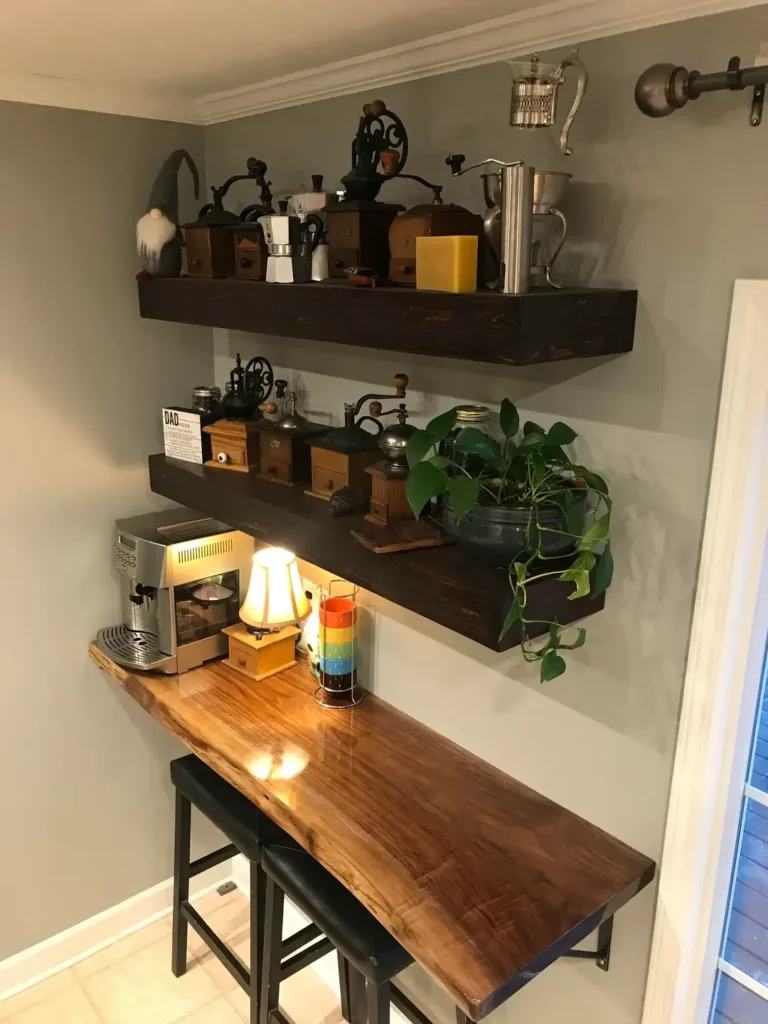
Collectors need display space, and this setup delivers. Three dark stained floating shelves showcase vintage coffee grinders and brewing equipment against a light gray wall.
The bottom shelf differs from the upper two. r/michaelhpichette used a live edge wood slab as a narrow counter, supported by simple black legs.
This creates an actual workspace for brewing while the shelves above provide display and storage. Vintage hand-crank grinders, moka pots, and ceramic coffee holders turn the wall into a gallery.
What makes this work is the commitment to the vintage aesthetic. Modern equipment would clash with the antique grinders.
Instead, the setup celebrates coffee history while remaining functional. The rainbow-striped French press and small table lamp add whimsy without undermining the cohesive look.
The floating shelf strategy works in tight spaces where a full cabinet would overwhelm. These shelves probably extend less than twelve inches from the wall, yet they create a complete coffee station. The live edge counter provides just enough surface for a single cup brew.
Industrial Pipe Shelf with Dual Brewing Methods
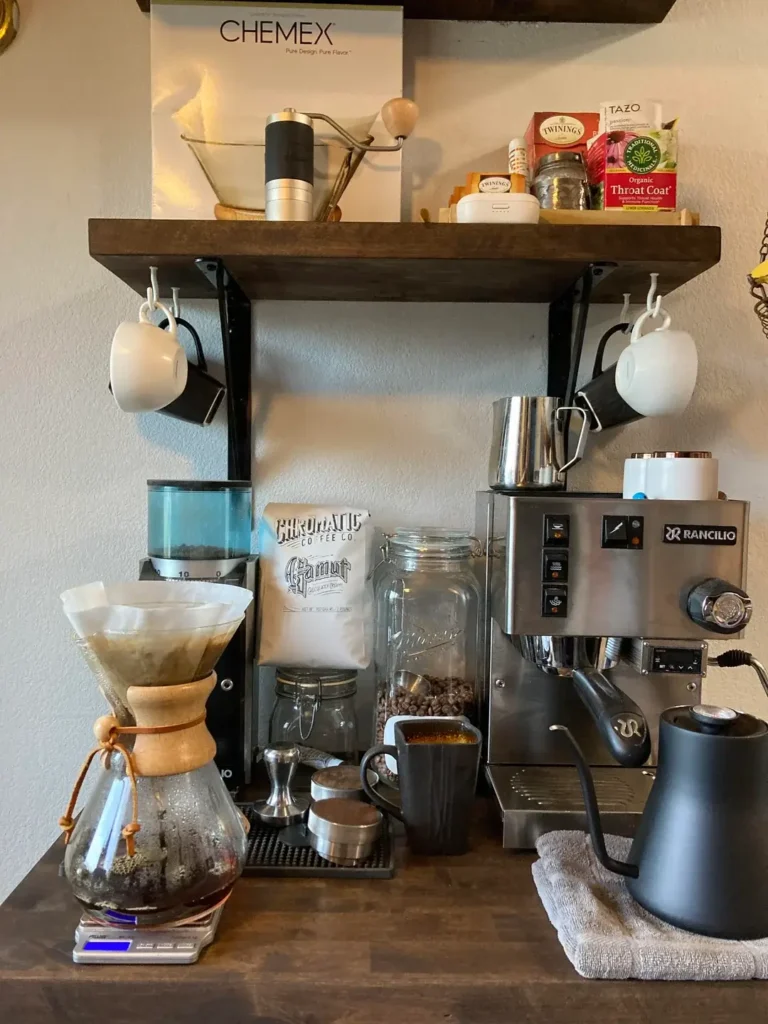
Simple materials can create striking results when thoughtfully arranged. This compact station uses a dark stained wood shelf supported by black pipe brackets, mounted above a small workspace.
r/StylishUsername demonstrates how to accommodate multiple brewing styles in minimal space. A Chemex pour-over sits on the left, a Rancilio espresso machine holds the right side, and storage containers fill the middle ground.
Above, the shelf holds a manual grinder, tea supplies, and decorative items. Mug hooks beneath the shelf keep cups accessible without using counter space.
The industrial pipe brackets provide both function and style. They’re stronger than typical shelf supports, which matters when you’re storing heavy grinders and equipment. The paper towel holder integrated with the shelf adds utility that typical coffee bar setups miss.
This approach costs less than custom cabinetry while delivering a complete station. The wood shelf, pipe brackets, and hooks could be assembled for under fifty dollars in materials. The key is choosing quality brewing equipment and keeping the styling minimal.
Light Wood Shelving with Two-Tone Cabinet Base
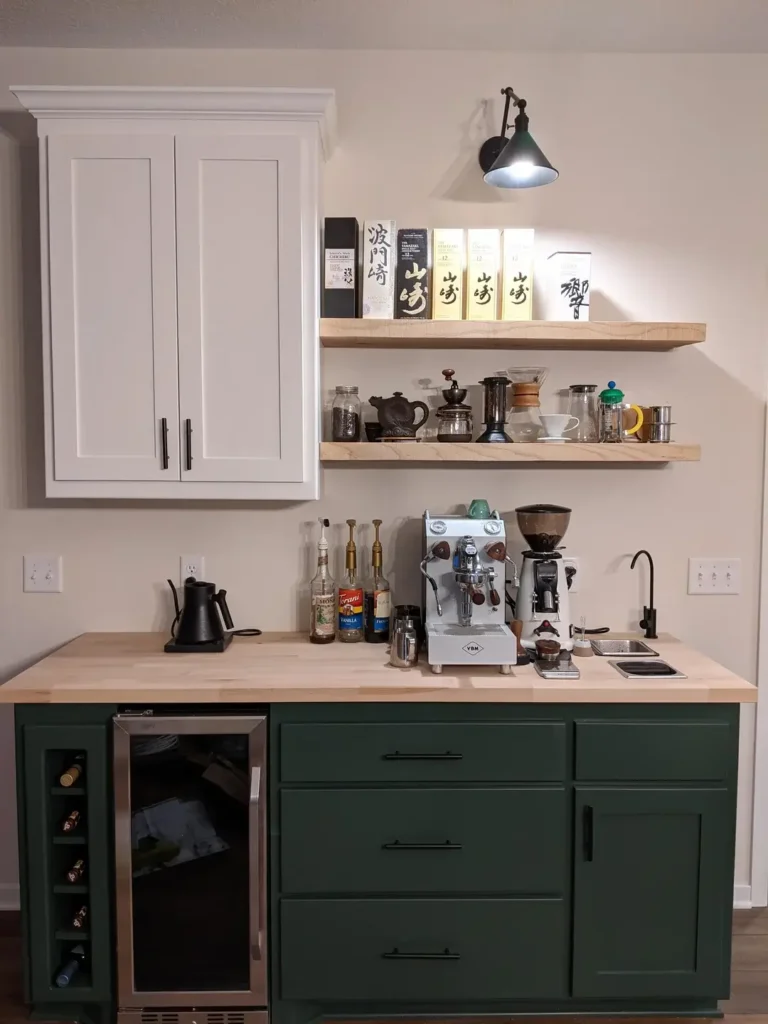
Mixing cabinet colors creates visual interest that single-tone kitchens lack. This coffee bar pairs crisp white upper cabinets with hunter green lowers, connected by light oak floating shelves.
The genius of what r/nguye569 built here sits in the shelf spacing. The top shelf holds whiskey bottles in decorative boxes, creating height.
The middle shelf displays teapots, pour-over equipment, and cups at eye level. These shelves bridge the gap between white and green cabinetry, making the color transition feel intentional.
Below, a light wood countertop provides workspace. The espresso machine, grinder, and accessories line up along the counter, while a small wine fridge sits beneath on the left.
Notice the adjustable task light mounted to the cabinet practical lighting that most coffee bars lack.
The two-tone cabinetry works because the colors share similar saturation levels. The green reads sophisticated rather than bold, complementing the white instead of competing with it. The wood shelves and counter tie both colors together through warmth.
Glass-Front Upper Cabinets with Display Lighting
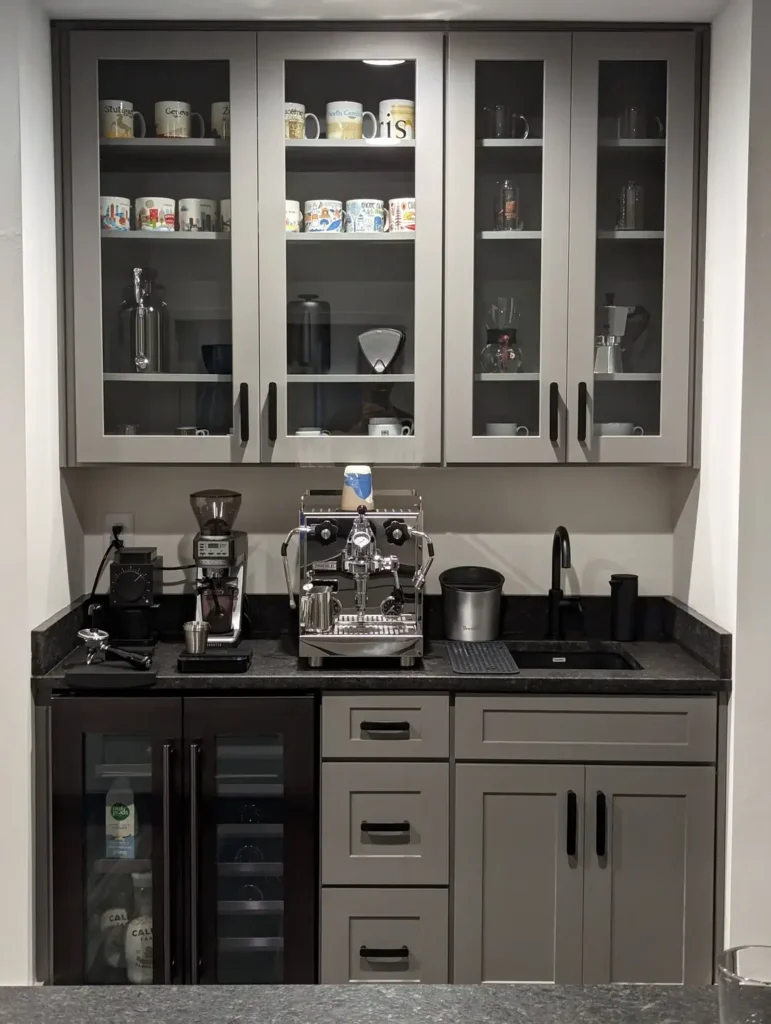
When you’ve invested in quality equipment and curated mug collections, hiding them makes no sense. This setup uses glass-front cabinets to showcase items while keeping them dust-free.
The upper cabinets feature four glass doors that reveal organized shelving. r/0HSHIFT arranged mugs on the top shelves and brewing equipment on the lower ones, creating a miniature museum effect.
Gray cabinet frames match the lower cabinetry, while the black shelving inside creates depth. Below, a black granite counter hosts a professional espresso machine flanked by grinders.
Interior cabinet lighting would elevate this even further, though it’s not visible in this setup. The glass doors serve a practical purpose too: they remind you what’s available when deciding which brewing method to use.
The black and gray color scheme creates a sleek, modern aesthetic. Everything coordinates without looking overly matched.
The glass-front approach works best when you maintain organization inside the cabinets; messy shelves become focal points rather than hidden problems.
Choosing Your Coffee Bar Style
The setups above represent different priorities and budgets. Some emphasize display and collection, others focus purely on function. Your choice should match both your coffee habits and your kitchen’s existing style.
| Setup Style | Best For | Complexity Level |
|---|---|---|
| Herringbone with vertical organizers | Small spaces with limited counter area | Easy |
| Professional bar mat foundation | Espresso enthusiasts who value cleanliness | Easy |
| Bold dark cabinetry | Modern kitchens with dramatic style | Medium |
| Natural wood shelving | Scandinavian or warm minimalist spaces | Medium |
| Built-in hutch conversion | Utilizing existing furniture | Easy |
| Custom colored cabinets | Kitchens needing personality injection | Advanced |
| Vintage collector display | Coffee history enthusiasts | Medium |
| Industrial pipe shelving | Budget-conscious DIYers | Easy |
| Two-tone cabinetry | Kitchens with defined zones | Advanced |
| Glass-front display cabinets | Organized collectors with quality gear | Medium |
Making Your Coffee Bar Work Long-Term
The difference between a coffee corner that lasts and one that becomes cluttered sits in honest assessment of your habits. If you only drink drip coffee, don’t build a station around an espresso machine you’ll use twice. If you collect mugs from every city you visit, plan display space from the start.
Consider what happens during your actual morning routine. Do you need counter space for multiple cups? Does someone else use the coffee station at the same time? Where do dirty portafilters and French presses go while you’re drinking your first cup?
The best setups I’ve seen account for the messy middle moments, not just the styled photos. They include knock boxes for espresso pucks, spots for wet spoons, and enough counter space to set down a mug while you’re still half asleep.
Your coffee bar should make your morning easier, not create another space that needs constant maintenance. Choose materials that age well, storage that holds what you actually own, and a layout that matches how you genuinely brew coffee.