
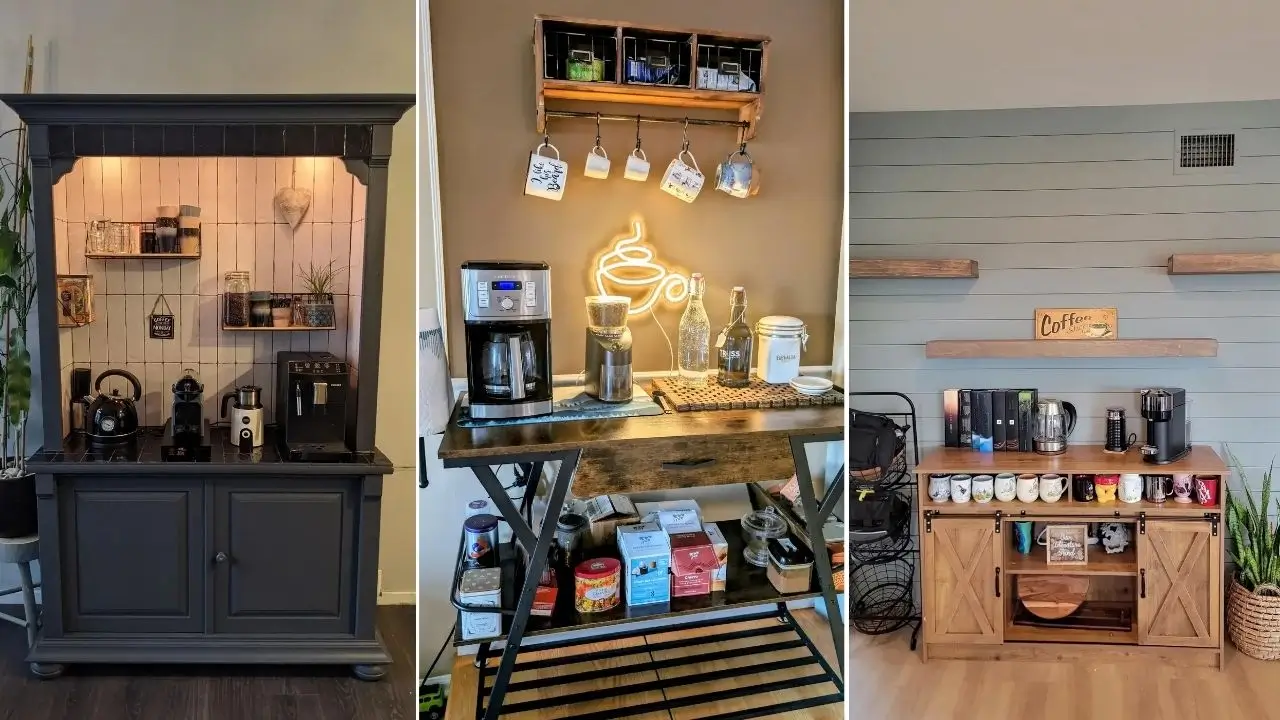
Your countertop looks like a disaster zone every morning. Coffee pods scattered, milk frother taking up half the space, and that grinder you swore would fit somewhere still sitting in a box.
You need dedicated space, but renovating the kitchen feels excessive when you really just want a decent cup of coffee without the chaos.
I’ve gathered 12 real examples from people who solved this exact problem. These are functional setups that work in actual homes, not staged magazine spreads.
You’ll see how they used everything from alcoves to repurposed furniture, and more importantly, why their specific choices work for their space.
Built-In Alcove with LED Backlighting
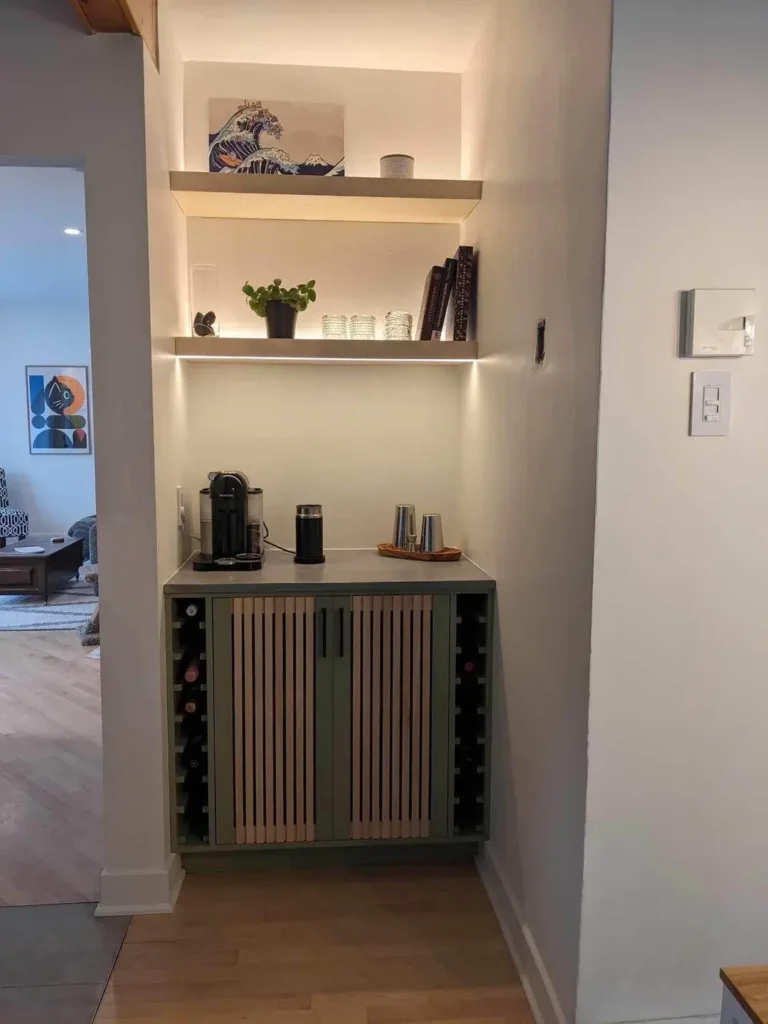
This recessed setup proves you don’t need sprawling counters to create a proper coffee station. The entire bar fits into what appears to be a narrow hallway niche, yet everything has its place.
r/Izz3t built this into an alcove with custom LED strip lighting behind floating shelves. The sage green cabinet below features slatted doors with built-in wine storage flanking the central compartment. Notice the butcher block countertop and how the warm backlighting creates depth against the white walls.
What makes this effective is the vertical storage strategy. Two floating shelves hold decorative items and glassware without crowding the work surface.
The cabinet keeps coffee equipment hidden while the wine racks add dual functionality. The lighting transforms what could be a dark corner into an inviting focal point.
If you’re working with a similarly narrow space, measure your deepest piece of equipment first. That Nespresso machine or French press determines your minimum depth.
Then build your shelving around that measurement rather than guessing and ending up with wasted space or overhang.
Multi-Level Bar Cart with Custom Cabinetry
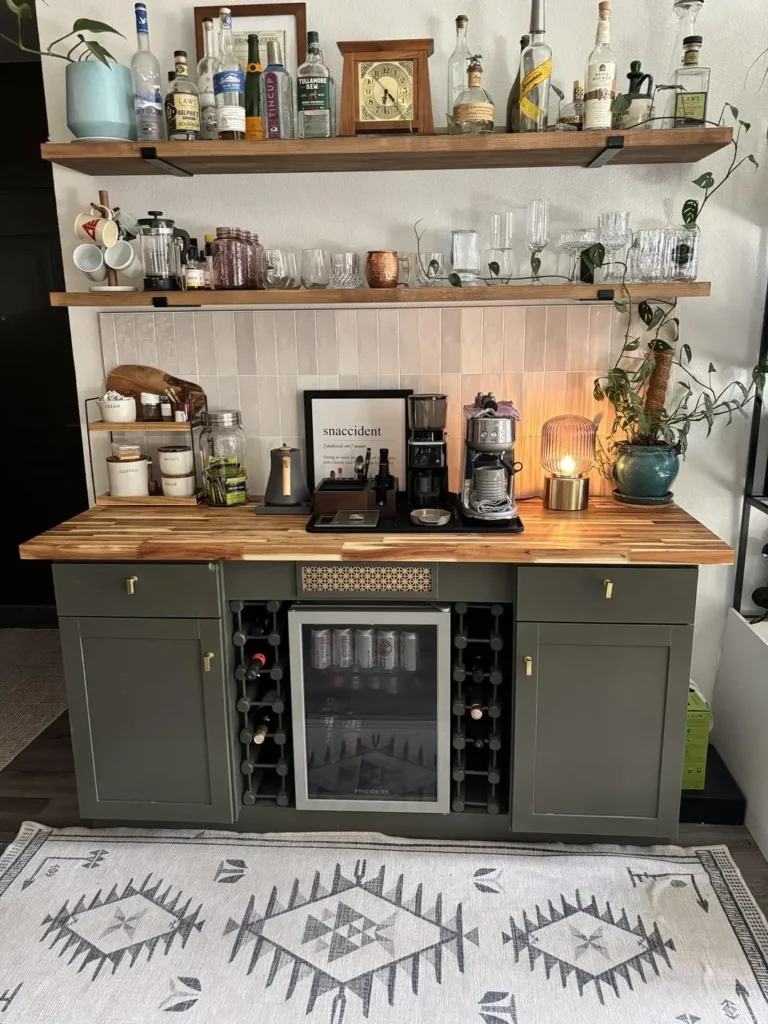
Some coffee stations need to handle more than just coffee. This setup doubles as a beverage center with spirits storage integrated directly below the brewing area.
The gray-painted base cabinet includes a beverage fridge with glass door, flanked by built-in wine racks on both sides.
r/housewiveswhore installed butcher block countertops and added white vertical tile backsplash that extends to floating wood shelves.
The upper shelves display spirits bottles and a vintage clock, while the work surface holds the coffee maker, grinder, and French press alongside canisters and glassware.
This works because it establishes clear zones. Coffee prep happens at counter level. Spirits stay visible but separate on the top shelf. Wine and cold drinks live below. The mixing of functions could create clutter, but the defined areas prevent that.
To replicate this zoning approach, assign each level a specific purpose before you start loading it with items. Counter for active equipment, upper shelf for occasional use or display, lower cabinet for backup supplies. This prevents the common mistake of just filling every surface until nothing has a home.
Industrial Pipe Shelving with Cafe Signage
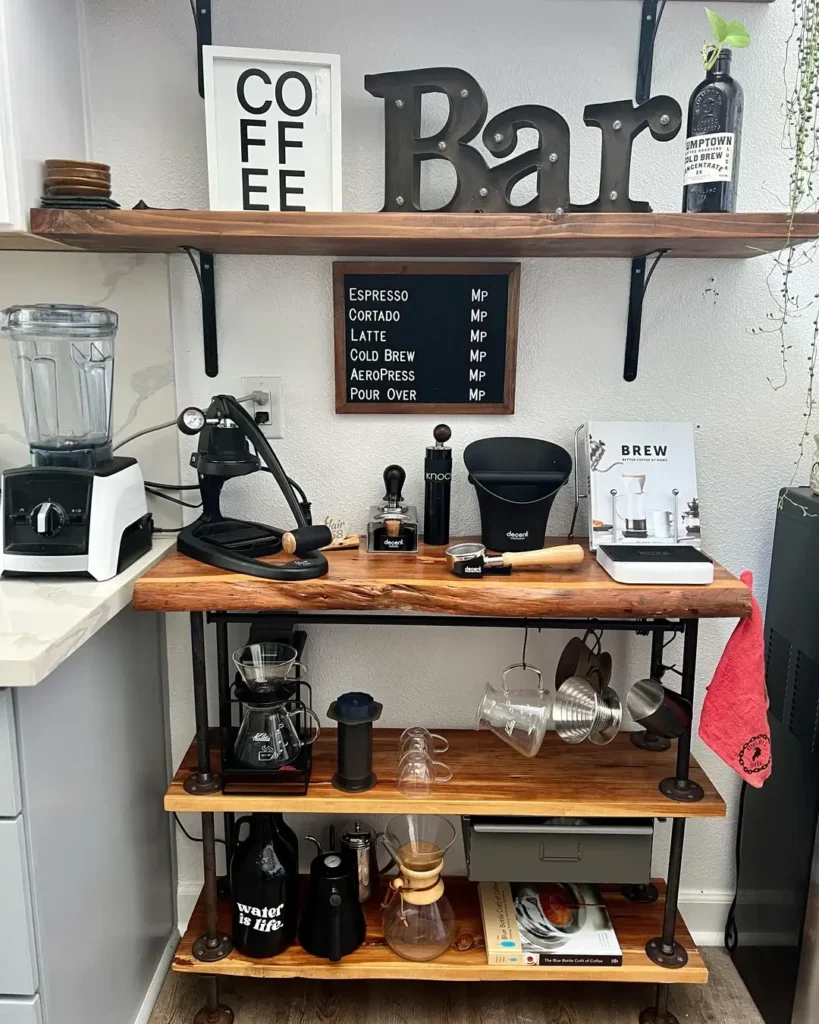
You want coffee bar aesthetics but don’t want to commit to permanent installations. This freestanding industrial shelf unit solves that problem.
The setup uses black pipe frame shelving with mixed wood tones across three tiers. r/Zealousideal_Prior84 mounted industrial pipe brackets directly to the wall above, holding a shelf with large “Bar” marquee letters and a framed coffee print.
Below that, a felt letter board displays drink options. The counter hosts an espresso machine setup with manual tools, while lower shelves store pour-over equipment and coffee books.
The genius here is the modular nature. You can move this entire station without patching drywall or dealing with mounting brackets.
The industrial aesthetic gives you permission to show the structure rather than hiding it, which paradoxically makes it look more intentional.
When shopping for similar shelving, check the weight capacity per shelf. Coffee equipment is deceptively heavy. That espresso machine alone probably weighs 15 pounds, and you need headroom beyond the stated capacity to avoid sagging shelves over time.
Repurposed Hutch as Coffee Station
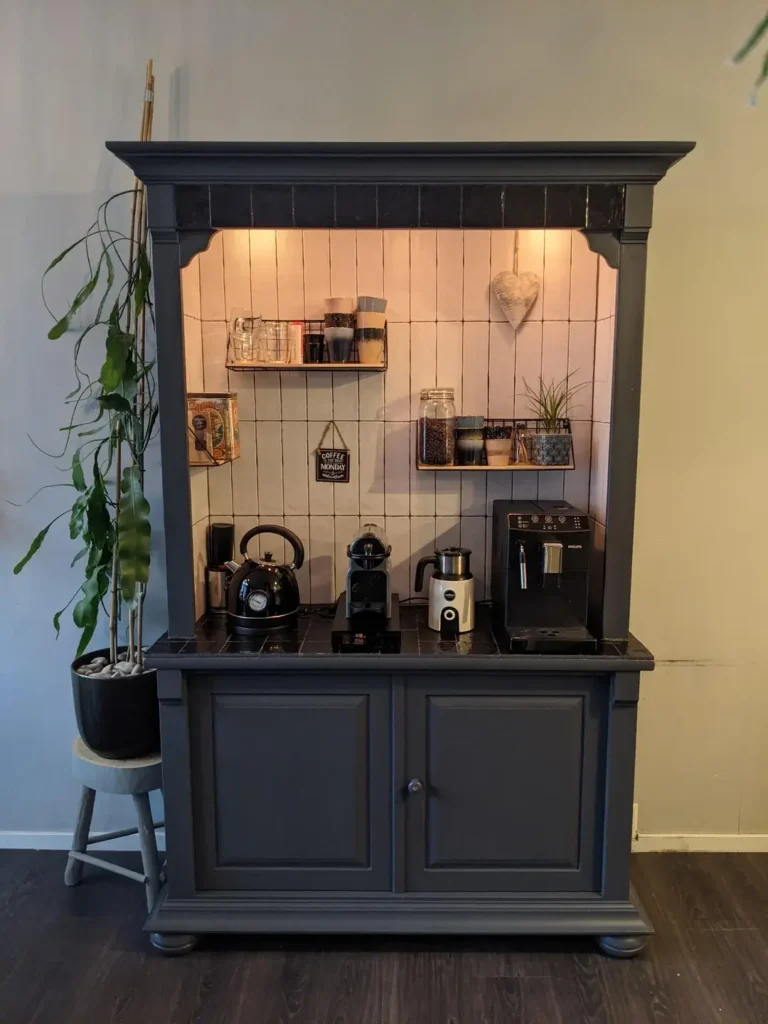
Not every solution requires building something from scratch. Sometimes the answer sits in your local furniture marketplace waiting for a second life.
This black painted hutch transforms a traditional dining piece into a dedicated coffee bar. The lower cabinet conceals storage while the upper section features white shiplap backing with a grid pattern for hanging small wire shelves and hooks.
r/Roger_Premuzak installed strip lighting under the upper cabinet and placed various coffee machines and a kettle on the counter level, with a “Coffee Monday” chalkboard sign as a focal point.
The transformation works because hutches already have the right proportions for this application. Counter height for equipment, upper storage for display and frequently used items, lower cabinet for bulk supplies. The grid backing turns the hutch interior into functional wall space for organizing.
If you’re eyeing vintage furniture for conversion, bring measurements of your tallest coffee machine with you. Some hutches have shorter interior heights than you’d expect, and finding out after you’ve hauled it home that your espresso machine won’t fit under the upper cabinet is frustrating.
X-Frame Cart with Floating Shelves
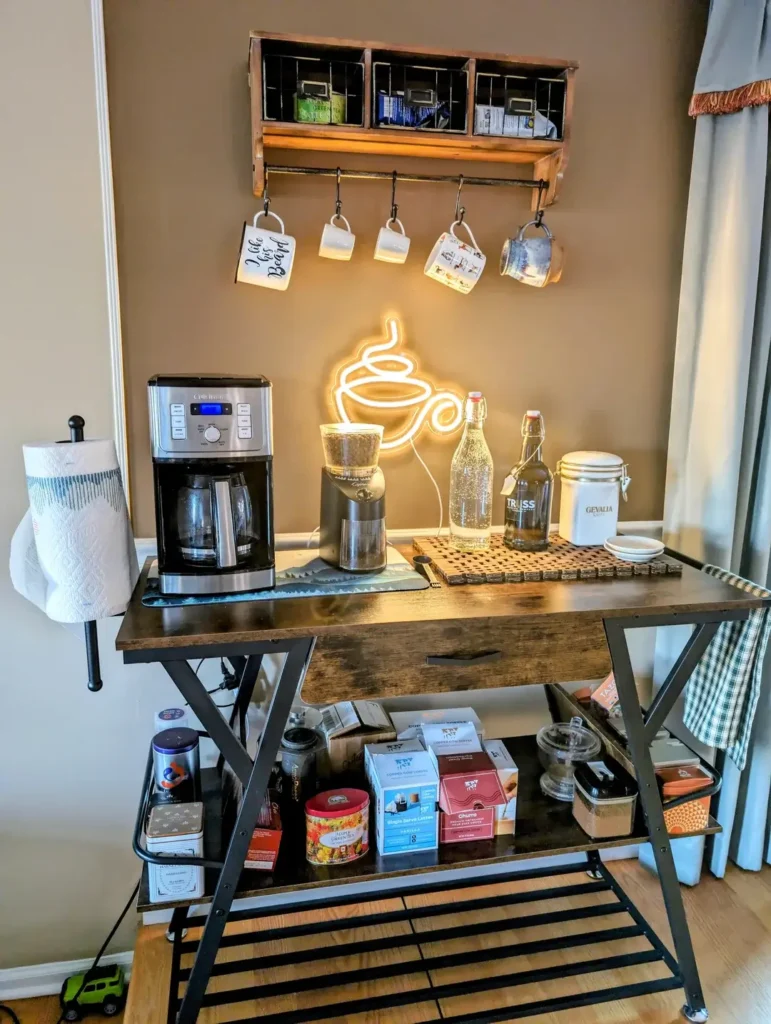
Farmhouse style persists because it actually solves practical problems. This combination of cart and shelving demonstrates why.
The setup centers on a natural wood console with X-frame legs and a drawer, topped with rustic wood floating shelves mounted on gray shiplap accent wall. r/belay_my_last used a barn-style cabinet below with sliding doors and open shelving displaying mugs, plus a vintage “Coffee Shop” sign above.
The workspace holds a Nespresso machine and kettle, with K-cups visible in the cabinet and mugs arranged in the mug cubby above.
This arrangement keeps daily essentials at eye level while hiding backup supplies behind those sliding cabinet doors. The X-frame provides sturdy support without bulk, which matters when your cart sits in a high-traffic area where people need to walk past it.
The key measurement here is the distance between your floating shelves and cart top. Leave at least 18 inches so you can comfortably reach for mugs without knocking over your coffee maker.
I see people mount shelves too low because they look better in photos, then they can’t actually use the space functionally.
Dual-Purpose Coffee and Cocktail Bar
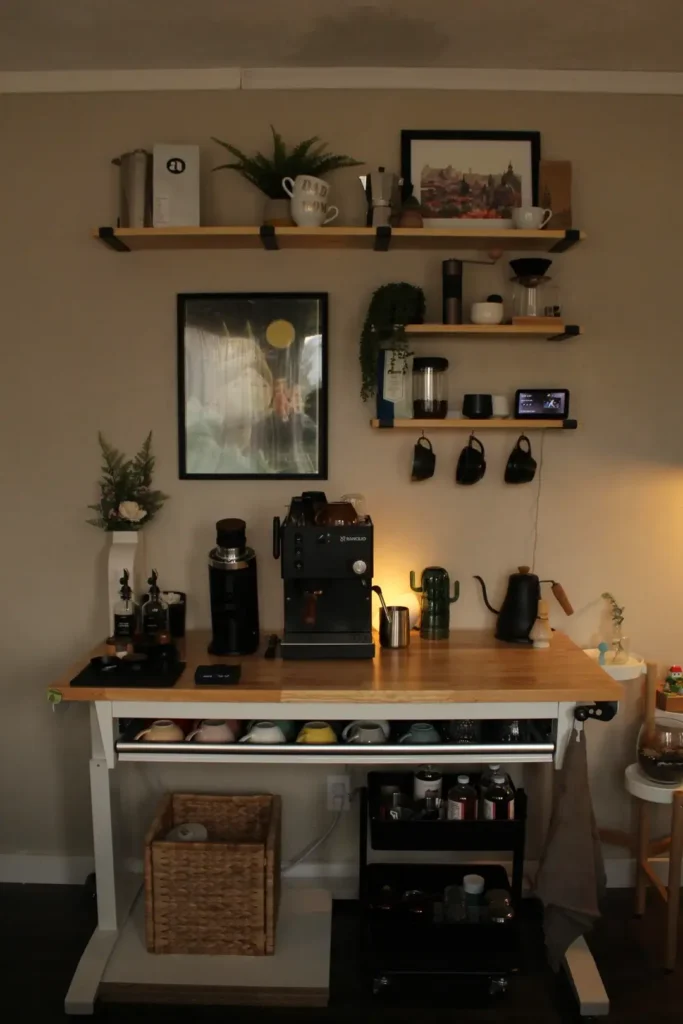
Sometimes you need one piece of furniture to earn its keep in multiple ways throughout the day. This credenza handles both morning coffee and evening cocktails without feeling chaotic.
Against a vibrant mustard yellow wall, this mid-century inspired credenza features white countertop, blue textured cabinet doors with brass hardware, and glass-front sections displaying spirits bottles.
r/itsbyrdie placed an espresso machine and grinder on top alongside a pour-over setup, with a wooden shelf above holding mugs on hooks and additional bottles. The modern art print provides a focal point.
The color blocking makes this work. The bold wall creates a defined zone without physical barriers, while the blue cabinet grounds the space.
The see-through storage keeps bottles visible so you know what you have without digging through cabinets.
When combining coffee and cocktail functions, keep them visually separate even on the same surface. Coffee gear on one end, spirits on the other, mixing tools in the middle if needed.
This prevents the confused look of having a cocktail shaker next to your coffee grinder with no clear purpose to either zone.
Compact Bar Table with Wire Baskets
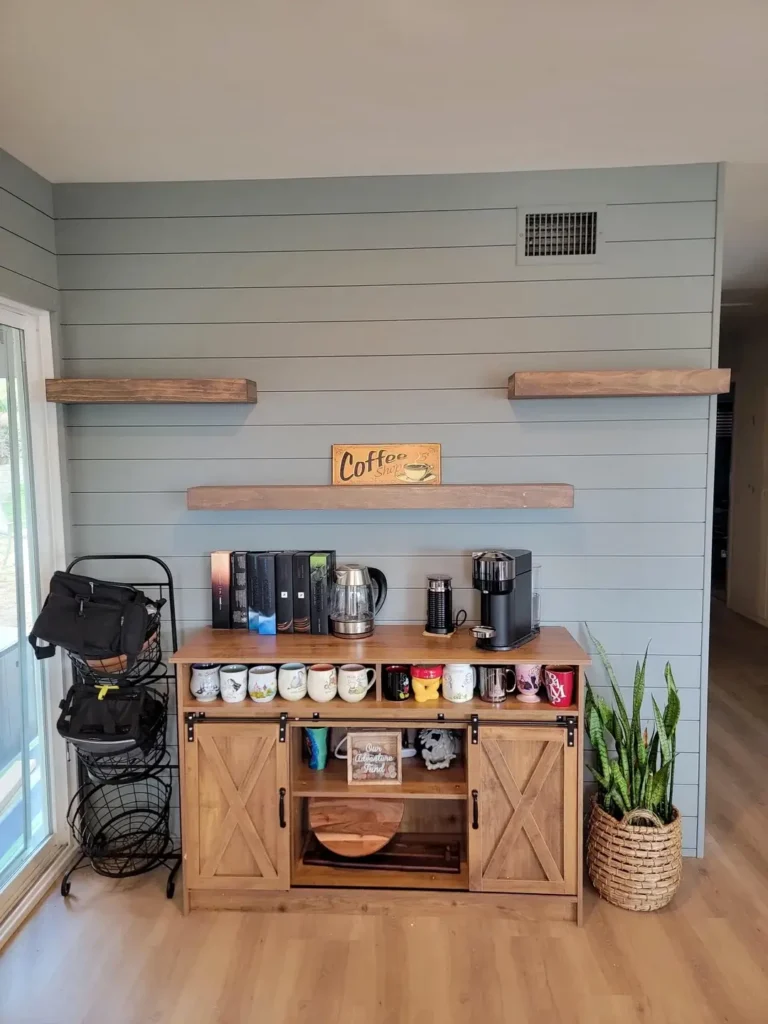
You have four square feet of floor space and still want a functional coffee bar. This demonstrates what’s possible with creative vertical storage.
Two brown leather bar stools sit at a floating wood slab countertop mounted to the wall. Above, dark wood shelves with integrated lighting hold mugs on hooks and stacked cups, with wire basket organizers providing additional storage.
r/iliketobefunny added a metal coffee sign silhouette as wall decor, and the counter holds a Keurig machine with water dispenser alongside it.
The brilliance here is treating it like a breakfast bar rather than a counter. By adding seating, the station becomes a destination rather than just a utility area. The wire baskets hang from the underside of shelves to capture dead space that usually goes unused.
If you’re installing a floating counter, factor in the weight of someone potentially leaning on it. Coffee equipment plus a person resting their elbows adds up quickly.
Use proper support brackets rated for the combined load, not decorative brackets that only handle the counter weight.
Butcher Block Cart with Asymmetric Shelving
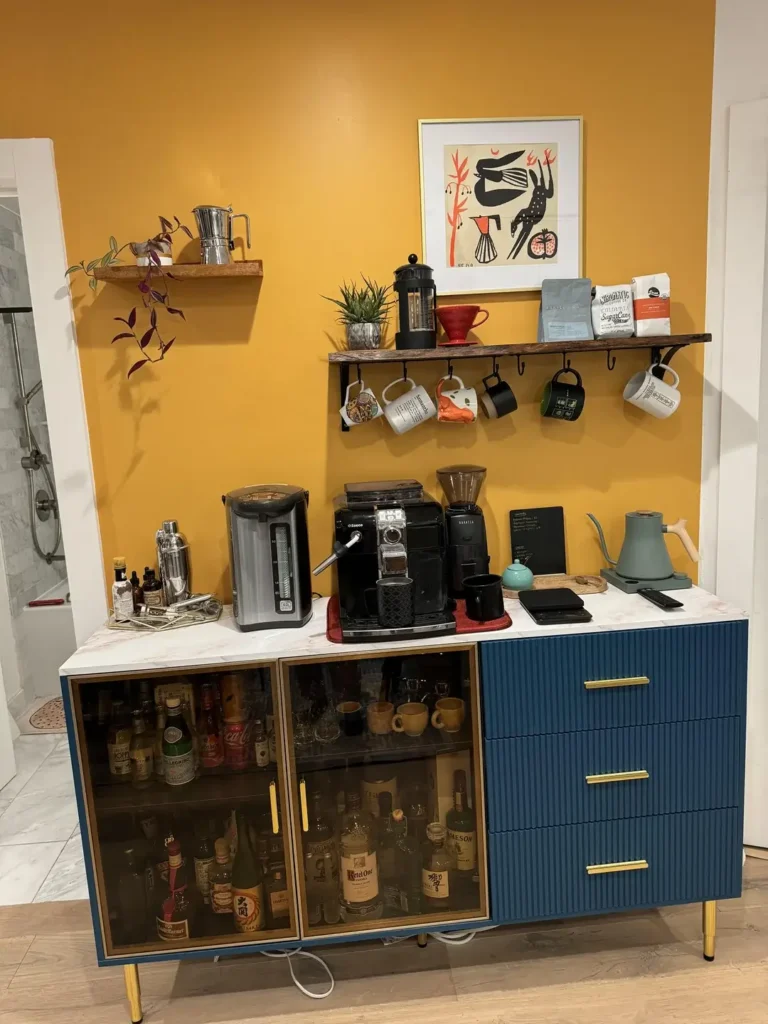
Open shelving looks clean in photos but gets messy in real life unless you have a system. This setup shows you how to make it work.
A white base with natural butcher block top provides the work surface, with three tiers of floating wood shelves arranged in a staggered pattern above.
r/Throwintdeco mounted the shelves with black metal brackets against a neutral wall, displaying a mix of coffee equipment, plants, mugs hanging from adhesive hooks, and a framed abstract print. Below the cart, a wicker basket and rolling black storage cart hold additional supplies.
The asymmetric shelf arrangement is the key. It looks artistic, but more importantly it creates different zones for different item heights. Tall items on the long shelves, small items on the short ones. This prevents the cramped feeling you get when everything sits on identical shelves.
When planning your shelf spacing, group items by frequency of use rather than by type. Daily mugs at arm’s reach, backup supplies higher up, equipment you rarely move on the bottom. This saves you from constantly reaching overhead for things you need every morning.
Narrow Built-In Cabinet Nook
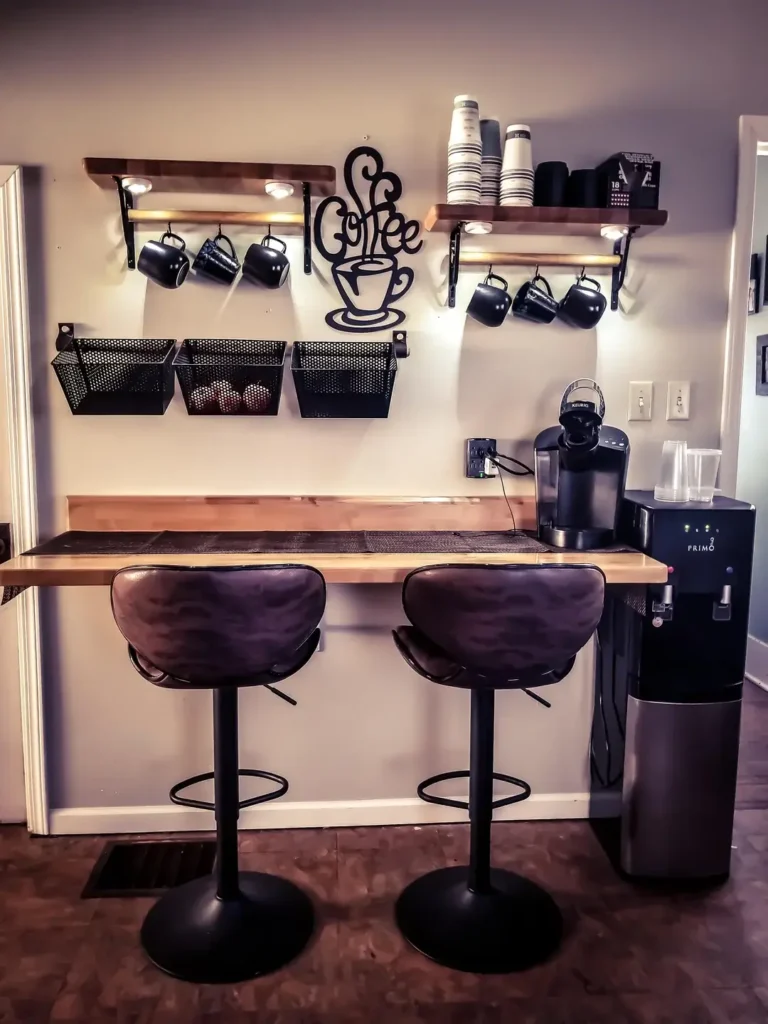
You found dead space between two cabinets and want to make it useful. This illustrates how to turn awkward gaps into purpose-built stations.
Squeezed between white cabinets, this narrow built-in features vertical tile in sage green behind two floating wood shelves. The white counter holds a Keurig machine and K-cup dispenser.
r/endorphiend2517 added minimal decorative elements on the shelves – a couple of plants and a few mugs – keeping the focus on functionality given the limited width.
This only works because everything is properly scaled. The machine fits with maybe two inches of clearance on each side. The shelves hold exactly what you need and nothing more. In a space this tight, every item needs to justify its presence.
The mistake people make with narrow spaces is trying to fit too much. They add decorative items until the space feels cluttered, which defeats the purpose of having a dedicated station.
If your gap is under 20 inches wide, limit yourself to the machine, pods or beans, and maximum three decorative items total across all shelves.
Wall-Mounted Floating Counter with Task Lighting
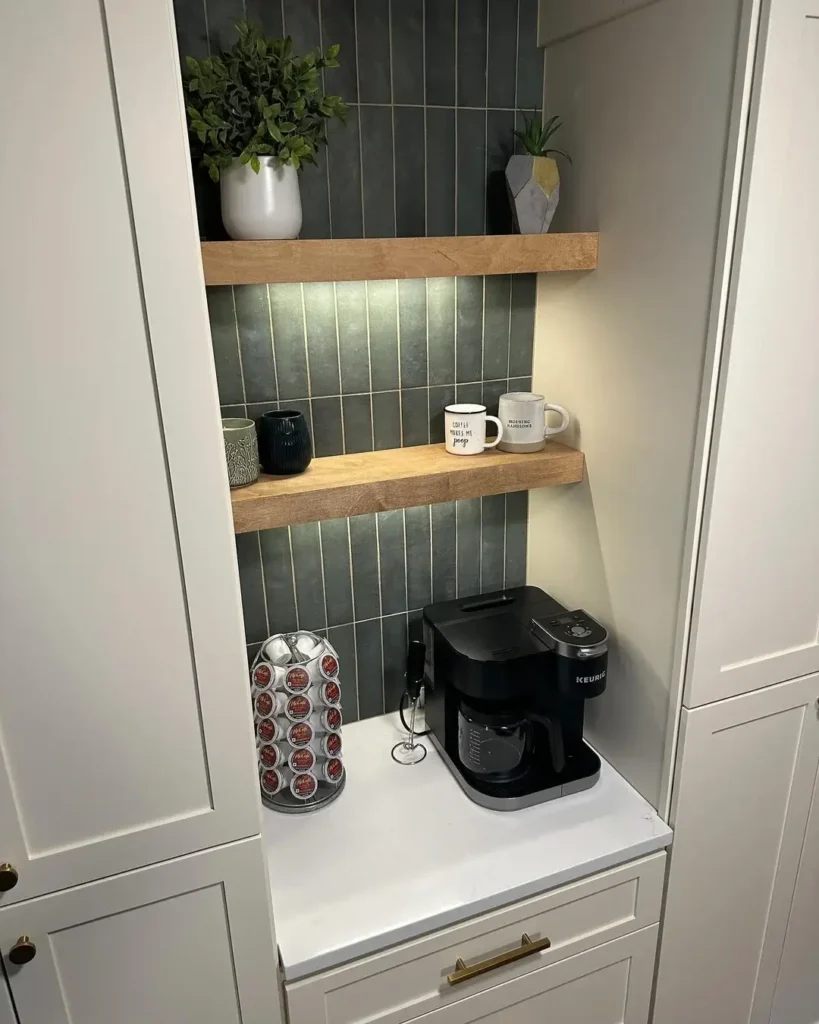
When floor space is nonexistent but wall space is abundant, this approach makes sense. It essentially creates a workspace from nothing.
A wide floating wood counter mounts directly to the wall, flanked by white cabinets with brass hardware. Above, three pendant lights on a track rail provide task lighting.
r/ThatBuilderDude added dark wood curved shelves that create visual softness against the angular cabinetry, displaying coffee equipment and decor.
The counter holds multiple machines including what appears to be a Nespresso and water dispenser, with more storage in the cabinet below.
The lighting makes or breaks this setup. Without those pendants, the deep counter would create shadows that make the workspace unusable. The curved shelves prevent the harsh look you’d get from all straight lines while still providing functional storage.
If you’re considering a floating counter, think about electrical access before you commit to the location. Running new outlets after installation costs significantly more than planning for them during construction. You need at least two outlets – one for the machine, one for the grinder or kettle. Three is better.
Compact Mini Fridge Station
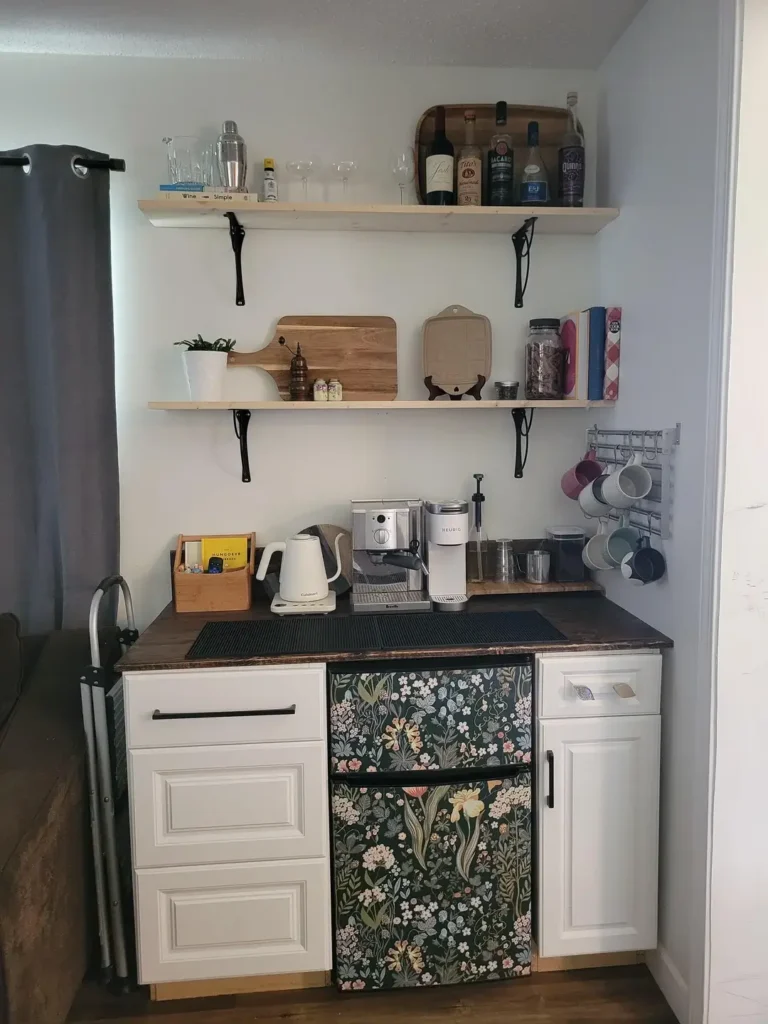
A coffee bar in what appears to be a closet or tight corner proves you can make this work almost anywhere. The constraints actually force good design decisions.
White built-in cabinetry creates a small nook with a mini fridge in the lower right cabinet. Floating wood shelves with black brackets hold cutting boards, small plants, and mugs on the wall side, while a patterned fabric covers the mini fridge opening.
r/mb232627 kept the espresso machine and kettle on the main counter with a black mat underneath to define the work zone, and hanging mugs on the wall add vertical storage.
The fabric curtain on the mini fridge is smarter than it looks. It hides the fridge without requiring a custom cabinet door, which would crowd this already tight space when opened. The visual softness also prevents the space from feeling too industrial despite all the equipment.
In tight quarters, every surface needs multiple functions. That black mat protects the counter but also defines where coffee prep happens versus where you set down other items.
The shelf holds pretty cutting boards but they’re functional for quick snacks. Nothing is purely decorative when space is at a premium.
Deep Teal Accent Wall with Fold-Down Counter
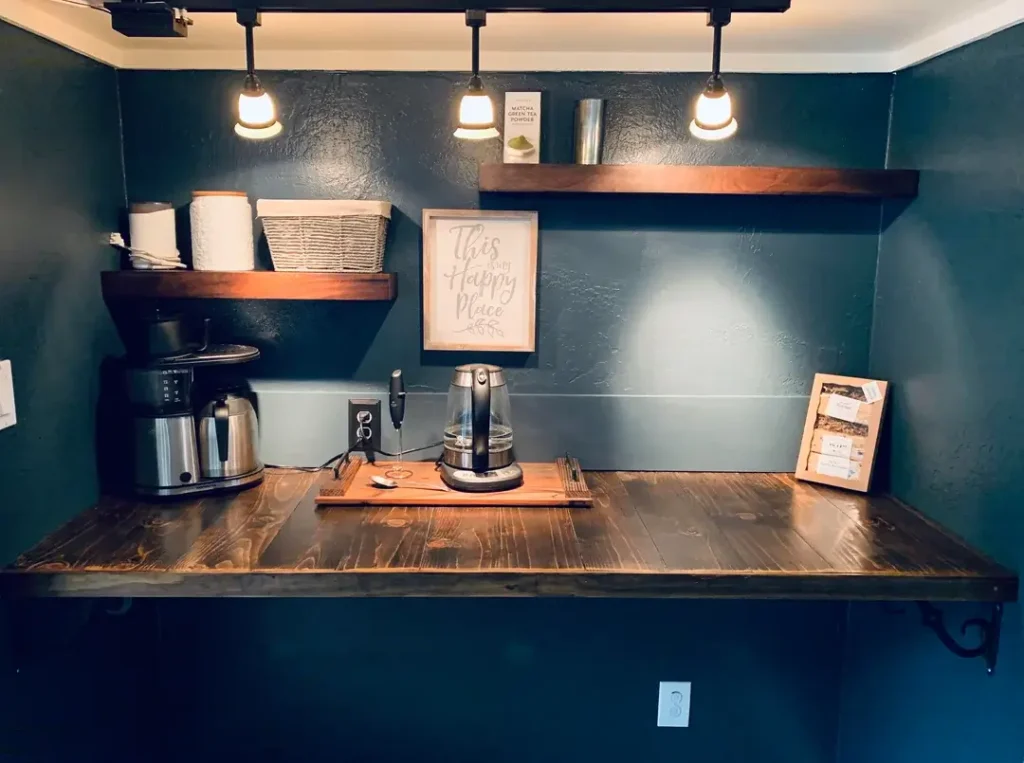
Bold color belongs in small spaces more than people think. This coffee bar proves that dark walls can actually make a tight area feel more defined rather than smaller.
Against deep teal walls, a fold-down or fixed wooden counter creates the work surface, with dark wood curved corner shelves above holding canisters and a basket.
r/bry31089 installed three pendant lights on a black bar that provide excellent task lighting. The counter displays a manual espresso setup with a “This Happy Place” sign, and the rich color creates an immersive dedicated zone.
The dark color works because it creates boundaries. Your eye knows exactly where the coffee zone starts and ends. In an open floor plan, this psychological definition can be more effective than physical dividers. The curved shelves soften what could feel like a box.
When using dark wall colors in small spaces, proper lighting becomes essential. Those three pendants aren’t optional decorative elements – they’re necessary to make the space functional.
Budget for quality fixtures that provide enough lumens to actually see what you’re doing. Dim atmospheric lighting looks moody in photos but makes morning coffee prep frustrating.
Key Design Principles Across All Setups
After examining these 12 examples, certain patterns emerge about what makes a coffee bar actually functional versus just photogenic.
Vertical storage matters more than counter space. Every effective setup maximizes wall height. Floating shelves, mounted brackets, hooks, and stacked storage keep the counter clear for actual work.
Lighting separates good from mediocre. Natural light rarely hits these stations at the right time of morning. The best setups add dedicated task lighting through strip LEDs, pendant fixtures, or puck lights.
The best solutions work with existing architecture. Rather than fighting your space constraints, these setups embraced alcoves, corners, and narrow gaps. Working with your space instead of against it produces better results than trying to force a magazine-perfect layout.
Here’s a comparison of the various approaches:
| Station Type | Best For | Space Required | Difficulty |
|---|---|---|---|
| Built-in alcove | Permanent homes, unused niches | 18-24 inches deep minimum | Advanced |
| Furniture repurpose | Renters, budget-conscious | Varies by piece | Easy |
| Cart-based | Flexible layouts, small spaces | 24 x 36 inches | Easy |
| Wall-mounted | Minimal floor space | 12 inches deep, 36 inches wide | Medium |
| Cabinet conversion | Hidden storage priority | 24-30 inches deep | Medium |
Your space likely falls into one of these categories. The examples show you don’t need a massive kitchen to create a dedicated coffee area. You need appropriate planning for your specific constraints.
Final Thoughts
Building a coffee bar isn’t about having the perfect space or unlimited budget. It’s about taking an honest look at where you actually have room and what you genuinely need access to every morning.
These 12 setups work because their creators started with their constraints rather than an idealized vision. Narrow hallway? Built-in alcove.
Need afternoon cocktails too? Combined beverage station. Zero floor space? Wall-mounted counter. The solution that works is the one that fits your actual life, not someone else’s kitchen.
You don’t need to match these exactly. Pull the specific ideas that solve your particular problems. Maybe it’s the wire basket storage from one example combined with the lighting approach from another.
Your space has its own quirks that will require its own solutions. These examples just prove that solutions exist for almost every situation if you’re willing to think beyond standard kitchen layouts.