
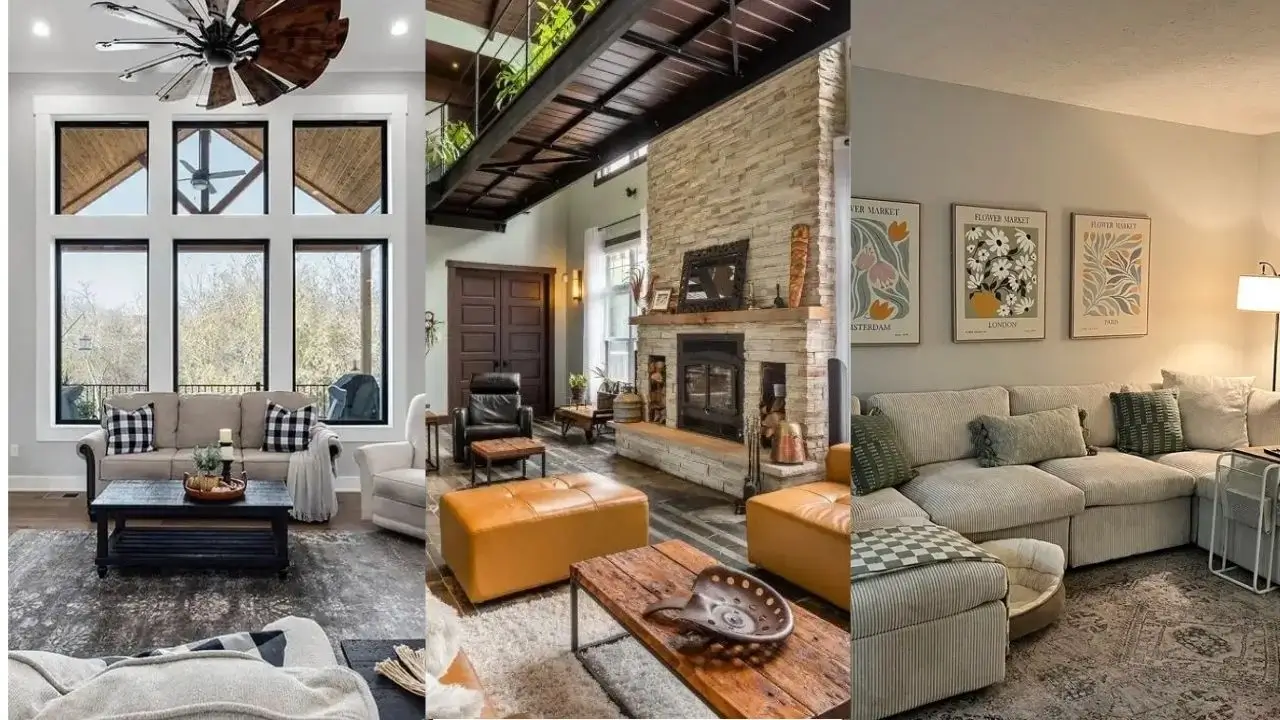
Let’s be honest. You’ve probably fallen down the Pinterest rabbit hole searching for “farmhouse living room” only to find a hundred rooms that look like they were assembled by a team of stylists who’ve never actually sat on a couch and eaten pizza. Everything’s perfectly placed, not a single throw blanket out of line, and you just know nobody’s ever lost a remote control in those cushions.
That’s not real life. And it’s definitely not helpful when you’re trying to figure out what YOUR living room should look like.
So I pulled together 15 actual living rooms from real homeowners who nailed country farmhouse style without turning their homes into museum exhibits. These rooms have personality, warmth, and that hard-to-fake “I’ve been collecting stuff I love for years” vibe. Whether you’re into vintage finds, bold wall colors, or keeping things super neutral, there’s something here for you.
Vintage French Chairs Meet Modern Comfort
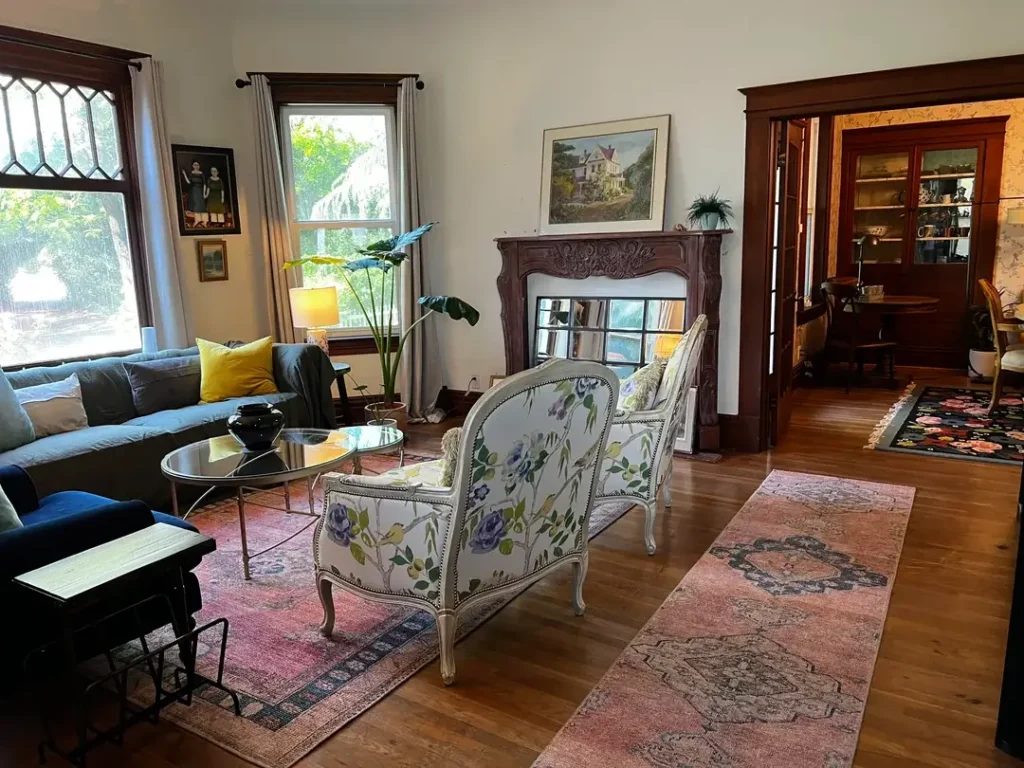
Here’s a combo most people wouldn’t think to try: formal French-style floral chairs sitting right next to a deep, dark velvet sofa. Sounds like it shouldn’t work, right? But it absolutely does.
This 1903 farmhouse living room pulls off the “collected over decades” look perfectly. The ornate carved fireplace mantel steals attention the second you walk in, and a large mirror above it bounces light around the whole space. Layered vintage pink rugs soften the hardwood floors without screaming for attention, and yellow accent pillows tie everything together across both the sofa and the chairs.
The big takeaway here? You don’t need matching furniture. In fact, mixing a formal antique piece with a comfy modern sofa creates way more visual interest than a perfectly coordinated set ever could.
How to steal this look:
- Use a single accent color (like those yellow pillows) to unify different styles
- Start with one statement antique or antique-style piece
- Let that piece inspire your color palette
- Fill in the rest with modern, comfortable furniture you’ll actually want to crash on
Ambient Lighting Transforms Evening Atmosphere
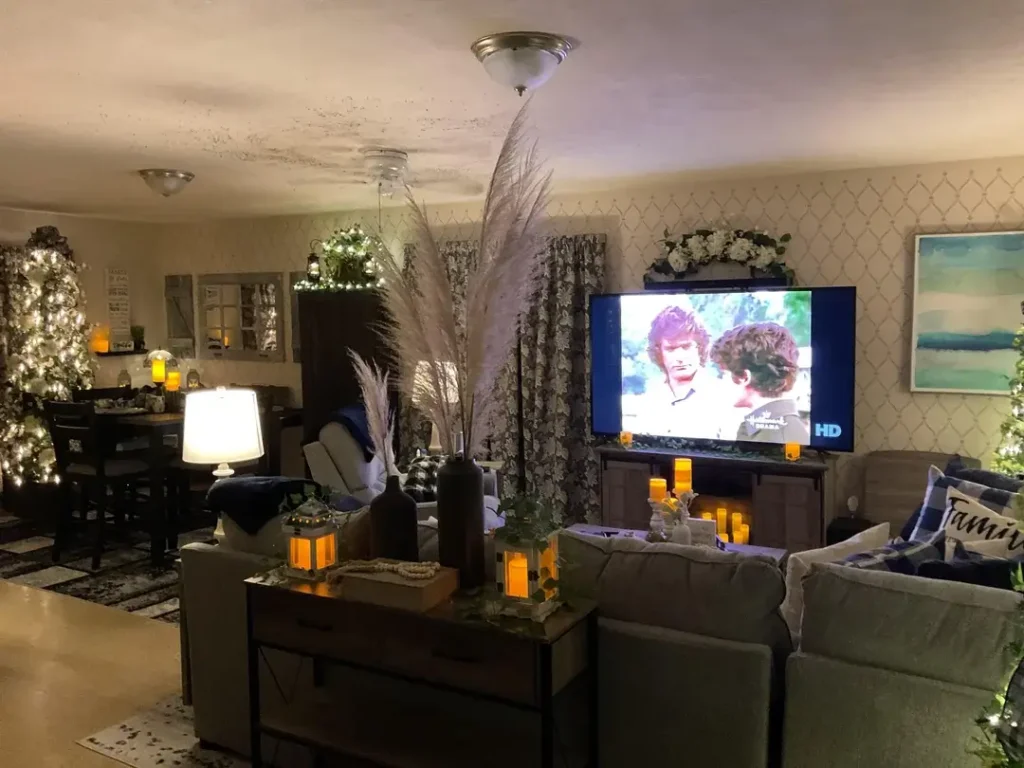
Most living rooms look great when the sun’s out and then turn into sad, flat spaces the second you flip on the overhead light at night. This farmhouse living and dining room flips that script entirely.
The homeowner layered lighting like a pro. We’re talking floor lamps, candles clustered on the coffee table, string lights on a small decorative tree, and the soft glow of the TV. A gorgeous pampas grass arrangement adds dramatic height while candlelight creates these warm little pockets throughout the room.
The secret sauce? Committing to mood over brightness. Floral curtains frame the windows without blocking them, and patterned wallpaper adds texture that actually looks better in dim, evening light.
Want to try this at home?
- Ditch the overhead light as your go-to. Your living room will thank you.
- Invest in dimmable lamps (seriously, they change everything)
- Add battery-operated candles if real flames make you nervous
- Place light sources at different heights to create depth
Deep Green Walls Ground a Bright Space
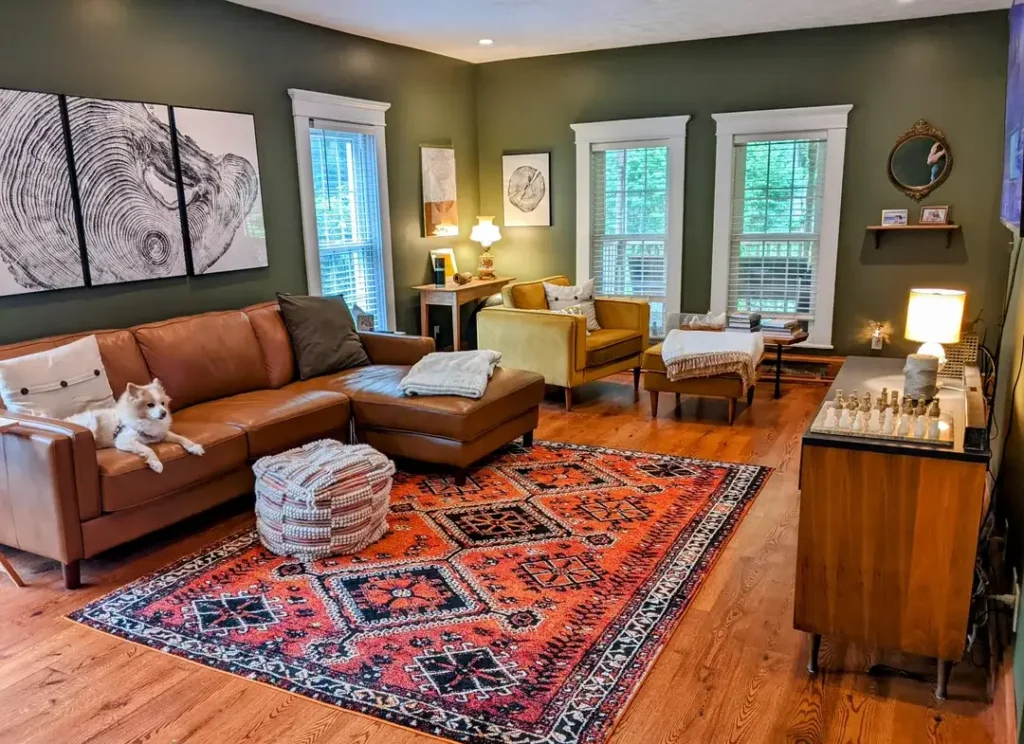
Bold wall color in a farmhouse space? Yep. And it’s kind of incredible.
This contemporary farmhouse living room rocks deep olive green walls with bright white window trim for contrast. A cognac leather sofa sits against all that green, and honestly, that color combo feels like it was meant to exist. A mustard velvet chair and ottoman pull the warm undertones together, and a vibrant red-and-navy patterned rug adds energy without going overboard.
Notice the wood tones. They vary throughout the room, from medium oak floors to a lighter console table. And guess what? It still looks completely pulled together. Perfectly matched wood is overrated, IMO.
One important caveat: dark walls need substantial natural light, or your room will feel like a cave. This space has large windows with white shutters that flood it with daylight. If your room doesn’t get much sun, try this color on a single accent wall instead of going all in.
Also Read: 10 Inspiring Black Living Room Decor Ideas for Dream Homes
Floor-to-Ceiling Built-In Bookshelves Create Character
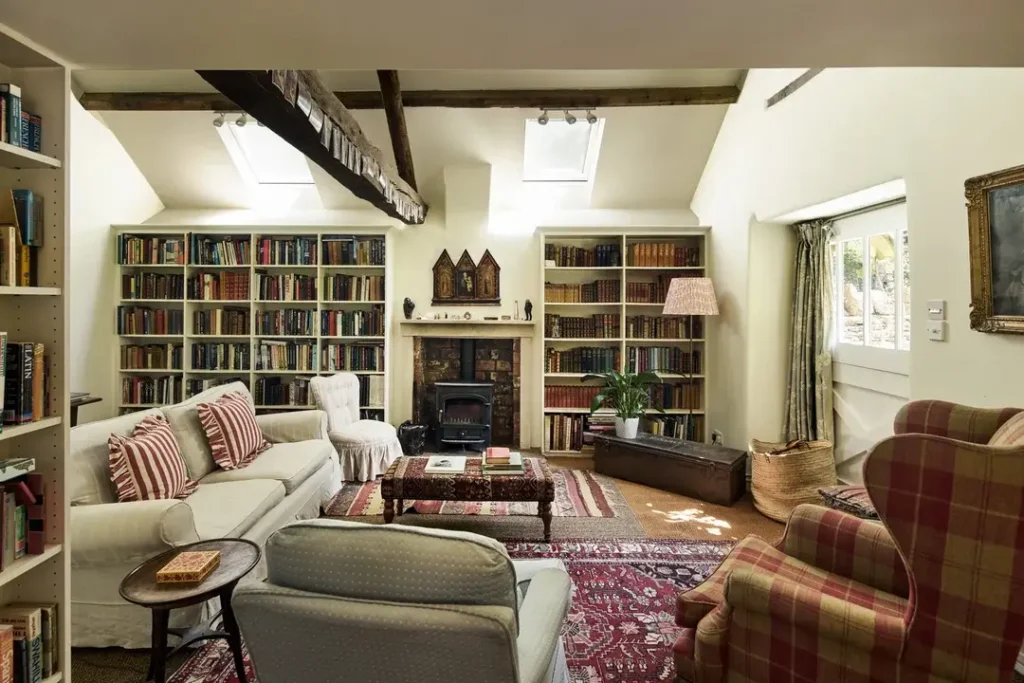
There’s something about built-in bookshelves flanking a fireplace that makes a room feel architecturally complete. No floating, random bookcase vibes here.
This 18th-century home goes all in with floor-to-ceiling shelves packed entirely with books, spines out. It creates a library atmosphere that feels smart but never stuffy. The neutral upholstered sofa and plaid accent chairs let the shelving steal the show, while exposed ceiling beams add authentic rustic charm overhead.
Pro tip: If you invest in built-ins, commit to filling them properly. Half-empty shelves look unfinished and honestly a little sad. Don’t own enough books? Mix in meaningful objects, framed photos, and plants for a curated but abundant look.
What makes these shelves work:
- The original fireplace opening preserves architectural history
- They’re genuinely full, creating a cohesive wall of color and texture
- Patterned rugs on the floor balance the strong vertical lines
- Natural light from side windows prevents the space from feeling dark
Industrial Elements Meet Farmhouse Warmth
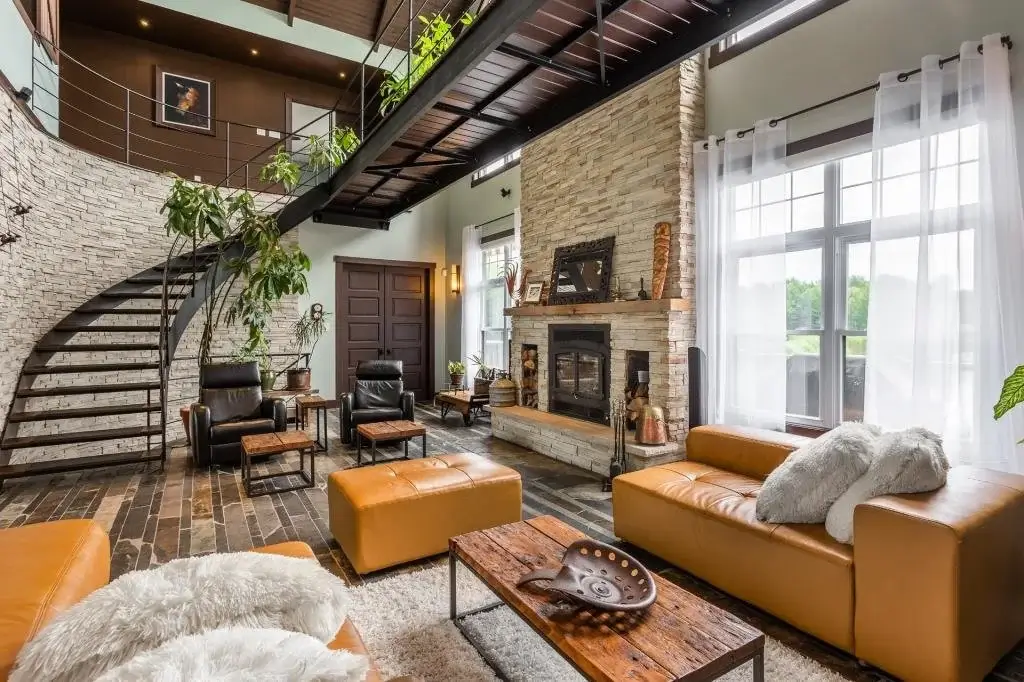
Who says farmhouse style only works in traditional homes? This loft-style space with 35-foot ceilings, exposed white brick walls, and a curved metal staircase proves otherwise.
The industrial foundation is softened beautifully with cognac leather furniture, fur throws draped everywhere, and a stone fireplace surround. A reclaimed wood coffee table anchors the seating area, and greenery scattered throughout brings life to the neutral palette.
The lesson here is simple: if your space has industrial features, embrace them instead of trying to disguise them with purely traditional farmhouse elements. The contrast between rough and refined makes spaces like this unforgettable.
Key elements that make it work:
- The double-height ceiling stays cozy thanks to layered textures
- Cognac leather works WITH industrial bones, not against them
- Fur throws and soft textiles temper all the hard surfaces
- Plants add warmth to a palette of neutrals, leather, and stone
Skirted Furniture Adds Traditional Softness
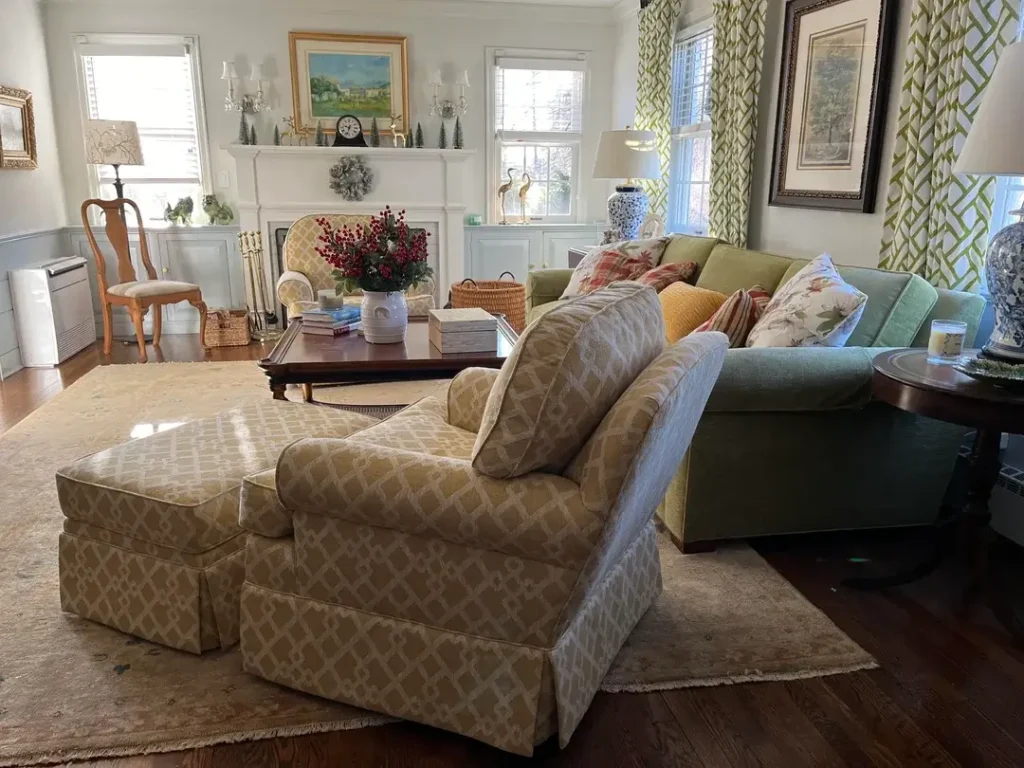
I know, I know. Skirted furniture sounds like something your grandma had. But hear me out, because this room makes a strong case for bringing it back.
The skirted chaise and ottoman create a softer, more traditional silhouette than typical exposed-leg furniture. A patterned fabric keeps the pieces from feeling too formal, and green geometric curtains bring in a contemporary edge that prevents the whole thing from feeling dated.
The mantel styling is chef’s kiss. Landscape art centered above the fireplace, flanked by matching white candle sconces and small topiaries. Symmetrical without being rigid. Fresh flowers on the coffee table seal the deal.
One thing to keep in mind: skirted furniture plays best in rooms with traditional architectural details like crown molding, wainscoting, or picture rails. If your space has modern bones, this look might feel out of place. But in a room with classic architecture? It feels absolutely right.
Also Read: 10 Stylish Shelf Decor Ideas to Transform Your Living Room
Neutral Textures Create Calm Layers
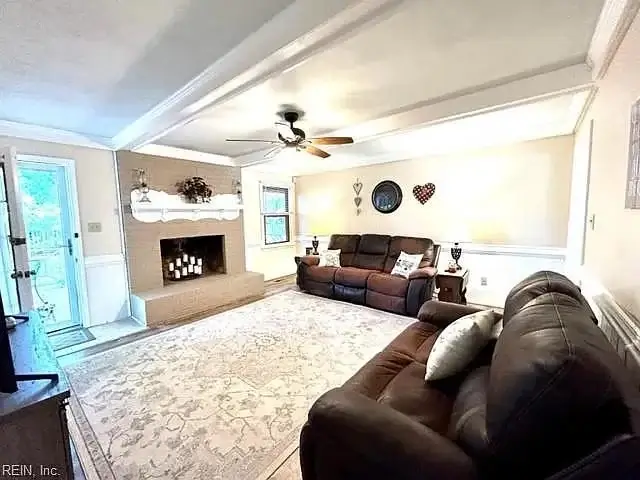
Some rooms prove that you don’t need a single bold color to create a space with serious visual interest. This living room relies entirely on texture and tone, and it’s calm, cozy, and totally inviting.
Brown leather recliners anchor the space with warmth, while everything else stays in a tight palette of whites, creams, and soft grays. A plush area rug layered over carpet adds softness and defines the seating area. White wainscoting along the lower walls provides farmhouse detail, and a simple ceiling fan handles the practical stuff without messing up the clean aesthetic.
The secret to making neutrals work? Vary your textures. Smooth leather, soft rug pile, painted wood paneling. When colors don’t change, textures MUST. Otherwise, “neutral” slides straight into “monotonous,” and nobody wants that.
Maximizing Small Space Without Sacrificing Style
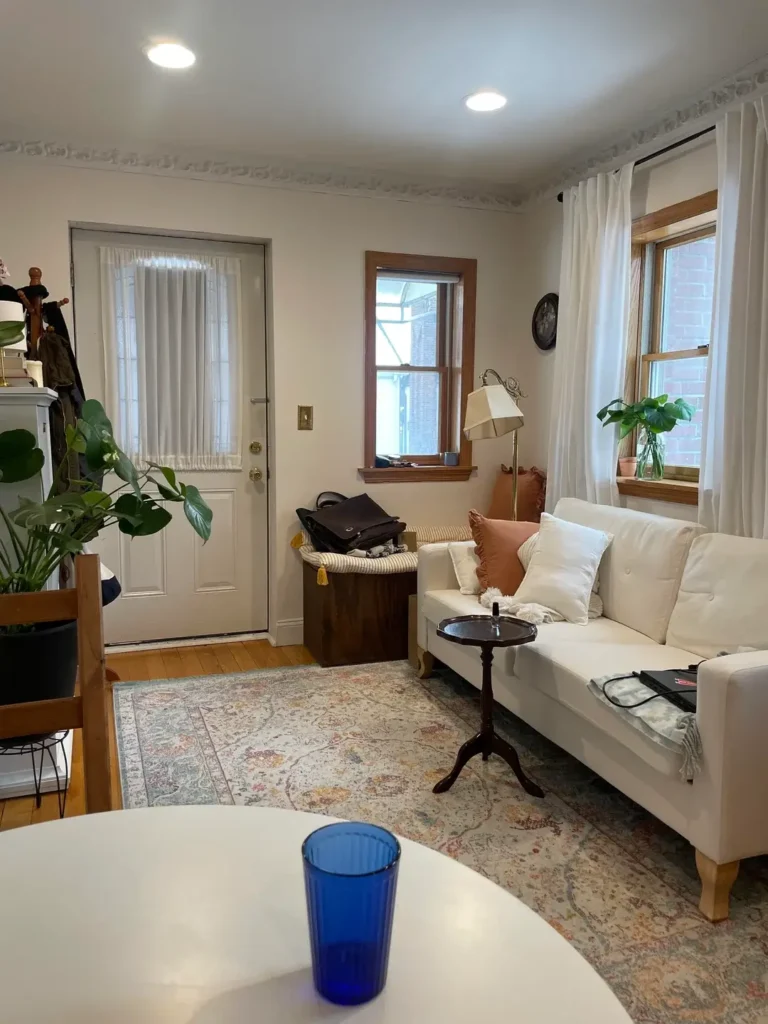
Got a tiny living room? Don’t panic. This space proves you can pack farmhouse charm into a small footprint without things feeling cramped or cluttered.
Light walls and natural wood trim keep the room open and bright. A compact cream sofa fits the scale perfectly, a vintage-style pedestal side table takes up minimal floor space, and an adjustable floor lamp provides light without needing a bulky table underneath it. Plants sit near windows where they’ll actually thrive (practical AND pretty).
Small space rules to live by:
- Decorative molding and vintage rugs prevent a small space from feeling generic
- Don’t go too small with furniture. The room should feel furnished and complete, not sparse
- Leave clear pathways around every piece
- Make every item earn its place with both function and style
- Use white curtains that frame windows without blocking natural light
Woven Basket Collection as Statement Art
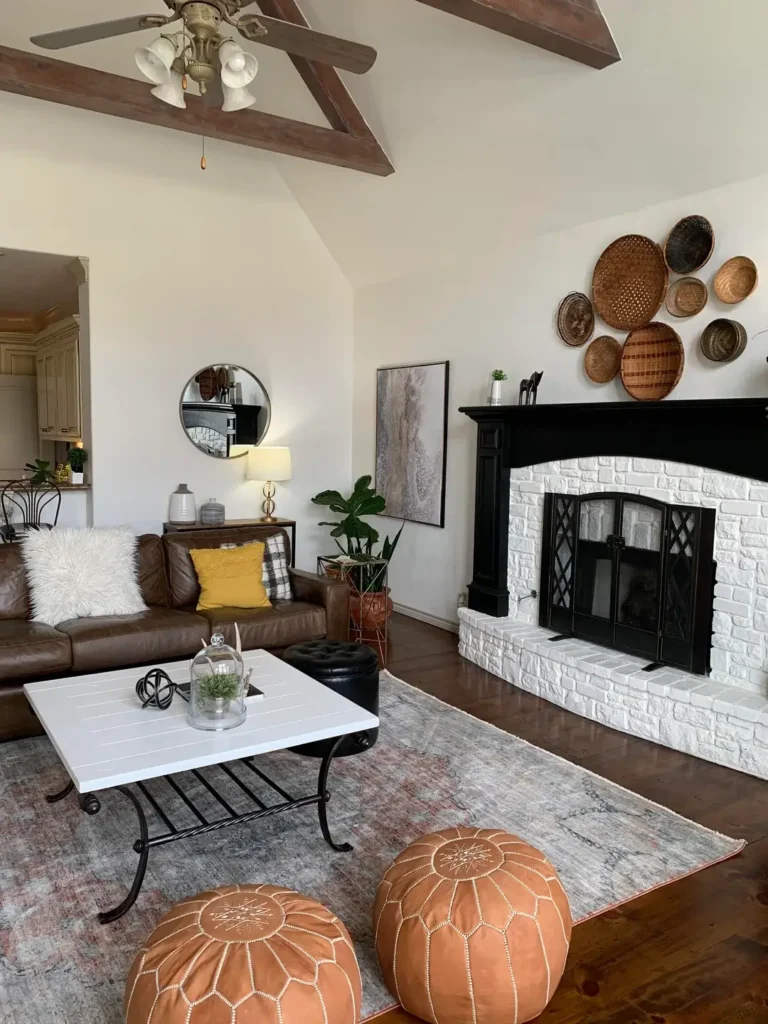
If I see one more “Live, Laugh, Love” sign in a farmhouse living room, I might lose it. This homeowner took a completely different approach to wall decor by hanging a collection of woven baskets above the fireplace, and it looks amazing.
The white painted brick fireplace creates a clean backdrop that lets the baskets’ natural tones and patterns pop. They’re arranged in an asymmetrical cluster that feels intentional but not overthought. A brown leather sofa and cognac Moroccan poufs bring in warm leather tones that connect to the basket materials. The vaulted ceiling with exposed beams painted white keeps everything airy.
How to build your own basket wall:
- The hunt becomes part of the fun, honestly
- Collect them over time from different sources (thrift stores, estate sales, antique shops)
- Don’t buy a matching set designed to hang together. The variety in size, weave, and tone is what makes it interesting
- Individual baskets are usually super affordable at secondhand shops
Also Read: 12 Trendy Mid Century Modern Living Room Ideas Designers Love
Distressed DIY Furniture Adds Rustic Character
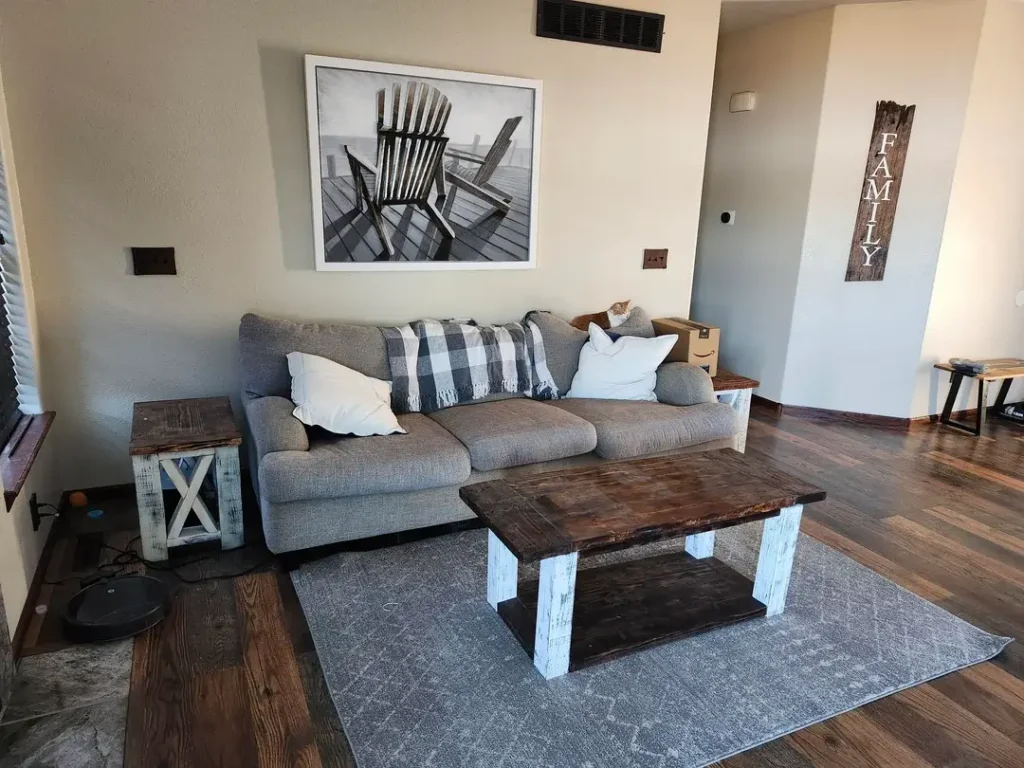
Nothing beats handmade furniture when it comes to authentic farmhouse feel. This room centers around what looks like a DIY coffee table with a dark stained top and a distressed white painted base, and it absolutely makes the space.
The chunky proportions and visible wood grain give it genuine character that mass-produced furniture just can’t touch. A gray upholstered sofa provides modern comfort next to it, and a matching distressed white end table ties things together. A buffalo check throw blanket draped over the sofa adds farmhouse pattern without overdoing it.
Real talk: if you can handle basic woodworking (or know someone who can), building even a couple of key furniture pieces transforms a room from “decorated in farmhouse style” to “authentically farmhouse.” The imperfections are features, not flaws. Even just distressing and repainting existing furniture can get you there.
Layered Oriental Rugs Create Foundation
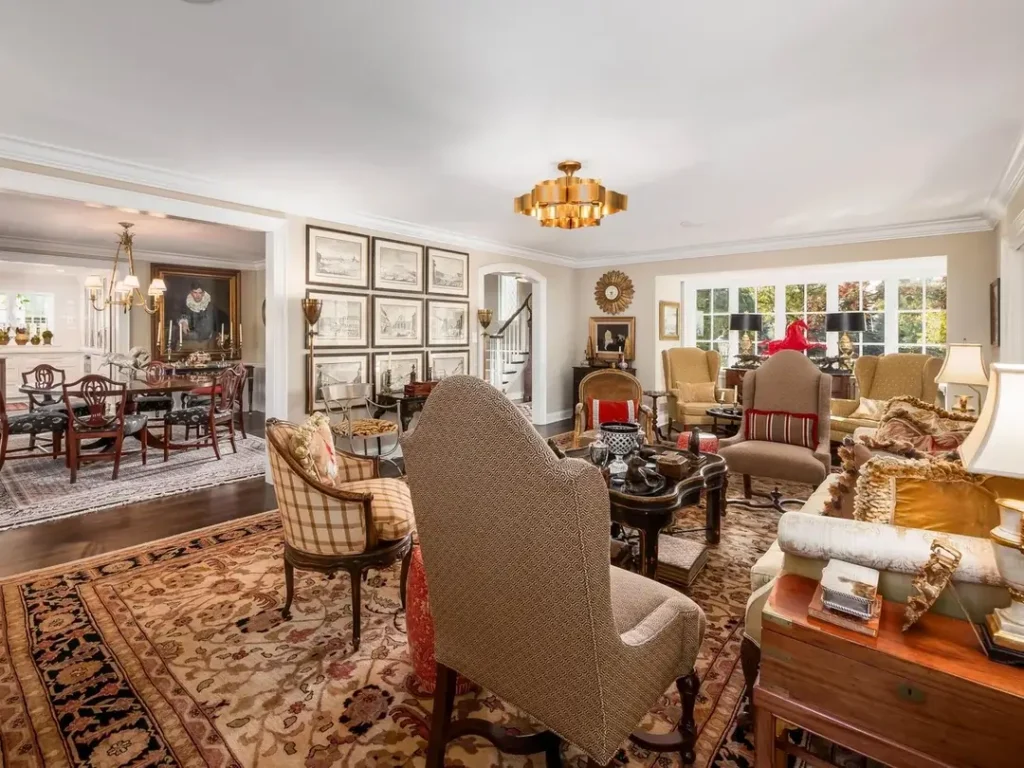
Antique and vintage Oriental rugs bring pattern, color, and genuine history into farmhouse spaces. And they never feel out of place when you let them do their thing.
This room uses multiple rugs to define zones within an open floor plan. The large patterned rug under the seating area establishes the living room boundary, while additional rugs in the background define the dining space. Traditional furniture with curved lines, checkered chairs, and a mix of patterned pillows create that coveted “collected over time” look. A brass chandelier elevates the whole vibe beyond casual farmhouse into something more refined.
Budget-friendly tip: vintage Oriental rugs often cost less than you’d think, especially if you’re cool with some wear or fading. That patina actually enhances farmhouse appeal because pristine rugs can look too precious. Worn patterns tell a story and add authenticity you can’t fake.
Painted Brick Fireplace with Architectural Detail
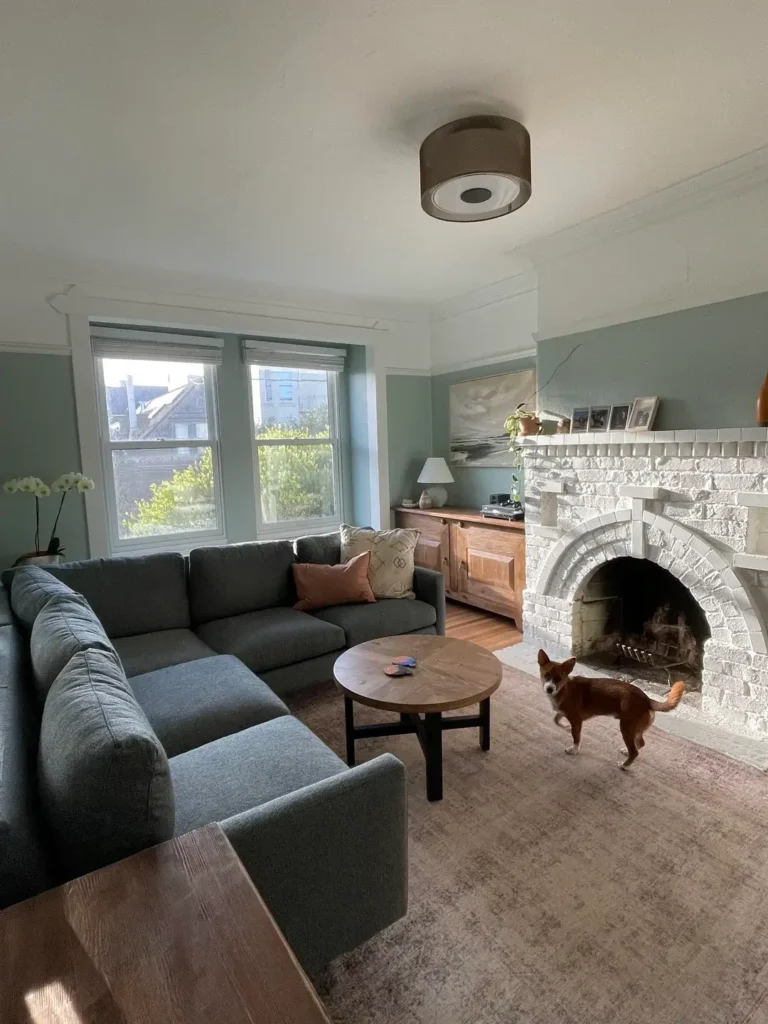
White painted brick is controversial in design circles. Some people love it, some people think it’s sacrilege. But this room makes a pretty compelling argument for Team Paint.
The arched fireplace opening creates an instant focal point, and the paint actually makes the brick texture MORE visible, not less. A dark gray sectional provides strong contrast against the white brick and pale sage green walls, while a round wood coffee table softens all the angular lines. A vintage rug ties the gray sofa to the warmer wood tones.
Before you paint your brick, consider this:
- Sage green walls pair beautifully with white brick, FYI
- Flat, uniform brick doesn’t gain much from paint
- Brick with varied texture and interesting mortar patterns (like an arched detail) actually becomes more prominent when painted a solid color
- The texture shows more clearly when color variation is removed
Arched Doorways and Natural Wood Trim
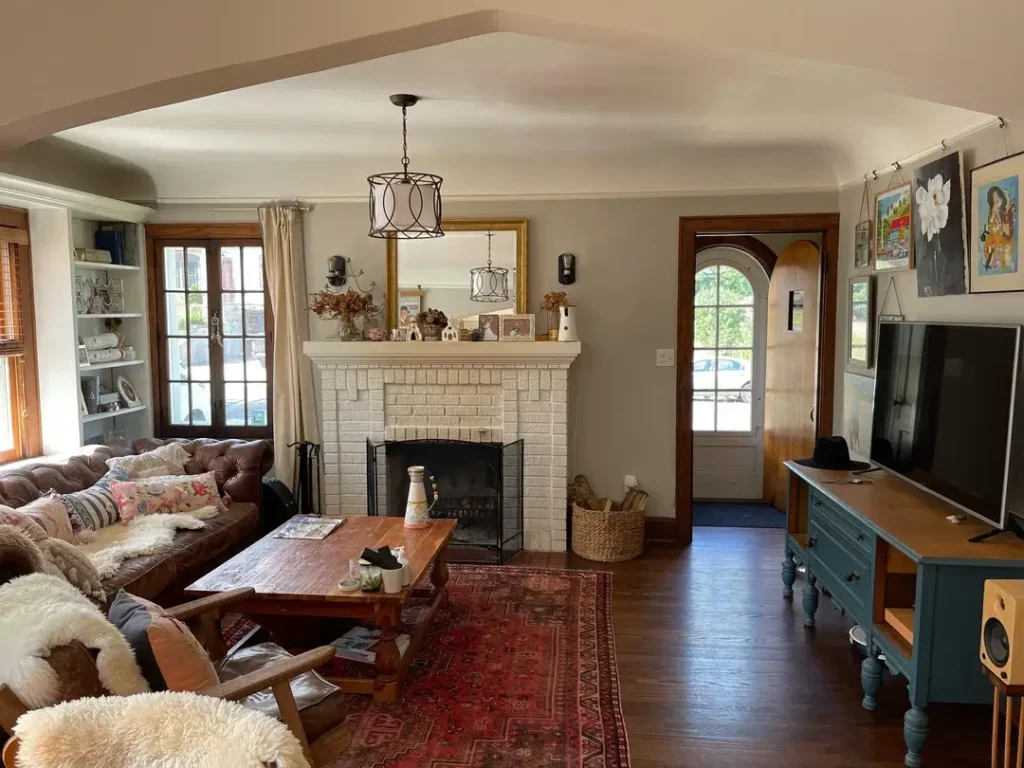
When your home has original architectural details like arched doorways and natural wood trim, those features do the heavy decorating lifting for you. This Minneapolis living room proves it.
A white painted brick fireplace sits between two arched doorways, and a tufted brown leather sofa with sheepskin throws layered on top creates the perfect spot to curl up. A vintage red patterned rug brings color to an otherwise neutral space, and a wire pendant light feels perfectly industrial-farmhouse.
If you’re lucky enough to have original architectural details like these, please resist the urge to modernize them. Don’t paint over natural wood trim. Don’t replace arched openings with squared-off ones. These elements give a room personality that newer construction can only dream of. Work with them, not against them.
Modular Sectional Maximizes Seating
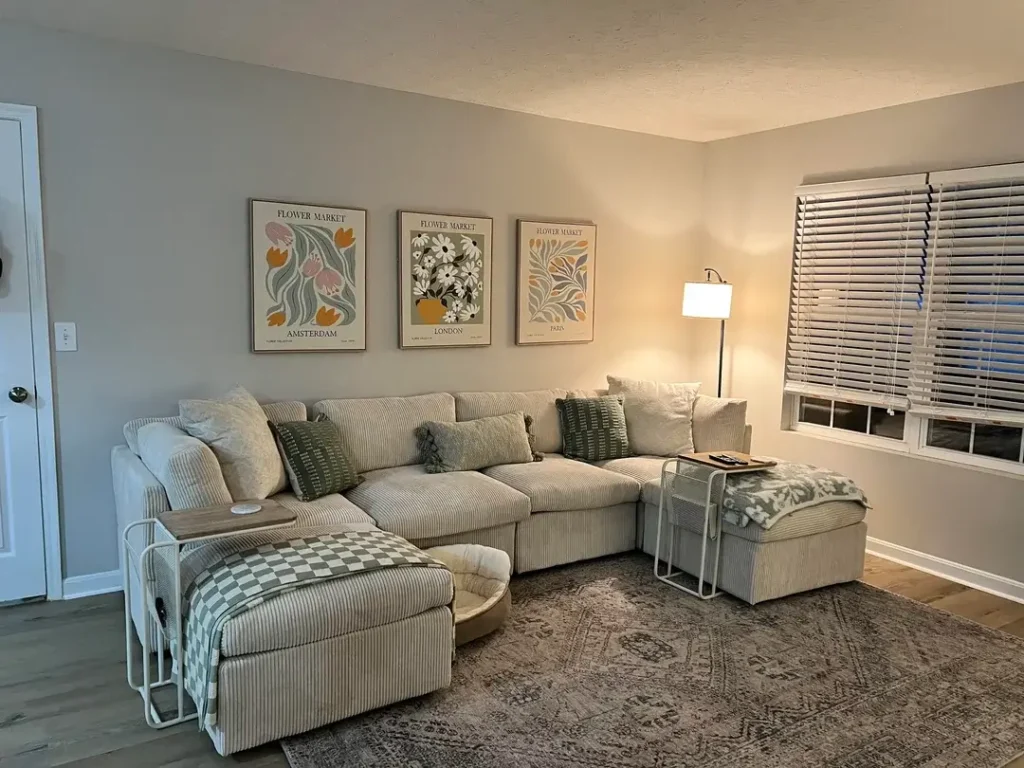
Big family? Love hosting? You need serious seating, and this neutral beige modular corduroy sectional delivers without eating the entire room alive.
The L-shape arrangement defines the seating area while keeping the center open. A vintage patterned rug anchors everything, flower market prints hung in a horizontal row add color above the sofa, and small nesting tables tucked beside the ottoman provide surface space only when needed. Smart.
Why modular sectionals are worth considering:
- They’re perfect for movie nights, naps, and fitting your entire friend group on one piece of furniture
- You can rearrange pieces for different room layouts
- Many include storage ottomans or chaise sections
- Neutral tones keep large-scale furniture from overwhelming a space
- Measure carefully before buying and leave at least 18 inches of walkway space around furniture
Floor-to-Ceiling Windows Frame Natural Light
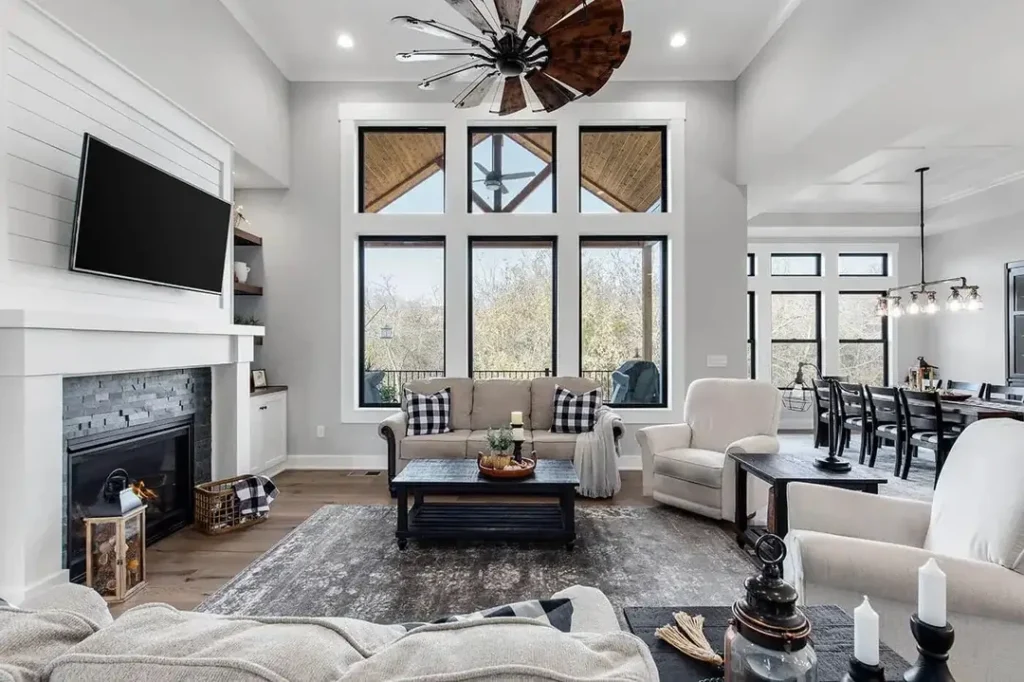
When your room has jaw-dropping windows, your decorating job is simple: don’t block them.
This bright farmhouse living room centers around dramatic black-framed floor-to-ceiling windows that flood everything with natural light. A shiplap accent wall behind the fireplace adds texture, floating shelves flank the TV, and cream-colored upholstered furniture keeps the focus right where it belongs: on those windows and the view beyond.
The black coffee table echoes the window frames for cohesive contrast, buffalo check pillows add just enough pattern, and a windmill ceiling fan with wood blades feels distinctly farmhouse overhead.
Bottom line: if you have exceptional windows, skip the heavy curtains. Use simple blinds or shades that disappear when raised. Position your furniture to face the view and the light. Your windows are your best feature, so treat them that way.
Choosing Your Country Farmhouse Path
These 15 living rooms prove one thing clearly: there’s no single formula for country farmhouse style. Some go hard on vintage finds and distressed wood. Others keep things clean, neutral, and minimal. The rooms that work best commit to a clear point of view instead of trying to cram every farmhouse trend into one space.
Here’s a quick breakdown of the main approaches:
| Approach | Key Elements | Best For |
|---|---|---|
| Vintage Collector | Antique furniture, Persian rugs, aged wood | Patient shoppers who enjoy the hunt |
| Industrial Farmhouse | Exposed brick, metal accents, leather furniture | Loft or open-plan spaces |
| Neutral Minimalist | Texture over color, simple lines, natural materials | Those who prefer calm, understated spaces |
| Traditional Cozy | Skirted furniture, formal symmetry, layered textiles | Rooms with architectural detail |
| DIY Rustic | Handmade furniture, reclaimed wood, painted pieces | Hands-on homeowners with basic skills |
Make It Yours
Your country farmhouse living room should reflect how you actually live. Not how some Pinterest board says you should live. Pick furniture you genuinely want to sit on. Choose colors that make YOU feel good. Display things that actually mean something to you.
The most authentic rooms in this collection all shared one thing: they looked lived in. Real books being read. Family photos on the mantel. Plants growing in actual sunlight. A dog probably sleeping on the leather sofa. Those details matter way more than a perfectly staged vignette ever will.
Start with what your room already gives you. Work with the architecture, not against it. Add furniture that serves your real needs. Layer in textiles and rugs for warmth. Then bring in the personal touches that turn a house into YOUR home.
That’s the real secret to farmhouse style that lasts. No Pinterest board required.