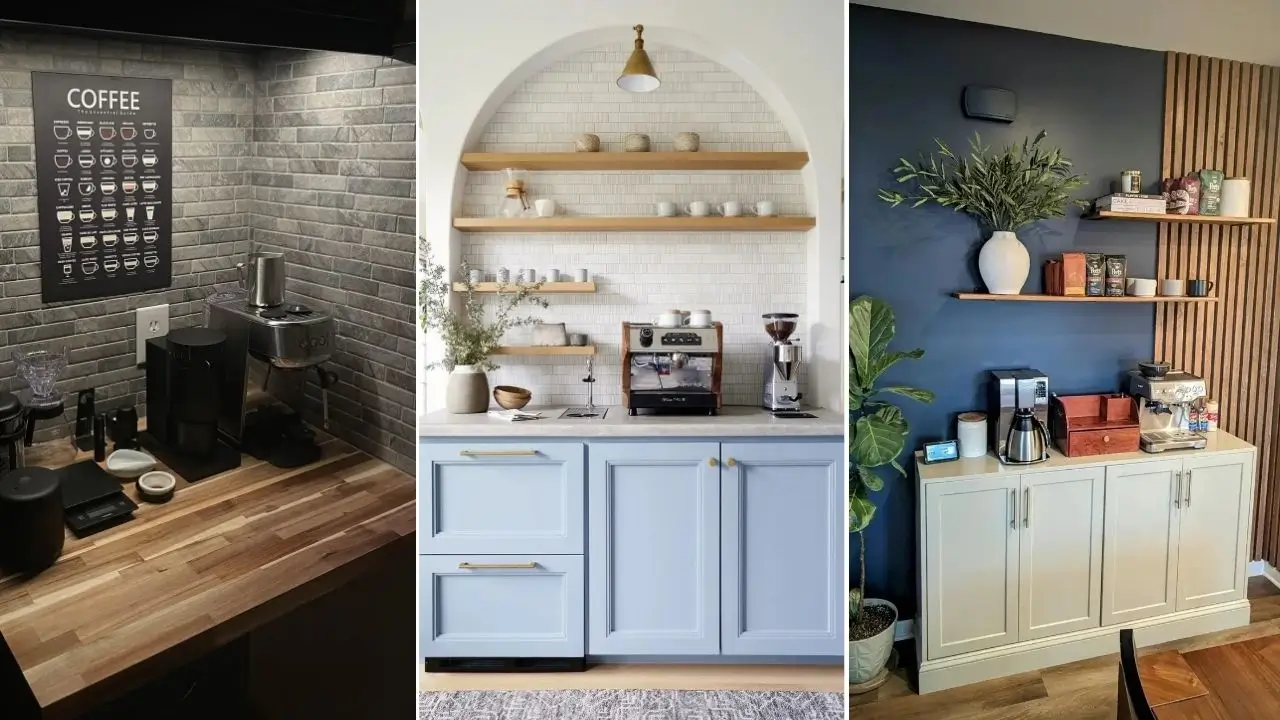
Your kitchen has dead space you walk past every morning while half-awake, hunting for caffeine. That awkward corner, the unused pantry alcove, the gap between cabinets these forgotten zones could become the coffee station you actually want to use instead of cluttering your main counter.
I have gathered eleven examples from people who built coffee bars into their homes, each solving a different spatial challenge.
These are not magazine staging photos. They are real setups that work daily, with storage solutions and design choices you can adapt to whatever space you have available.
Full-Height Pantry Cabinet with Shaker Doors and Floating Shelves
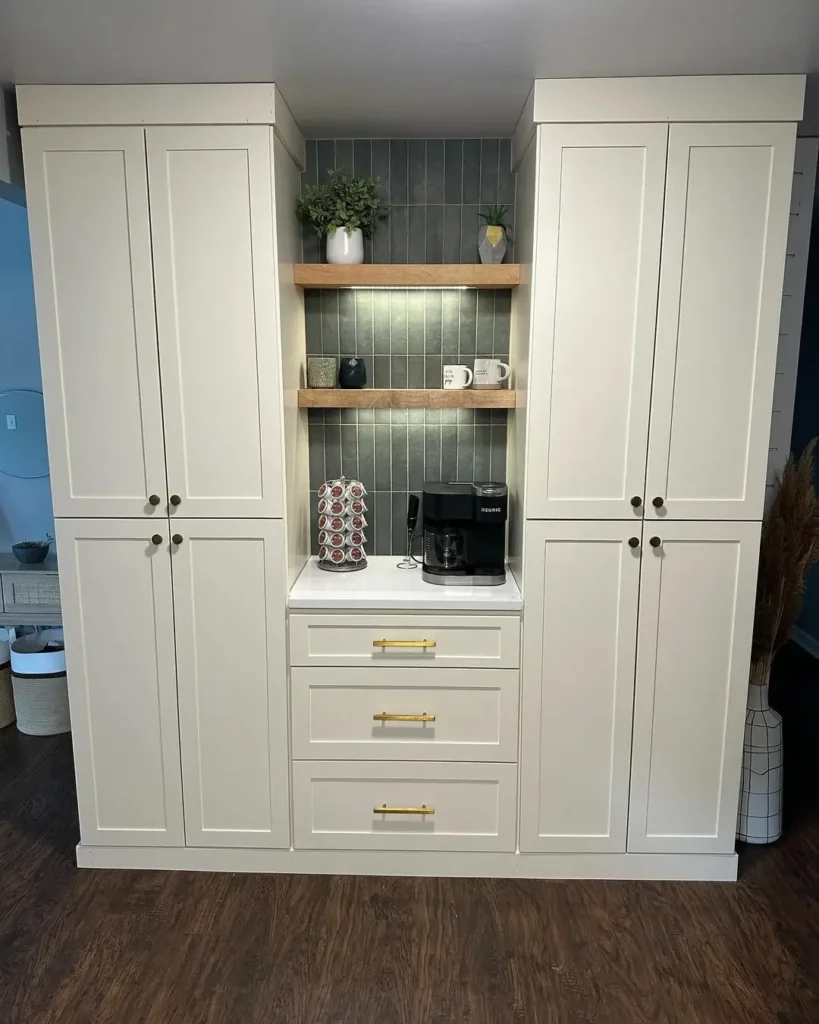
Floor-to-ceiling cabinetry changes how much you can store without expanding your footprint. The white shaker-style doors in this setup flank a recessed coffee zone with vertical tile backsplash in muted sage green.
r/ThatBuilderDude built this using standard cabinet boxes with a center section carved out for open shelving and counter space.
The floating oak shelves with integrated LED strips hold everyday mugs and plants, while the closed cabinets hide bulk supplies, serving pieces, and anything that creates visual clutter.
Three deep drawers below the counter surface store pods, filters, syrups, and all the small items that usually migrate across your kitchen.
The gold brass drawer pulls add warmth against the white cabinetry without demanding attention. This design works because everything has a designated spot the coffee maker lives on the counter, daily mugs stay on the open shelves within arm’s reach, and backup inventory disappears behind doors.
If you have an empty wall between rooms or an unused alcove, this approach maximizes vertical space. Standard cabinet depths work fine, but consider going 15 inches deep instead of 12 for the lower cabinets to accommodate larger appliances.
Minimalist Built-In Nook with LED Floating Shelves
Most coffee bars try to do too much. This one does the opposite.
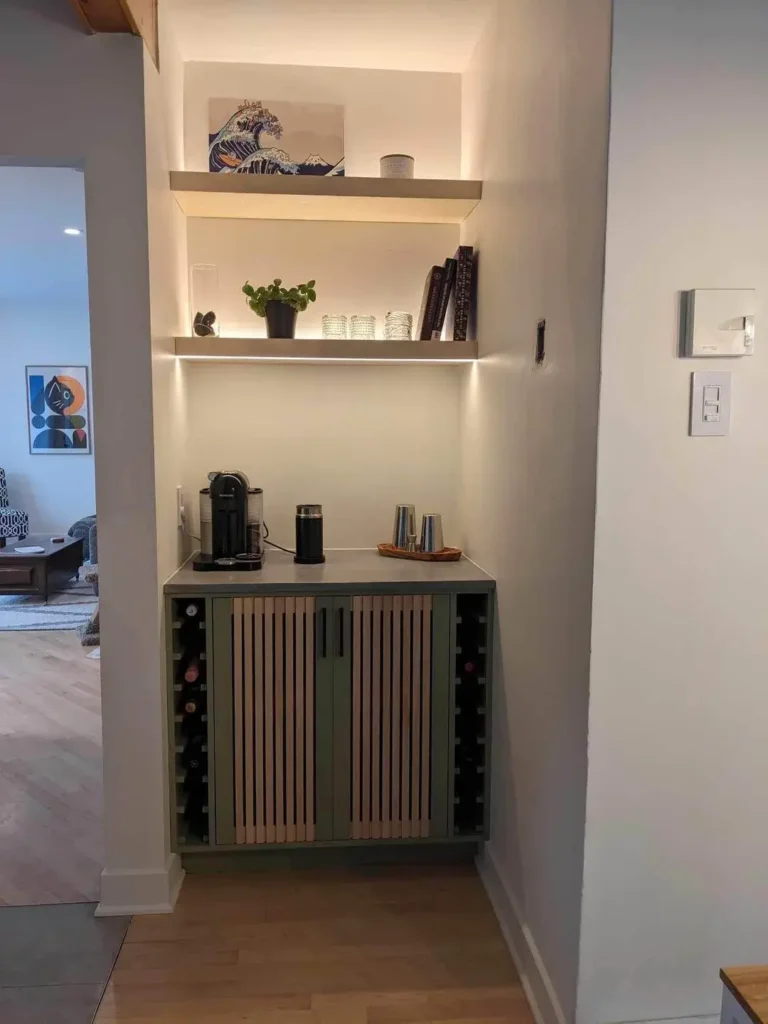
The setup occupies a narrow alcove with just two floating shelves backed by clean white walls and subtle LED lighting.
r/Izz3t chose sage green base cabinetry with vertical wood slat doors that hide storage while adding texture. The Nespresso machine sits on a light countertop with minimal accessories a milk frother, a small plant, and a few books on the upper shelf.
What makes this effective is the restraint. There are no pod carousels, no syrup collections on display, no decorative clutter.
The LED strips illuminate from behind the shelves without visible hardware, creating ambiance without calling attention to the light source itself.
The wood slat cabinet doors deserve specific mention. They provide ventilation if you store anything that generates heat or moisture, and they break up what could be a heavy visual block of solid cabinetry. The vertical orientation makes the ceiling feel higher.
You could recreate this in a hallway nook or the end of a kitchen counter run. The key is keeping surfaces clear except for what you use that morning.
Personality-Driven Corner Bar with Blue LED Accent Lighting
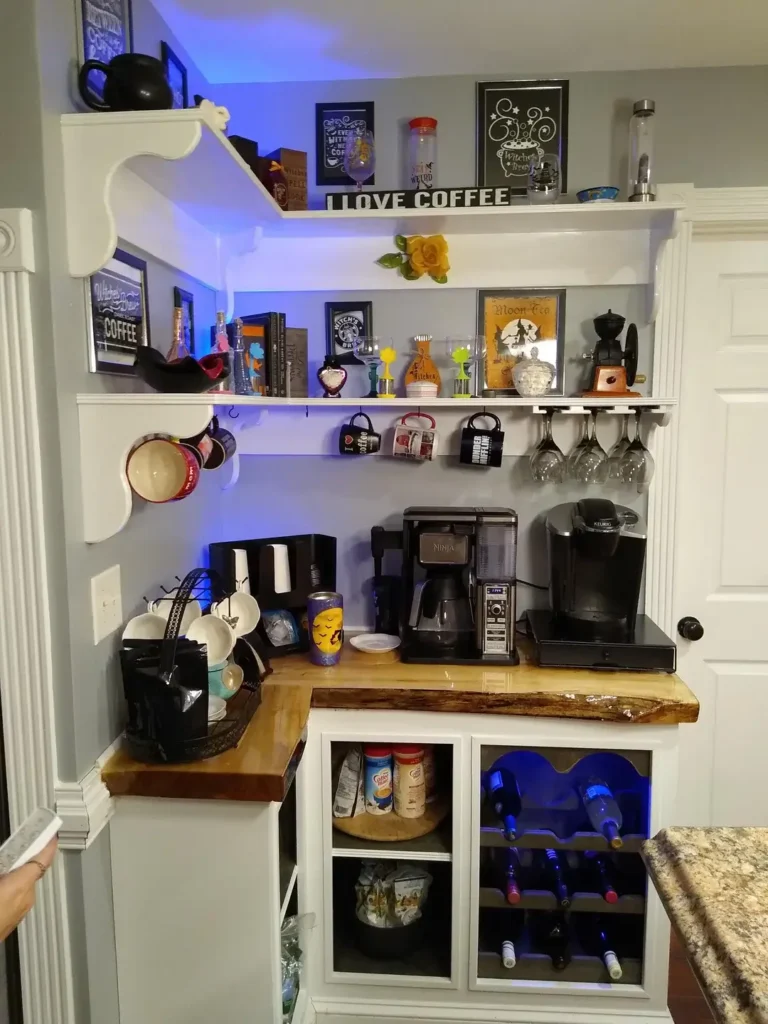
Not every coffee station needs to whisper in neutrals. Some should announce themselves the moment you walk in.
This corner setup uses white painted wood shelves with corbel supports against a light gray wall, but the blue LED lighting and dense collection of coffee-themed decor create an entirely different mood.
r/HammerTime3076 displays everything from vintage coffee tins to wine storage to decorative signs, creating a space that functions as both coffee bar and personal gallery.
The live-edge wood counter adds organic texture against the painted shelving. Multiple coffee makers a standard drip, a Keurig, and an espresso machine sit ready on different levels.
Mug hooks dangle under the middle shelf, and stemware hangs from a rack on the right side, suggesting this corner serves double duty for morning coffee and evening drinks.
The white wine cooler with blue interior lighting echoes the blue LED shelf lighting, creating a cohesive color story despite the visual density. This is not a minimalist approach, and that is precisely the point.
If you have strong aesthetic preferences and a corner to work with, lean into decoration as part of the function. Just ensure your most-used items remain accessible rather than buried behind display pieces.
Arched Alcove with Subway Tile and Open Wood Shelving
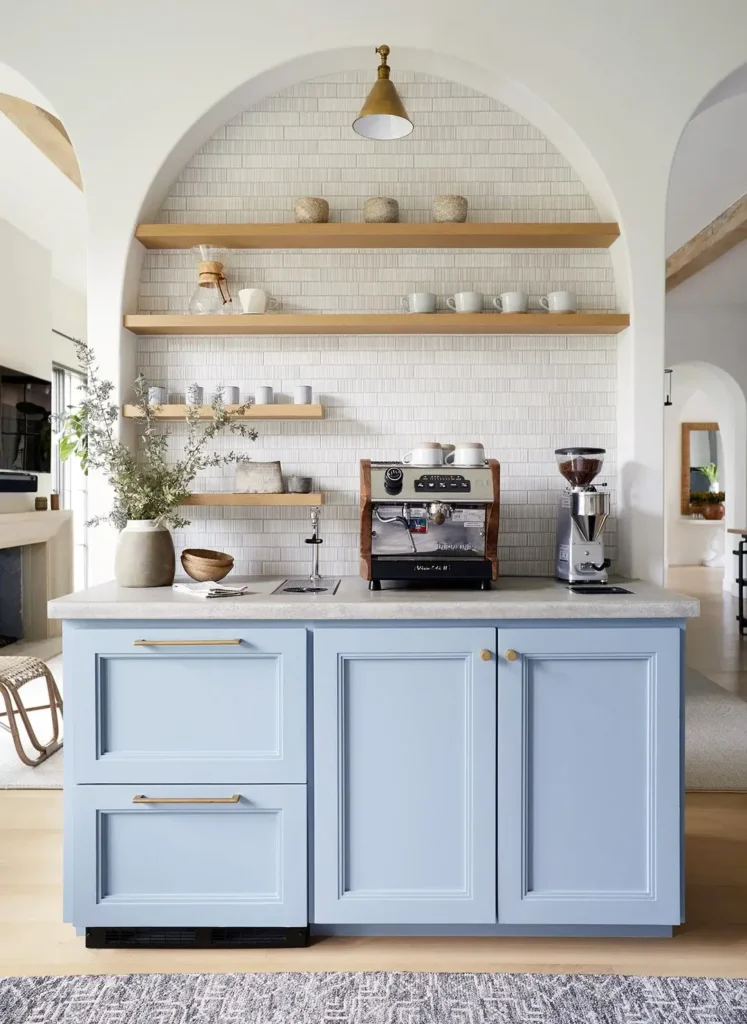
Architectural features should guide your design, not fight against it. The curved archway in this setup becomes the focal point instead of something to work around.
The white subway tile backsplash runs floor to ceiling inside the arch, creating a clean backdrop for thick oak floating shelves.
r/ManiaforBeatles installed a commercial-grade espresso machine on a marble-look countertop, with a separate grinder and milk frother.
The upper shelves hold matching white mugs in neat rows, along with decorative spheres and a pendant light fixture that hangs at eye level.
The powder blue base cabinet with gold knobs anchors the composition without competing with the arch. The color choice brings softness to what could read as stark with all that white tile and wood.
This design succeeds because it embraces the existing architecture. The shelves align with the curve, and the tile treatment emphasizes the alcove’s depth. The brass pendant light draws your eye to the arch’s apex before bringing you back down to the work surface.
If you have an architectural detail like an arch, bay window, or exposed brick, build your coffee bar to highlight that feature rather than covering it up.
Industrial Black Metal Station with City View
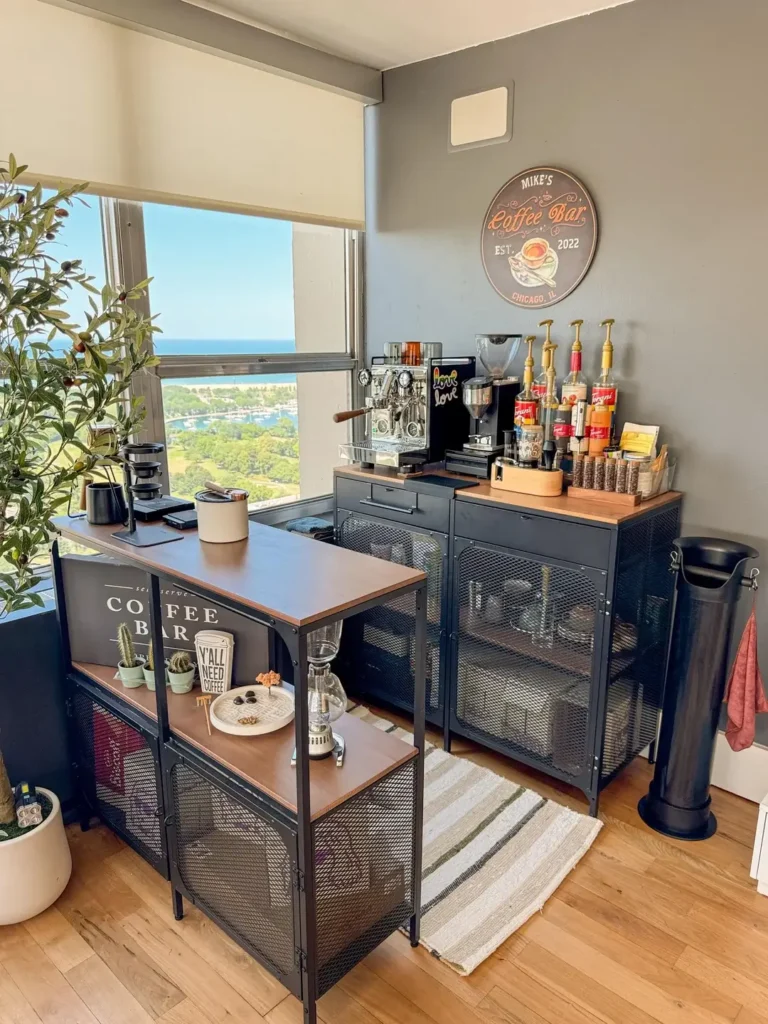
Some coffee bars compete with their surroundings. This one complements them.
The black powder-coated metal shelving units with mesh doors and open shelving create an industrial framework that does not block the floor-to-ceiling windows.
r/iamuptonogood24 positioned a commercial espresso machine and grinder on a walnut wood top that spans across both metal units, creating continuous work surface while maintaining the visual lightness of metal and glass.
The mesh panel doors hide supplies without creating visual weight. You can see through them just enough to know what is stored inside, but the contents do not become part of the room’s composition.
The syrup bottles on the upper wood shelf add color against the gray wall, and the custom coffee bar sign provides a focal point.
This setup works in a condo or apartment where natural light matters more than storage capacity. The metal framework reads as furniture rather than cabinetry, which helps in spaces where you cannot (or should not) install permanent built-ins.
The L-shaped configuration also creates defined zones brewing equipment on one side, storage and accessories on the other—without walls or dividers.
Sleek Gray Built-In with Glass Upper Cabinets
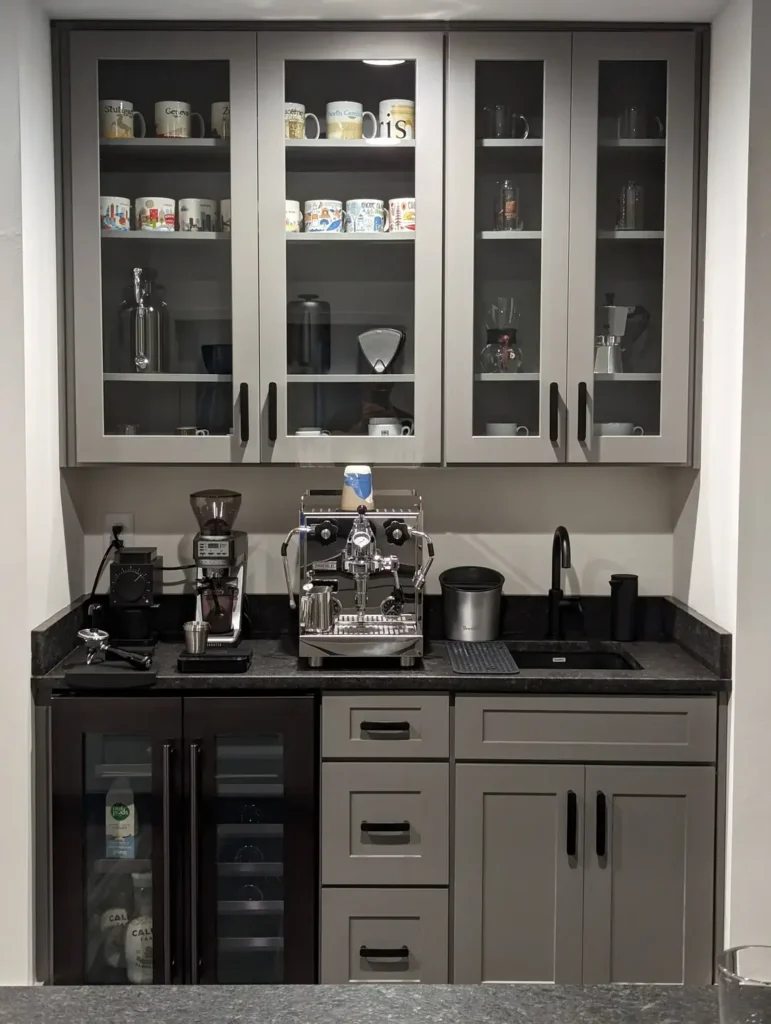
Glass-front cabinets force organization. You cannot hide mess behind transparent doors, which means everything inside must earn its spot.
This built-in uses gray shaker cabinets with glass uppers that display coffee mugs and specialty glassware against a black interior.
r/0HSHIFT installed a professional espresso machine as the centerpiece on black quartz or granite countertops, flanked by a precision grinder and tamping station.
The base cabinets include a beverage fridge and wine cooler, transforming this from coffee bar to full beverage station.
The black interior backing in the glass cabinets creates drama and makes the white mugs pop. Notice how the items are curated and arranged no random mixing of styles or colors. The restraint in what is displayed makes the station feel intentional.
The countertop depth matters here. This is not a standard 25-inch kitchen counter but appears closer to 30 inches to accommodate the commercial machine’s footprint without crowding. The extra depth also provides workspace for weighing beans, dosing espresso, and steaming milk.
If you take your coffee seriously enough to invest in commercial equipment, build the station around the machines’ requirements rather than forcing them into standard cabinetry dimensions.
Two-Tone Cabinet Design with Maple Countertop and Open Shelving
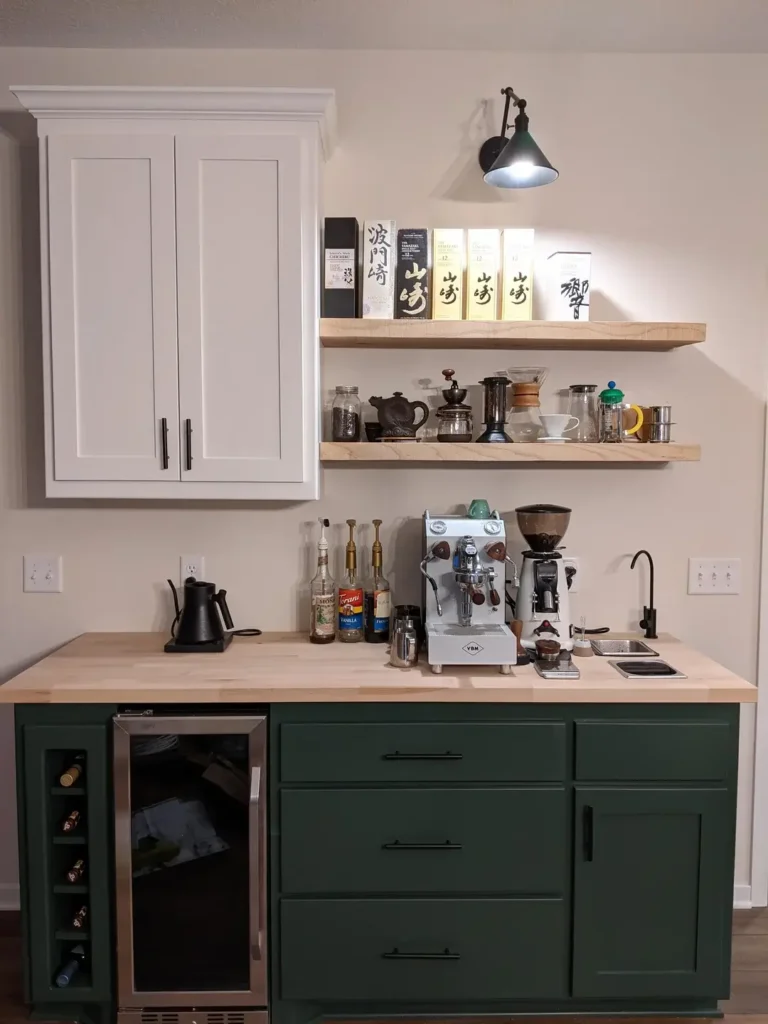
Color contrast defines spaces without needing walls. The white upper cabinet and deep green lower cabinets in this setup create two distinct visual zones while remaining clearly part of one cohesive design.
r/nguye569 mounted two floating oak shelves on a white wall above a light maple countertop. The top shelf displays Japanese whisky bottles and coffee packaging, while the lower shelf holds brewing equipment a manual grinder, various pour-over vessels, teapots, and glassware. The espresso machine sits on the counter with syrup bottles and a kettle nearby.
The green base cabinets include a wine refrigerator and three deep drawers with black pulls. This color choice—a muted forest green adds richness without the heaviness of navy or the coldness of pure gray. It grounds the lighter elements above.
The adjustable arm wall sconce provides task lighting exactly where you need it during brewing without requiring overhead fixtures. This matters more than people realize when you are working with precise measurements and timing.
If you are combining coffee and beverage service, this two-tone approach helps delineate functions. Lighter colors keep the focus on the equipment and process, while darker lowers provide visual weight and hide storage.
Dark Stained Wood Shelving in Tight Alcove
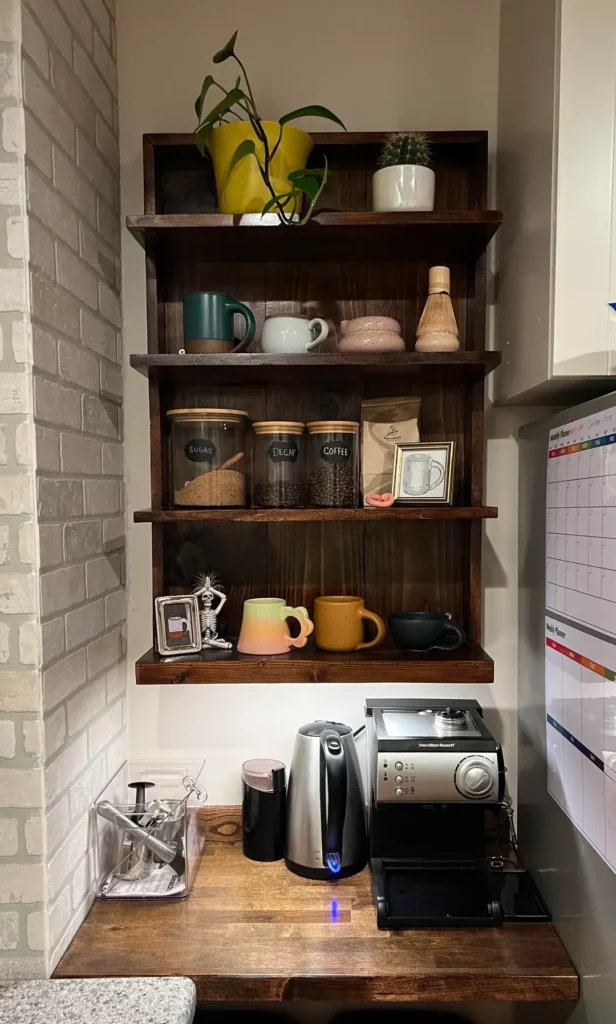
Small spaces demand different thinking. You cannot rely on spreading out, so every vertical inch matters.
This narrow alcove uses four deep shelves in dark-stained wood mounted against a white wall beside exposed brick.
r/lithigos fitted a single-serve Keurig and a drip coffee maker on the counter level, with a glass coffee storage jar and decorative items above.
The shelves hold glass canisters labeled for sugar, decaf, and coffee, along with mugs in various colors and a few personal decorative touches.
The dark wood reads as furniture rather than cabinetry, which softens what could feel like a tight, cramped corner. The depth of these shelves probably 10 to 12 inches provides enough space for mugs and coffee equipment without protruding too far into the walkway.
The exposed brick on the left adds texture and warmth that prevents the white walls from feeling sterile. This is an example of working with what you have rather than trying to create something that belongs in a different house.
For narrow spaces between doorways or at the end of a hallway, deep shelving with a small countertop section can create a functional coffee station that takes up less than two feet of width.
Navy Accent Wall with Vertical Wood Slat Divider
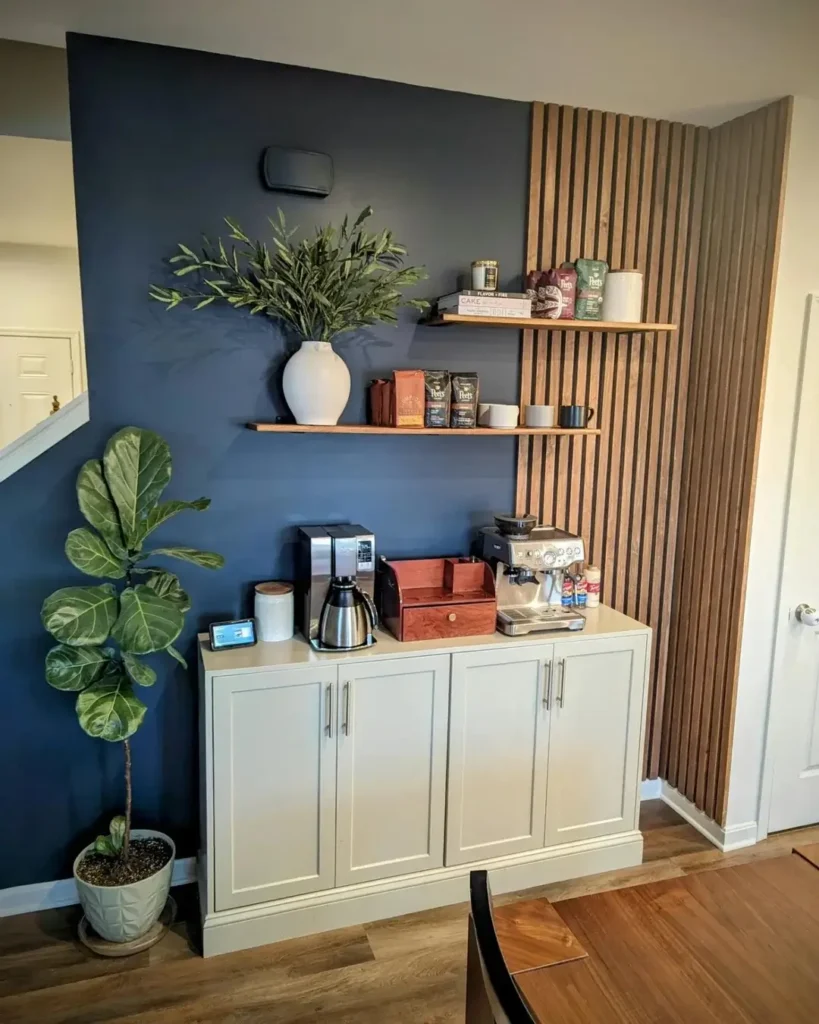
Bold background colors change everything about how a space feels. The deep navy wall in this setup provides drama and depth that white or gray cannot match.
r/Background-Menu8527 mounted two floating shelves with walnut finish against the navy, creating strong horizontal lines that balance the vertical wood slat partition on the right.
The white shaker base cabinet keeps the lower portion from feeling too heavy, while the grinder and espresso machine sit prominently on top. A fiddle leaf fig in the corner brings organic shape against all the straight lines.
The wood slat divider serves multiple purposes. It partially conceals what is likely a less attractive doorway or opening, adds vertical interest that draws the eye upward, and creates a sense of enclosure around the coffee station without blocking light or flow.
The contrast between the navy wall and white cabinetry amplifies both. The navy would read as too dark with dark cabinets, and the white would feel too stark against white walls. Together, they create tension that makes the space more interesting.
If you are working with an open floor plan and want to define a zone without adding walls, a bold paint color combined with a partial divider creates separation while maintaining openness.
Floating Shelf Bar with Open Lower Storage
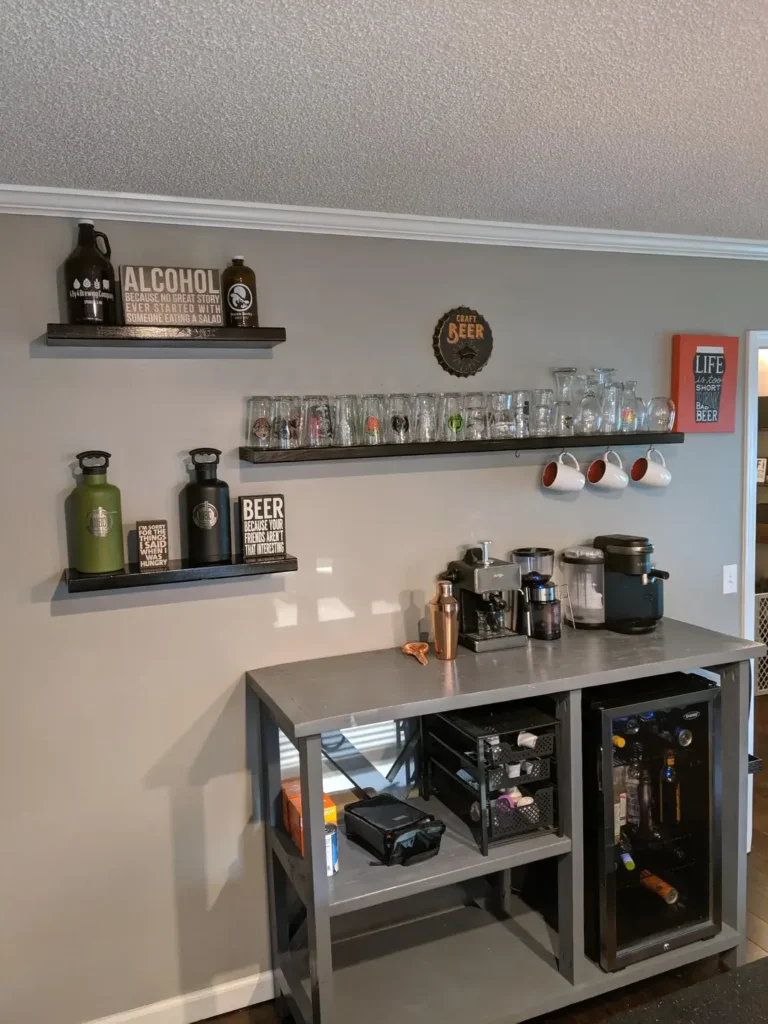
Not everything needs doors. Sometimes the most practical solution is also the most visually accessible.
This setup uses three black floating shelves against a light gray wall to display beer glasses, growlers, decorative signs, and coffee supplies.
r/evilncarnate82 positioned an espresso machine and grinder on a gray laminate countertop, with a metal frame open shelving unit below for additional storage and a beverage refrigerator.
The industrial aesthetic comes through in the material choices matte black shelves, gray surfaces, metal framework.
The beer-themed decor signals this station serves multiple purposes throughout the day. The open metal shelving below keeps frequently used items visible and accessible without the commitment of closed cabinetry.
The spacing between the floating shelves creates rhythm. They are not evenly distributed but instead grouped to create intentional negative space that gives the arrangement breathing room.
For basement bars, home offices, or casual entertainment spaces, this approach balances function with personality.
The lack of upper cabinets keeps costs down and makes installation simpler, while the open shelving below provides flexibility to reconfigure as your needs change.
Brick Accent Corner with Butcher Block Counter
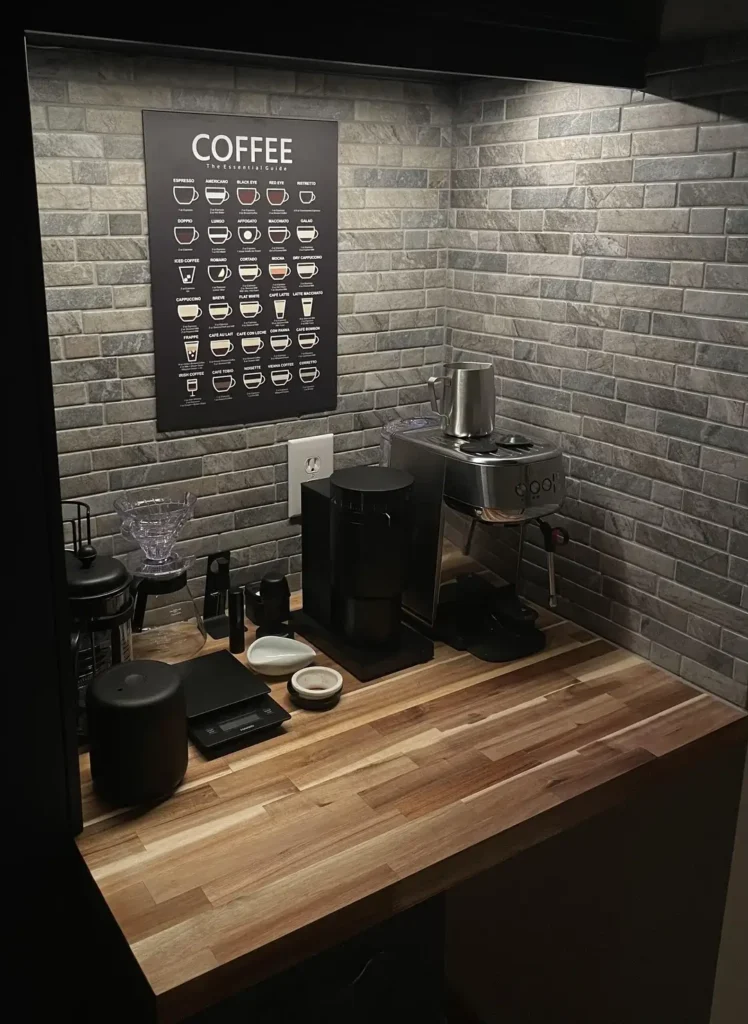
Texture can define a space as effectively as color. The gray brick-look tile wrapping this corner creates an immersive environment that feels separate from the surrounding room.
The walnut butcher block counter provides warm contrast against the cool gray brick. r/KettchupIsDead mounted all the brewing equipment grinder, pour-over setup, and what appears to be a temperature-controlled kettle on the wood surface, with a minimalist coffee chart as the only wall decoration. Black and stainless accessories maintain the industrial aesthetic without introducing unnecessary color.
The corner configuration maximizes limited space by using two walls instead of one linear run. This creates more counter surface and allows the brick treatment to wrap around, forming a defined zone.
The upper corners where the brick meets are particularly effective they frame the space without needing overhead cabinets.
The wood counter choice matters here. A stone or solid surface would make this feel cold and commercial, but the butcher block brings warmth that balances the industrial materials.
For basement installations, garage conversions, or commercial-style home coffee bars, brick or brick-look tile creates atmosphere that drywall cannot match. The key is committing to the material fully rather than using it as an accent.
Comparing Built-In Coffee Bar Styles
Different designs solve different problems. Here is how these approaches stack up based on key factors:
| Style Type | Best For | Storage Capacity | Difficulty Level |
|---|---|---|---|
| Full-Height Cabinetry | Maximum storage, formal kitchens | High | Advanced |
| Floating Shelf Nook | Small spaces, minimal aesthetic | Low | Easy |
| Corner Display Bar | Personality-driven design | Medium | Medium |
| Arched Alcove | Architectural features | Medium | Advanced |
| Industrial Metal | Rentals, modern spaces | Medium | Easy |
| Glass Cabinet Bar | Serious enthusiasts | High | Advanced |
| Two-Tone Design | Defined zones, style contrast | High | Medium |
| Tight Alcove Shelving | Narrow spaces | Low | Easy |
| Navy Accent Wall | Bold style, open plans | Medium | Medium |
| Floating Shelf Open | Casual spaces, flexibility | Low | Easy |
| Brick Corner | Industrial aesthetic | Low | Advanced |
What Actually Matters in Coffee Bar Design
After analyzing these eleven setups, several patterns emerge that transcend style preferences.
Counter depth makes or breaks functionality. Standard 25-inch counters work for drip coffee makers and single-serve machines. Commercial espresso equipment needs 28 to 30 inches minimum to avoid feeling cramped. Measure your largest appliance and add four inches.
Vertical storage beats horizontal spread. Every successful example uses wall height rather than consuming more floor space. Shelves, upper cabinets, and tall pantry units keep the footprint compact while expanding capacity.
Lighting changes everything. Task lighting under shelves or mounted on walls makes early morning brewing safer and more pleasant. LED strips, pendant lights, and adjustable sconces all appeared across these examples because overhead room lighting never falls where you need it.
Open and closed storage both matter. Daily items belong in the open mugs, coffee, your go-to machine. Everything else should hide behind doors or in drawers. The most successful setups balance display with concealment.
Your coffee equipment dictates dimensions. Build around what you already own or plan to buy, not around standard cabinet sizes. A five-thousand-dollar espresso machine deserves a station designed for its footprint.
Bringing Your Coffee Bar to Life
The best built-in coffee bar ideas work because they solve your specific spatial challenge while matching how you actually make coffee. That might mean a full pantry transformation with floor-to-ceiling storage, or it might mean four shelves in a narrow alcove.
Consider what you use every morning, where you have available space, and whether you need this station to serve other purposes like wine storage or cocktail prep.
Then build the minimum permanent structure required and let your equipment and daily habits fill in the rest. The examples here prove you do not need a massive kitchen or unlimited budget you need a plan that respects your space and your morning routine.
