
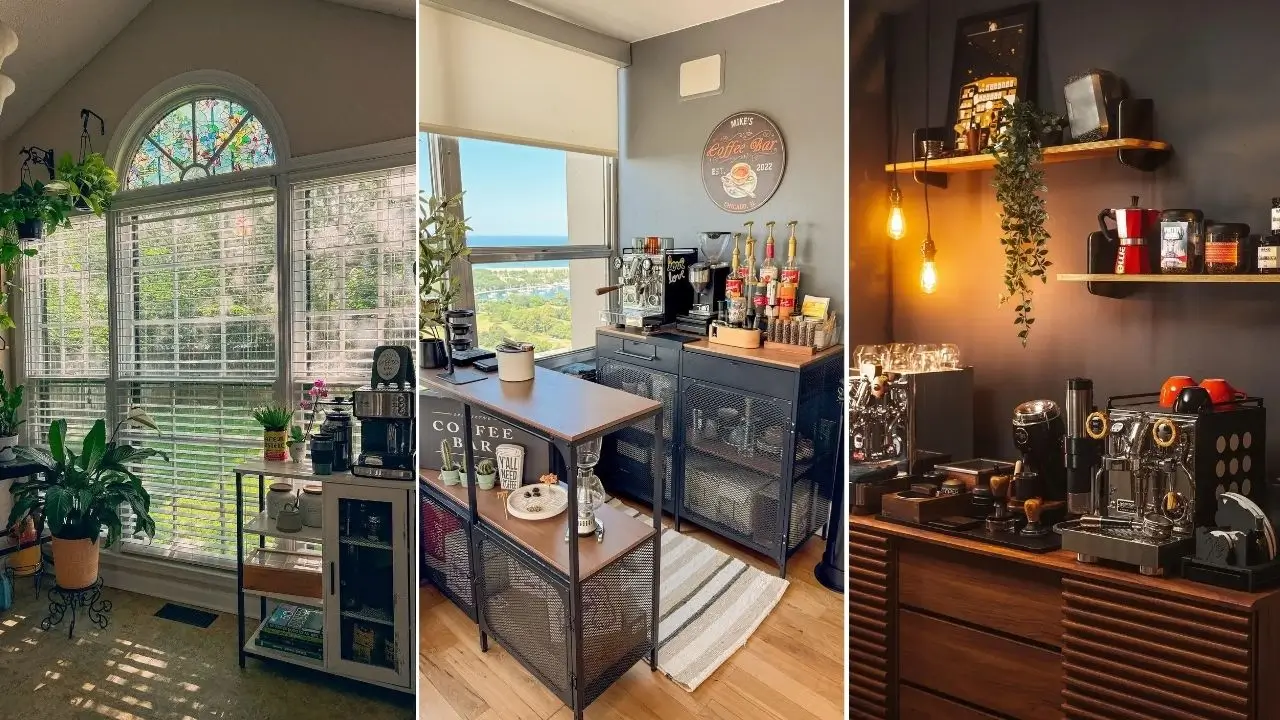
Your kitchen counter is cluttered with coffee gear you use every single day, but somehow it still looks like an afterthought. You’ve scrolled past those picture-perfect coffee setups on Pinterest, convinced they only work if you have unlimited space and a design degree.
I’ve spent months analyzing real coffee bars that actual people built in their homes. These aren’t staged photos from professional designers.
They’re working setups from coffee enthusiasts who figured out how to make their daily routine both functional and visually satisfying.
Each example offers specific solutions you can adapt to your own space, whether you’re working with a tiny apartment corner or a full kitchen wall.
Industrial Workspace with Charcoal Walls and Natural Wood
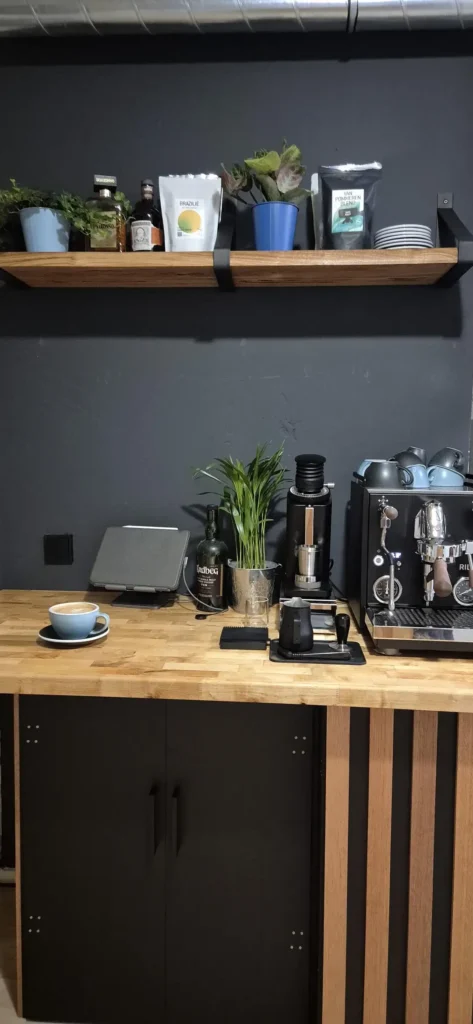
This setup proves that dark colors don’t shrink a space when paired with the right materials. The charcoal gray walls create depth rather than closing things in.
r/Blleh built this around a butcher-block countertop that serves as the primary work surface, with black metal accents throughout.
The exposed industrial ceiling adds vertical interest without requiring any modifications. Notice how the wooden shelf mounted with black metal brackets keeps essentials within reach while maintaining the clean aesthetic.
The coffee machine, grinder, and accessories all sit on the wood counter, with a small plant adding life to the space.
The success here comes from the material contrast. Wood warms up the dark walls and black cabinetry. The key is choosing genuine materials rather than synthetic alternatives that photograph well but feel cheap in person.
If you want this look, start with your wall color and work backward. Gray paint is forgiving, and the wood tone you choose matters more than the grade.
Standard butcher block from a home improvement store works perfectly well. Focus your budget on one or two quality tools rather than spreading it thin across decorative items.
Floating Shelves with Custom Neon Signage
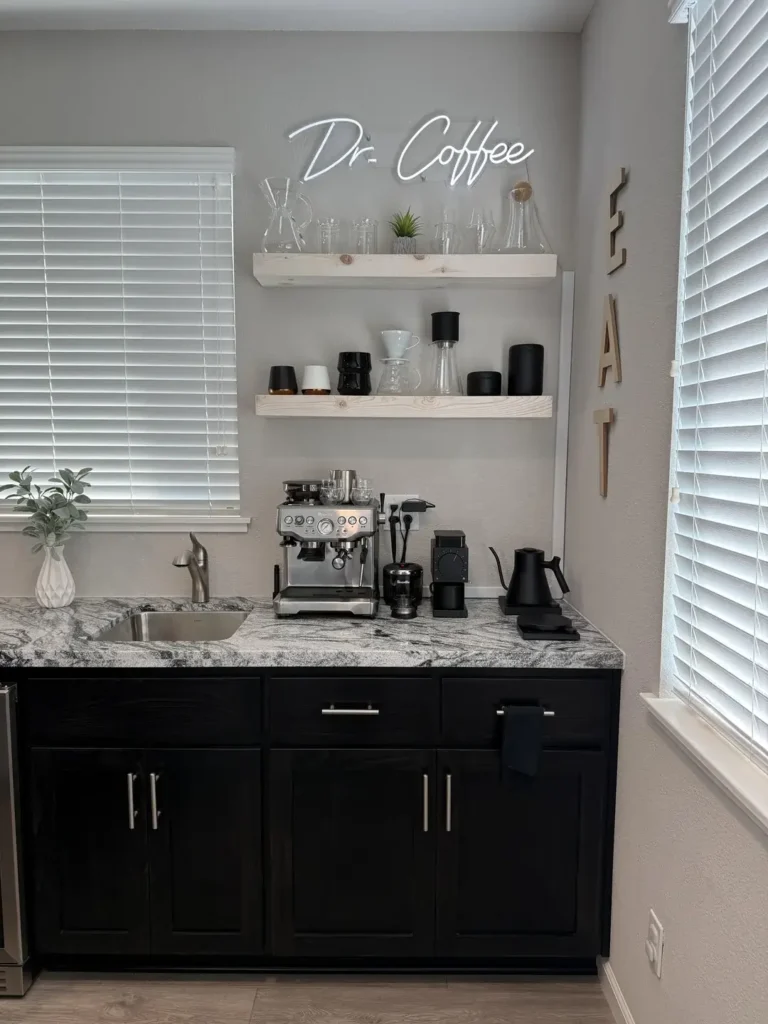
Personal touches make a coffee bar feel like it belongs in your home rather than a showroom. This corner demonstrates how a single custom element can define an entire space.
The light gray walls and black base cabinets with granite countertops provide a neutral foundation. r/9tobiwan installed two blonde wood floating shelves above an espresso machine setup, but the “Dr. Coffee” neon sign becomes the focal point.
The shelves hold brewing equipment on the lower level and decorative items including glass vessels and small plants on the upper shelf. Black kettles and accessories on the counter tie into the cabinet color.
What makes this effective is the restraint. The neon sign adds personality without overwhelming the functional layout. The shelves remain practical rather than purely decorative.
To recreate this approach, identify one personal element that reflects your specific taste. Custom neon signs have become more affordable through online retailers.
Mount your shelves at heights that actually work for daily use—the upper shelf should hold items you access less frequently, while the lower shelf keeps your regular tools within easy reach.
Corner Window Station with Maximum Natural Light
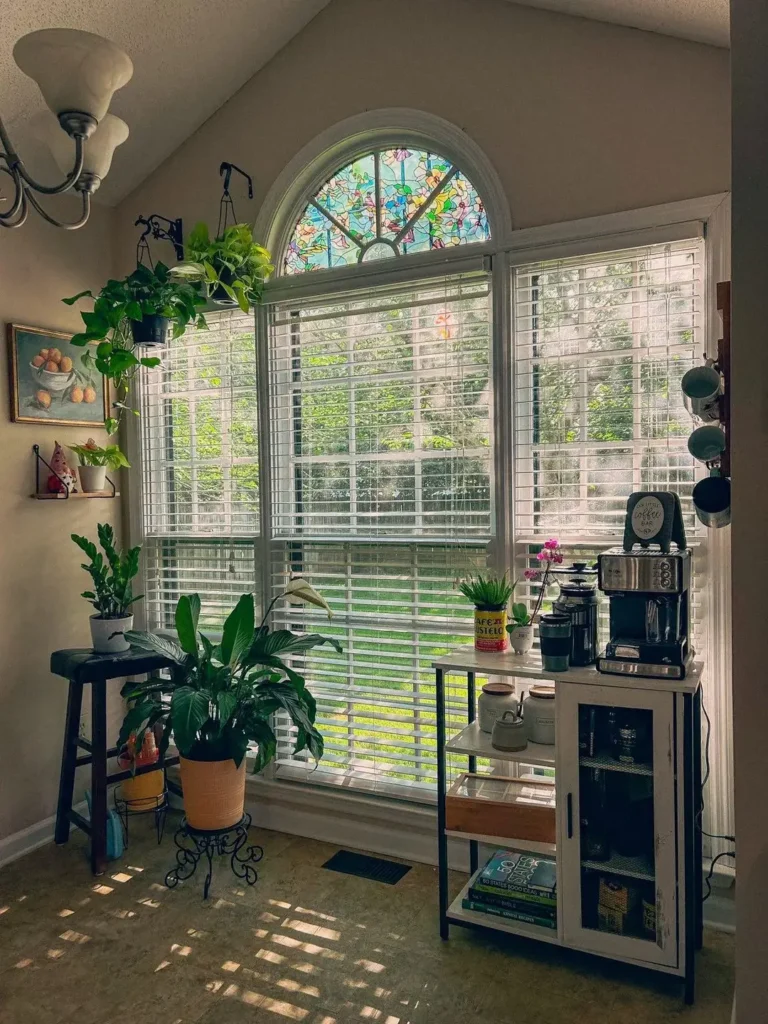
Natural light transforms coffee preparation from a morning chore into a genuine ritual. This corner capitalizes on existing architecture rather than fighting against it.
r/miceonmice positioned a compact station directly in front of large windows with white blinds that diffuse direct sunlight.
The setup includes a small plant stand on the left holding multiple potted plants at various heights, while the main coffee equipment sits on a slim console table with glass doors.
A stained glass accent window above adds character without blocking light. The color palette stays minimal—white walls, natural wood floor, and black equipment.
The genius here is recognizing that the view and light are the primary features. Everything else supports rather than competes with them. The glass-door cabinet keeps backup supplies visible but contained, preventing counter clutter.
For similar results, identify which window in your home gets morning light. You don’t need elaborate window treatments—simple blinds you can adjust work better than decorative curtains that limit flexibility. Keep your color scheme minimal so nothing distracts from the natural light.
Compact Multi-Brew Station with Vertical Storage
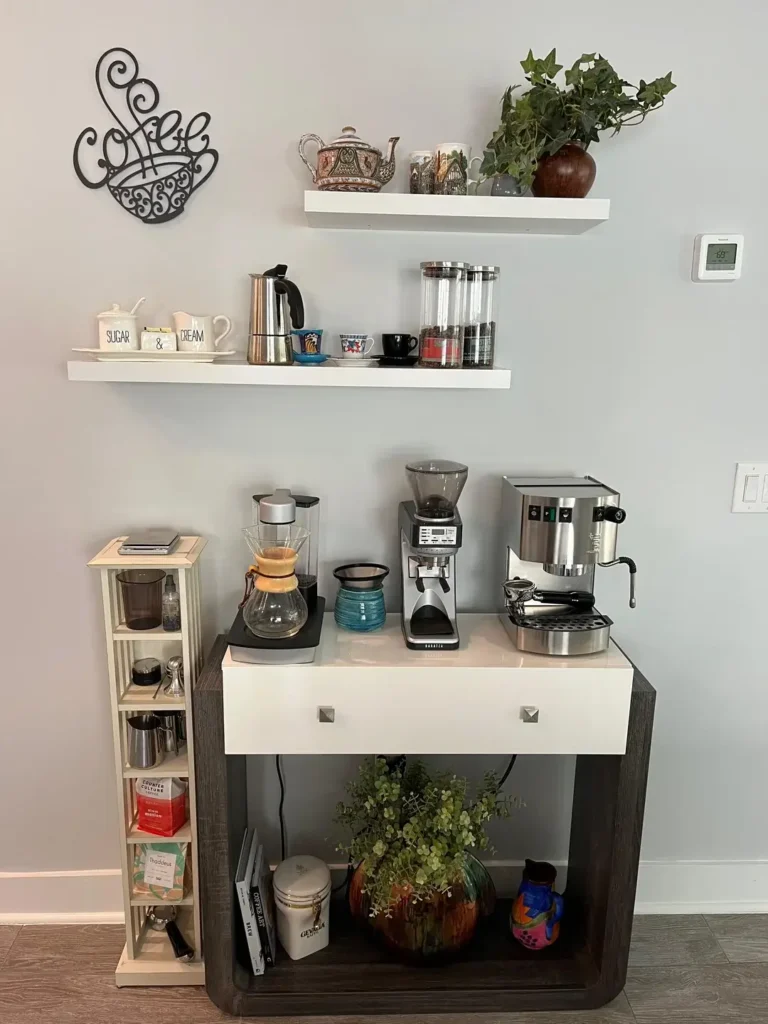
Limited counter space forces creative thinking about vertical organization. This setup maximizes a small footprint without sacrificing brewing variety.
The two-tone approach uses white floating shelves against light gray walls, with decorative coffee wall art above the shelves.
r/CoffeeCave arranged multiple brewing devices on a white console table with one large drawer and open lower shelving—an espresso machine, grinder, pour-over setup, and drip coffee maker all coexist in roughly four feet of horizontal space.
A slim light wood storage tower on the left holds additional supplies. The lower shelf displays a large glass jar and decorative items while hiding less attractive necessities.
This works because each brewing method has a designated spot without things stacking on top of each other. The vertical tower adds storage without consuming more counter depth.
To implement this approach, measure your available counter depth first. Many coffee bars fail because they don’t account for the actual depth espresso machines and grinders require.
Choose a console or table that gives you at least 18 inches of working depth. The vertical storage tower should be narrow—6 to 8 inches—so it adds storage without visually blocking the main setup.
Integrated Kitchen Backsplash Coffee Zone
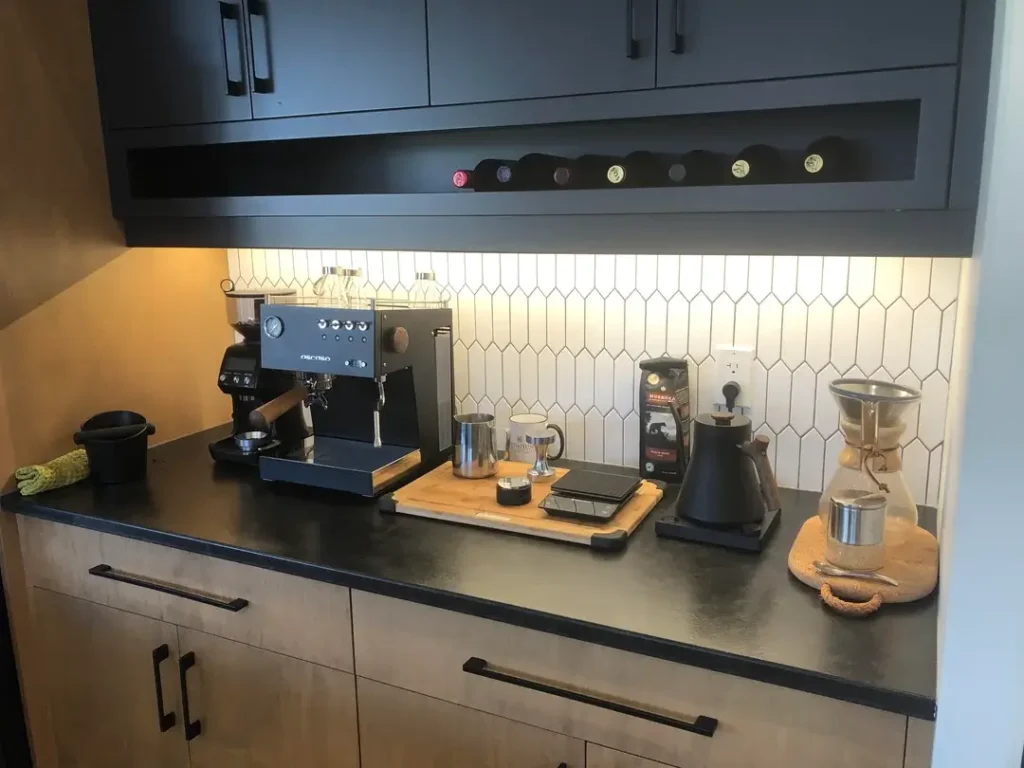
Built-in coffee stations work best when they flow seamlessly with existing kitchen design. This integration makes the coffee area feel intentional rather than added as an afterthought.
The setup sits under white upper cabinets with black handles, featuring a striking white geometric tile backsplash. r/Huntry9 placed the espresso machine directly on black countertops with wooden trivets or serving boards underneath key pieces.
A row of Nespresso capsules lines the upper cabinet area, acting as unexpected color accents. The black kettle, grinder, and accessories match the countertop color, creating visual continuity.
The backsplash does heavy lifting here. The geometric pattern adds visual interest without requiring additional decor. Under-cabinet lighting illuminates the workspace effectively.
If you’re planning a kitchen renovation or backsplash update, consider dedicating one section specifically to coffee equipment.
Choose tile that tolerates moisture and heat—porcelain or ceramic work better than natural stone near active brewing areas. The electrical outlets need to be positioned behind where machines will sit, which requires planning before tile installation.
Floor-to-Ceiling Pantry Cabinet Conversion
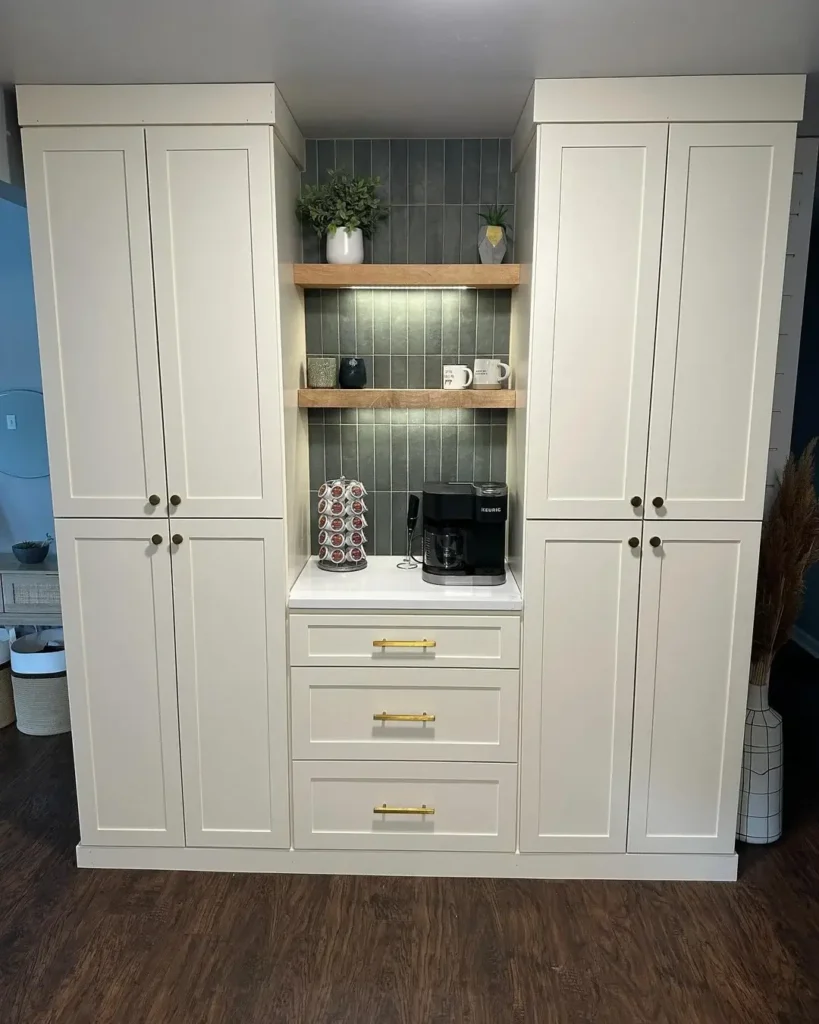
Converting existing cabinetry gives you a dedicated coffee zone without new construction. This built-in approach provides maximum storage while maintaining a clean look.
r/ThatBuilderDude transformed a pantry alcove with white shaker-style cabinets into a coffee station. The centered coffee maker sits on a white counter between three drawers with brass pulls.
Two wood floating shelves above hold mugs and decorative items, with integrated lighting behind them. The teal vertical tile backsplash adds unexpected color. Floor-to-ceiling cabinet doors on both sides hide bulk storage.
The practicality here is obvious—everything coffee-related lives in one defined zone. The closed storage prevents the visual chaos that kills most coffee bar attempts. The shallow depth means this doesn’t consume much floor space despite the tall profile.
To adapt this idea, evaluate your existing cabinetry for underused sections. Butler’s pantries or narrow closets near the kitchen often work perfectly.
The key measurement is counter depth—you need at least 24 inches for most machines. If you’re installing new cabinetry, specify electrical outlets inside the cabinet space and include lighting beneath the shelves.
Open Shelving with Mug Collection Display
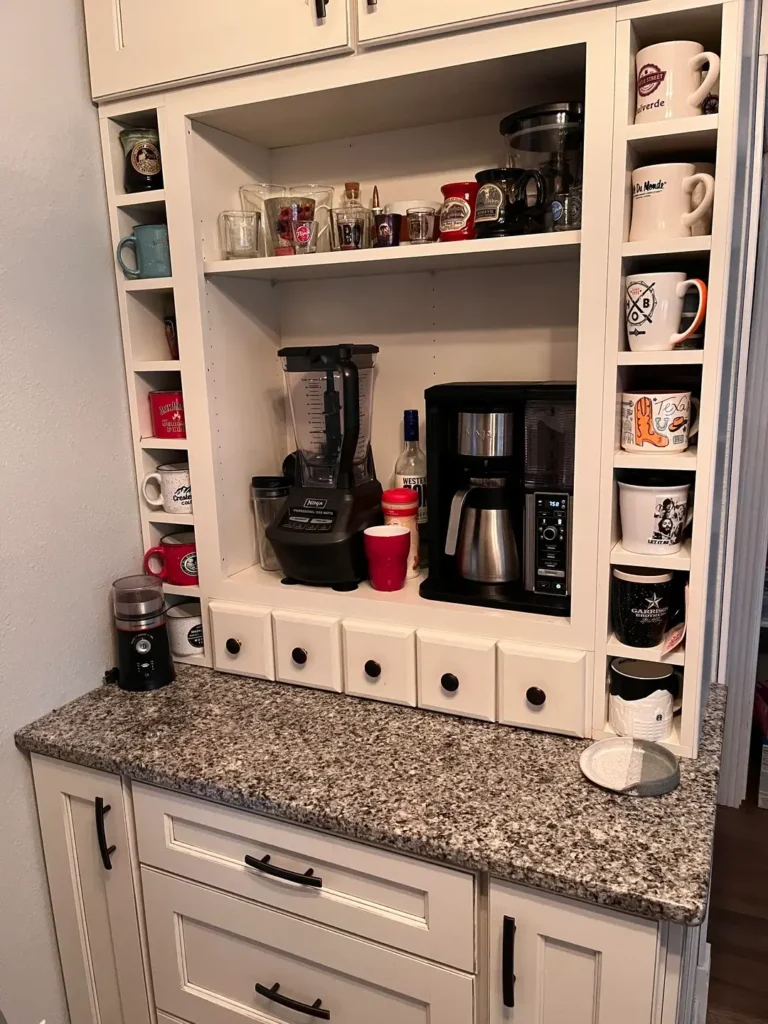
Collections deserve to be seen rather than stacked in cabinets. This setup treats everyday mugs as part of the design.
The white built-in cabinetry includes a central hutch section with open shelving on three sides. r/bb_69_dd filled the narrow vertical sections flanking the main area with their mug collection—dozens of mugs from various places and roasters creating an eclectic but cohesive display.
The main counter holds a ninja blender, thermal coffee maker, and smaller accessories, with more brewing equipment on the shelf above. The gray and white speckled granite counter provides a neutral base.
What elevates this beyond simple storage is the intentional display. The mugs aren’t randomly shoved onto shelves—they’re positioned to show off their designs and create visual rhythm through repetition.
To make this work, commit to editing your collection. Not every mug deserves display space. Choose pieces with visual interest or sentimental value.
Arrange by color or type if you have enough similar mugs, or embrace variety if your collection spans different styles. The key is maintaining some organizational logic so it reads as intentional.
Freestanding Baker’s Rack Coffee Bar
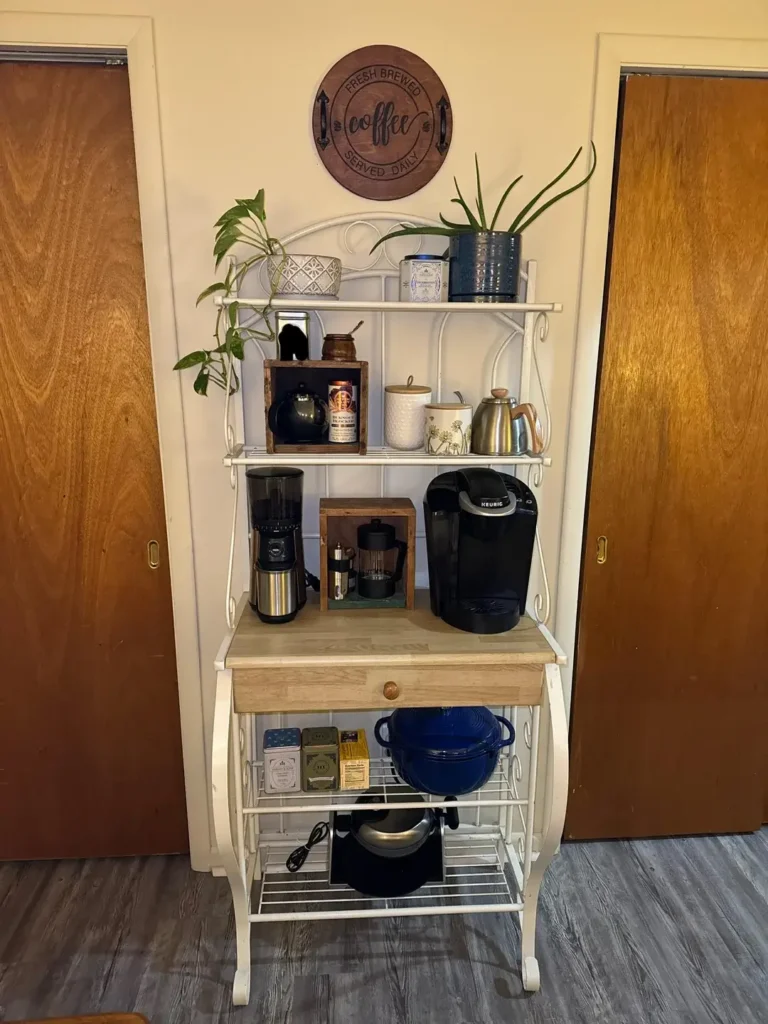
Rental-friendly solutions don’t require permanent installation. This portable approach offers flexibility for people who move frequently or can’t modify walls.
r/Cautious-Many1108 used a white metal baker’s rack with decorative scrollwork to create a complete coffee station. A wooden “Fresh Brewed Coffee” sign tops the unit, setting clear purpose. Three white shelves hold brewing equipment, with a Keurig machine on the middle shelf alongside smaller accessories.
The decorative wooden box on the top shelf likely holds coffee supplies. Wire baskets on the bottom level provide additional storage. A small drawer in the middle section keeps smaller items organized.
The portability here matters more than aesthetics. This entire setup can move to a new home without leaving marks on walls or requiring tools to disassemble.
The open shelving keeps everything accessible while the decorative elements soften the utilitarian metal frame.
For renters or frequent movers, prioritize furniture-style coffee bars over wall-mounted solutions. Look for pieces with enough weight to stay stable when you’re operating an espresso machine—lightweight metal racks tip easily. The finish should tolerate moisture and heat without damage. Measure your vertical space carefully since baker’s racks can be tall.
Bold Personality Bar with Statement Decor
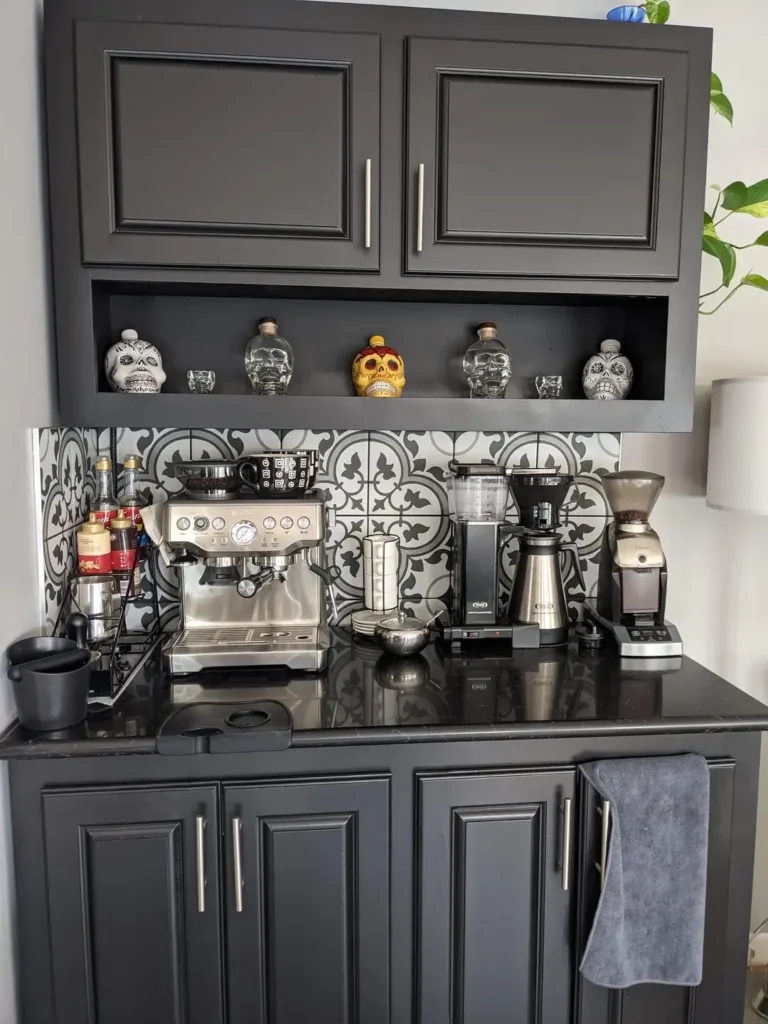
Sometimes you want your coffee station to reflect specific interests rather than following neutral design rules. This setup leans into personal style without apology.
The gray cabinets and black countertops create a dark base that makes the colorful elements pop. r/fallingd0wn installed a row of decorative skull bottles above the cabinets as the primary attention-grabber—tequila bottles shaped like skulls in white, gold, and silver.
The black and white patterned tile backsplash adds geometric interest. The espresso machine, grinder, and accessories arrange on the counter in front, with orange and black cups providing additional color accents.
This works because the functional layout remains practical despite the bold decor. The brewing equipment still has proper spacing and the workflow makes sense. The personality comes from the decorative elements rather than compromising function.
If you want a distinctive coffee bar, separate function from personality in your planning. Nail down the practical layout first—where machines sit, where you’ll prepare drinks, where accessories store.
Then add decorative elements that reflect your interests. The advantage of keeping them separate is you can swap out the personality pieces without redoing the functional components.
Industrial Mesh Cabinet Coffee Corner
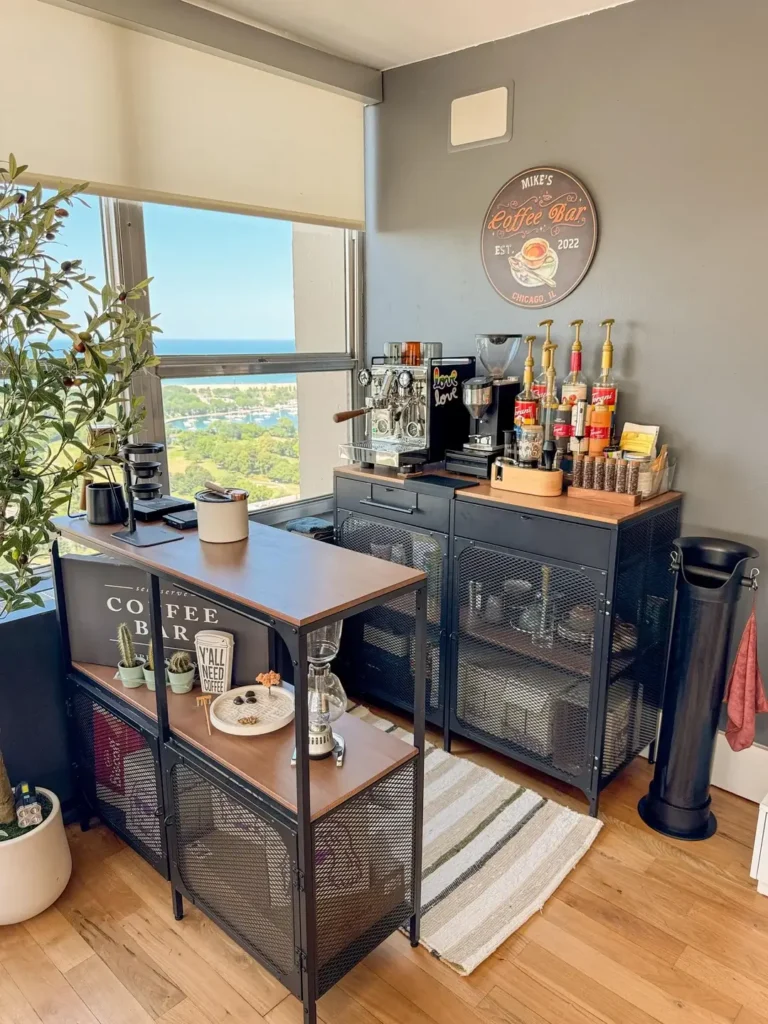
Transparent storage creates visual interest while keeping supplies accessible. This modern approach embraces open organization rather than hiding everything.
Two black industrial cabinets with mesh front panels form an L-shape configuration. r/iamuptonogood24 placed a custom coffee bar sign on the wall, establishing the space’s purpose.
The left cabinet has open shelving on top displaying pour-over equipment and decorative items, while the right cabinet sits higher and holds the espresso machine and syrup bottles with wooden handles.
Both cabinets have mesh doors on the lower sections, showing stored items without full exposure. The wood-toned countertops on both units warm the industrial black metal.
The mesh fronts are the key feature—they provide the organizational benefits of closed cabinets while maintaining the airiness of open shelving. You can see what you have without creating visual clutter.
For this aesthetic, source cabinets specifically designed with mesh or perforated metal panels. DIY versions using chicken wire rarely look intentional.
The mesh needs to be actual industrial material, not decorative screening. Keep the items behind the mesh somewhat organized since they remain visible.
This works best for people who naturally maintain order rather than those who need closed doors to hide chaos.
Moody Lighting Coffee Display with Premium Equipment
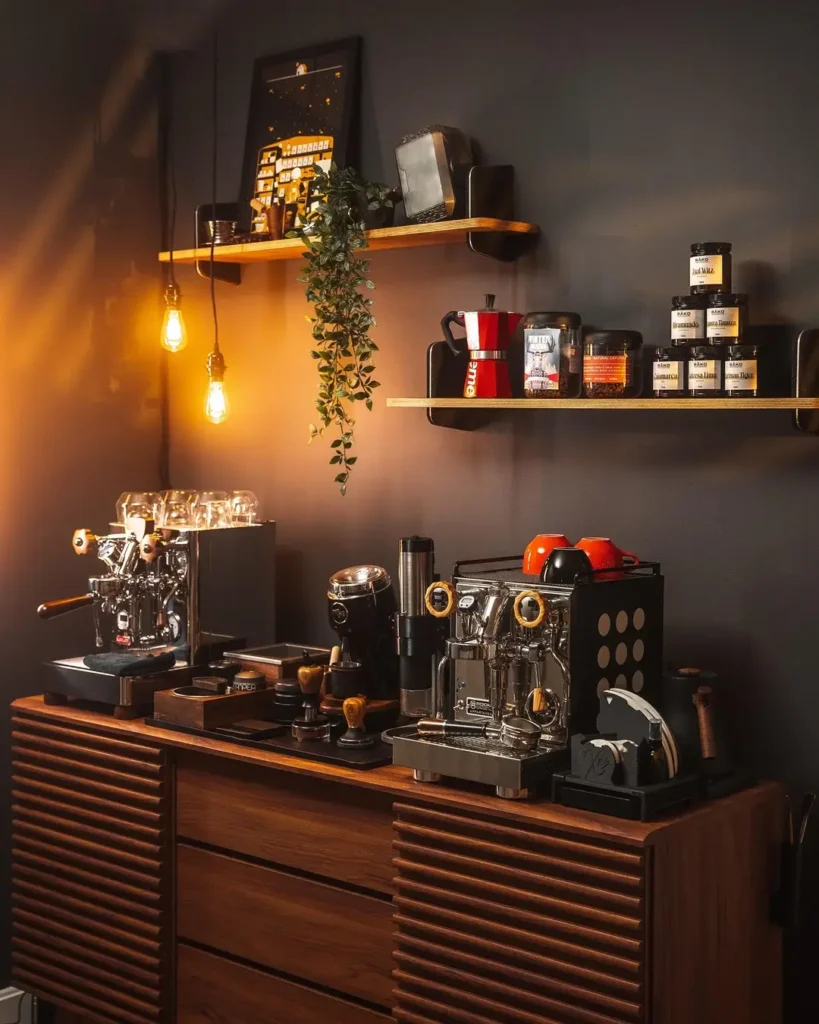
Lighting transforms functional spaces into experiential ones. This setup treats coffee preparation as performance rather than routine.
The warm Edison-bulb pendant lights illuminate dark gray walls, creating dramatic shadows and highlights. r/xristiantj arranged professional-grade equipment on a walnut credenza with slatted front panels a chrome espresso machine and manual grinder claim the counter, with additional accessories and a red moka pot adding color pops.
Two floating wood shelves with black metal brackets hold coffee supplies, a red Italian coffee maker, and decorative jars. A trailing pothos plant softens the masculine aesthetic.
The lighting is what elevates this from a nice coffee bar to an experience. The warm glow from the Edison bulbs creates ambiance that makes you want to spend time in this space rather than grabbing coffee and leaving.
For similar impact, invest in quality task lighting before buying decorative items. Adjustable pendant lights give you control over the mood.
Choose bulbs with warm color temperatures 2700K to 3000K creates that inviting glow. The dark walls work because the lighting is strong enough to illuminate the workspace while creating contrast. This approach works better in spaces without competing natural light.
Compact Apartment Coffee Cart Setup
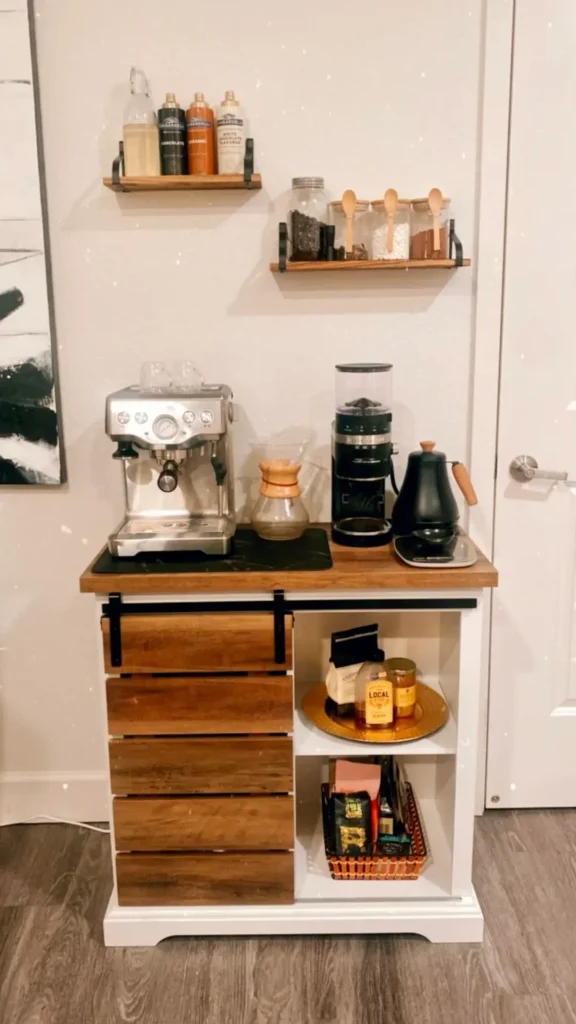
Small spaces don’t mean giving up specialty coffee. This minimal footprint solution fits into studios and efficiency apartments.
r/gingers_snaps_ used a modified short dresser or media console with a white painted exterior and natural wood drawers.
The espresso machine sits directly on the black or dark gray top, with a chemex, electric grinder, and black kettle arranged alongside.
Two small floating shelves above hold syrup bottles with wood spoons and other supplies. The white shiplap wall keeps the backdrop bright, preventing the setup from feeling cramped.
The genius is choosing a piece of furniture at the right height counter height rather than standard table height gives you proper ergonomics for operating the espresso machine. The drawers provide hidden storage so the small counter doesn’t overflow.
For apartment dwellers, measure your vertical space first. Many apartments have limitations on what you can mount to walls, so choose a taller furniture piece rather than planning on lots of shelving.
The width should accommodate your largest piece of equipment plus at least six inches on each side for working room. Prioritize storage within the furniture piece since you probably can’t add cabinets.
Full Coffee Bar with Seating
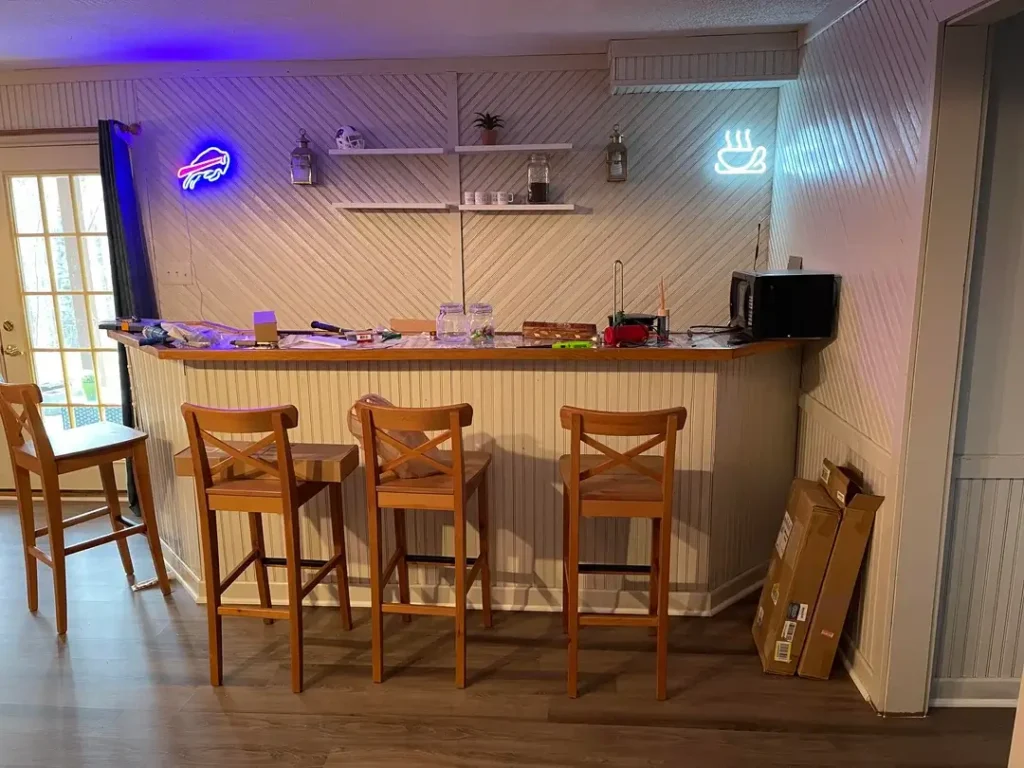
Creating gathering space around coffee transforms it from personal routine to social ritual. This setup invites people to sit and stay.
The custom-built bar spans a full wall with white vertical paneling creating texture. r/private_enemy installed a raised bar top with wooden bar stools, making this equally suitable for morning coffee or evening conversations.
Floating shelves above hold coffee supplies, while neon signs a Bills logo and coffee cup add personality and ambient lighting.
The bar top itself stays relatively clear, with the coffee-making equipment presumably housed elsewhere or in cabinets below.
The seating changes everything. This isn’t just a functional coffee prep area it’s a destination within the home. The bar height creates separation from the main living area while maintaining openness.
To build something similar, you need roughly eight linear feet minimum three to four feet for the coffee prep area and four feet for seating.
Bar-height construction requires 42-inch height, which is taller than standard counter height. You’ll need proper support underneath since the cantilevered bar top has to handle both equipment weight and people leaning on it.
This only makes sense if you have the space and genuinely want to create a gathering spot rather than just a functional coffee area.
LED-Lit Collector’s Coffee Bar with Vintage Signage
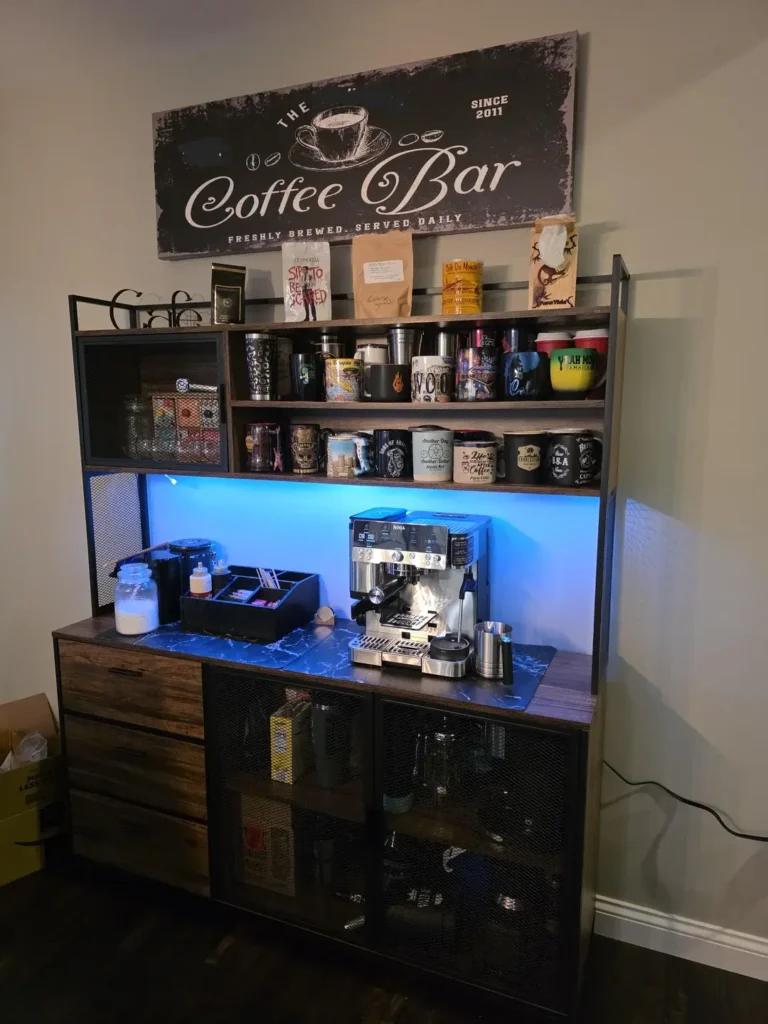
Collections tell stories, and this setup celebrates coffee culture through curated objects. The display is as important as the function.
r/LI0NHEARTLE0 converted a baker’s rack into a comprehensive coffee station, topped with a vintage metal coffee bar sign.
Three open shelves display a mug collection spanning different roasters and locations—the varied designs creating visual interest through repetition.
The working counter holds an espresso machine, milk steamer, and accessories, with a tray organizing smaller items. Blue LED strip lighting behind the middle shelf creates a commercial coffee shop atmosphere. Mesh storage on the lower levels keeps backup supplies visible but contained.
The LED lighting is what pushes this from good to memorable. The blue glow highlights the mug collection and creates ambiance without relying on overhead lighting. The vintage sign establishes theme without being heavy-handed.
If you’re a collector, designate specific shelves for display versus storage. LED strips are inexpensive and transform the visual impact significantly position them behind shelves rather than under them for that backlit effect.
The color matters blue creates a modern commercial feel, while warm white feels more residential. The mug collection needs some organizational principle (by roaster, by color, by size) rather than random placement.
Bold Color-Matched Coffee Station
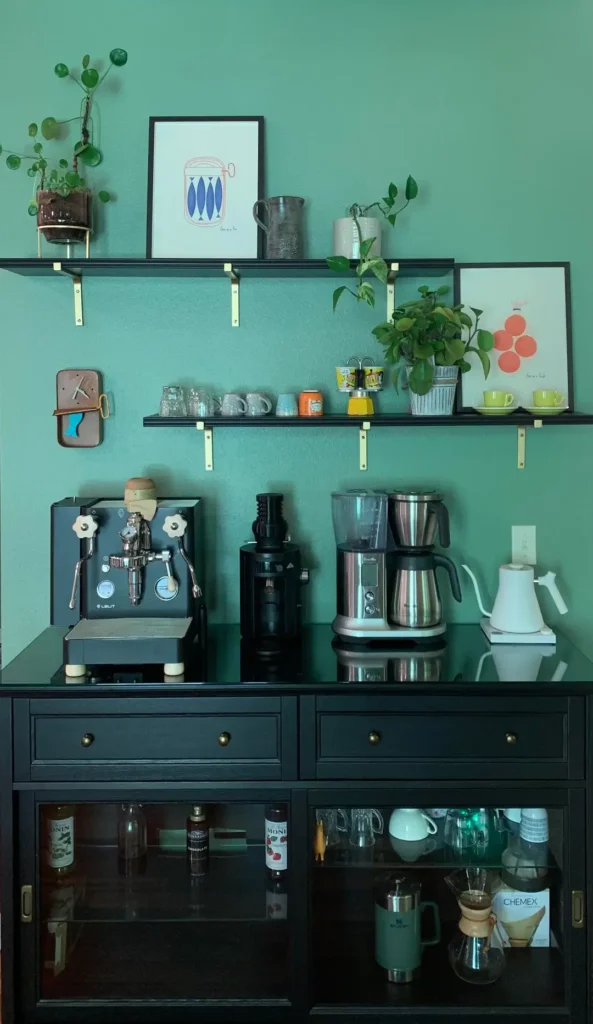
Committing to a color scheme creates cohesion that makes even budget-friendly setups look expensive. This maximalist approach embraces saturation.
The turquoise walls dominate this space, with every element chosen to complement or contrast the bold background. r/IdPharmD17 installed black floating shelves with brass brackets, creating strong visual lines against the bright color.
The espresso machine, grinder, and coffee maker all sit on matching black base cabinets with brass hardware. Plants in various containers and framed coffee-themed art continue the color story, with touches of white, yellow, and green providing accent colors.
The commitment to the color scheme is what makes this work. Everything coordinates without being matchy. The brass hardware ties the black elements together, while the turquoise provides energy without feeling chaotic.
For a color-forward coffee bar, choose your wall color first and live with it for a week before buying anything else. Bold colors look different throughout the day as light changes.
Once you commit, stick to a clear accent metal brass, black, or copper, but not all three. The plants can introduce additional colors as long as they stay within the same temperature range (all warm or all cool). This approach requires maintenance bold colors show dirt and wear more obviously than neutral tones.
Choosing the Right Coffee Bar Style for Your Space
The setups above span different aesthetics, but they all solve the same core problems: equipment storage, workflow efficiency, and visual integration. Your specific situation will determine which approach makes sense.
Consider your daily coffee routine before choosing a style. If you only use a drip coffee maker, you don’t need a multi-tier setup designed for espresso enthusiasts with multiple brewing methods.
If you rotate through pour-over, espresso, and cold brew, you need counter space and storage for multiple devices.
| Space Type | Best Approach | Key Consideration |
|---|---|---|
| Small apartment | Freestanding furniture, vertical storage | Portability and minimal footprint |
| Rental home | Wall-mounted shelves with minimal holes | Easy restoration when moving |
| Kitchen with cabinets | Built-in conversion, integrated design | Matching existing finishes |
| Open floor plan | Statement piece, bold personality | Visual impact from multiple angles |
| Corner or alcove | Custom fit, maximizing awkward space | Exact measurements required |
The location matters as much as the style. Coffee bars near sinks simplify cleanup and water access. Stations far from water sources need larger water reservoirs or more frequent trips. Proximity to your coffee storage (if separate) affects your morning efficiency.
Making Your Coffee Bar Work Long-Term
The coffee bars that still look good six months after installation share common characteristics. They have homes for every item rather than relying on “I’ll find a spot for that.” They account for the messy reality of daily coffee making—drips, grounds, steam marks—rather than only working in pristine conditions.
Successful coffee bars accommodate growth. Your equipment will change as you get deeper into coffee. That basic drip maker might become an espresso machine. You’ll acquire more accessories as you try new brewing methods. Build in extra storage and counter space from the start rather than trying to cram additions into a perfectly optimized initial setup.
The best advice I can offer is to set up your equipment before committing to a permanent installation. Live with a temporary arrangement for two weeks. You’ll discover which items you actually use daily versus those that sounded good but stay in cabinets. You’ll figure out if you’re a person who cleans the counter after each use or if you need closed storage to hide daily mess. Those two weeks of testing will prevent expensive mistakes when you build the permanent version.
Your coffee bar should make your life easier rather than creating another thing to maintain. If a design requires constant organization to look acceptable, it’s the wrong design for you. Choose setups that match your actual habits rather than aspirational versions of yourself.
