
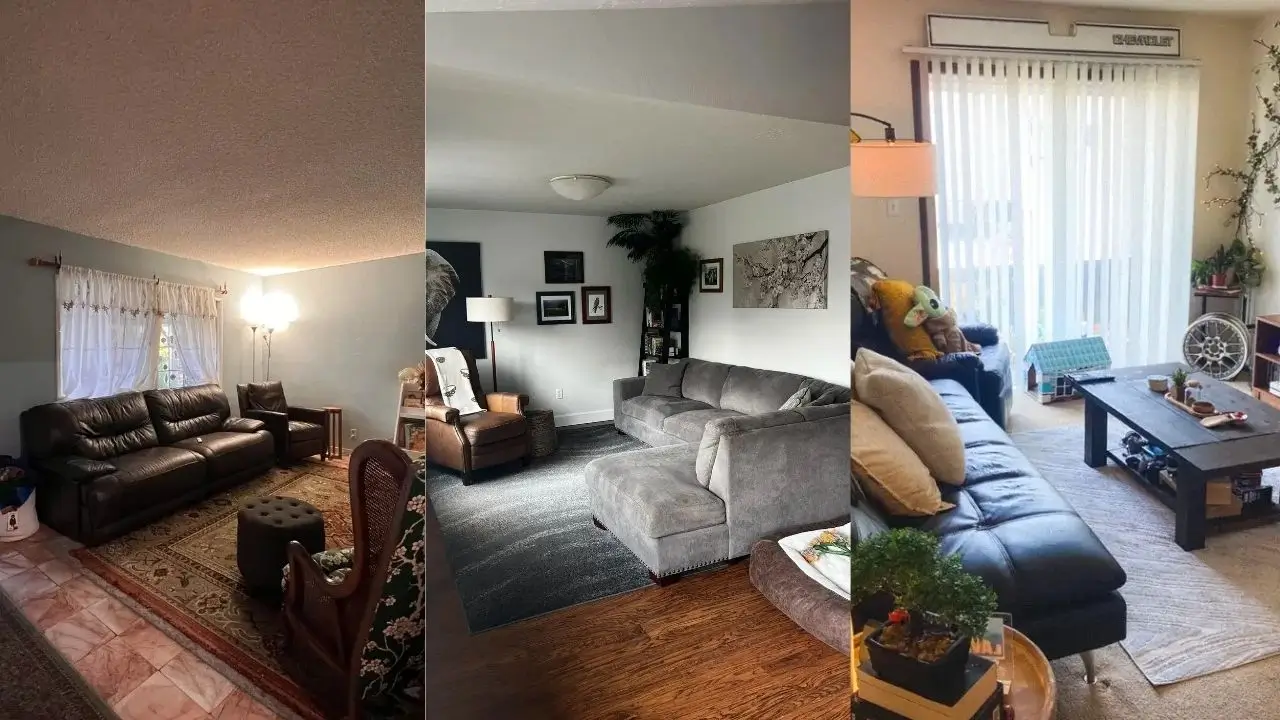
Let’s skip the part where I pretend your tiny living room just needs “a few clever tricks” and suddenly looks like an HGTV set. That’s not happening. What IS happening is that real people with real small spaces have figured out genuinely smart ways to make those rooms feel livable, cozy, and even stylish.
I’m talking about rooms under 120 square feet. Not the “small” rooms in design magazines that could comfortably host a birthday party. Actual small. The kind where you have to think twice before buying a new lamp.
Here are ten approaches that work, pulled from people who’ve actually been there.
Maximize Corners with Multi-Level Greenery and Ambient Lighting
Most people treat corners like dead zones. Big mistake. Your corners are prime real estate, and once you start using them intentionally, the whole room starts to breathe differently.
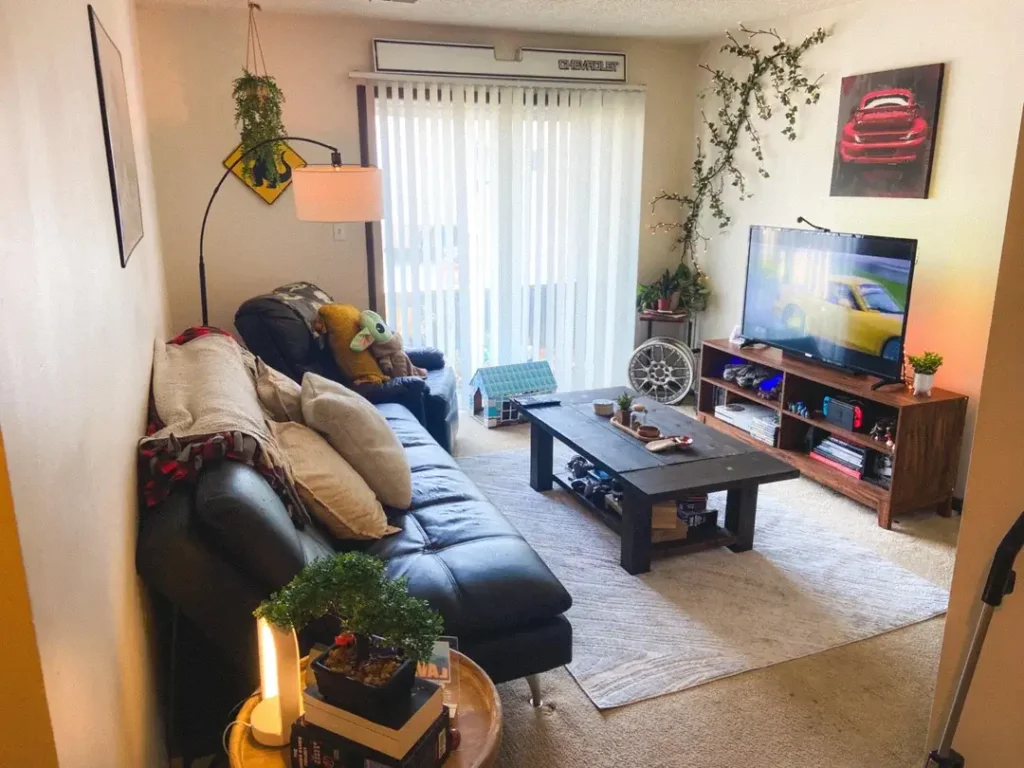
Picture this: a black leather sectional against white walls, with a tall artificial tree anchoring one corner and a hanging plant tucked into another near the window. Add an arc floor lamp curving over the sofa from behind (so the base doesn’t eat up your walkway) and suddenly the room feels layered and alive without feeling crowded.
A few things that make this setup work:
- Tall elements go in corners, where they don’t block movement
- A low, long media console keeps storage without killing sightlines
- A coffee table with a lower shelf doubles the storage without doubling the footprint
- A beige area rug defines the seating zone cleanly
Start from the corners and work inward. Seriously, try it.
Bold Pattern Rugs Anchor Minimalist Small Spaces
Here’s something a lot of people get wrong about small spaces: they try to make everything disappear. Neutral walls, neutral sofa, neutral rug, neutral everything. And then the room just looks sad and unfinished.
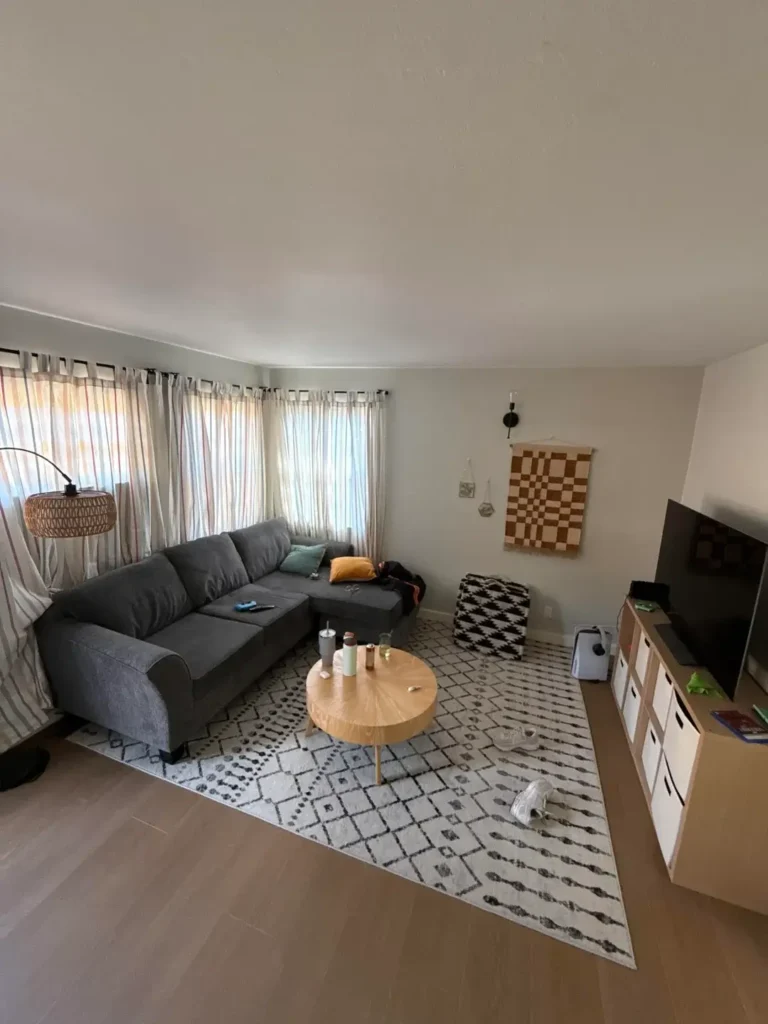
A bold, geometric rug actually helps organize a small space. It tells your eye where the living area starts and stops, which matters a lot when your apartment is basically one big open room trying to do five jobs at once.
A black and white geometric rug under a gray sectional, paired with a round blonde wood coffee table, a wicker pendant lamp overhead, and a checkerboard wall hanging? That’s a room with a point of view. The secret is keeping the color palette consistent so the patterns don’t fight each other.
IMO, geometric patterns work better than florals or abstract designs in small spaces because the structure helps organize the room visually, not just decorate it.
Layer Vintage Textiles in Compact Traditional Layouts
Not everyone wants a minimal, modern small space. Some of us want warmth, character, and the feeling that the room actually has a personality. Totally valid.
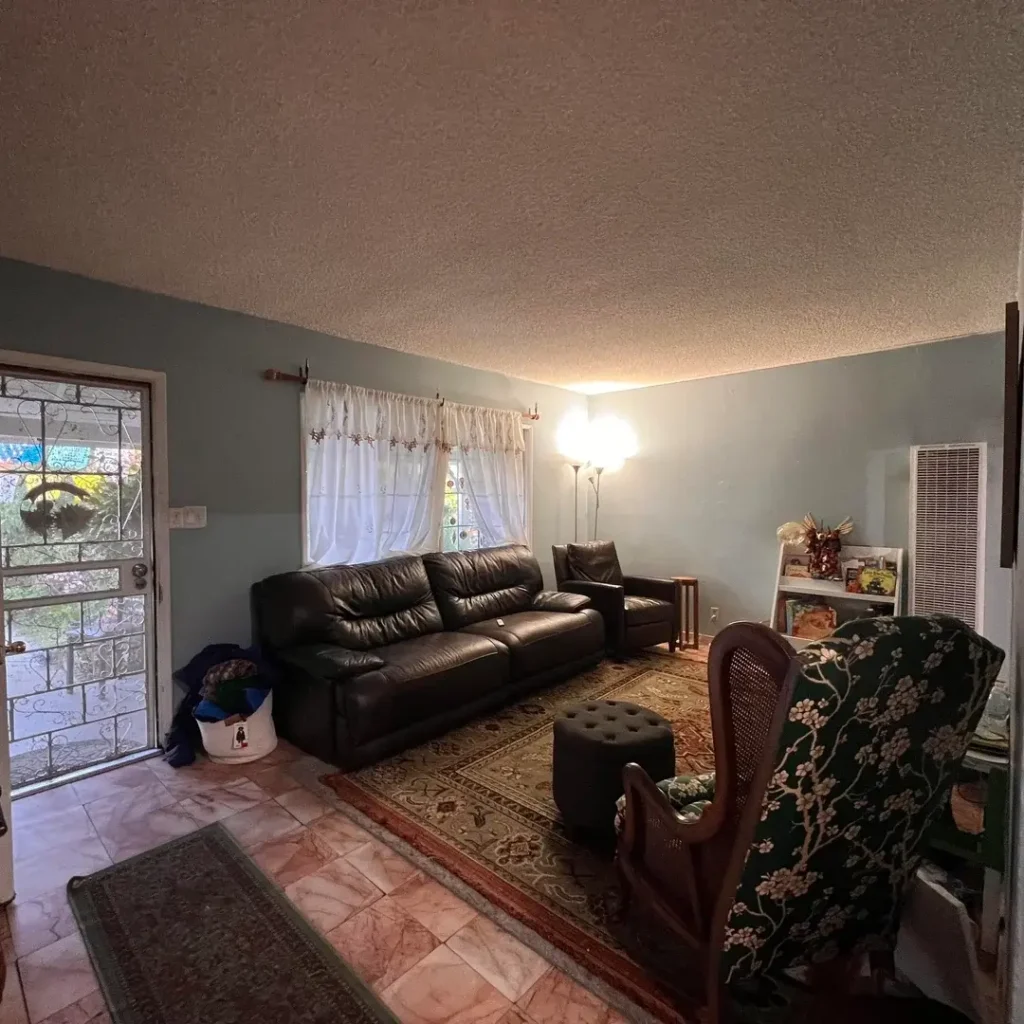
Pale blue walls with a brown leather sofa already sets a calm, grounded tone. Then you layer an ornate Persian-style rug over terracotta tile (great move for renters stuck with flooring they didn’t choose), add a vintage floral armchair in one corner, throw in white sheer curtains with a decorative valance, and you’ve got a small room that feels genuinely cozy instead of just… small.
A few tips for this approach:
- Pick a rug large enough to anchor your main seating pieces
- Choose a vintage-style accent chair instead of a second sofa
- Use small shelving units for books and personality pieces
- Keep curtains light so they filter without blocking natural light
The layered rug approach is especially smart in rentals. Instant warmth, zero commitment.
Also Read: 10 Inspiring Black Living Room Decor Ideas for Dream Homes
Create Zones with Accent Lighting and Statement Art
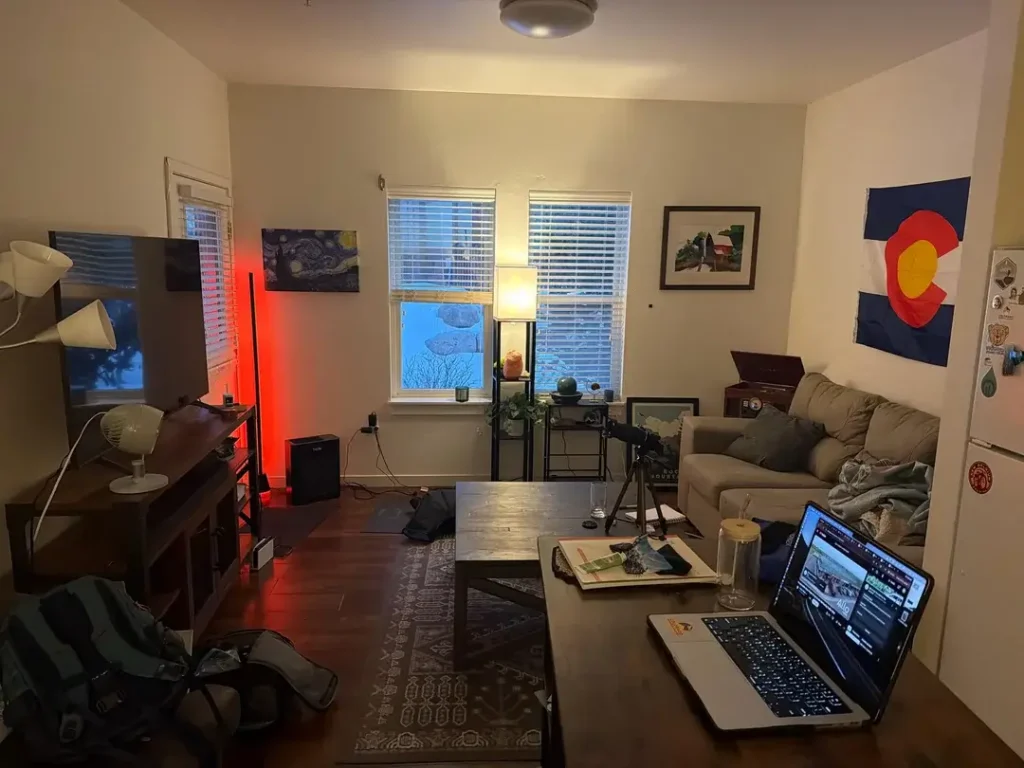
When your living room is also your workspace, dining area, or bedroom (no judgment, city life is expensive), lighting becomes your most powerful zoning tool. Furniture can’t always separate spaces, but light absolutely can.
A beige sofa near two windows handles daytime beautifully. But after dark? A vertical LED strip behind the media console shifts the whole mood. Suddenly it’s not just a living room anymore, it’s a vibe. The patterned area rug grounds the seating zone, while a small side table near the desk setup keeps the work area functional but separate.
The key here is intentional lighting, not just enough to see by. Pick one statement lighting element that defines a mood or purpose, then arrange furniture around it. The red accent lighting in this kind of setup sounds bold, and it is, but it works because everything else stays relatively neutral.
FYI, this approach is also great for people who work from home and need the space to mentally “switch off” in the evenings.
Built-In Storage Flanking Focal Points Maximizes Wall Space
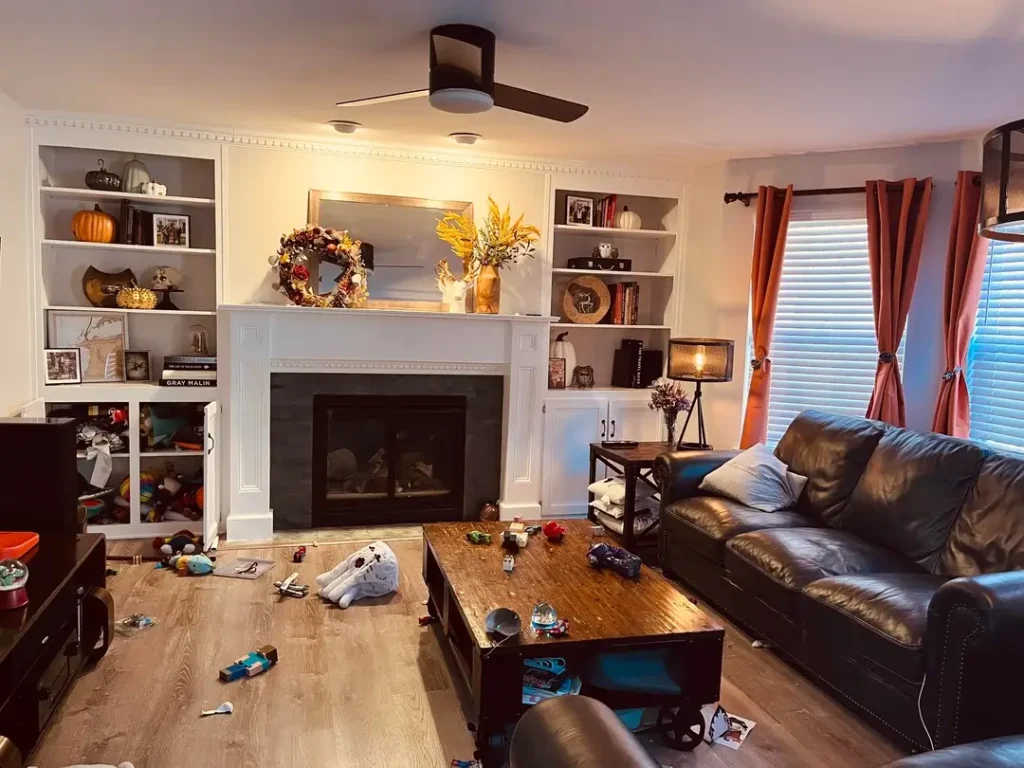
Got a fireplace? Lucky you. Got a fireplace and no idea what to do with the wall space on either side of it? That’s where built-in shelving saves the day.
White built-in shelves flanking a fireplace give you substantial storage without eating into the room. Style the shelves with a mix of decorative items, family photos, and storage baskets in the lower cabinets, and you’ve got something that looks intentional rather than cluttered.
A brown leather sofa facing the fireplace, a coffee table with a lower shelf, light wood floors, and a ceiling fan with a built-in light fixture (no floor lamp needed!) rounds this out perfectly. Seasonal touches like an autumn wreath on the mantel prove that small spaces can still celebrate occasions without tipping into chaos.
The rule here is simple: vertical storage always beats horizontal in small rooms. Go up, not out.
Moody Paint Colors Create Intimacy in Tiny Rooms
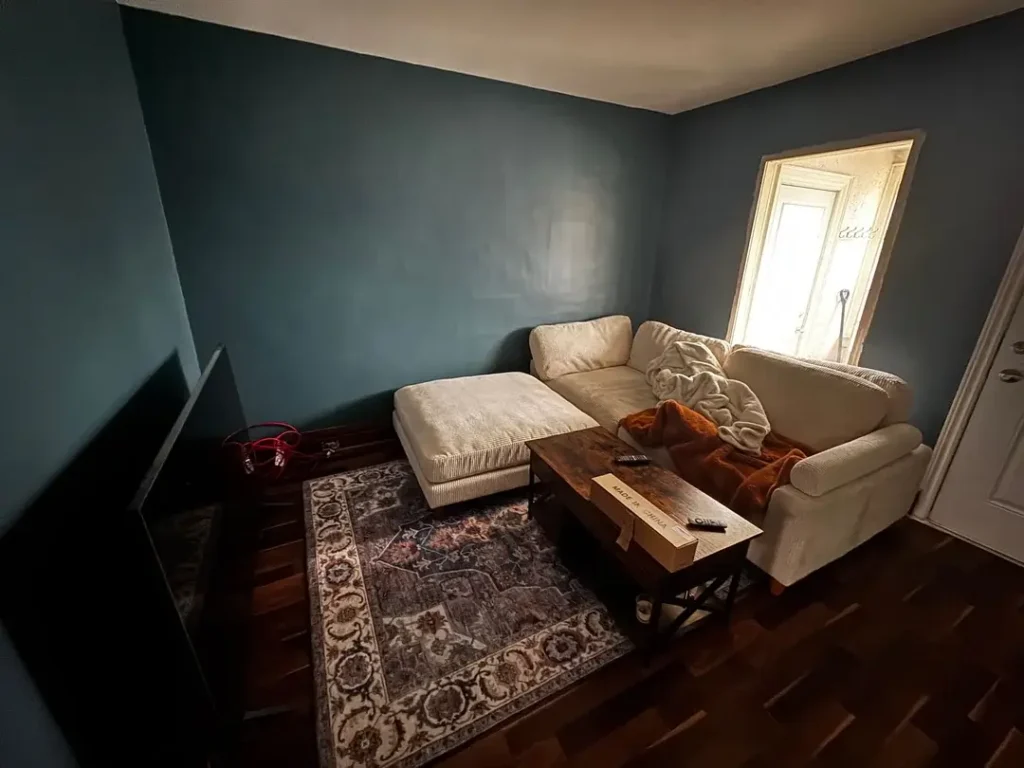
Every design guide ever written has told you to paint small rooms white. I’m here to respectfully disagree, at least sometimes.
Deep, moody paint colors can make a tiny room feel intentional and cozy rather than just cramped. There’s a big difference between a small room that apologizes for itself and one that leans into its intimate scale.
Deep teal walls with a cream sectional, a walnut side table, patterned area rug, and dark wood floors? That’s a room that feels like a deliberate retreat. The trick is making sure your lighting can carry it. Natural light during the day plus strategic lamp placement at night keeps it from tipping into “cave” territory.
Before committing to a bold paint color:
- Test it at multiple times of day, not just noon
- Make sure you have enough light sources to balance it out
- Choose light-colored furniture to create contrast against the dark walls
- Keep wall decor minimal so the color can breathe
Dark colors that feel heavy at noon might create exactly the atmosphere you’re going for in the evening. Give it a fair test.
Also Read: 10 Stylish Shelf Decor Ideas to Transform Your Living Room
Sectional Sofas Work When Scaled to Room Proportions
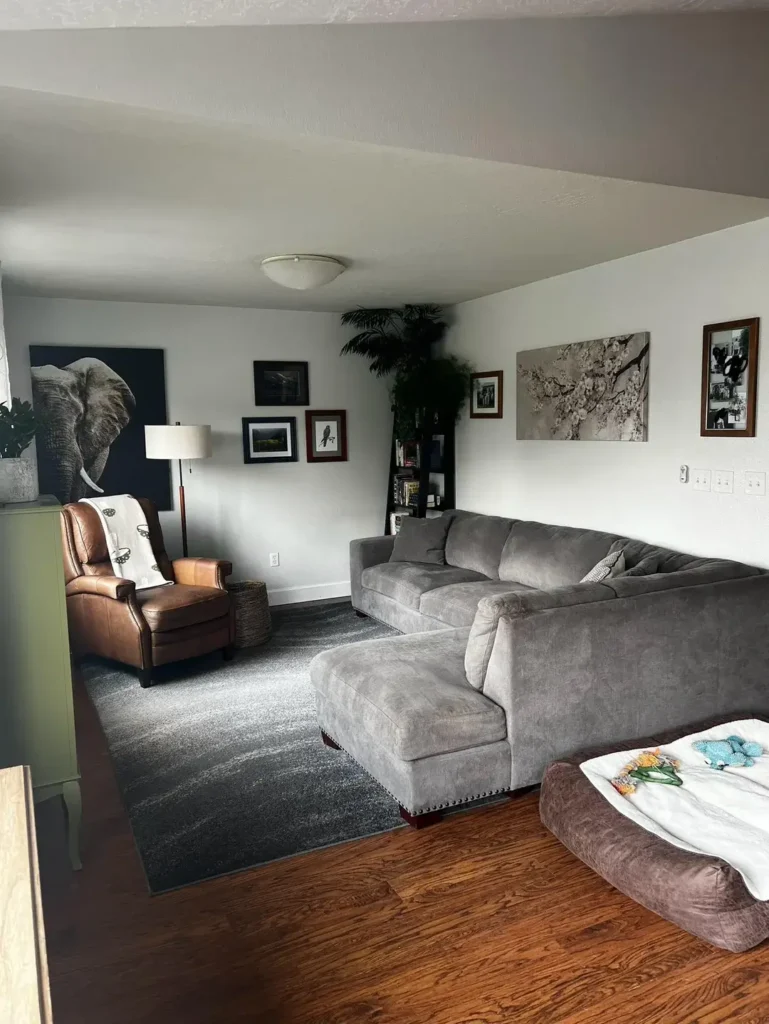
The furniture industry loves to imply that sectionals are only for spacious family rooms. Not true. The right sectional solves multiple seating problems in a small living room, as long as you choose one scaled to the actual space.
A gray velvet sectional with an ottoman, a dark gray area rug to define the seating zone, a brown leather accent chair for texture and extra seating, and a gallery wall of mixed frames? That’s a complete living room that works hard without feeling overcrowded.
What makes a sectional work in a small room is shallow depth on each piece. Deep, plush sectionals designed for sprawling are a trap. They look comfy in the showroom and make your actual room feel like a furniture storage unit.
Measure carefully. Leave at least 24 inches of walkway on all sides before you commit to anything. Your future self will thank you.
Exposed Brick Walls Add Character Without Furniture
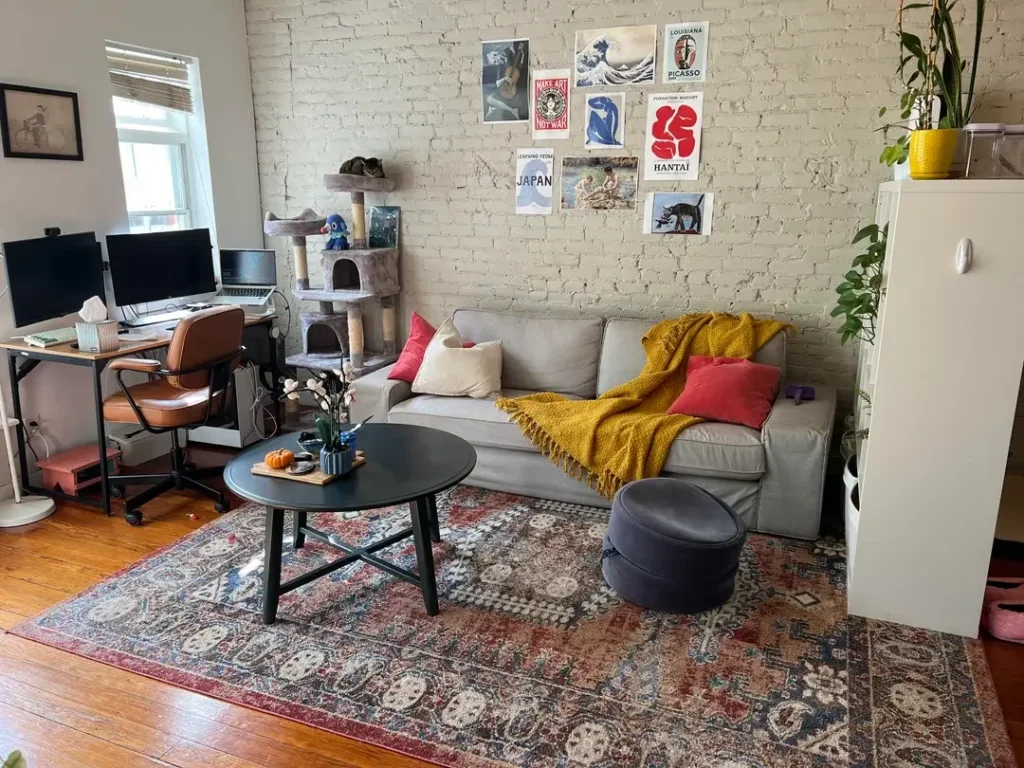
If your space has exposed brick (lucky you, genuinely), you need significantly less furniture and decor to make the room feel finished. The texture and visual interest in the brick does work that would otherwise cost thousands in accessories.
White-painted brick walls with a gray sofa, a black round coffee table, a bold poster grid for color and personality, and a patterned area rug for warmth. That’s it. That’s the whole room. It works because the architecture carries so much of the visual weight.
A desk and office chair tucked against one wall keeps the space functional as a home office without needing a separate room for it. The zones stay defined even without physical barriers.
The advice here is simple: resist the urge to fill every surface. The brick is already doing the heavy lifting. Let it.
Warm Color Schemes Make Small Rooms Feel Welcoming
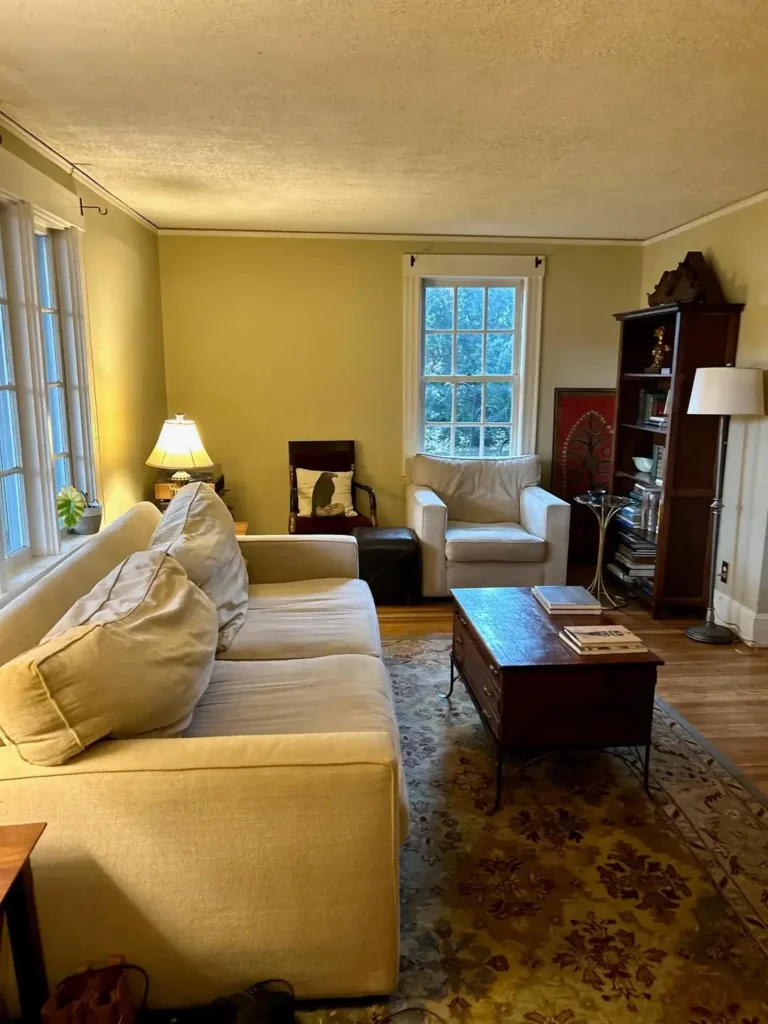
Sometimes you don’t want a room that looks bigger. You want a room that feels good to be in. That’s a totally legitimate design goal, and warm colors deliver it.
Buttery yellow walls create an enveloping glow that makes a small living room feel intentionally cozy rather than accidentally cramped. Pair them with a cream sofa and matching chair (so the upholstery blends with the walls rather than contrasting against them), add a dark wood coffee table and antique bookshelf for weight and character, and throw in a patterned rug with burgundy and cream tones.
The result is a room that feels warm and welcoming without feeling heavy or dark.
The balance to strike here:
- Warm walls set the atmosphere
- Light upholstery prevents the room from feeling closed in
- Dark wood accents add gravitas so nothing feels insubstantial
- Strategic mirrors or reflective surfaces help bounce the warmth around
Warmth without weight. That’s the goal.
Also Read: 11 Creative Wall Decor Living Room Designs for Any Home
High Ceilings Offset Small Floor Plans with Vertical Elements
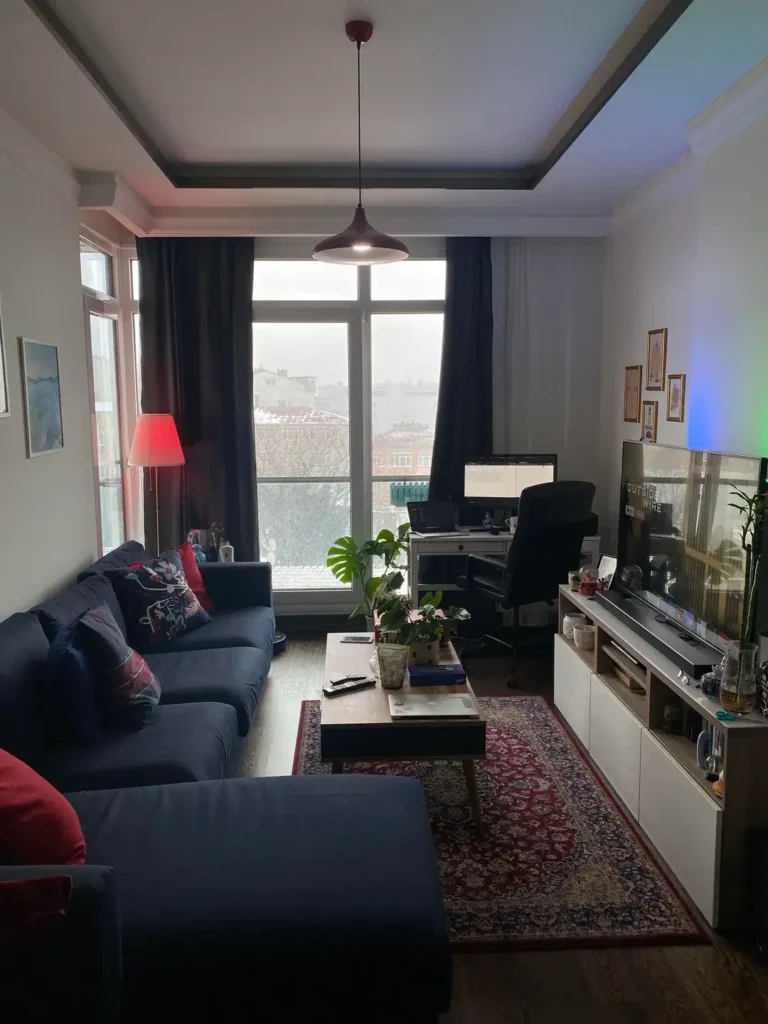
A small floor plan feels way less limiting when you can build upward. If your room has high ceilings, that’s your secret weapon and you should absolutely be using it.
A dark blue sectional wrapping around one corner, floor-to-ceiling navy curtains drawing the eye upward, a white floating media console keeping the floor space open underneath, and a pendant light hanging low to create an intimate zone within the larger volume. That’s how you make a small room feel expansive without actually gaining a single square foot.
A few ways to emphasize vertical space:
- Tall curtains hung close to the ceiling make walls feel higher
- Vertical art arrangements draw the eye upward naturally
- Floating furniture (like wall-mounted consoles) keeps the floor open
- Tall plants in corners reinforce the height without crowding the floor
The eye focuses on volume, not just square footage. Use that to your advantage.
Quick Reference: Small Living Room Approach by Style
| Style Type | Best For | Key Strategy |
|---|---|---|
| Multi-level corner design | Renters who can’t modify walls | Vertical storage and strategic lighting |
| Bold pattern anchoring | Studio apartments needing zones | Statement rug defines spaces |
| Vintage textile layering | Traditional style lovers | Rugs over existing flooring |
| Accent lighting zones | Multi-purpose rooms | Lighting creates separate moods |
| Built-in maximization | Homeowners with existing features | Work with architectural elements |
| Moody paint treatment | Personal spaces prioritizing atmosphere | Dark walls with light furniture |
| Scaled sectionals | Primary living spaces needing seating | Right-sized furniture prevents crowding |
| Exposed brick as decor | Loft or vintage apartments | Minimal decoration, maximum texture |
| Warm color psychology | Spaces needing inviting atmosphere | Yellow/warm tones with light furniture |
| Vertical emphasis | Rooms with high ceilings | Floor-to-ceiling elements draw eye up |
Stop Apologizing for Your Small Living Room
Here’s the thing about all ten of these ideas: none of them are trying to trick you into thinking your room is bigger than it is. They’re not about mirrors, or furniture that folds away like you’re embarrassed to have guests, or painting everything white and hoping for the best.
They’re about designing for the room you actually have, not the room you wish you had.
Every example here prioritizes function AND personality. Your small living room needs to work for your real life, not for some theoretical version of yourself who only sits in it twice a year with very polite guests.
The common thread? Intentionality. Every piece earns its place. Every color creates a specific feeling. Every storage solution solves a real problem.
Pick the approach that matches your space and your style, then make it yours. Your room won’t magically gain square footage, but it absolutely can feel like enough. And honestly? That’s better than enough.
\
