

Your washer and dryer take up the same amount of space whether you have 40 square feet or 400. That’s the frustrating reality of small laundry room ideas: the equipment doesn’t shrink, but somehow you still need to fit detergent, fabric softener, stain removers, dryer sheets, laundry baskets, and maybe even an ironing board into whatever awkward corner your builder decided was “good enough.”
I’ve spent more time than I care to admit studying how real people make tiny laundry spaces functional. The images I’m sharing below come from homeowners who actually use these rooms every week, not staged photos from design magazines.
Each setup solves specific problems that come with limited square footage, and I’ll walk you through what makes each one work so you can steal the ideas that fit your space.
Built-In Shelving That Maximizes Every Vertical Inch
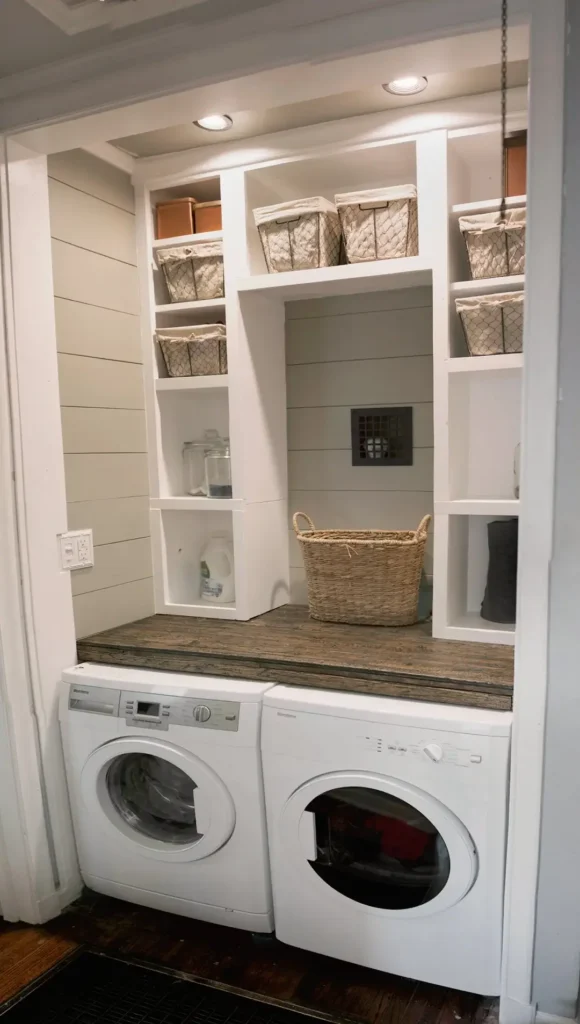
The smartest small laundry spaces treat walls like valuable real estate. This setup proves you can create substantial storage even when your floor space barely accommodates the machines themselves.
r/DIY built custom shelving that reaches the ceiling and wraps around the washer-dryer alcove. The white shiplap backing adds texture without visual weight, while the walnut-toned countertop bridges the machines and creates a legitimate folding surface.
Notice how the shelving compartments vary in size—the upper cubbies hold those fabric storage baskets that corral smaller items, while lower shelves accommodate taller bottles and that oversized woven basket for catching clothes straight from the dryer.
The recessed lighting makes a difference too. Small spaces need intentional illumination, and those two ceiling fixtures eliminate the shadowy corners that make laundry rooms feel cramped.
The sliding barn door visible on the left suggests this room tucks into a hallway or closet, which is exactly the kind of awkward space that benefits from floor-to-ceiling organization.
If you want similar results, measure your wall height first and plan your shelving in thirds. Bottom third for active-use items, middle third for frequently needed supplies, top third for bulk storage or seasonal items you rarely touch.
Natural Wood Counter with Statement Wallpaper
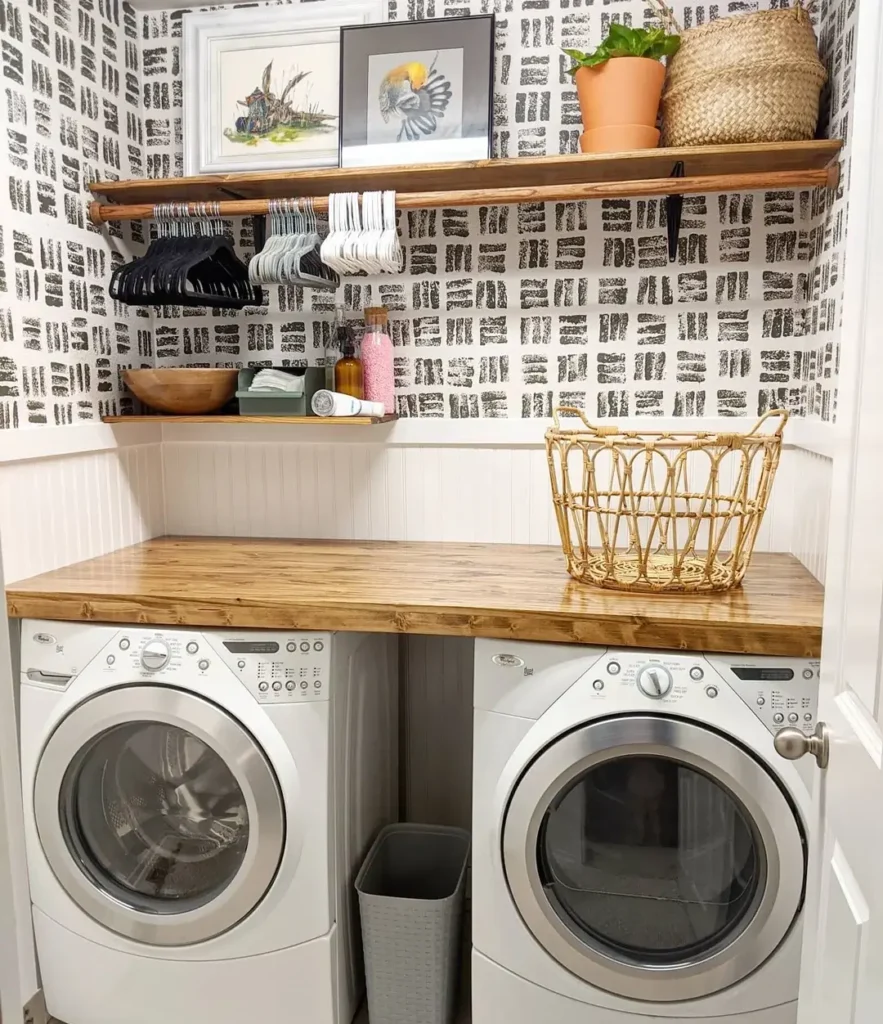
Bold wallpaper in a laundry room sounds counterintuitive until you see it done right. Small rooms can handle pattern better than you might think, especially when the rest of the palette stays neutral.
The black and white graphic wallpaper r/cantsaysg5 chose creates rhythm on the walls without making the narrow space feel smaller. That’s the key with pattern in tight quarters—high contrast but low color variation.
The thick wood floating shelf and countertop introduce warmth through natural material rather than color, and the white beadboard wainscoting grounds everything while protecting walls from detergent splashes.
I particularly notice the rod mounted under the upper shelf. It’s positioned perfectly for air-drying delicates, and those matching hangers keep the visual line clean.
The rattan laundry basket on the counter stays put because there’s nowhere else to set it—sometimes design choices are really just practical accommodation of reality.
What makes this work is the commitment to the aesthetic. Everything coordinates without matching exactly. If you go this route, pick your wallpaper first and let it dictate your wood tone and hardware finish.
Deep Blue Cabinetry with Dark Wood Accents
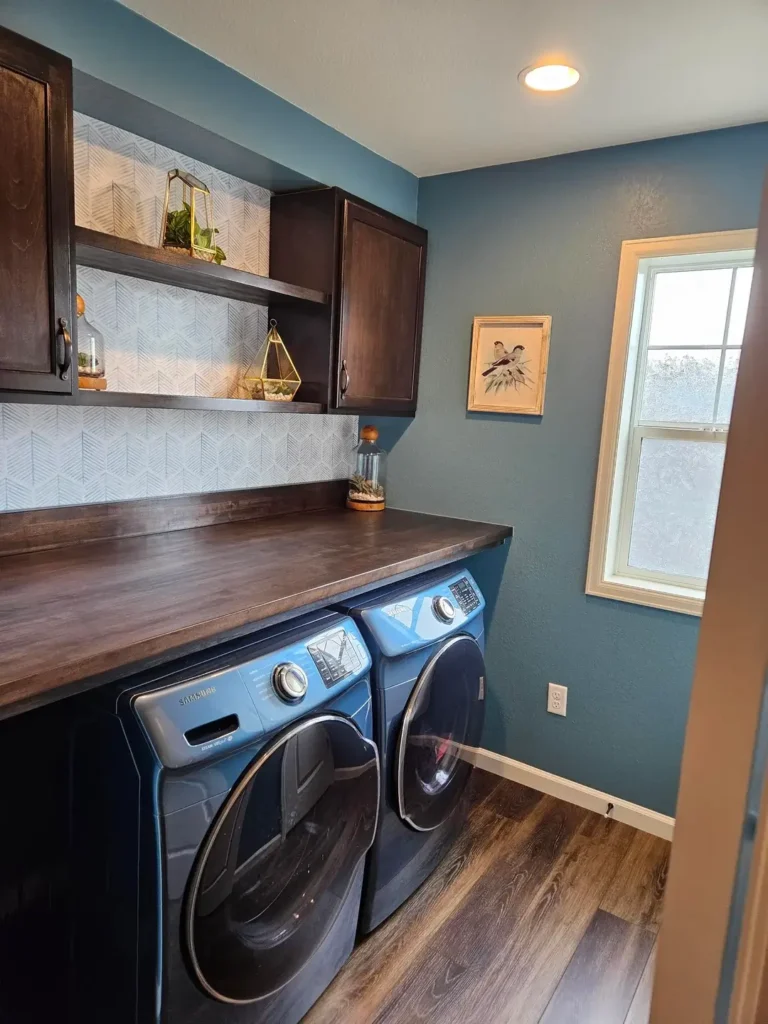
Color changes perception of size, but not always the way you expect. This space uses a moody blue-green on the walls, and instead of shrinking the room, it makes the dimensions feel intentional.
The dark walnut cabinetry r/ElaineMae installed creates a sophisticated backdrop for the blue appliances—yes, blue appliances, which I initially dismissed as gimmicky until I saw them in context.
The upper cabinets with that white chevron tile backsplash keep supplies hidden while the open floating shelf displays a few decorative items. The walnut countertop ties to the cabinets and provides workspace above the machines.
That single window brings in natural light, which matters more in a dark-painted room. The frosted glass maintains privacy while still allowing daylight to reach the space.
Notice the room feels compact but not claustrophobic, largely because the eye has interesting things to look at—the tile pattern, the cabinet hardware, the botanical print.
When using deep colors in small spaces, keep your ceiling white and maximize whatever natural light you have. The contrast between dark walls and bright ceiling actually makes rooms feel taller.
Patterned Floor Tile in an All-White Space
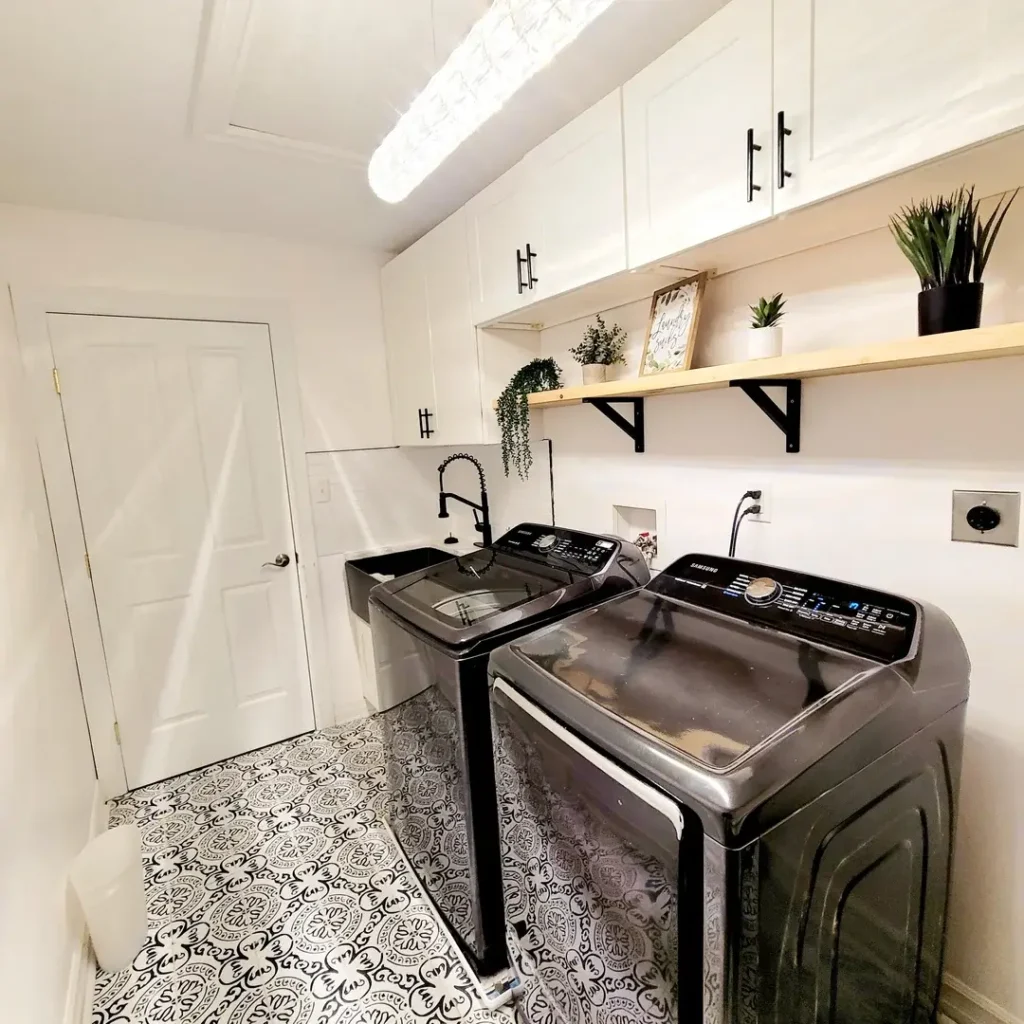
Sometimes the floor should do the talking. This room keeps walls, cabinets, and appliances uniformly white, then anchors everything with black and white patterned floor tile that commands attention.
What r/Special-Coffee2166 demonstrates here is restraint. The black faucet, black cabinet hardware, and black appliances provide just enough contrast without competing with that floor.
The floating shelves with minimalist black brackets hold real greenery and small decorative items—notice how sparse they are compared to the heavily styled shelves in some of the other examples. That sparseness reads as intentional when the floor provides this much visual interest.
The space includes a utility sink, which I consider essential in laundry rooms when you can possibly fit one. Pre-treating stains, hand-washing delicates, or even just rinsing out mop buckets happens more easily with dedicated plumbing. The cabinet above the shelves hides less attractive necessities.
If you choose busy flooring, edit everywhere else. Pick one finish for hardware and stick with it. Keep counters clear. Let the floor be the personality.
L-Shaped Countertop with Navy Blue Cabinets
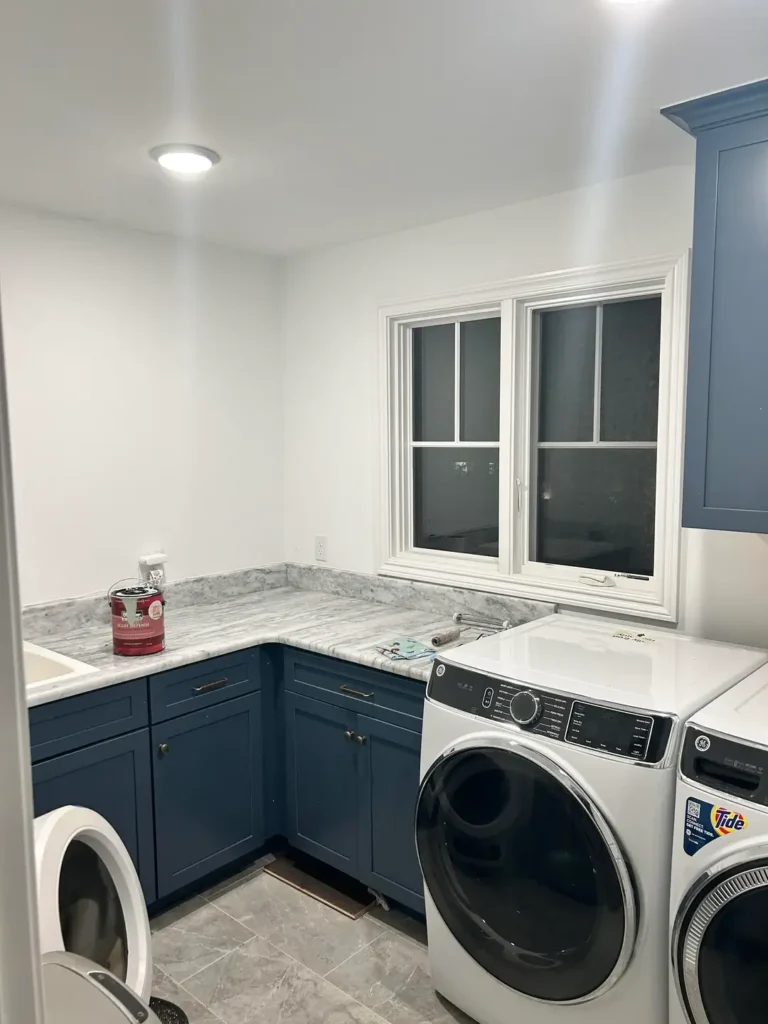
Corner spaces create opportunity for L-shaped configurations that front-loading machines can’t match with standard side-by-side placement. This layout turns an awkward corner into functional workspace.
The navy blue lower cabinets r/CharityWeak5788 installed wrap the corner and continue beyond the visible frame, creating substantial storage underneath that marble countertop. The light marble with its gray veining stays neutral enough to keep the space feeling open despite the dark cabinetry.
Both machines fit under the counter, and that window placement suggests this room occupies a former nook or addition.
I notice the room still looks unfinished—those bare walls need something—but the bones are solid. The combination of closed storage below and potential for open shelving or upper cabinets above sets up good organizational flow. Different laundry tasks need different zones, and this layout naturally creates them.
When planning corner installations, confirm your machines fit with doors fully open. Measure the door swing radius, not just the machine width, or you’ll discover too late that you can’t actually access the drum.
Practical Setup with Exposed Wood Walls
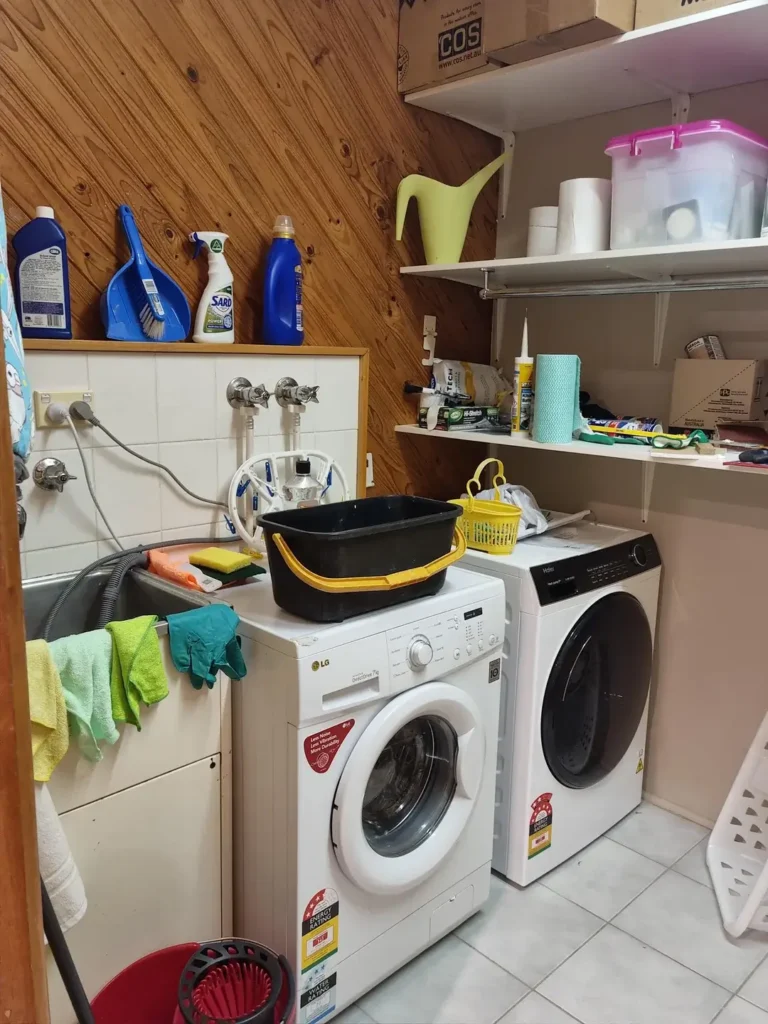
Not every laundry space gets a renovation budget. This room shows what’s possible when you work with what you have instead of against it.
The exposed pine walls r/HomeDecorating left untreated give this space character that drywall wouldn’t match. Those white base cabinets underneath the wall-mounted sink provide closed storage for cleaning supplies, while the mix of open white wire shelving and simple wood shelves above holds everything from detergent to random household items that tend to accumulate in laundry rooms.
The setup is honest about what the space actually does—laundry, yes, but also general household storage and utility tasks.
That wall-mounted sink with exposed plumbing keeps the footprint minimal. The colorful cleaning products, baskets, and miscellaneous items create visual chaos that somehow works because the room doesn’t pretend to be something it’s not. This is a working space, and it looks like one.
If your laundry room doubles as general storage, commit to it. Use clear or labeled containers so you can find things, and keep similar items grouped even if they’re on open shelving.
Bright Turquoise with Wood Accents
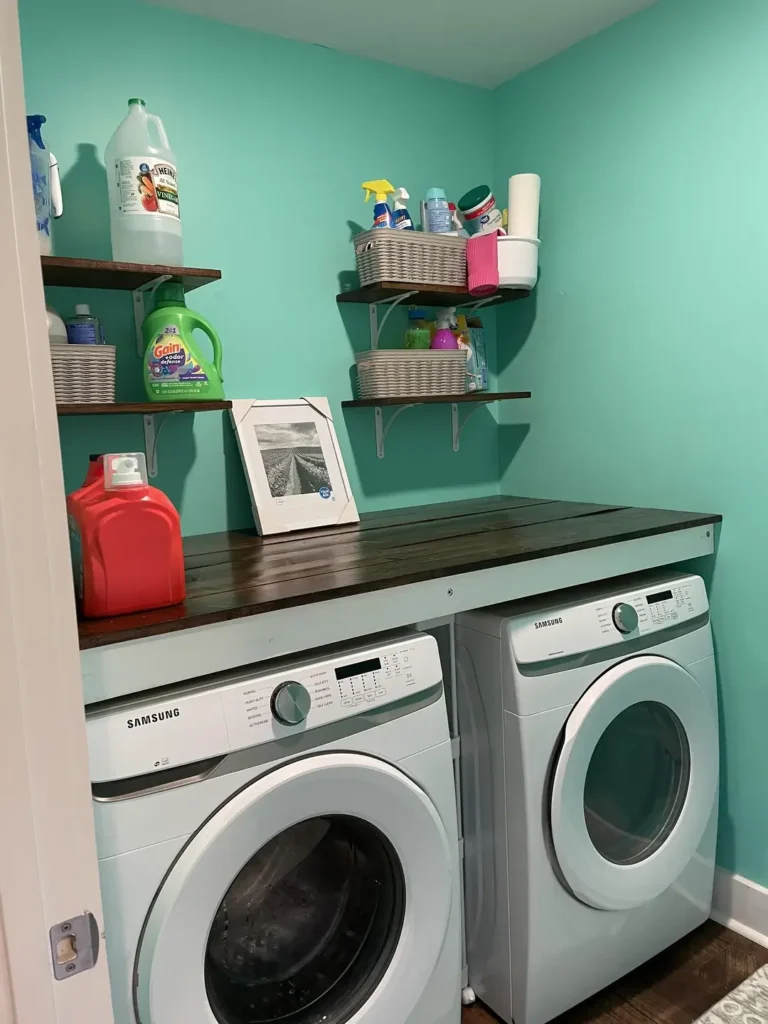
Personality matters, even in utilitarian spaces. This turquoise laundry room demonstrates how color transforms a basic setup into something you might actually enjoy using.
The turquoise walls r/12345665432112345 painted create a cheerful backdrop for those dark wood floating shelves. The same dark wood continues as a countertop over the machines, providing workspace and visual continuity.
The mix of open shelving at different heights accommodates various container sizes—tall detergent bottles, wicker baskets for smaller items, even that framed photo that makes the space feel less purely functional.
I appreciate how the bright wall color draws attention away from the fact that this is a narrow galley-style room. Your eye goes to the color first, not the dimensions. The white Samsung machines stay neutral and don’t fight with the bold wall choice.
When using saturated colors, stick to washable paint. Laundry rooms get splashed with bleach, detergent, and other substances that can damage paint. Semi-gloss or satin sheens clean more easily than flat.
Stacked Units with Integrated Storage Tower
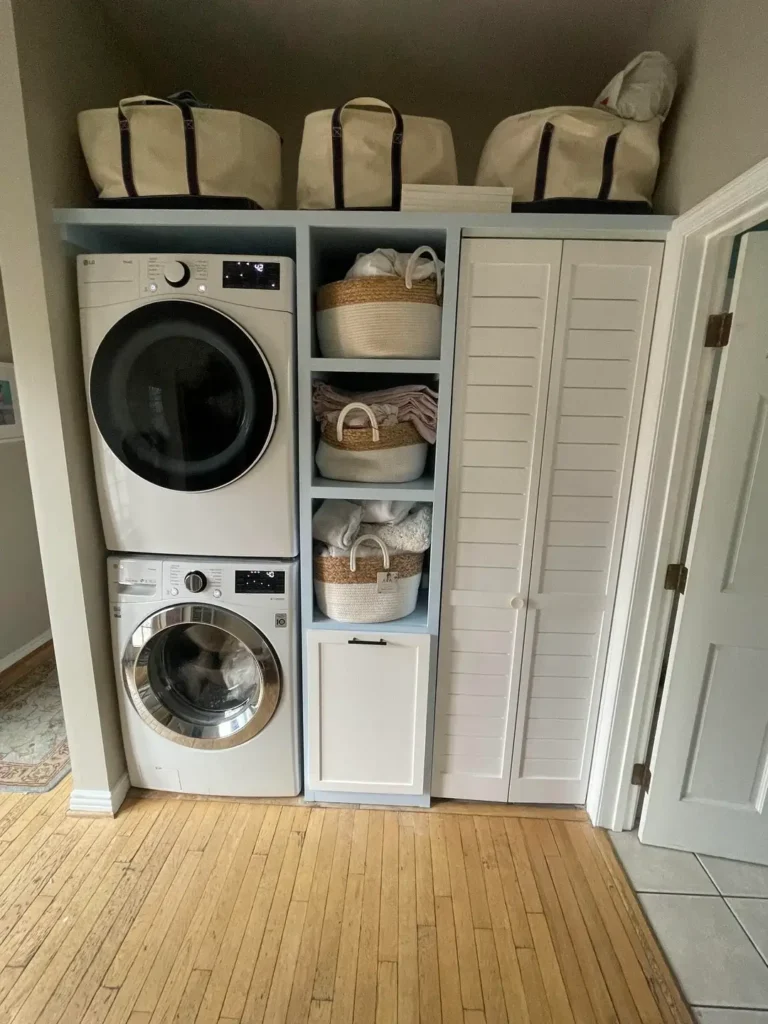
Vertical stacking solves the width problem but creates a height accessibility issue. This installation addresses both by building storage directly into the unit configuration.
The gray storage tower r/ThaddeusBoyleAddams integrated between the stacked machines and the louvered cabinet creates a middle zone for laundry essentials. Three baskets at comfortable reaching height hold items you grab repeatedly—dryer sheets, stain sticks, whatever.
That single drawer below provides closed storage, and the upper cubbies hold overflow supplies. The canvas tote bags on top probably contain seasonal items or backup supplies.
The neutral color scheme—grays and creams—keeps this corner alcove feeling cohesive with the rest of the home visible through the doorway. This matters more in open-concept layouts where the laundry area isn’t behind a closed door.
When stacking machines, consider what you’ll need mid-cycle. That middle storage zone should hold things you want during the wash, not just supplies you grab at the start.
Basement Laundry with Bright Paint and Simple Shelving
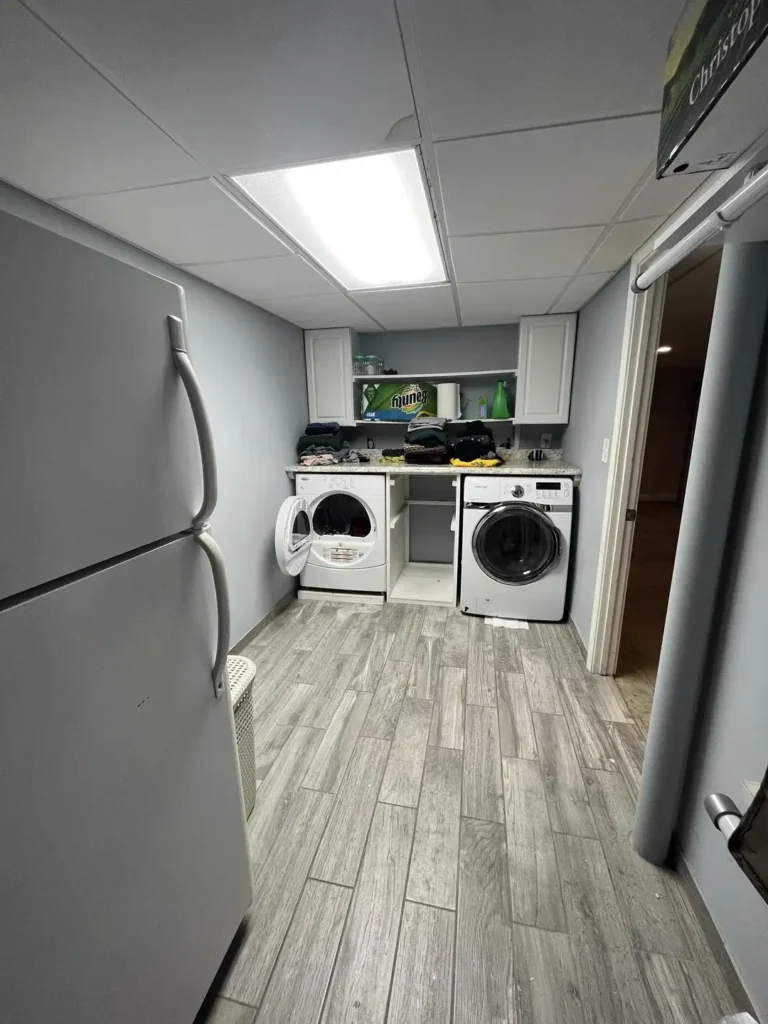
Basement laundry rooms fight dampness, low ceilings, and often awkward dimensions. Paint and smart lighting make a measurable difference.
The light gray walls r/lagartofresco chose reflect the fluorescent light better than darker colors would. Those simple white cabinets above the machines provide essential storage without overwhelming the space, and the open shelving area on the left keeps frequently used items visible and accessible.
The gray wood-look floor handles moisture better than traditional hardwood while still looking finished.
I notice this room includes a refrigerator, which is common in basement laundry setups. The space serves multiple purposes, and the design accommodates that reality rather than fighting it.
Basement spaces benefit from warmer lighting than they typically get. If you’re stuck with fluorescent fixtures, consider LED tubes in warmer color temperatures—3000K instead of the harsh 5000K that many basements default to.
Sage Green Cabinets with Stacked Machines
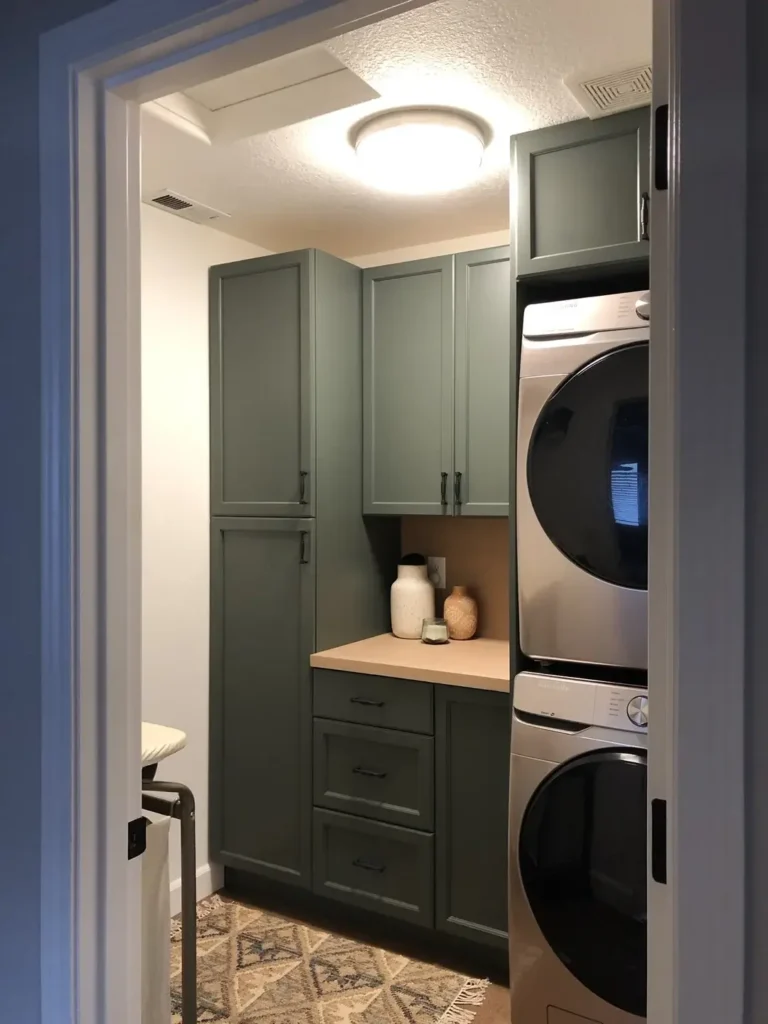
Stacking machines frees up floor space but requires thoughtful cabinet planning around the vertical configuration. This installation shows how custom cabinetry can integrate stacked units seamlessly.
The sage green cabinets r/platofzion installed create a built-in look that makes the stacked machines feel like part of the design rather than an afterthought.
The tall cabinet section flanking the machines provides substantial closed storage, while that light wood countertop at mid-height creates a landing spot for baskets or supplies. The two-drawer base section anchors the composition and likely holds heavier items or less frequently needed supplies.
The patterned rug adds warmth underfoot without interfering with function—it’s clearly sized to sit in front of the machines without sliding underneath them where lint would collect. The overall effect reads more like a mudroom than a purely utilitarian laundry space.
When building around stacked units, leave service clearance. Machines need occasional maintenance, and technicians won’t appreciate cabinetry that makes access impossible without deconstruction.
Gray Room with Continuous Countertop
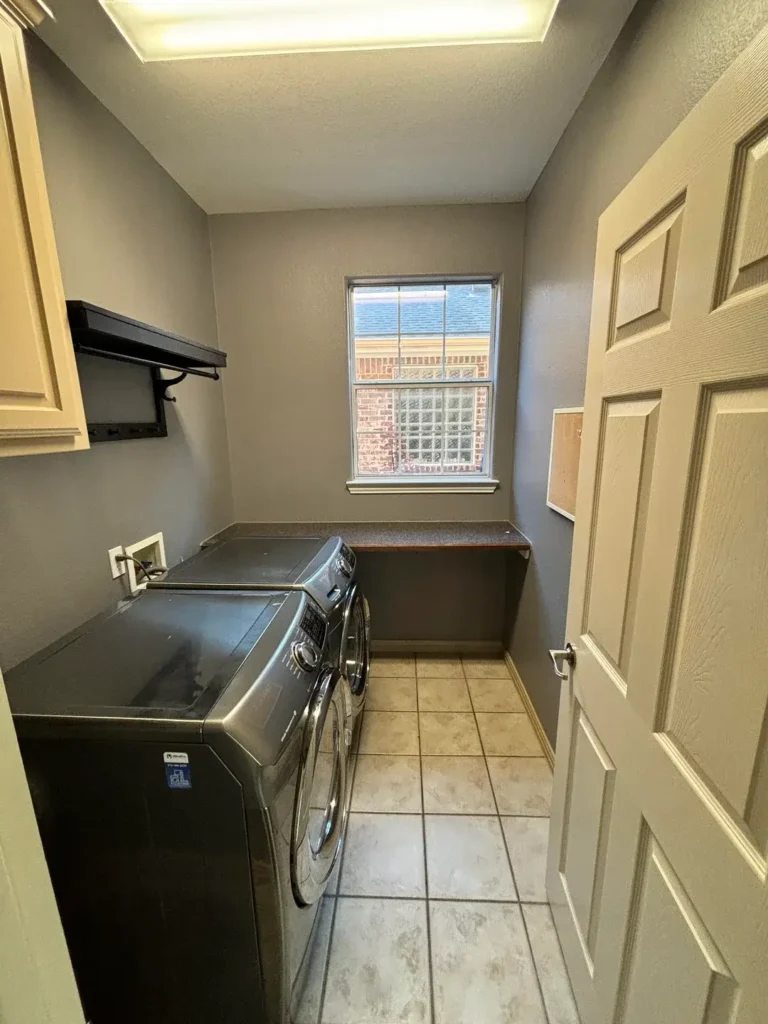
Sometimes the “before” photos matter as much as the “after” ones. This gray laundry room with its L-shaped dark countertop represents a blank canvas many people are working with.
The gray walls r/balanoff painted create a neutral backdrop that could go many directions. That dark countertop runs continuously across two walls, creating substantial workspace above what I assume will eventually house front-loading machines.
The single window provides natural light, and the existing upper cabinets in cream offer closed storage.
I include this because transformation doesn’t always mean adding more. Sometimes it means working with the structure you have and making better decisions about what fills it.
This room has good bones—the countertop height works, the window placement is ideal, and the floor plan allows a functional work triangle between machines, sink (not visible), and folding area.
Before you renovate completely, consider whether paint, new hardware, and better organization might solve your problems. Not every laundry room needs a gut job.
Comparing Small Laundry Room Design Approaches
| Design Element | Best For | Maintenance Level | Budget Impact |
|---|---|---|---|
| Built-in floor-to-ceiling shelving | Maximum storage in minimal footprint | Low – easy to clean | Medium – requires custom build |
| Bold wallpaper with neutral base | Adding personality without renovation | Medium – may need touch-ups | Low to Medium – depends on wallpaper choice |
| Dark cabinetry with contrast counters | Creating sophisticated look in windowless spaces | Medium – shows dust and fingerprints | High – quality cabinetry and stone |
| Patterned tile flooring | Hiding dirt and adding interest at ground level | Low – pattern disguises wear | Medium – tile and installation costs |
| Open shelving with baskets | Flexible storage that adapts to changing needs | High – requires regular tidying | Low – shelves and containers |
| Stacked machines with storage tower | Maximizing vertical space in narrow rooms | Low – less floor area to clean | Medium – storage unit or custom build |
Making Your Small Laundry Room Actually Function
The thread connecting these examples is intentionality. Each homeowner identified their specific constraints—narrow width, low ceilings, no natural light, awkward corners—and designed around them rather than pretending they didn’t exist.
Your laundry room probably has one or two features from these images that would solve your biggest frustrations. Maybe it’s adding a sink for pre-treating.
Maybe it’s finally building those upper cabinets to hide the clutter. Maybe it’s just painting the walls a color that makes you less annoyed every time you walk in.
Start with your most irritating problem and solve that first. The room doesn’t need to be perfect, just better than it is now.
That’s a lower bar than most design content suggests, and it’s the approach that actually gets results instead of leaving you paralyzed by the gap between your Pinterest board and your reality.