
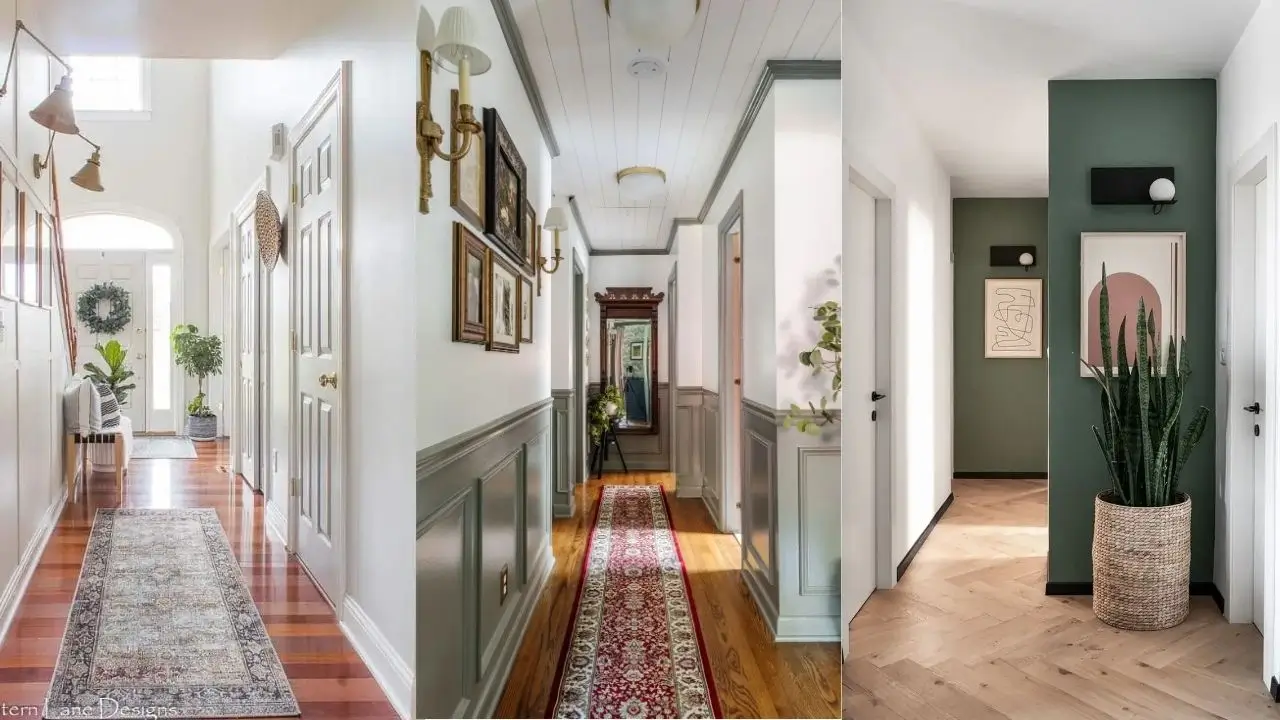
Your hallway is probably five feet wide at most, and every designer you’ve ever read tells you to “make it welcoming.” Easy for them to say when they’re working with eight-foot clearances and natural light from three directions.
I’ve spent years photographing and analyzing small hallway transformations, and I’ve noticed something: the best ones break at least one conventional design rule. The examples below prove that narrow doesn’t mean boring, and limitations often produce the most creative solutions. Each approach shows a different way to handle the same basic challenge: making a tight corridor feel intentional rather than awkward.
Deep Blue Walls with Statement Lighting
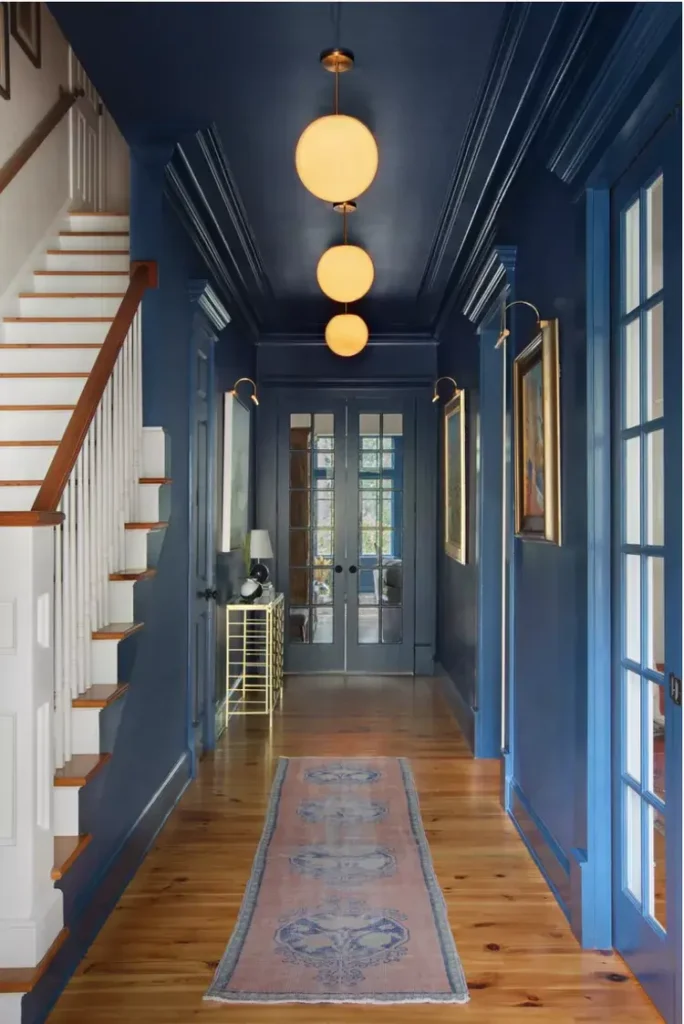
This hallway commits fully to dark walls, and that takes courage. The rich navy blue extends from baseboards to crown molding, creating a cocoon effect that somehow doesn’t feel claustrophobic.
Three oversized globe pendants hang down the center, providing both light and a focal point that draws your eye lengthwise rather than side to side. The warm honey-toned wood floors contrast beautifully against the cool wall color. Notice the vintage runner that adds a layer of pattern without competing with the boldness overhead.
What makes this work is the commitment to the concept. Half measures with dark paint usually fail in small spaces, but going all in creates a deliberate mood. The high-gloss finish on the trim reflects light back into the space, preventing the darkness from swallowing everything.
If you’re considering this approach, test your paint in the actual hallway first. Dark colors shift dramatically based on your light sources, and what looks sophisticated in one space can read as dingy in another.
Warm White Walls with Layered Lighting
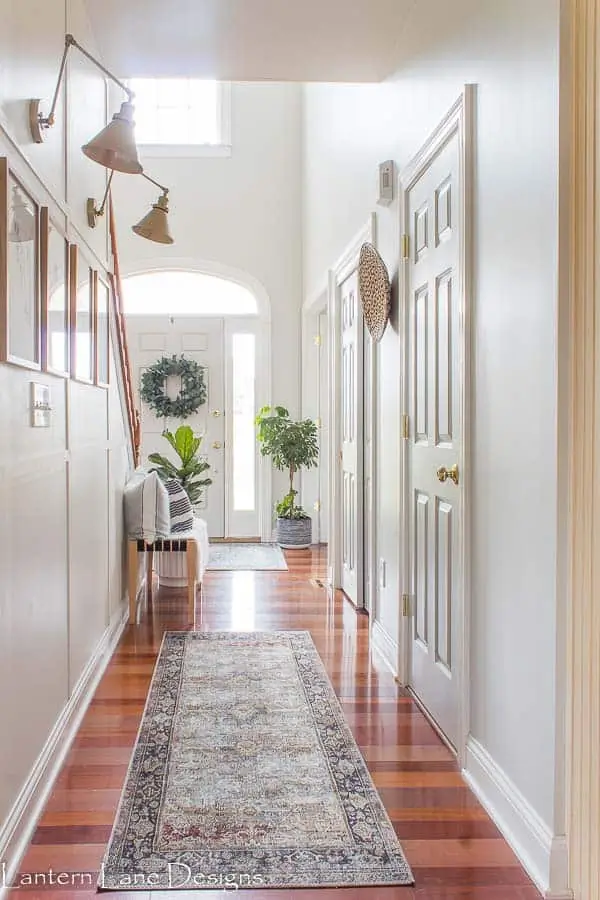
Some hallways succeed through simplicity rather than drama. This space proves that white walls aren’t boring when you pay attention to the details.
The wall-mounted swing-arm sconces add adjustable light exactly where it’s needed. White paneling runs along the lower half of the walls, adding subtle texture without fragmenting the space visually. That vintage runner grounds the wood floors, and the mix of framed artwork creates casual interest as you move through.
The genius here is in what’s not present. No console table fighting for floor space, no decorative objects that would make the passage feel cluttered. Everything serves a purpose while maintaining breathing room.
This approach works best when your hallway connects multiple rooms and needs to feel like a true transition space rather than a destination. The neutrality allows whatever’s on either end to take center stage.
Traditional Wainscoting with Architectural Details
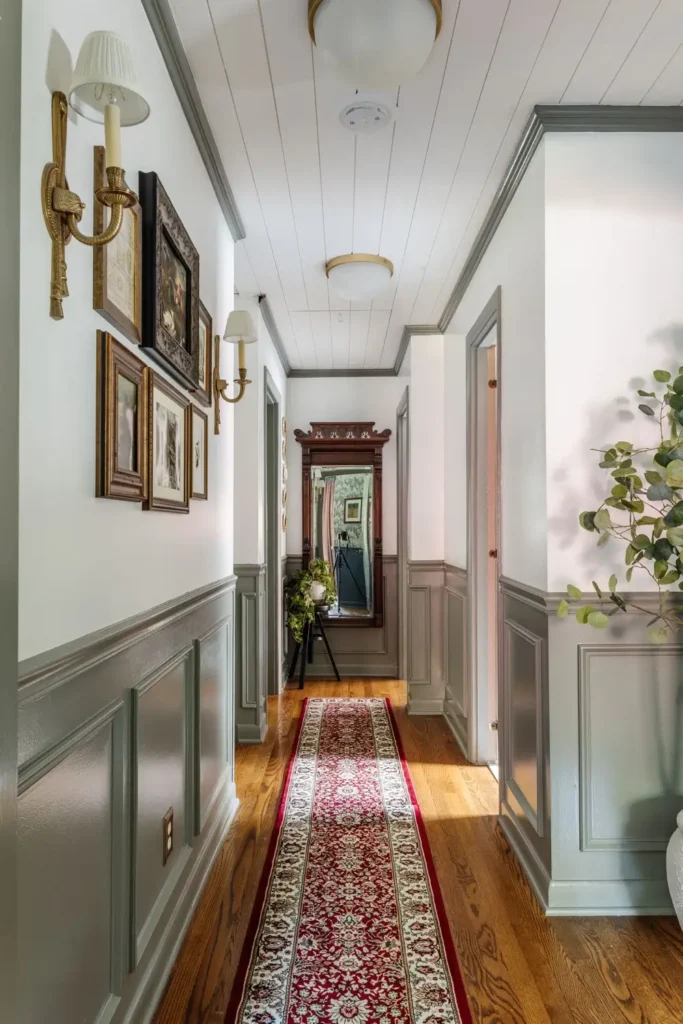
Older homes often have hallways that feel dated rather than classic. This example shows how traditional elements can feel fresh when executed with precision.
Gray-green wainscoting covers the lower third of the walls, paired with crisp white above and a detailed ceiling treatment that adds another layer of visual interest. Brass sconces flank vintage family photos, and the Persian runner adds a shot of deep red that prevents the muted palette from feeling too restrained.
What elevates this beyond typical builder-grade trim work is the attention to proportion. The wainscoting height matches the door frames, the ceiling detail has enough depth to cast actual shadows, and even the runner width feels calculated rather than accidental.
Traditional details like these require commitment to quality. Thin trim and shallow molding end up looking like an afterthought, but substantial millwork creates genuine architectural character.
Pink Door as the Focal Point
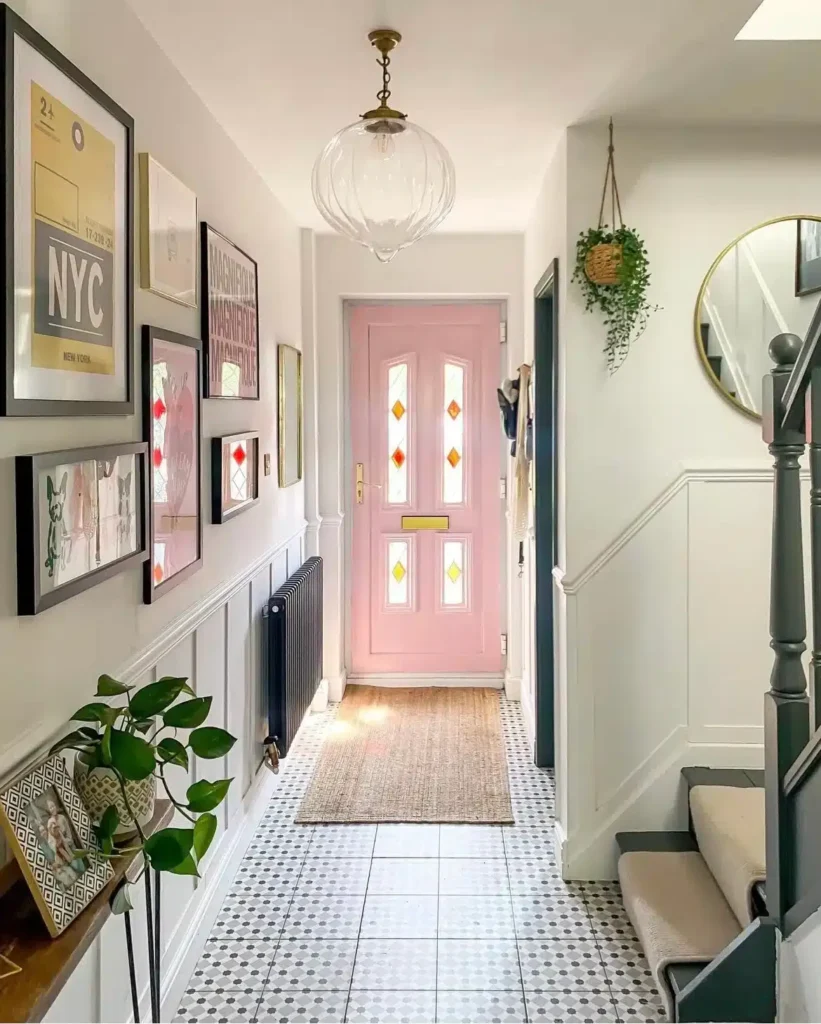
Sometimes the best solution for a narrow hallway is giving people something specific to look at. This soft pink door with colorful glass inserts becomes the entire point of the space.
The gallery wall on the left includes everything from vintage travel posters to abstract prints, creating a collected-over-time feeling that’s hard to fake. That clear glass pendant fixture adds just enough visual weight overhead without blocking sightlines. The geometric tile floor provides pattern at ground level, completing a space where every surface contributes something different.
This works because the pink door isn’t fighting for attention with the other elements. Everything else stays relatively neutral, allowing that pop of color to anchor the entire composition.
If you want to recreate this energy, start with your end focal point and work backward. The door color determines what you can get away with everywhere else.
Modern Minimalism with Accent Walls
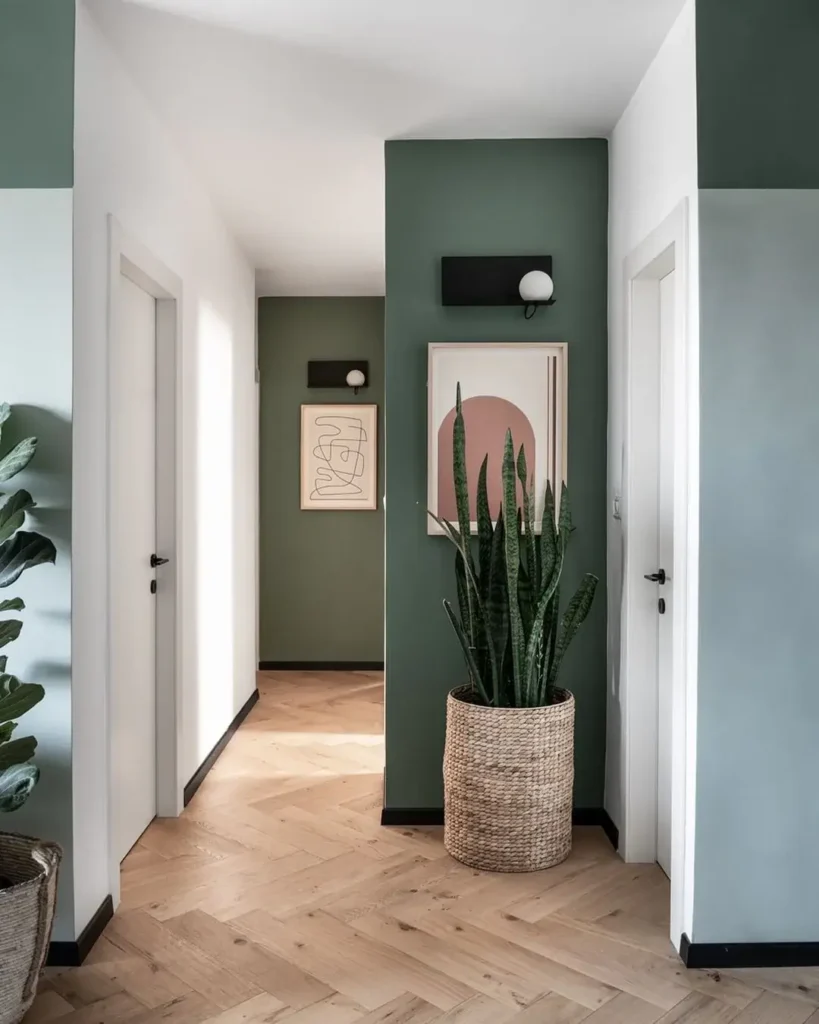
Not every hallway needs pattern or color to feel complete. This space uses a single accent wall in muted sage green to create all the interest it needs.
The wall extends from floor to ceiling at the far end, with minimal modern artwork that complements rather than competes. A tall snake plant in a woven basket sits directly on the floor, adding organic texture without requiring a stand or table. The herringbone wood flooring provides subtle pattern underfoot.
What I appreciate here is the restraint. One plant, two pieces of art, one accent color. Nothing extraneous, nothing that could be removed without diminishing the impact.
This approach requires confidence in your editing skills. The temptation to add “just one more thing” can quickly tip minimalism into sparse or cold. Know when to stop.
Small Console with Layered Decor
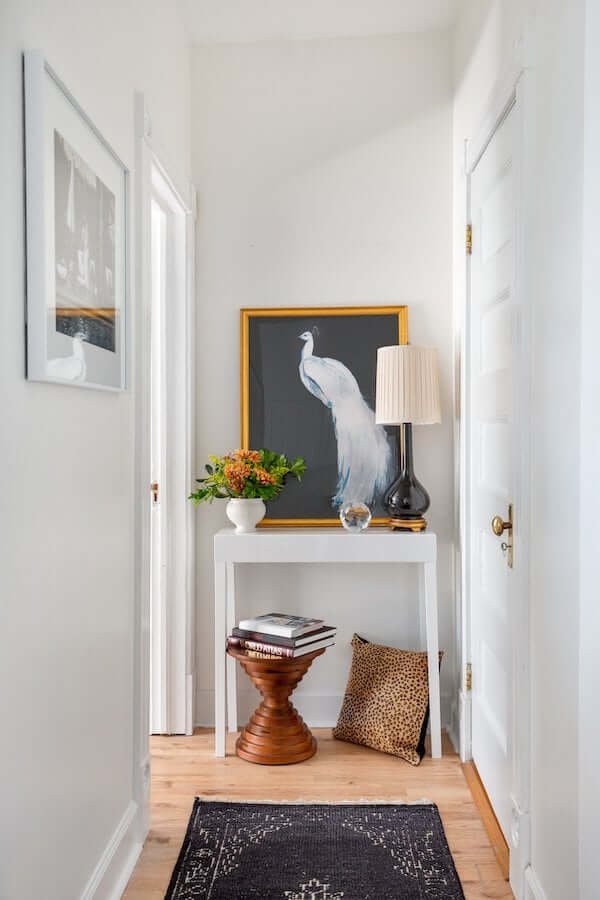
Even the narrowest hallways can sometimes accommodate a slim console table. This example shows how much personality you can pack into minimal square footage.
The white console sits barely deeper than a picture frame, but it’s enough to display a sculptural lamp, a framed peacock print, and a small turned-wood stool underneath. Everything has vertical presence rather than spreading outward. The high-contrast peacock art against a dark background creates a dramatic moment in an otherwise neutral palette.
The key is choosing pieces with intention. That lamp isn’t just providing light; its curved silhouette adds movement. The peacock print isn’t just filling wall space; its composition draws your eye upward, making the ceiling feel higher.
Measure twice before committing to furniture in a hallway. You need at least 36 inches of clear passage, and honestly 42 inches feels better. Anything tighter and you’re creating an obstacle course.
Pattern on the Ceiling
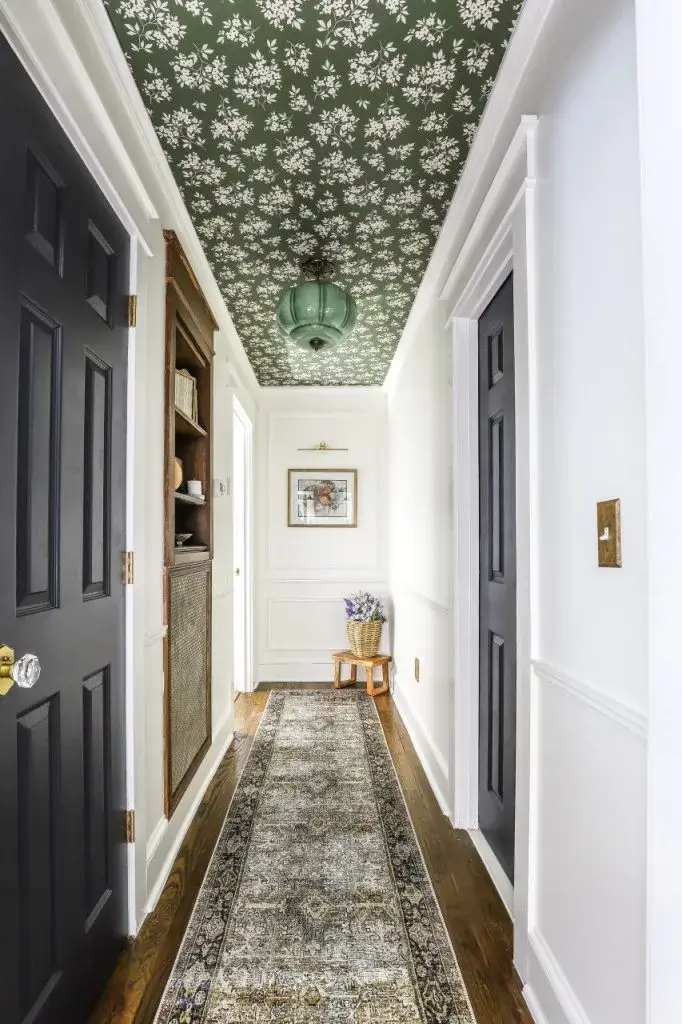
Most people ignore the ceiling completely, which makes this botanical wallpaper treatment all the more effective. The green and white floral pattern covers the entire ceiling plane, transforming what would normally be dead space into the room’s defining feature.
The walls stay clean white, allowing the overhead pattern to command full attention. Dark painted doors on both sides create framing elements, and that vintage-inspired pendant fixture in coordinating green ties everything together. The runner below echoes the pattern’s traditional roots without directly matching it.
Ceiling treatments feel risky because they’re permanent and highly visible, but they solve the “narrow hallway” problem elegantly. When you’re looking up, you’re not noticing how close the walls are.
If this appeals to you, consider removable wallpaper for your first attempt. The commitment feels less permanent, and you can test whether you actually enjoy the effect before investing in professional installation.
Sculptural Seating with Minimal Accents
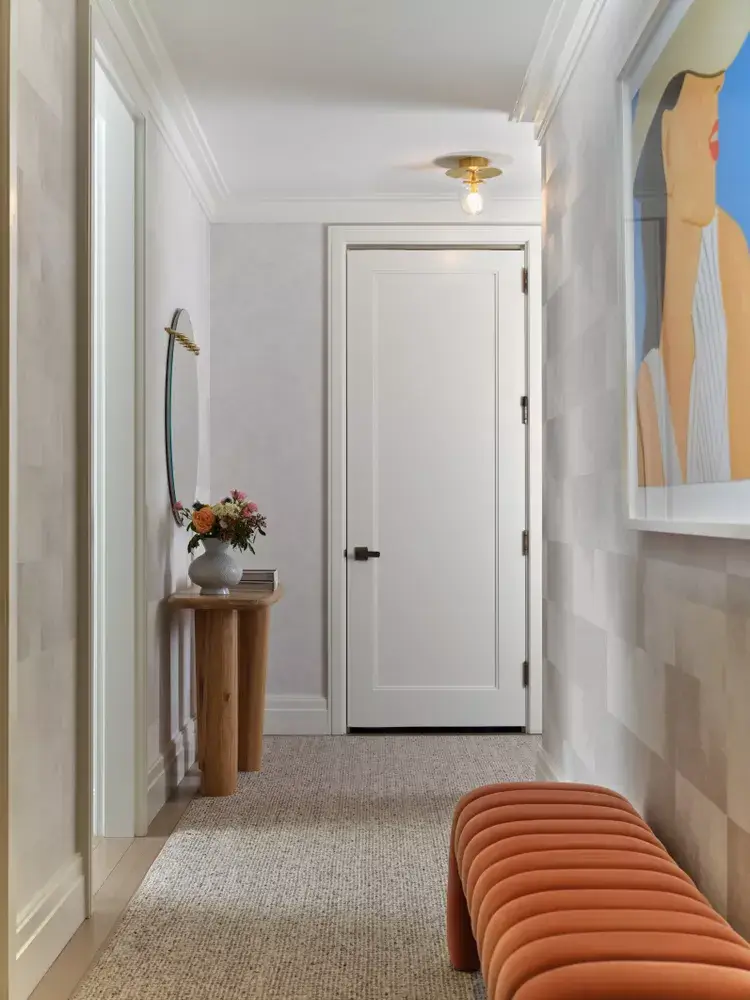
This hallway barely has room to walk through, yet someone managed to fit a channeled velvet bench in rust orange tones. Bold move, and it pays off.
The bench provides actual seating while doubling as a visual anchor for the space. Everything else stays deliberately quiet: white walls, simple molding, a small wooden console with one vase and one flower arrangement. The artwork visible on the right adds a contemporary touch without demanding too much attention.
What makes this successful is the quality of that one statement piece. Cheap furniture in a small space looks like you’re trying too hard, but that bench has enough presence to justify its existence.
Think about whether you actually need seating in your hallway. If it’s just for show, skip it. But if you genuinely use the space to put on shoes or set down bags, invest in something worth looking at.
Dramatic Chandelier with Arched Architecture
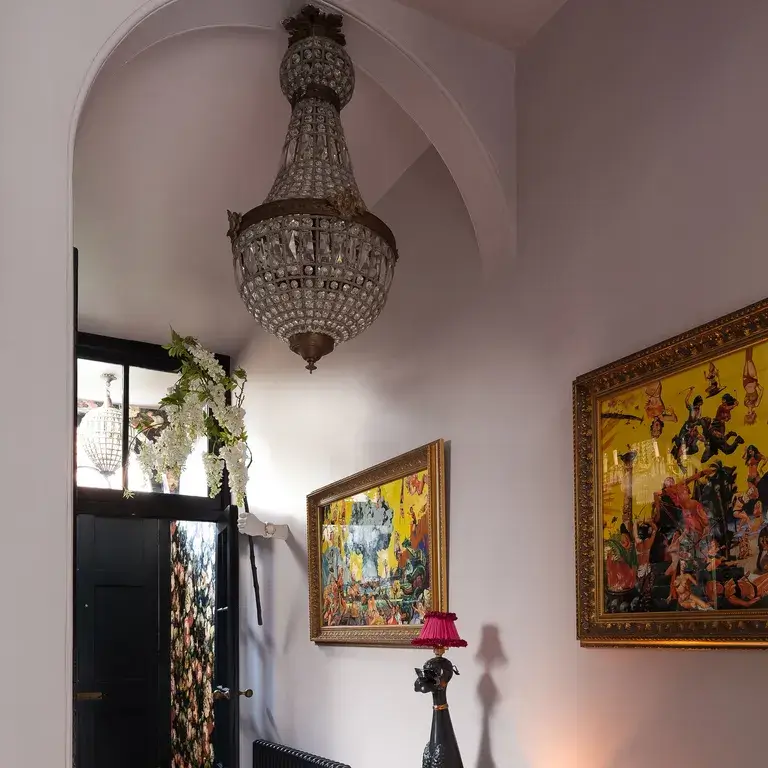
Some hallways have architectural bones that deserve to be celebrated. This arched entry with an oversized crystal chandelier leans into its dramatic structure rather than fighting it.
The elaborate fixture hangs from the arch’s center point, creating a moment of pure glamour before you even enter the main space. White walls keep the focus on the architecture and the lighting, while the bright artwork visible through the doorway hints at more personality beyond. That black-framed transom window adds another layer of historical detail.
This approach works when you have genuine architectural features to highlight. Trying to create drama from nothing usually feels forced, but amplifying what’s already there can be spectacular.
Crystal chandeliers collect dust and require maintenance. If you’re not willing to clean it regularly, choose something simpler. Nothing kills elegance faster than visibly dirty fixtures.
Warm Ochre Walls with Traditional Elements
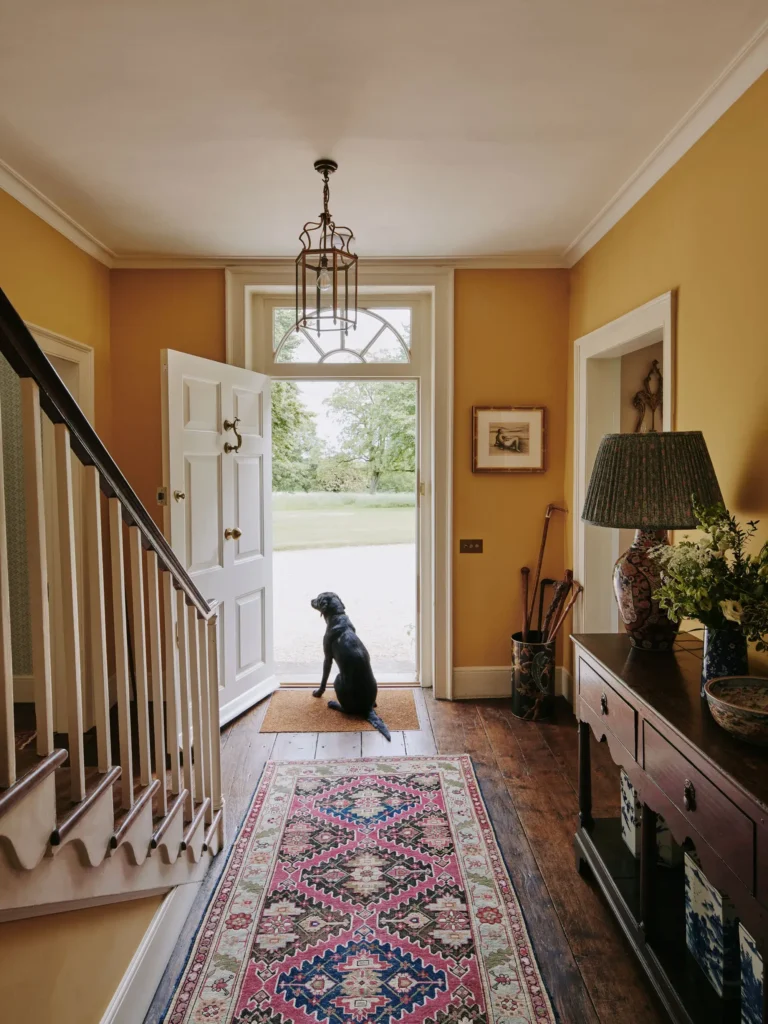
Color can completely redefine a space’s character, and this golden ochre proves that warm tones don’t have to feel heavy or dark in a hallway.
The saturated walls wrap the entire space, paired with white trim that stays crisp against the warmth. A lantern-style pendant provides traditional lighting, and the Persian runner introduces a completely different color story that somehow works with the walls. Wide plank floors in warm wood tones complete the cozy, lived-in atmosphere.
What strikes me about this example is how personal it feels. This isn’t a decorator’s neutral palette designed to appeal to everyone. Someone made a specific choice about the mood they wanted, and they committed to it fully.
Warm colors like this need natural light to avoid feeling dingy. If your hallway lacks windows, this approach might not translate. Test samples at different times of day before painting everything.
Finding Your Hallway’s Purpose
These examples span completely different aesthetic approaches, but they share common principles worth noting.
| Design Element | Why It Matters | Application Difficulty |
|---|---|---|
| Lighting | Creates mood and perceived height | Medium |
| Color commitment | Establishes personality | Easy |
| Strategic furniture | Adds function without crowding | Advanced |
| Ceiling treatment | Draws eye upward | Medium |
| Quality materials | Signals intentional design | Variable |
Each hallway above solves the narrow space problem differently, but none of them try to make the space something it’s not. That’s the real lesson here.
What Actually Works in Tight Spaces
After reviewing hundreds of small hallway transformations, I’ve developed specific opinions about what’s worth your time and money.
Runner rugs matter more than you think. They define the path visually, add warmth underfoot, and introduce pattern at a scale that works in narrow spaces. Skip the tiny accent rugs that bunch up and create tripping hazards.
Lighting should come from multiple sources. A single overhead fixture creates harsh shadows and makes people look terrible in hallway mirrors. Add sconces, pendants, or picture lights to create layers.
Paint finishes change everything. Flat paint on walls absorbs light and makes small spaces feel smaller. Eggshell or satin reflects just enough to open things up without looking shiny.
Your hallway width determines your decor strategy. Under four feet wide, keep walls clear except for art. Four to six feet, you might fit a slim console. Over six feet, you’re not actually working with a small hallway anymore.
Making Decisions That Last
The best small hallway decor ideas work because they match how you actually live, not because they looked good in a photo.
Consider your traffic patterns honestly. If kids and dogs charge through this space ten times daily, that delicate console table will last about a week. Choose durable materials and secure anything that could tip.
Think about maintenance before committing to elaborate solutions. Wallpapered ceilings look fantastic until you need to patch a leak. Crystal chandeliers require regular cleaning. Dark walls show every scuff mark.
Start with permanent elements first. Paint, lighting, and flooring create your foundation. Add furniture and decor only after you’ve lived with the bones for a while. You might discover you don’t need as much as you thought.
The hallways that work best are the ones where every element earns its place. No filler, no “this space needs something” additions. Just intentional choices that serve your specific space and lifestyle.
