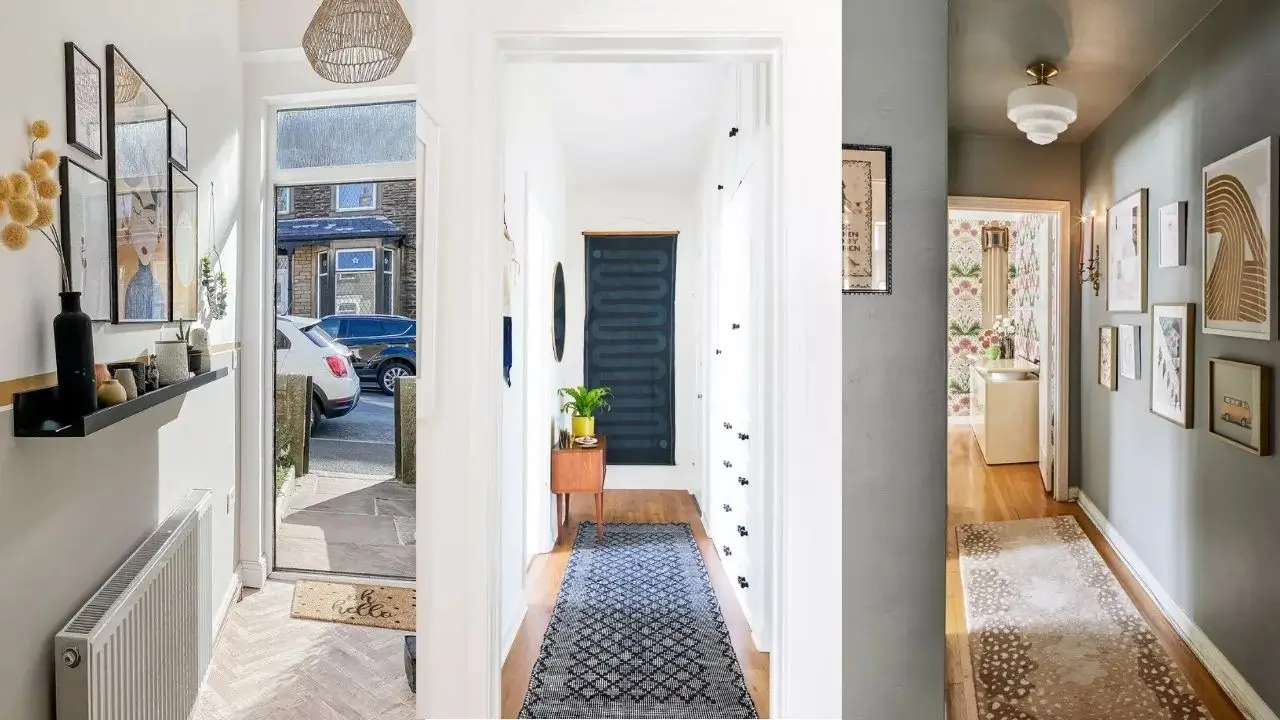
Your hallway is four feet wide, runs the entire length of your house, and every time you walk through it, you think “this could be better.” I’ve spent years looking at narrow hallways that work and ones that don’t, and the difference usually comes down to a few smart choices that have nothing to do with knocking down walls.
Most people treat hallways like unavoidable connectors between the rooms that actually matter. That’s a mistake. A well-designed narrow hallway can set the tone for your entire home, and the constraints of working with limited width often lead to more interesting solutions than you’d find in a generous space. I’ve gathered ten examples that show exactly how to make a narrow hallway feel deliberate rather than apologetic.
Herringbone Tile and Warm Wood Built-Ins Create Visual Width
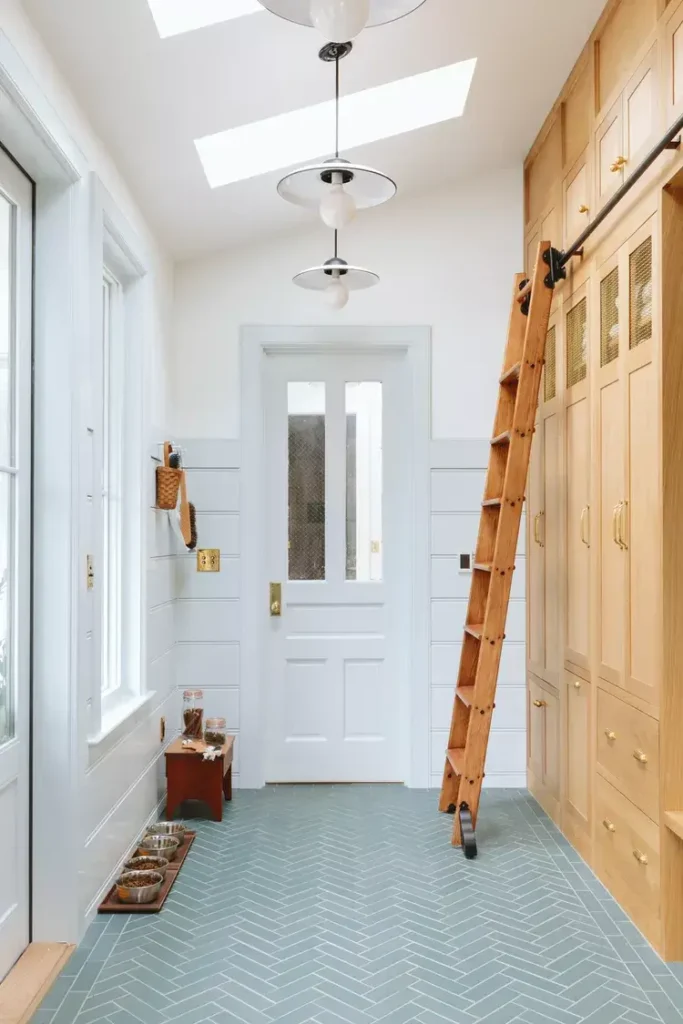
This hallway proves that pattern placement matters more than square footage. The pale blue herringbone tile runs the full length of the floor, drawing your eye forward while the diagonal pattern creates movement that makes the space feel wider than it actually is.
The natural wood built-ins along the right wall add warmth without overwhelming the space. Notice how they’re designed with depth variation some sections recessed, others protruding slightly which creates shadows and dimension.
The cane door inserts keep the cabinets from feeling too heavy. That rolling ladder isn’t just functional storage access; it’s a design element that adds vertical interest and suggests the ceiling height matters as much as the floor plan.
What makes this work is the restraint with color. White walls, pale blue flooring, and natural wood create a three-material palette that feels cohesive. The brass hardware and light fixtures add just enough warmth to prevent the space from reading as cold.
If you’re considering built-ins for your narrow hallway, prioritize quality over quantity. Choose materials that will age well, and design the storage to actually solve problems you have rather than just filling wall space.
Patterned Runner and Symmetrical Art Create a Gallery Effect
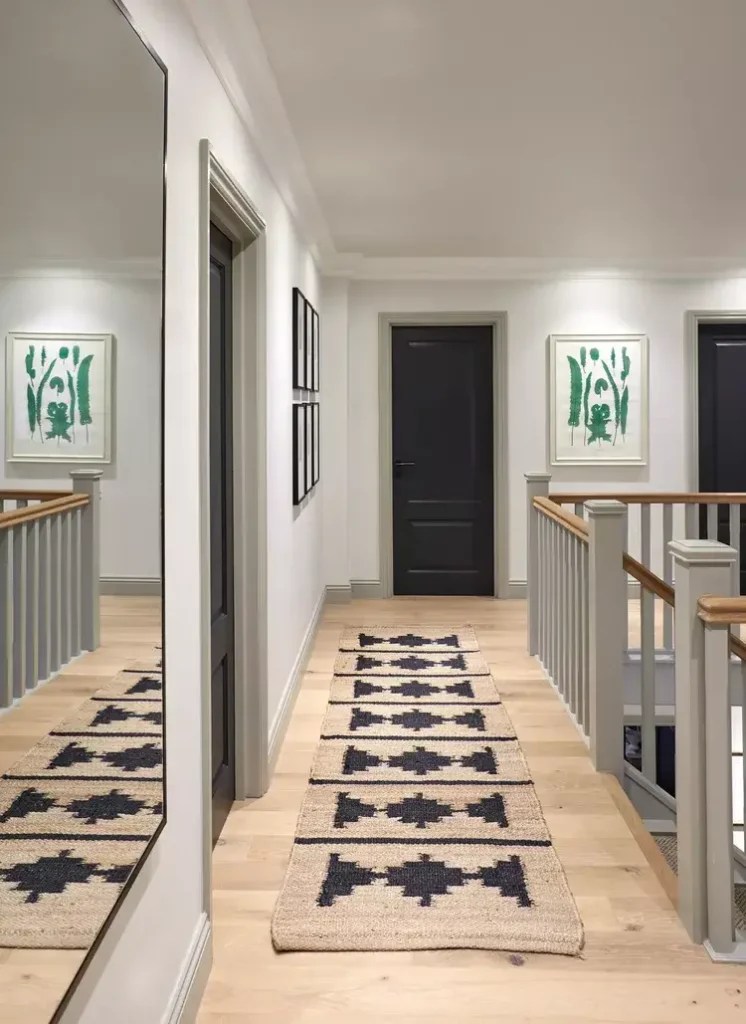
The geometric runner immediately commands attention here, but it’s the thoughtful approach to wall art that makes this hallway memorable. Two matching botanical prints flank the doorway, creating a symmetrical focal point that anchors the entire space.
The light wood flooring reflects natural light beautifully, which is critical in narrow hallways that often lack windows.
The runner adds pattern and visual weight at floor level while the pale walls keep everything feeling open. Notice how the black door at the end provides a strong contrast point your eye travels the length of the hallway and lands somewhere definitive.
The painted stair railings introduce subtle architectural detail without competing with the art or floor covering. This is a good example of knowing when to keep structural elements neutral so your chosen design features can do the work.
When selecting a runner for a narrow hallway, go bold with pattern but controlled with color. This black and cream geometric works because it doesn’t introduce new colors to the palette it just adds visual texture within the existing scheme.
Skylights and Minimal Styling Let Architecture Lead
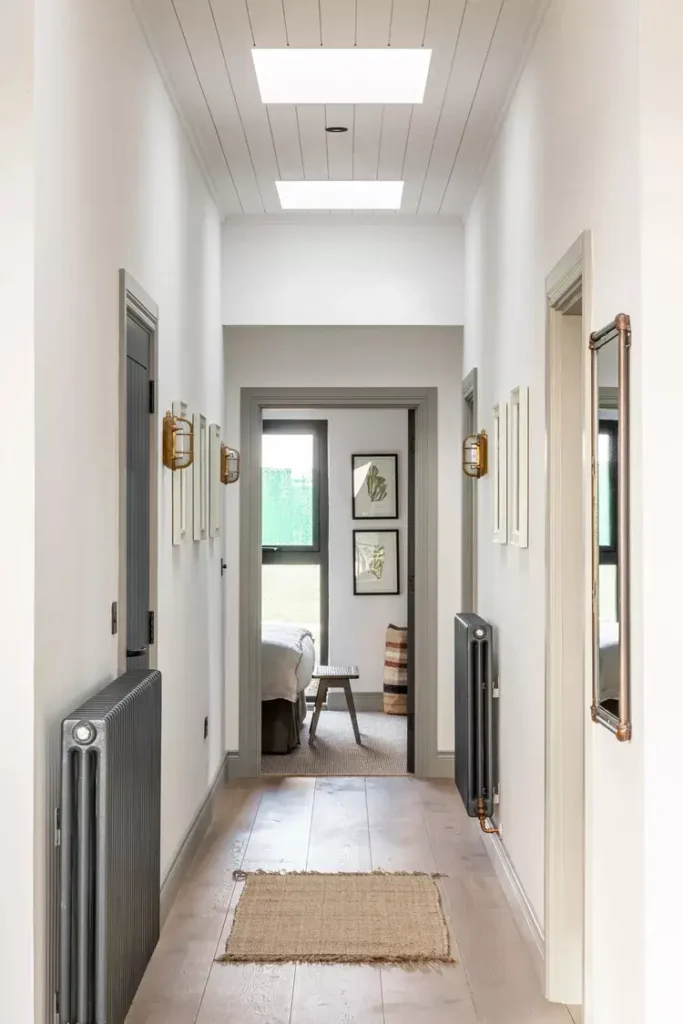
Sometimes the best narrow hallway ideas involve doing less, not more. This space relies almost entirely on architectural features rather than layered decoration.
The tongue-and-groove planked ceiling with two generous skylights floods the hallway with natural light. That single move transforms what could be a dark corridor into something that feels almost outdoor-adjacent. The white walls and pale wood flooring amplify that brightness rather than absorbing it.
The brass nautical-style sconces add warmth and practical task lighting for evening hours. A simple jute mat at the floor provides texture without competing for attention.
The view through to the bedroom at the end creates a sense of depth and purpose you’re moving toward something, not just through something.
I prefer this approach when the hallway has genuinely good bones. If you have ceiling height, natural light, or interesting architectural details, let them be the design rather than covering them with layers of decoration.
For hallways with skylights or windows, keep wall treatments minimal. The changing natural light throughout the day becomes the most interesting element in the space.
Mid-Century Credenza and Collected Art Create Personality
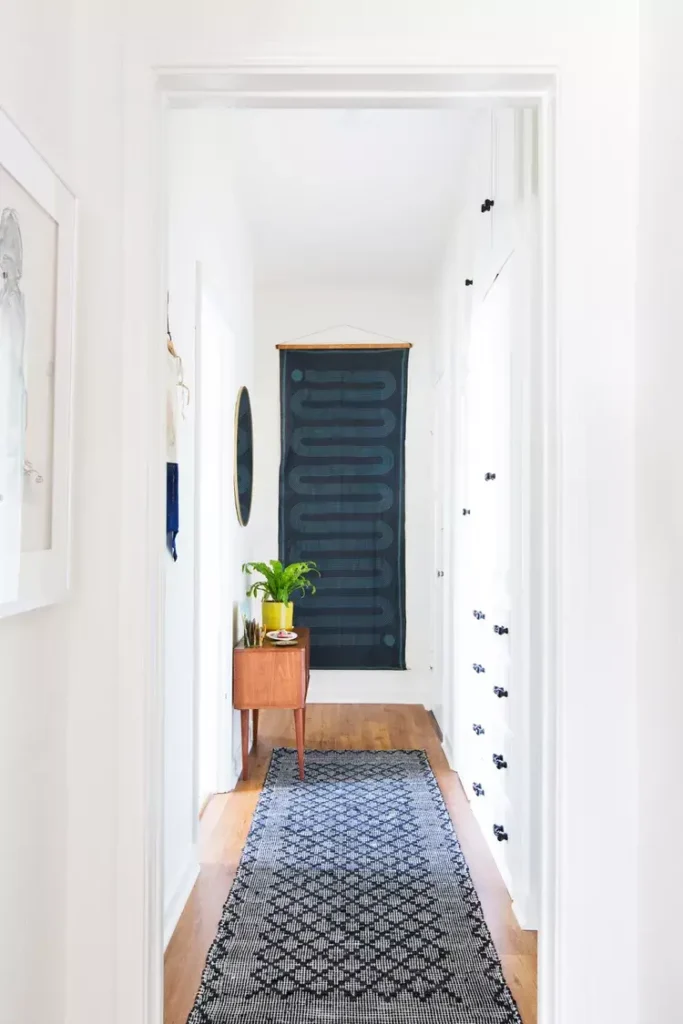
Not every narrow hallway needs to be an exercise in minimalism. This one shows how carefully chosen furniture and art can create genuine character in a tight space.
The low teak credenza serves multiple purposes it’s storage, it’s a display surface for the potted plant and small objects, and it’s a horizontal line that emphasizes the length of the hallway rather than fighting it.
The pieces hanging on the wall above create a casual gallery that feels collected over time rather than purchased as a set.
That patterned runner adds just enough visual interest at floor level without competing with the wall display. The navy door at the end provides a color anchor that makes the white walls feel intentional rather than default.
What I appreciate about this approach is the confidence to mix styles and periods. Mid-century furniture, contemporary art, traditional architecture it works because the color palette stays controlled and nothing is trying too hard to match.
If you’re furnishing a narrow hallway, choose pieces with a smaller footprint that sit low to the ground. Tall furniture can make the space feel cramped, while low-profile pieces maintain sight lines and make the hallway feel more spacious.
Bold Color Blocking with Contrasting Trim Adds Drama
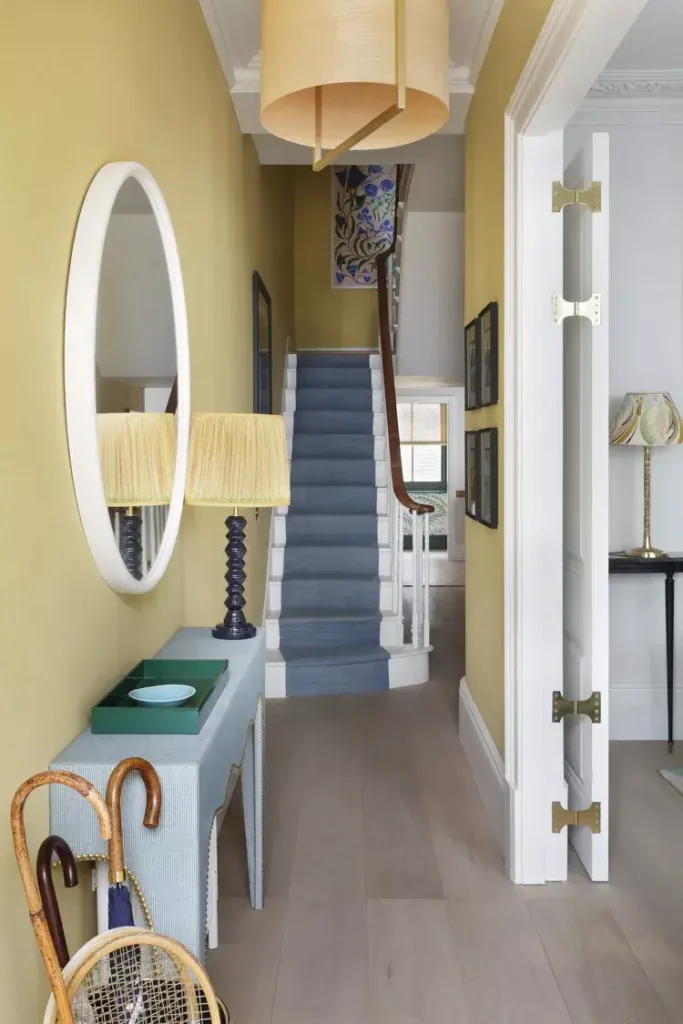
This hallway demonstrates that color can actually make a narrow space feel more intentional rather than smaller. The mustard yellow walls paired with gray trim create distinct zones that give the eye something to process.
The white chair rail divides the wall height, which is a smart move in a hallway with generous vertical space. It prevents the color from feeling overwhelming while adding architectural detail.
The blue runner on the stairs visible in the background picks up the trim color and creates visual continuity between spaces.
Notice the large oval mirror positioned at a height that reflects light rather than just serving as a functional piece. The pair of navy table lamps on the gray console add symmetry without feeling too formal. The umbrella stand at floor level is both practical and honest this is a working entryway, not just a pretty pass-through.
Color this bold requires commitment, but it can transform a boring connector hallway into one of the most memorable spaces in your home. The key is choosing colors you genuinely love rather than trends you think you should like.
When painting a narrow hallway in dark or saturated colors, invest in quality paint with good coverage. Cheap paint in bold colors never looks intentional it just looks like you ran out of budget halfway through.
Gallery Wall with Statement Lighting Creates Warmth
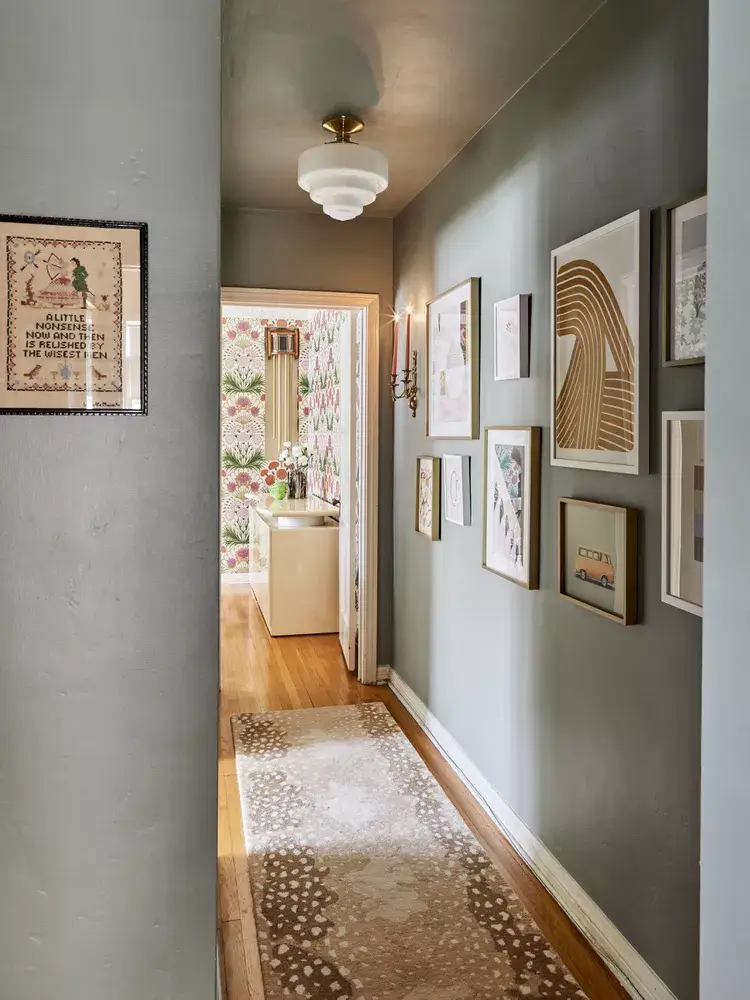
Dark painted walls can work beautifully in narrow hallways if you approach them correctly. This charcoal gray creates an intimate, cocooning effect rather than feeling oppressive.
The carefully curated gallery wall spanning one full side brings personality and visual interest. Mixing frame styles, art subjects, and sizes creates a collected look that feels authentic. That vintage sampler at the left anchors the display with its larger scale and distinct aesthetic.
The tiered pendant light is doing serious work here the brass and white milk glass add warmth while the sculptural form draws your eye upward. This prevents the narrow width from feeling claustrophobic by emphasizing vertical space.
The glimpse into the powder room with its bold floral wallpaper shows that this homeowner isn’t afraid of pattern and color in small spaces.
The patterned runner adds another layer of visual texture without fighting the gallery wall for attention. Its neutral colors with subtle pattern provide grounding without competing.
Gallery walls in hallways work best when you commit fully. Three pieces looks accidental, but ten or more creates an intentional display that becomes the design feature of the space.
Floating Shelf and Minimal Decor Maximize Entry Function
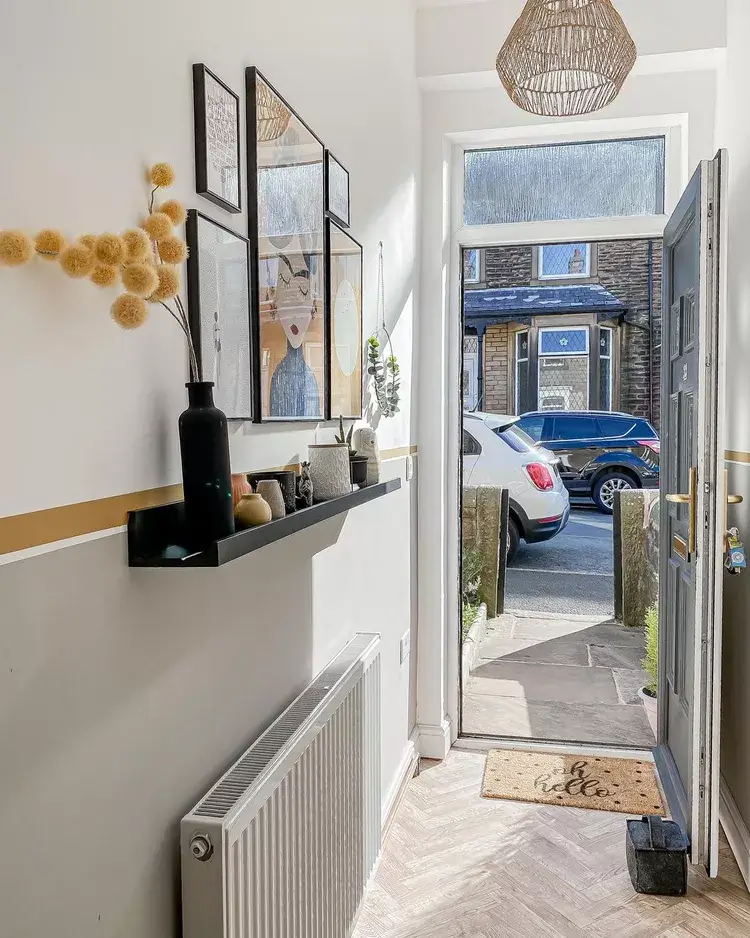
This narrow entry hallway takes a restrained approach that prioritizes function without sacrificing style. The single black floating shelf provides display space for a few carefully chosen items—framed art, a black vase with dried branches, and small decorative objects.
The light wood herringbone floor adds pattern at ground level, which is particularly effective in narrow spaces where floor material might be one of the few opportunities for visual interest. That simple “hello” doormat provides a welcoming touch without overcomplicating the entry.
What stands out is the decision to keep the walls white and the decor minimal. In a truly narrow hallway, less really does allow the space to breathe. The wicker pendant light adds texture and warmth overhead without taking up visual space.
The view straight out to the street might seem like a design challenge, but the doorway frames it as an intentional vista rather than a problem to solve. The natural light flooding in makes the narrow width feel less confining.
For narrow entry hallways, resist the urge to add a console table or bench unless you genuinely need the function. Sometimes a shelf and a few hooks serve better without making the space feel cramped.
Decorative Ceiling and Patterned Wallpaper Add Luxury
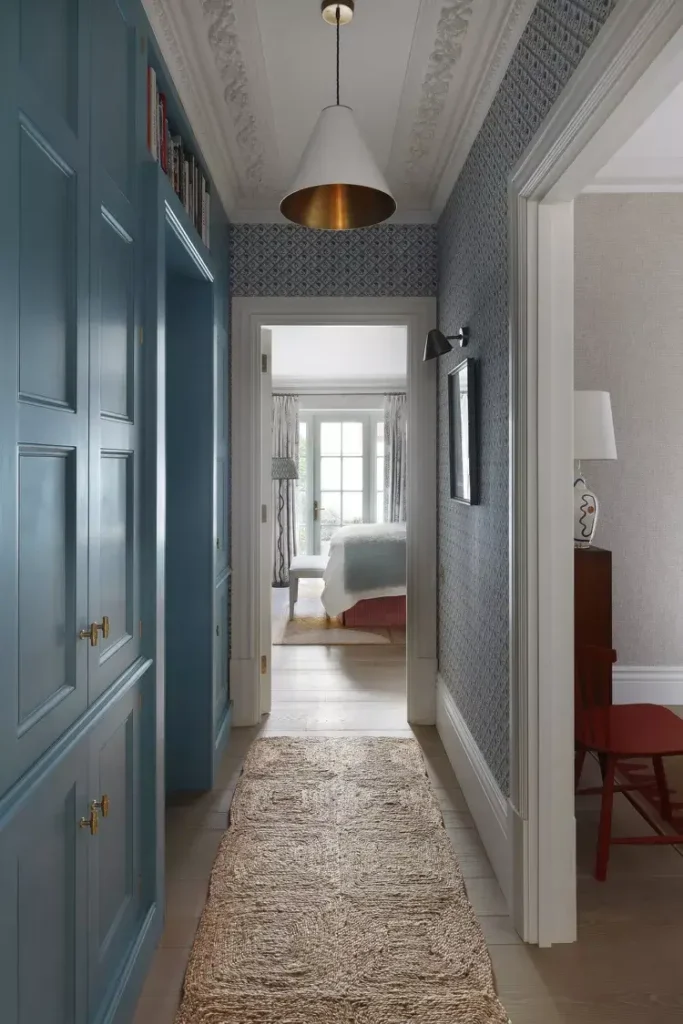
This hallway shows that narrow doesn’t mean you can’t go bold with pattern and architectural detail. The ornate ceiling molding and the geometric wallpaper create a sophisticated envelope that makes the space feel designed rather than leftover.
The deep blue painted built-in cabinetry along one wall provides substantial storage while the brass hardware adds warmth and elegance. Books stored above the cabinets turn dead space into display area. The pendant light with its copper interior creates warm, flattering light that bounces off the detailed ceiling.
Notice how the patterned wallpaper doesn’t make the space feel smaller—it actually creates depth and visual interest that tricks your eye into forgetting about the narrow width. The textured runner grounds the space and provides a neutral path through all that pattern.
The glimpse into the bedroom at the end shows coordinated but not matching design choices. The pale walls in the adjacent room let the hallway be the moment without competing for attention.
When working with patterned wallpaper in narrow hallways, choose designs with some breathing room in the pattern itself. Dense, busy patterns can feel overwhelming, while geometric designs with negative space create interest without chaos.
Dark Walls with Layered Lighting Create Intimacy
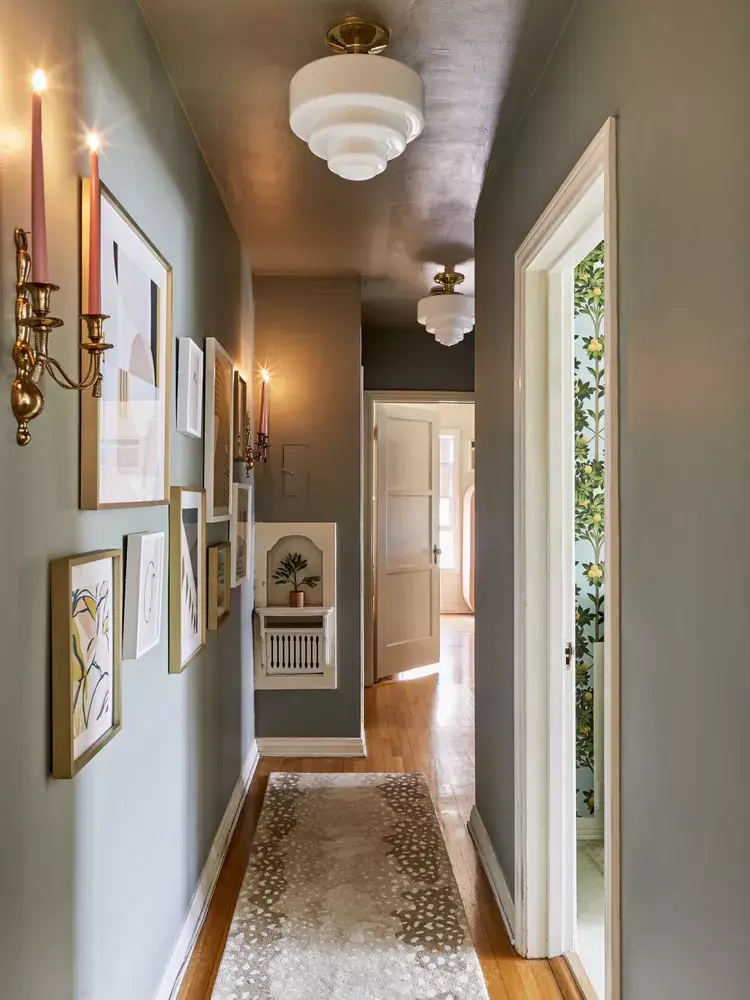
Deep charcoal walls envelope this narrow hallway in warmth rather than making it feel smaller. This is because the lighting strategy is absolutely dialed in—brass wall sconces, tiered ceiling pendants, and natural light at the end all work together.
The gallery wall mixing frame finishes and art styles creates a collected, personal feel. The spacing between frames allows each piece to register individually rather than blurring into one mass. That leopard-print runner adds just enough pattern to keep the floor from disappearing into the dark walls while staying within the warm neutral palette.
What makes this work is the commitment to the drama. Half-hearted dark walls always feel like a mistake, but when you lean into the moodiness with confident lighting and thoughtful art placement, it becomes sophisticated.
The white door frames create strong contrast against the dark walls, defining the architectural elements and preventing everything from blending together. This visual separation is critical when working with saturated wall colors.
If you’re considering dark walls in a narrow hallway, invest heavily in lighting. You need ambient light from ceiling fixtures, task light from sconces, and ideally some natural light source to prevent the space from feeling like a cave.
Arched Doorway and Warm Minimalism Create Elegance
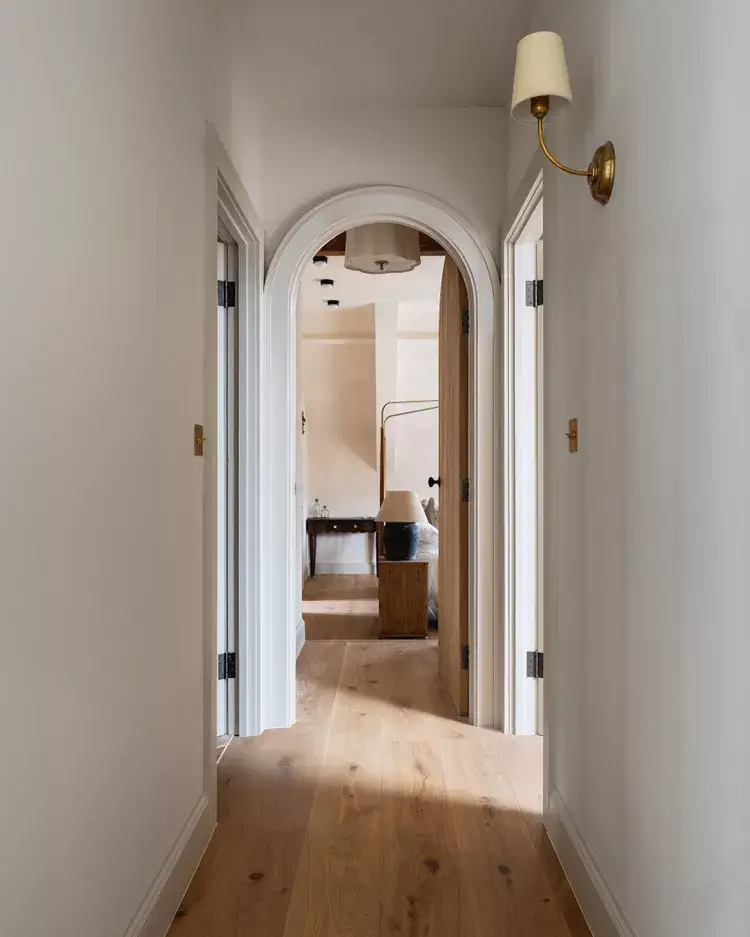
Sometimes the architecture is beautiful enough that the best design decision is to get out of its way. This hallway relies on the elegant arched doorway, warm natural wood flooring, and simple brass sconces to create its impact.
The all-white walls and trim create a clean envelope that emphasizes the architectural details rather than competing with added decoration. The arched opening frames the view into the bedroom beyond, creating a sense of anticipation and flow between spaces.
The symmetrical brass sconces provide gentle ambient light and add warmth against the white walls. Their simple, classic design feels timeless rather than trendy. The natural wood floor in a wide-plank format adds warmth and texture without pattern or color competition.
What I find most effective here is the restraint. No art, no console table, no runner—just beautiful bones and quality materials. This approach works when the architecture genuinely has something to offer and when you’re confident enough to let simplicity be the statement.
For narrow hallways with beautiful architectural details like arched doorways or original molding, consider keeping decoration minimal. Sometimes adding more just dilutes what’s already working.
Comparing Narrow Hallway Design Approaches
| Design Strategy | Best For | Commitment Level | Key Element |
|---|---|---|---|
| Bold floor pattern | Hallways with plain walls | Medium | Herringbone or patterned tile |
| Dark painted walls | Spaces with good lighting | High | Multiple light sources required |
| Gallery wall display | Long, uninterrupted walls | Medium | Curated art collection |
| Minimal architecture focus | Hallways with good bones | Low | Quality materials and restraint |
| Colorful paint with trim | Traditional homes with molding | High | Confident color choices |
Making Narrow Hallways Work for Your Home
The connecting thread through all these narrow hallway ideas isn’t a specific style or color palette—it’s intentionality. Each space shows evidence of deliberate choices about what to include and what to leave out.
Narrow hallways fail when you treat them like rooms and try to make them do too much. They succeed when you acknowledge the constraints and work with them rather than against them. Sometimes that means embracing darkness and creating a moody gallery space. Sometimes it means keeping everything light and minimal so the architecture can shine.
The most common mistake I see is trying to make a narrow hallway feel wider through design tricks. That rarely works and usually just creates visual confusion. Better to accept the narrow width and make it feel intentional through confident material choices, good lighting, and restraint with decoration.
Your narrow hallway doesn’t need to apologize for itself. It needs a clear purpose, whether that’s dramatic color, curated art display, or beautiful simplicity. Choose the approach that fits your home’s architecture and your actual needs, then commit to it fully.