

Let’s be honest. Most bathroom inspiration falls into two camps: sterile white boxes that feel like you’re showering in a hospital, or rustic cabin vibes that make you wonder if a bear might wander in. Neither feels quite right, does it?
Black and wood bathrooms sit in that sweet spot between sophisticated and cozy. They’ve got personality without trying too hard. And honestly? They photograph like a dream but also function for actual humans who need to brush their teeth at 6 AM.
I’ve pulled together 15 real examples from actual homes. Not staged showrooms with unlimited budgets and professional lighting. These are bathrooms people use every single day, designed by folks who figured out how to balance drama with warmth.
Crisp Board-and-Batten with Natural Wood Warmth

Why it works: The contrast between architectural white trim and natural wood creates instant visual interest without a single decorative accessory. This approach absolutely shines in smaller powder rooms where you want maximum impact with zero clutter.
Picture this: white board-and-batten wainscoting climbing halfway up the walls while charcoal paint takes over above. A light oak vanity with a matching mirror frame provides just enough natural wood to keep things from feeling cold. Black hardware ties everything together without screaming for attention.
The beauty here is how little styling the space actually needs. The wood grain becomes the texture. And here’s what surprised me when I first saw this configuration work in person: the black upper walls create depth rather than closing in the space.
Pro tip: Invest in good lighting if you’re going this route. Dark upper walls absorb light like nobody’s business, so you need both overhead and task lighting to make the vanity functional. Also, that specific shade of charcoal matters more than you’d think. Too blue and it reads cold. Too brown and it muddies your wood tones.
Textured Black Tile Against Light Wood Vanity

Why it works: Large-format vertical tiles create a striking backdrop without the grout maintenance nightmare of smaller mosaics. This style works especially well in bathrooms blessed with good natural light.
Imagine black vertical tiles with subtle texture that catches light differently throughout the day. Pair that with a blonde wood vanity featuring ribbed cabinet doors, and you’ve got warmth and visual softness against hard tile surfaces. A white quartz countertop and freestanding tub keep the room from tipping too dark while maintaining that sophisticated palette.
The balance of proportions here is everything. The black tile dominates but doesn’t overwhelm because it’s broken up by window light and balanced by a large white tub. The warm wood anchors the middle of the space right at eye level where you interact most.
Gold fixtures would totally work here, but brass tones add warmth without going full grandmother’s bathroom. If you’re recreating this look, think about where your natural light comes from. These dark tiles need illumination to show their texture and avoid looking flat and lifeless.
Floating Vanity with Black Frame and Oak Drawers
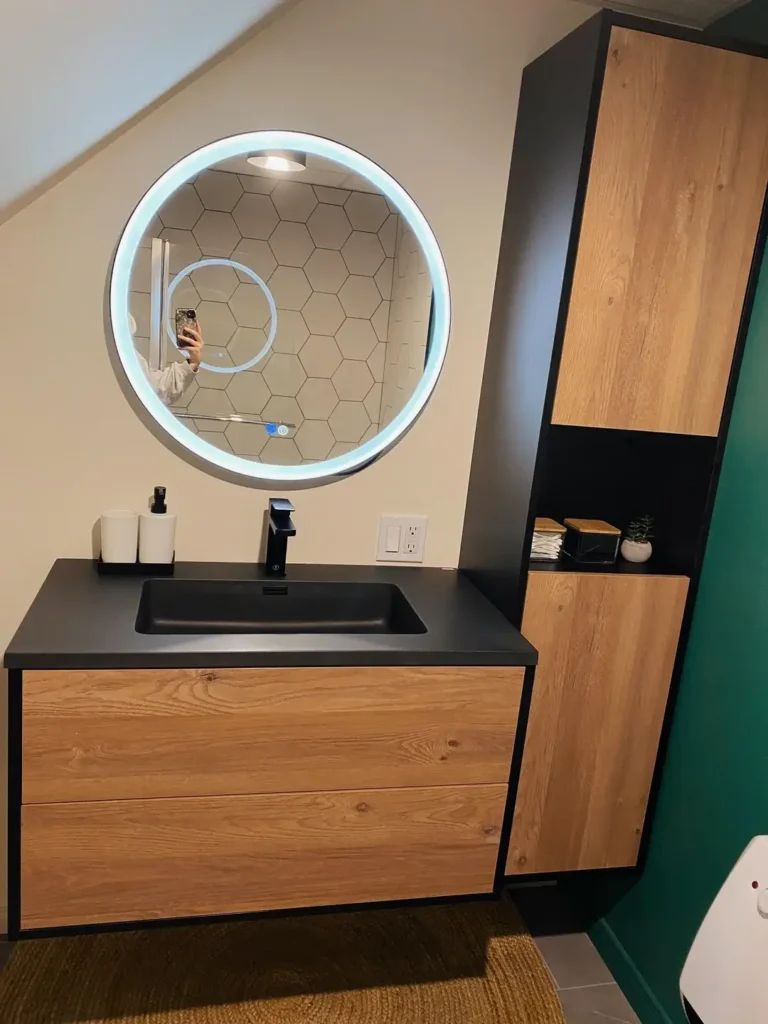
Why it works: A wall-mounted vanity keeps sightlines clean in compact bathrooms while providing essential storage. The black frame structure adds industrial edge without going full warehouse aesthetic.
The proportions on a well-designed floating vanity can be stunning. A black metal frame creates a shadow line underneath that makes the vanity appear lighter than it actually is. Oak drawer fronts with visible grain bring organic warmth into what could otherwise read too modern and cold. A black countertop matches the frame while a circular LED mirror adds contemporary function without feeling trendy in a way that’ll age poorly.
A hexagonal tile backsplash introduces pattern subtly. It’s there when you notice it but doesn’t compete with the vanity for attention. A black faucet continues the material theme without adding new finishes to coordinate.
Heads up: Floating vanities require proper blocking in the walls. This isn’t a project for drywall alone. Make sure your contractor knows what they’re doing, or you’ll have a vanity on your floor instead of your wall.
Also Read: Gorgeous Black and White Bathroom – 15 Decor Ideas and Timeless Styles
Vertical Wood Slats with Stone and Black Fixtures
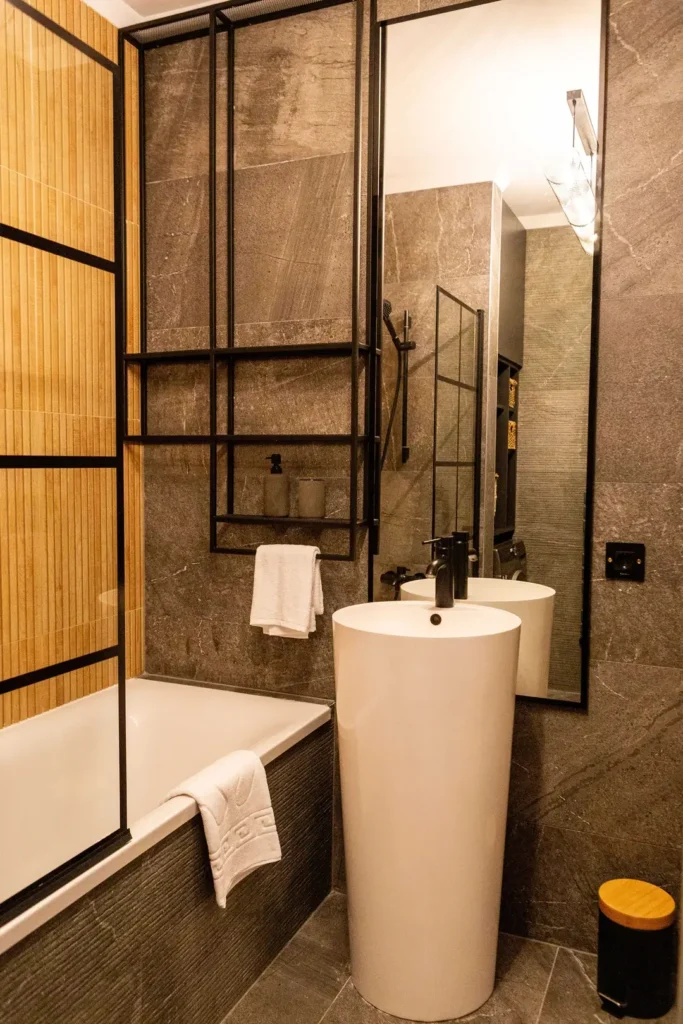
Why it works: Combining three distinct textures creates layers of visual interest that genuinely hold up over time. Smooth stone, linear wood, and matte black metal play together beautifully in bathrooms where you can dedicate full walls to each material.
Textured stone tiles that read almost like concrete in their earthy neutrality can cover the wet zone completely. Smart for maintenance. Then vertical wood slats take over as a full wall treatment, running floor to ceiling to maximize height perception. A black shower enclosure frame, vanity frame, and fixtures tie the materials together without introducing another color.
A cylindrical pedestal sink might seem like an unexpected choice, but it works because of its sculptural simplicity. It doesn’t fight with the strong vertical lines happening on the walls. A small wooden stool adds practical function while reinforcing the wood element.
What I appreciate most: The wood slats remain visually lightweight despite covering a large area. The gaps between slats prevent the wall from feeling heavy. If you pursue this direction, think about how the slats might handle moisture. Proper sealing and adequate ventilation become essential rather than optional.
Moody Dark Walls with Wood Vanity and Statement Mirror
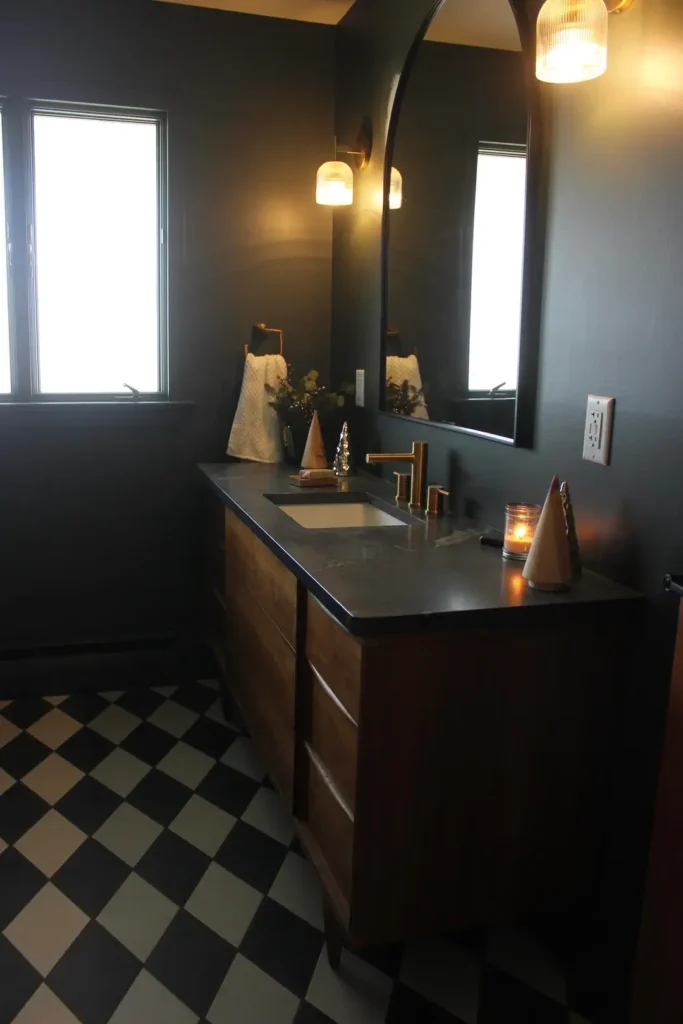
Why it works: Going dark on all walls requires confidence but delivers atmosphere that lighter palettes simply cannot achieve. The right wood tone prevents the darkness from feeling like you’re bathing in a cave.
Charcoal walls with enough depth to read almost black in lower light but reveal their true color near windows create incredible mood. A medium-tone wood vanity with simple drawer fronts keeps focus on material quality rather than decorative details. A black countertop integrates seamlessly with the walls while brass fixtures catch light and create focal points.
An oversized black-framed mirror is deliberate here. It bounces light around the space and creates the illusion of another window. A checkered floor in cream and black adds pattern at the bottom of the room where it grounds everything without overwhelming.
Ambient lighting becomes absolutely crucial in dark bathrooms. Pendant lights providing both task illumination and decorative interest, with warm bulbs counteracting cool black, make the space feel inviting rather than stark.
Before you commit: Buy sample pots and live with them for several days to see how they perform in your specific lighting conditions. What looks perfect at the paint store might feel totally different in your bathroom.
Spa-Like Setup with Wood Slat Wall and Black Fixtures
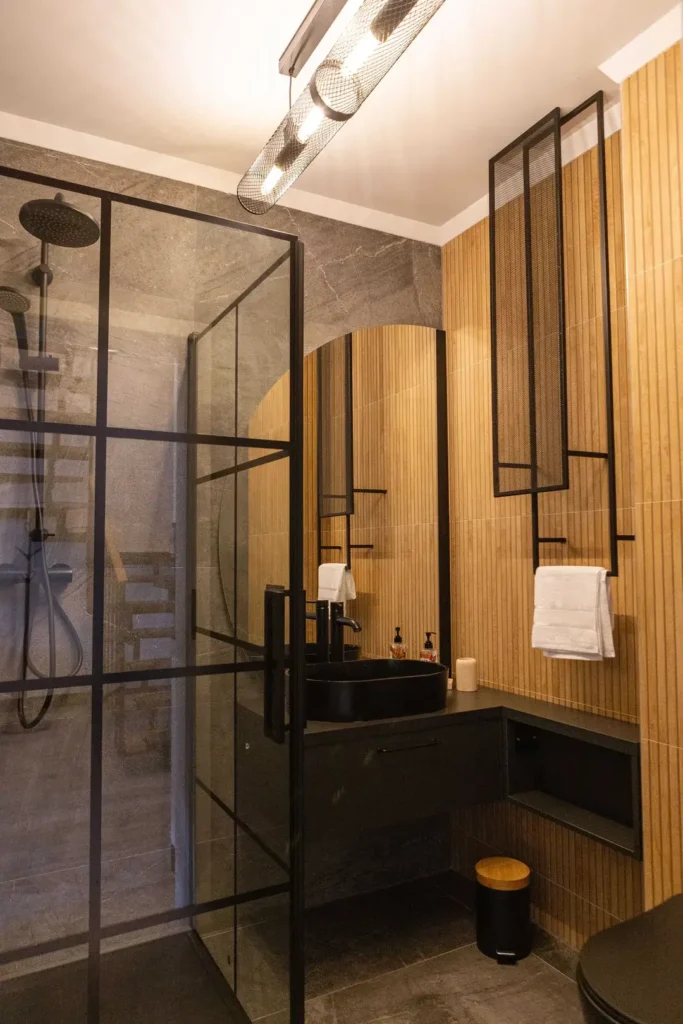
Why it works: Creating that resort bathroom feeling at home requires careful balance between natural materials and contemporary fixtures. The wood slat wall provides texture without rustic overtones that’ll make you feel like you’re camping.
Imagine an entire wall dedicated to vertical wood slats in a honey tone that brings warmth without going orange. The continuation of these slats onto the ceiling creates an envelope effect that defines the vanity zone. A black floating vanity with vessel sink maintains clean modern lines while black-framed mirrors add function without visual weight.
Brown stone tile in the shower area provides earthy contrast to the lighter wood. A black gridded shower enclosure continues the linear theme. A sculptural mesh light fixture introduces organic form into an otherwise angular space.
The clever part: Storage gets hidden within the slat wall system. You get the visual impact of a full wood wall with practical function tucked behind it. A wooden bath mat and small accessories reinforce the natural material story without cluttering surfaces.
Also Read: Black Bathroom Ideas? 12 Ways to Turn It Into a Quiet Escape (No Art Degree Required)
Richly Grained Walnut Vanity with Black Hexagonal Floor

Why it works: Bold pattern on the floor allows walls and vanity to remain simpler while still delivering visual complexity. This approach suits bathrooms where you want personality without maintenance-intensive materials covering every surface.
A floating walnut vanity showing its grain proudly, with no attempt to hide knots or variation, paired with white Carrara-style countertop creates classic contrast. Black hexagonal floor tiles introduce geometry and movement. Black-framed mirrors repeat the hex shape loosely without being matchy-matchy.
What makes this work is restraint everywhere else. White subway tile, white walls, black hardware. Nothing competes with the wood grain or the floor pattern. Wall-mounted faucets clean up the countertop and add a contemporary detail that keeps this from reading traditional despite classic materials.
Real talk about walnut in bathrooms: You need proper sealing. Wood this dark shows water spots mercilessly, so you need a finish that repels rather than absorbs. The floating mount helps air circulate underneath, extending the vanity’s life in a humid environment.
Oak Vanity Revival with Black Countertop Upgrade
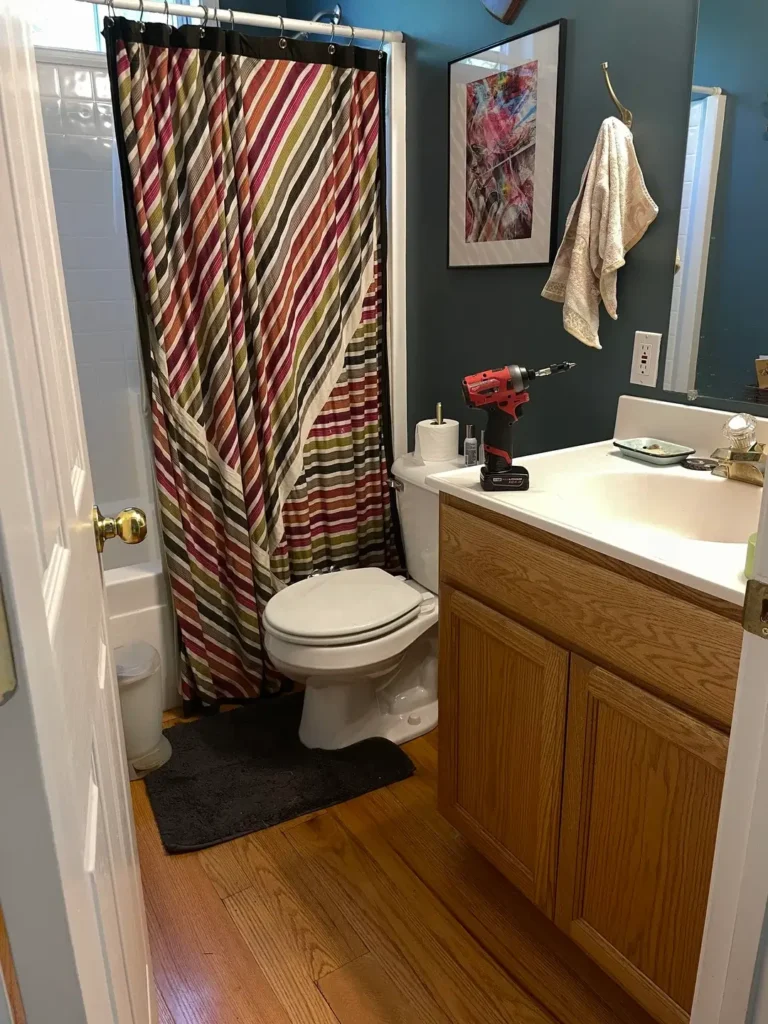
Why it works: Existing golden oak cabinetry gets new life with a black countertop and coordinating hardware. This demonstrates how strategic updates can modernize without gutting everything.
Working with an existing oak vanity and floor instead of ripping everything out is both budget-friendly and environmentally conscious. A black countertop completely transforms the perception of the cabinet. Suddenly the oak reads as warm and intentional rather than dated 90s nightmare. A black faucet and hardware continue the update while an LED-backlit mirror adds contemporary function.
A teal wall color creates unexpected contrast with both wood and black elements. It’s a bold choice that works because it’s the only bold choice. Everything else stays neutral. White ceiling and trim keep the color contained.
This approach makes so much sense if your existing cabinetry is solid wood in good condition. Rather than sending perfectly good cabinets to landfills, you update the elements you interact with most. Countertop, hardware, lighting, paint. Suddenly the space feels current, and the oak floor continues the warm wood theme from the vanity, creating cohesion you didn’t plan but absolutely get to enjoy.
Farmhouse-Style Oak Vanity with Black Granite
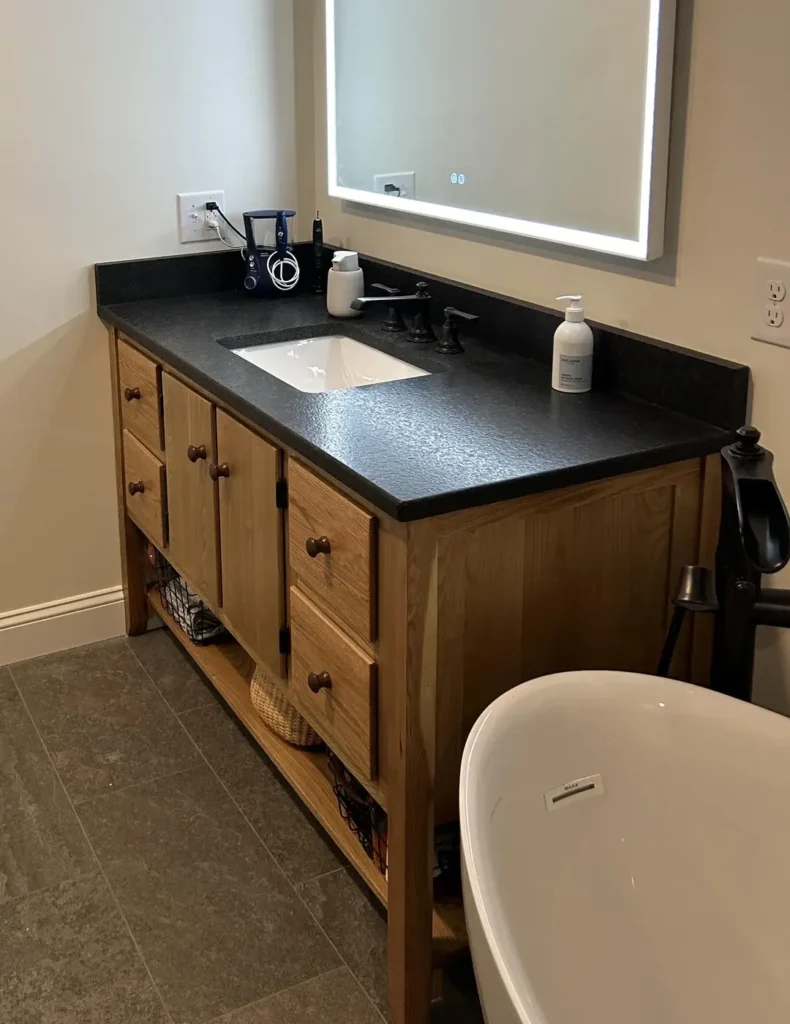
Why it works: Traditional wood cabinetry pairs surprisingly well with black stone when you let both materials be themselves. This works in bathrooms where you want timeless rather than trendy.
An open-shelf oak vanity with furniture quality rather than built-in cabinetry feel has real charm. Woven baskets provide storage while reinforcing the natural material story. Black granite countertop with subtle speckle adds depth without pattern, letting the wood grain take center stage.
An LED mirror provides modern function without stylistic conflict. It’s simple enough to work with a traditional vanity. Gray tile floor bridges the oak and black without matching either exactly. White sink and toiletries keep the countertop from appearing too heavy.
Worth considering: The openness of this vanity style suits smaller bathrooms where closed cabinets would make the space feel cramped. You sacrifice some hidden storage but gain visual lightness. Just remember that open storage means everything visible needs to look intentional. This isn’t the place for product packaging clutter. Get some cute baskets or matching containers.
Also Read: 11 Brilliant Small Bathroom Storage Ideas for Compact Homes
Clean Modern Lines with Maple and Black Steel
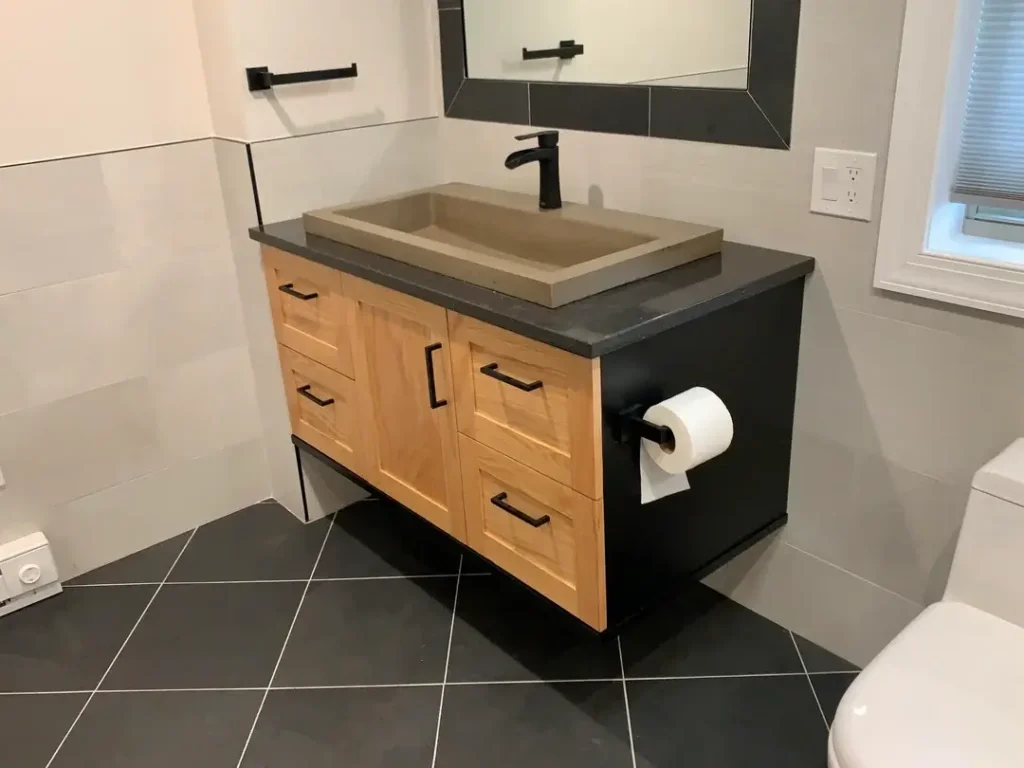
Why it works: Mixing warm maple with cool black steel creates tension that keeps a space interesting over time. This configuration delivers modern sophistication without cold minimalism vibes.
Light maple for a floating vanity lets the wood’s subtle grain provide texture without demanding attention. A black steel side panel creates architectural interest while integrating practical elements like a toilet paper holder. Form meeting function at its finest. A gray countertop bridges the maple and black while a concrete-look sink adds industrial edge without metal overload.
White wall tile keeps things bright while black fixtures throughout maintain material consistency. A black wall-mounted faucet particularly commits to the theme while opening up countertop space for actual use.
White grout on black floor tiles creates deliberate graphic pattern that grounds the floating elements. This demonstrates how dramatically grout color affects tile appearance. Gray grout would have softened the pattern considerably.
Fair warning: Light wood shows dust and water spots more readily than darker tones. Plan for more frequent wiping if you choose maple or similar light woods in bathroom applications. It’s worth it for the look, but go in with eyes open.
Two-Tone Tile Treatment with Wood Vanity
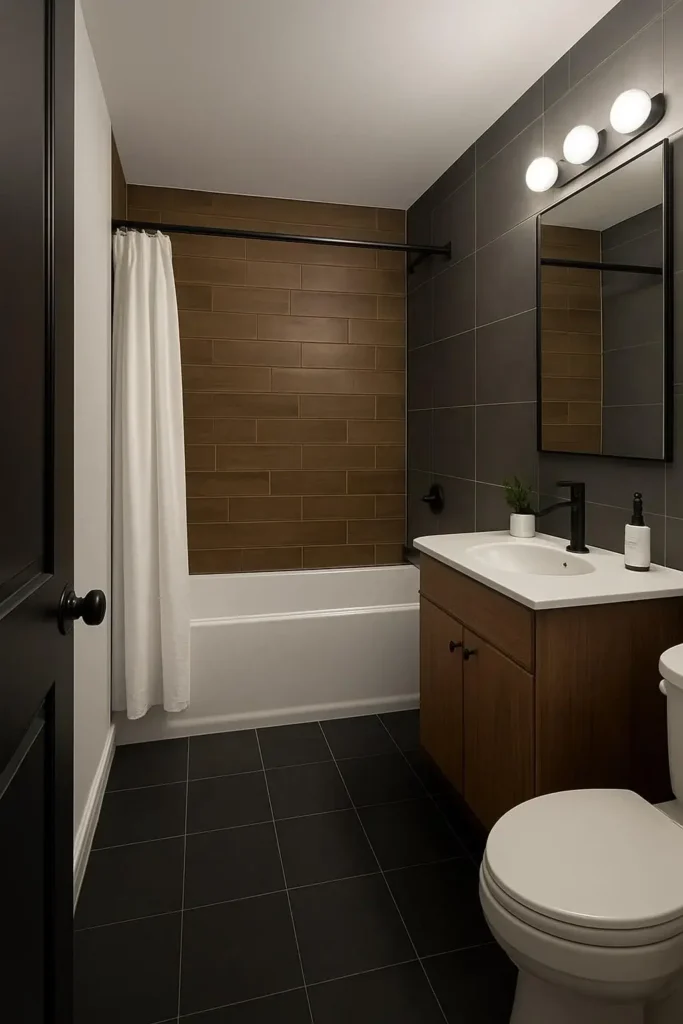
Why it works: Dividing wall tiles between black and wood tones creates visual interest without additional materials or significant cost increase. This approach suits bathrooms where you want impact on a moderate budget.
Black tile on upper walls and brown wood-look plank tile below create a horizontal divide that makes ceilings appear higher. The wood vanity picks up warm tones from the lower tile while black fixtures and trim connect to the upper wall color. A white tub and countertop provide necessary light reflection in a darker space.
Black door hardware and round light fixtures continue the material theme without introducing new finishes to coordinate. Black floor tile grounds everything while visually connecting to upper walls.
Pattern direction matters more than you’d think. Vertical installation of black tile draws the eye up while horizontal wood-look planks widen the space visually. If you’re tiling a bathroom, consider orientation as carefully as color and material selection.
Rustic Wood Tile Shower with Black Built-In Niches
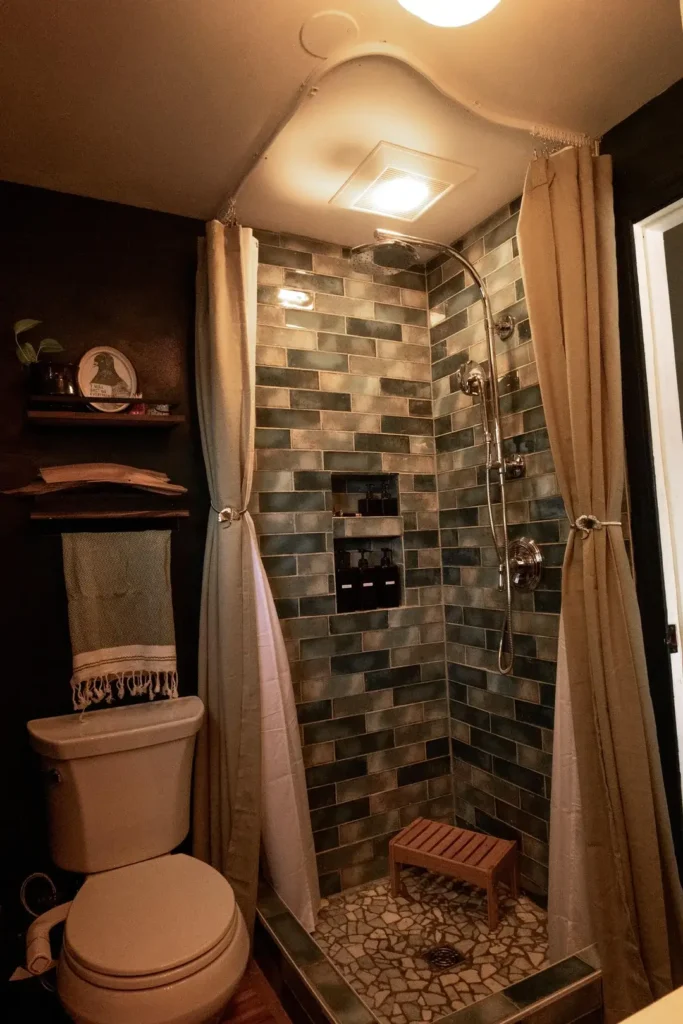
Why it works: Ceramic tile that mimics wood grain brings warmth into wet areas where real wood becomes problematic. Built-in storage in black creates functional focal points.
Porcelain planks that read convincingly as weathered wood covering an entire shower surround look incredible. Random variation between pieces prevents that repetitive look that gives away cheaper imitations. Black built-in niches break up the wood pattern while providing essential shower storage. Black shower fixtures and unique woven light fixtures maintain the material story.
Black walls outside the shower create drama without tile expense. Wood shelving beside the toilet adds practical storage while reinforcing the wood element beyond the shower area. A beige curtain softens all the hard surfaces without introducing pattern competition.
The real beauty: Maintenance-free natural appearance. You get spa-like warmth of wood without sealing, refinishing, or rot concerns. Random plank widths and colors are key to convincing results. That level of variation requires higher-grade tile but delivers realism cheaper options simply cannot match.
Traditional Cherry Vanity with Black Granite
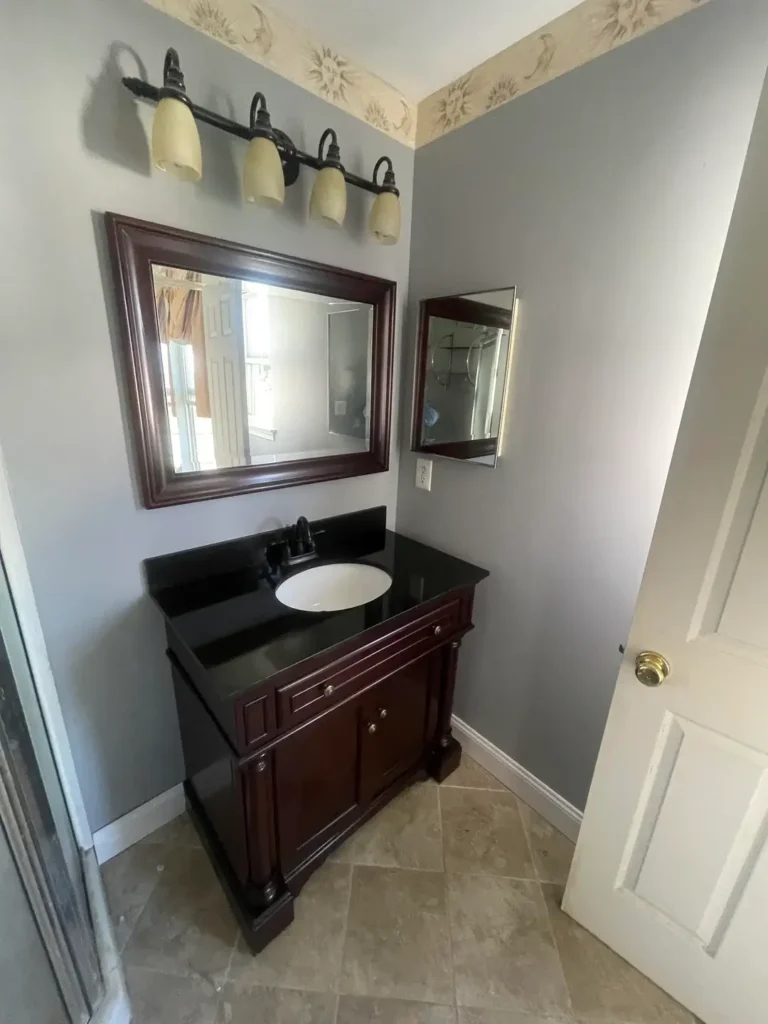
Why it works: Rich cherry wood brings warmth and traditional elegance that pairs surprisingly well with black stone. This combination suits bathrooms where you want classic rather than contemporary aesthetics.
A cherry vanity with traditional paneled doors and furniture-like base makes a statement. Black granite countertop with polished finish creates formal elegance while a white undermount sink keeps things classic. A wood-framed mirror repeats the cherry tone while a black light fixture bridges both materials beautifully.
Light walls and floor are essential here. They keep darker wood from overwhelming smaller spaces. This demonstrates an important principle: dark wood requires light surroundings to breathe. All-dark bathrooms feel dramatically smaller than their actual dimensions.
If you’re working with traditional cherry cabinetry, lean into it rather than fighting it. Black granite or soapstone countertops embrace the formality. Black hardware and fixtures update without stylistic conflict. Let the wood dominate but use black as a strong supporting element rather than an afterthought.
Spacious Layout with Black Painted Cabinetry and Oak Floor
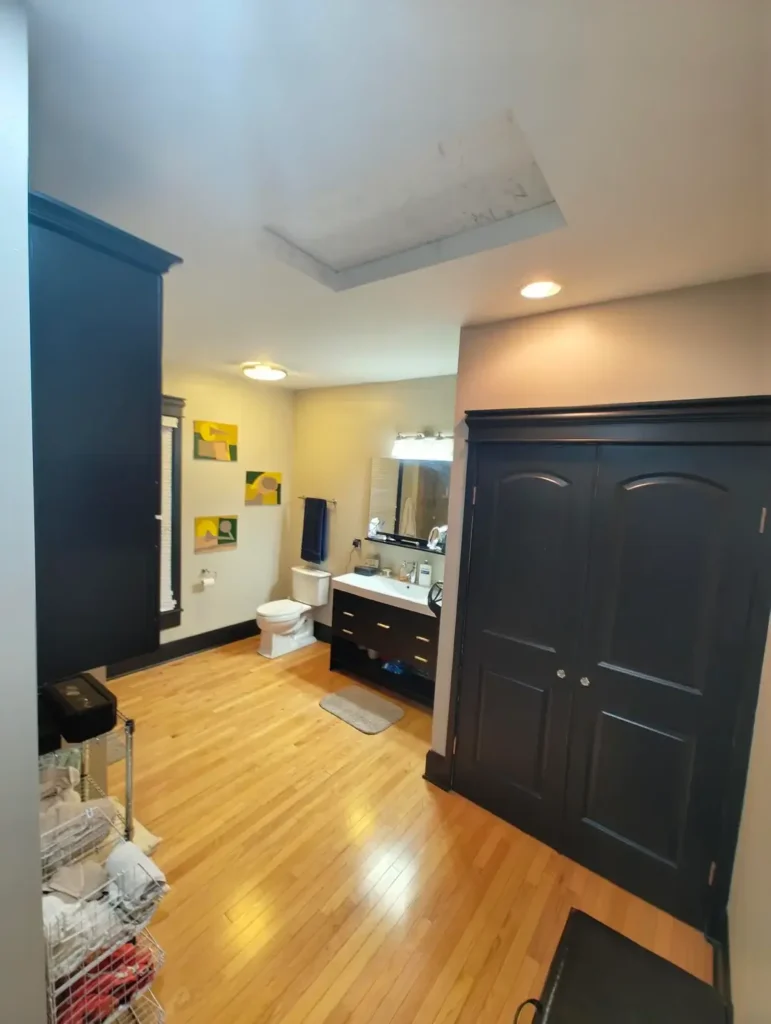
Why it works: Large bathrooms can handle bolder moves like extensive black cabinetry when balanced with warm wood flooring. Scale affects color choices more than most people realize.
Multiple bathroom elements painted black, including vanity, linen cabinet, and even the door, would overwhelm a smaller room. But it works in larger spaces because of square footage and oak flooring running throughout. Natural wood planks warm everything and tie the bathroom to adjacent spaces.
White countertop, toilet, and shower tile prevent black from dominating completely. Recessed ceiling details add architectural interest while additional lighting keeps the space bright despite dark cabinetry.
This approach makes sense for open-plan homes where bathroom flooring continues from other rooms. Wood flooring becomes your warmth element while painted cabinetry allows color experimentation. Black paint costs far less than black-stained wood but delivers similar visual weight. Just ensure adequate ventilation. Moisture is the enemy of any painted surface.
Textured Walnut Vanity with Black Geometric Floor
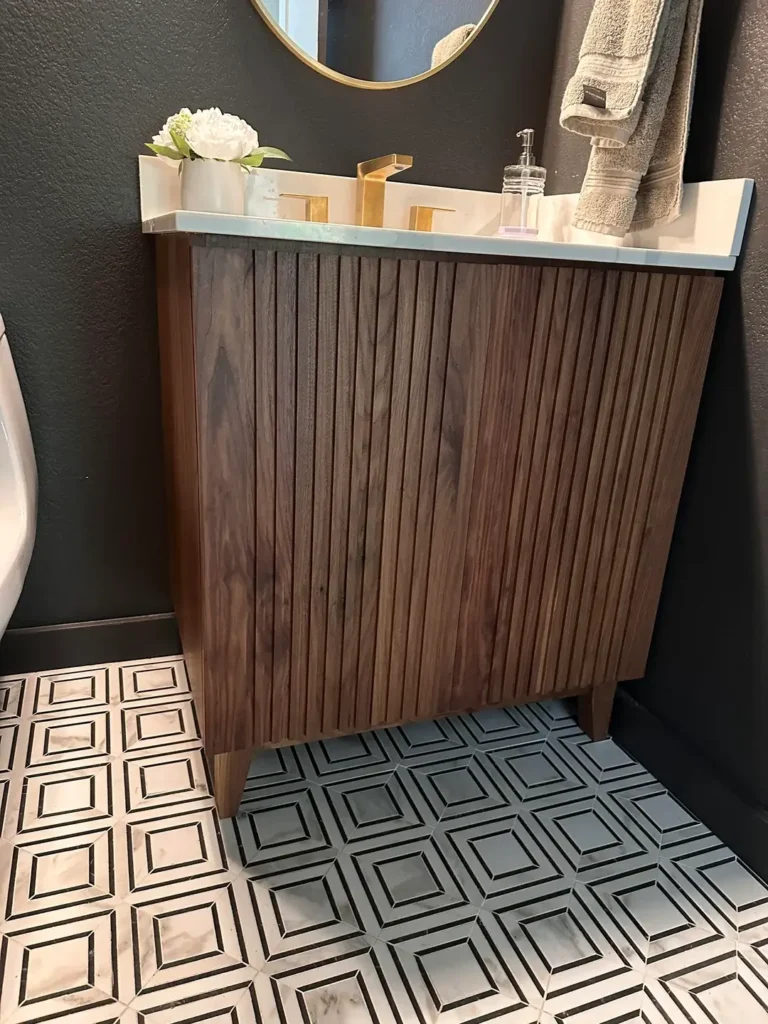
Why it works: Vertical ribbing on vanity fronts creates subtle texture that elevates simple cabinet boxes. Paired with graphic floor tile, this combination delivers sophistication through pattern mixing.
A walnut vanity featuring vertical reeded panels catches light differently throughout the day. A glass countertop feels contemporary and unexpected while a gold faucet adds warm metallic tones that bridge wood and black elements. A round brass mirror continues the warm metal theme.
Black geometric floor tile in a 3D cube pattern creates movement and visual complexity. It makes a simple vanity appear more sophisticated by association. Charcoal walls complete the dark envelope while white trim and door keep things from going too heavy.
The key takeaway: When you pair detailed tile with cabinetry, let one element stay simpler so they complement rather than compete. The textured wood provides all the interest needed without hardware or additional ornamentation fighting for attention.
Understanding the Black and Wood Bathroom Palette
The combination works because of fundamental color theory and material contrast. Black provides depth and sophistication that lighter colors cannot achieve. Wood brings organic warmth and texture that synthetic materials lack. Together they create balanced spaces that feel both refined and actually livable.
Most successful black and wood bathrooms follow certain principles worth understanding:
Material proportions matter significantly. Too much black creates oppressive darkness. Too much wood can read overly rustic or cabin-like. The sweet spot typically involves black as countertop, fixtures, and possibly one wall or floor, with wood dominating cabinetry.
Finish selection affects the entire mood. Matte black reads contemporary and sophisticated. Glossy black tile feels more traditional and formal. Similarly, wood with heavy grain and knots brings rustic energy while smoother cuts appear more refined.
Lighting becomes non-negotiable. Dark bathrooms need multiple light sources at different heights. A single overhead fixture will leave shadows and make the space feel cave-like. Layer ambient, task, and accent lighting for flexibility.
Here’s a quick reference guide:
| Design Approach | Best For | Difficulty |
|---|---|---|
| Black countertop with existing wood vanity | Quick updates, rentals | Easy |
| Black accent wall with new wood vanity | Small to medium baths | Medium |
| Full black tile with wood elements | Renovations, bold statements | Advanced |
| Wood-look tile with black fixtures | Wet areas, low maintenance | Medium |
| Mixed wood tones with black hardware | Eclectic styles, vintage spaces | Easy |
White serves as the necessary third element in most successful black and wood bathrooms. Whether through walls, countertops, tile, or fixtures, white provides visual rest and light reflection that prevents the space from feeling too heavy or dark.
Making Black and Wood Work in Your Bathroom
You’ve seen what’s possible, but translating inspiration into your specific space requires considering practical factors beyond aesthetics.
Start by evaluating your natural light situation honestly. Bathrooms with windows can handle more black and darker wood tones. Interior bathrooms need careful balance and excellent artificial lighting.
Consider your existing architecture. Traditional homes with detailed trim and molding suit richer woods like walnut or cherry paired with black granite or soapstone. Modern spaces with clean lines call for lighter woods like oak or maple with matte black surfaces and minimal ornamentation.
Think about maintenance reality:
- Matte black faucets show water spots constantly
- Glossy black countertops reveal every smudge
- Light wood surfaces need more frequent cleaning than dark ones
Choose finishes that match your cleaning habits rather than fighting them forever.
Final Thoughts
The black and wood combination continues dominating bathroom design because it balances competing needs. You get sophisticated design with warm, livable spaces. Unlike all-white bathrooms that can feel sterile or all-natural designs that sometimes read dated, this pairing ages gracefully across changing trends.
These fifteen examples prove the combination works across different styles, budgets, and bathroom sizes. Whether you’re updating a powder room with new hardware and paint or renovating a primary bathroom from scratch, black and wood offers enough flexibility to create something distinctly yours.
The principles consistently deliver good results: balance your proportions, invest in lighting, and let white play supporting actor. Now go make that bathroom happen. Your future self, towel in hand, will thank you.
