
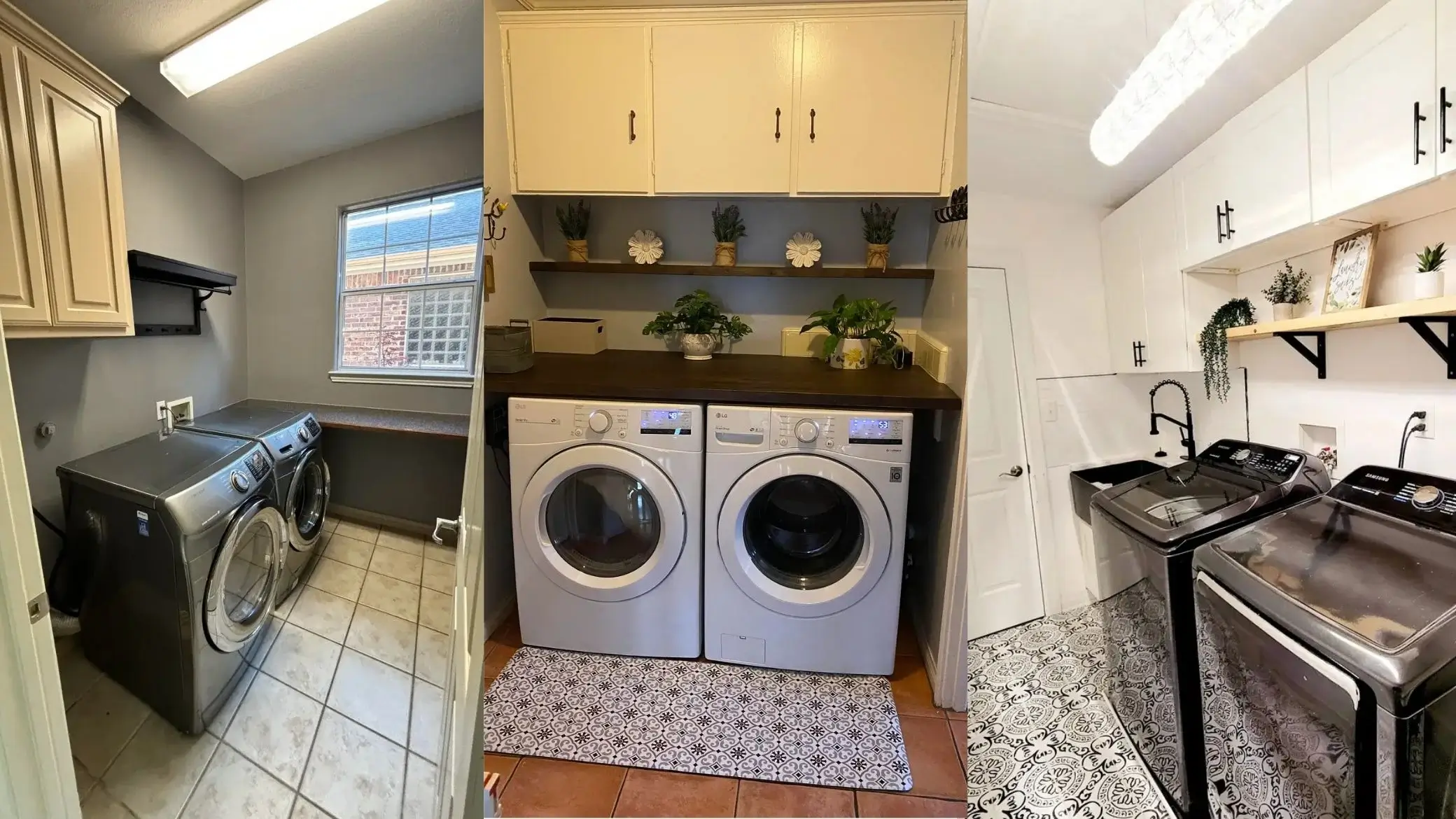
Let’s be real. If you’ve ever done the sideways shuffle past your washer while clutching a mountain of dirty clothes, you already know the pain of a narrow laundry room. I’ve been there. Hip-checking the dryer, knocking detergent off a shelf, questioning every life decision that led to this moment.
But here’s the good news. A skinny laundry room doesn’t have to feel like doing chores inside a submarine. I found 15 real setups from real people who turned their narrow, awkward laundry spaces into rooms that actually function. No fantasy Pinterest mansions here. Just clever ideas you can steal for your own home.
Custom Cabinetry with Statement Flooring
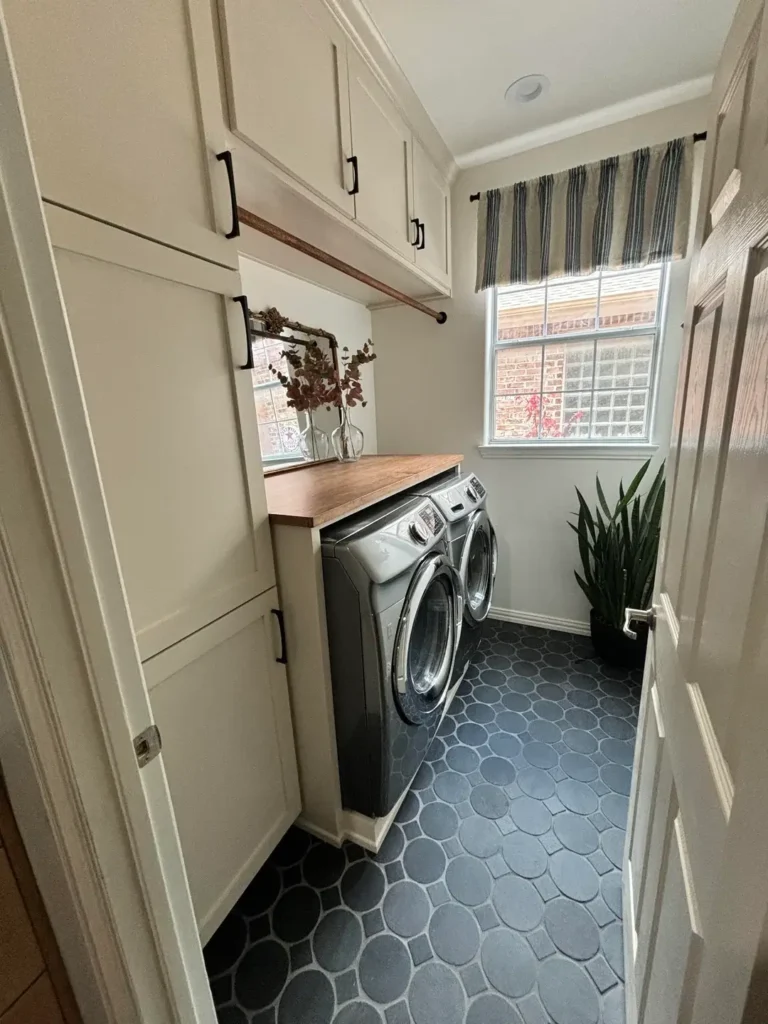
Floor-to-ceiling cabinets are a total game changer when your room is more hallway than room. One homeowner installed white shaker-style cabinets stretching from floor to ceiling on a single wall, and the result is honestly impressive.
The secret weapon? Blue hexagonal tile flooring. It pulls your eyes downward, which tricks your brain into thinking the space is wider than it actually is. Pretty sneaky. Black hardware on the cabinets adds just the right amount of contrast without making things feel busy.
A wood countertop runs across the top of the washer and dryer, giving you a legit folding surface. Natural light from a window keeps the whole thing from feeling like a storage closet.
Pro tips if you’re going this route:
- Make the countertop removable in sections so you’re not trapped when it’s time to replace an appliance.
- Measure your appliances before you build anything. Seriously, measure twice.
- Leave at least two inches of clearance on each side of the machines for ventilation.
Minimalist Side-by-Side Configuration
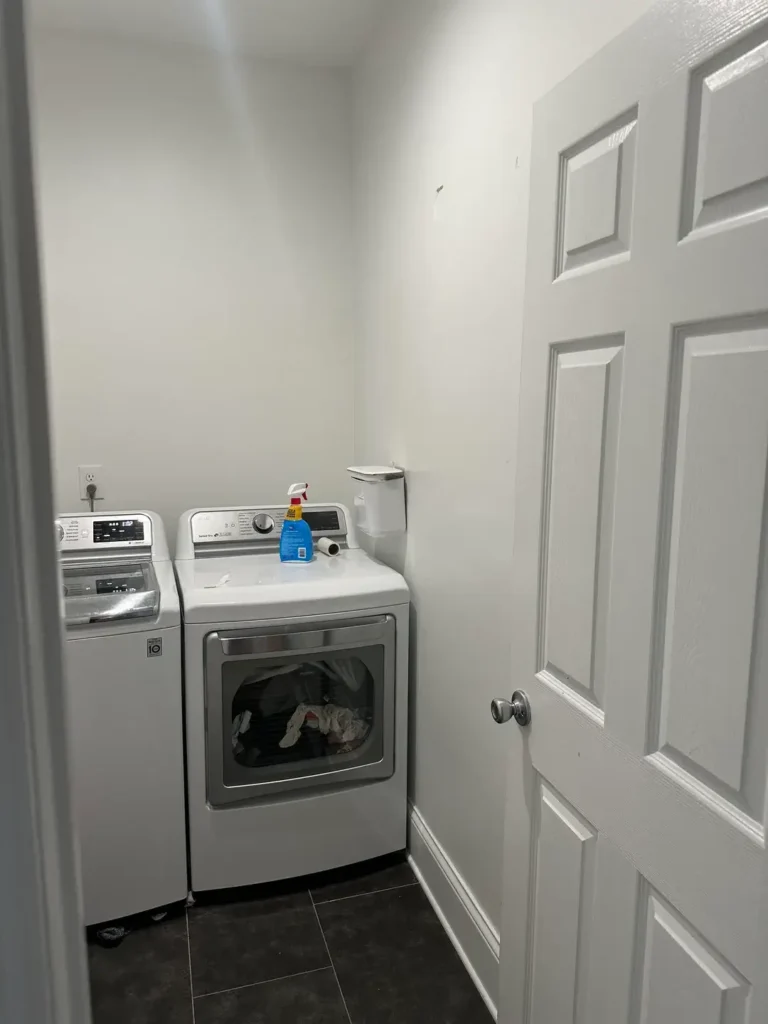
Sometimes the smartest design move is knowing what to leave out. One setup I came across took the “less is more” philosophy and ran with it beautifully.
Two top-load machines sit side by side in a tight space with bare white walls and simple dark tile flooring. That’s basically it. A wall-mounted touchless trash can keeps one more thing off the floor. The only visible items on the machines are a spray bottle and paper towels.
No floating shelves. No cute signs. No baskets. Just pure function.
This layout works best if:
- You store detergents and supplies somewhere else in your home
- Your laundry room is less than five feet wide
- You prefer top-loaders (which are easier to load when you can’t bend down comfortably in tight quarters)
The trade-off? You lose overhead cabinet space because top-loaders need clearance above them. But honestly, if your space is that tight, simplicity wins every time.
Black and White with Patterned Tile
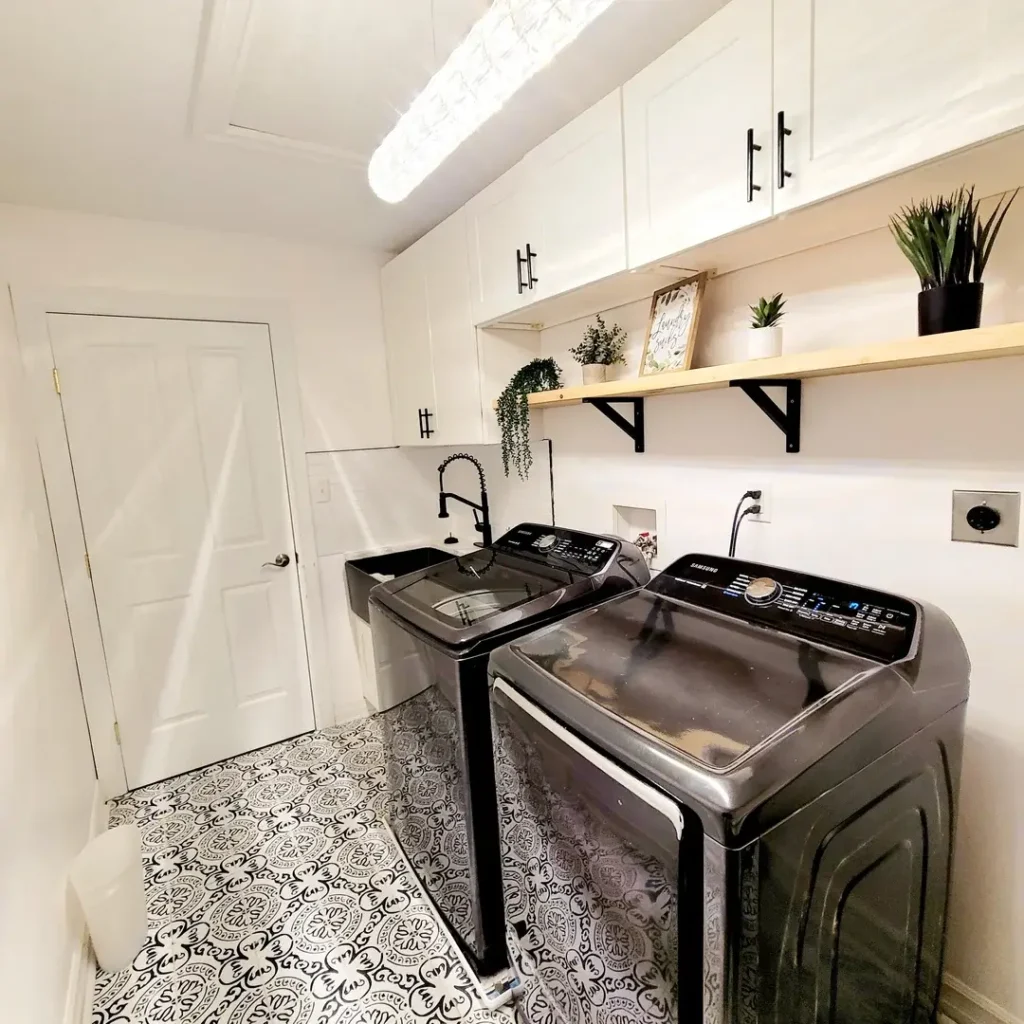
Want to add personality to a narrow laundry room without making it feel claustrophobic? Start with the floor.
One homeowner laid down bold black-and-white patterned tile and kept literally everything else neutral. White shiplap walls. Simple floating wood shelves with black brackets. A black faucet over a utility sink. The patterned floor does all the heavy lifting in the personality department.
The top-load Samsung machines have a slimmer profile than front-loaders, which matters when you’re counting every inch. And those floating shelves hold a couple of plants and a small sign without the visual bulk of closed cabinets.
Key takeaway: Pattern at floor level draws attention away from the narrow width. Keep walls and cabinetry simple so the room doesn’t feel like it’s screaming at you. Also, anchor those shelf brackets into studs. Laundry supplies get heavy fast.
Also Read: Stop Treating Your Laundry Room Like a Junk Drawer: 15 Ideas to Steal
Compact Built-In Laundry Closet
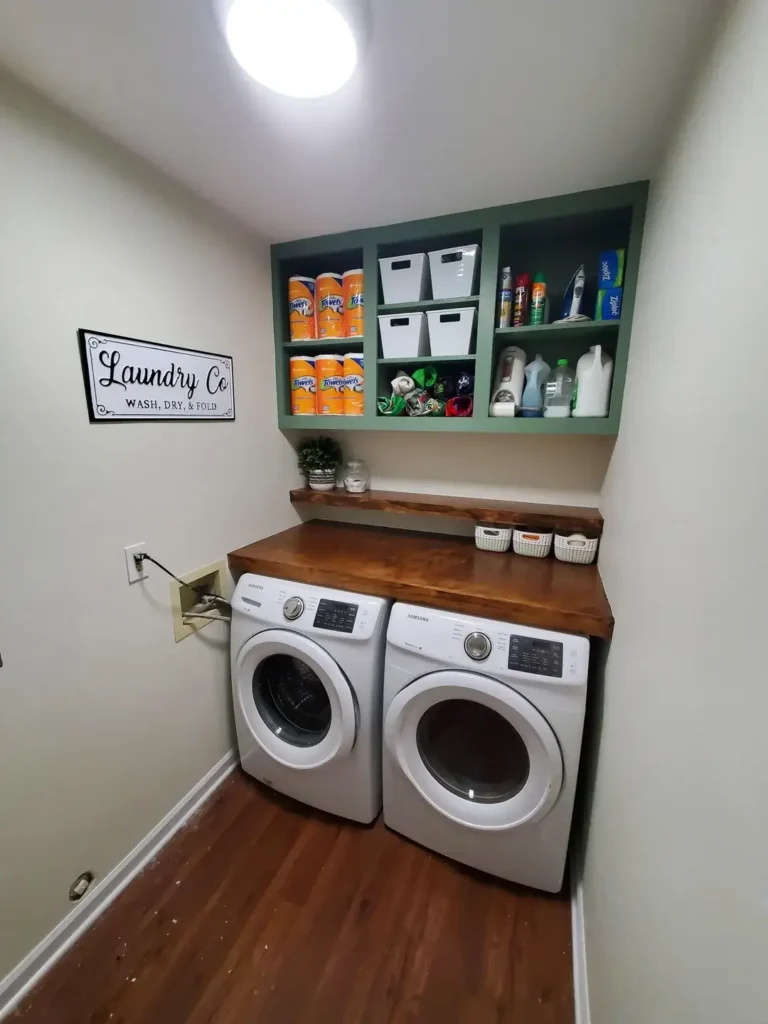
Not everyone has a dedicated laundry room. Some of us have a laundry closet, and honestly? That can work just fine.
One creative homeowner painted the back wall of their laundry closet a deep teal color, which creates a surprising sense of depth. White front-load Samsung machines sit below a custom wood countertop, with cubbies above holding a mix of open shelving and closed bins. White storage containers with handles keep everything tidy. A little “Laundry Co” sign and some small plants add personality without stealing functional space.
This setup works in closet spaces roughly 60 to 72 inches wide. Front-loaders are non-negotiable here because top-loaders would kill any chance of having a counter or overhead storage.
Quick design hack: Paint your back wall darker than the surrounding walls. It creates an illusion of depth that makes the closet feel less like a coffin. Build your countertop at about 36 inches high for comfortable folding.
Ultra-Narrow Single-Machine Setup
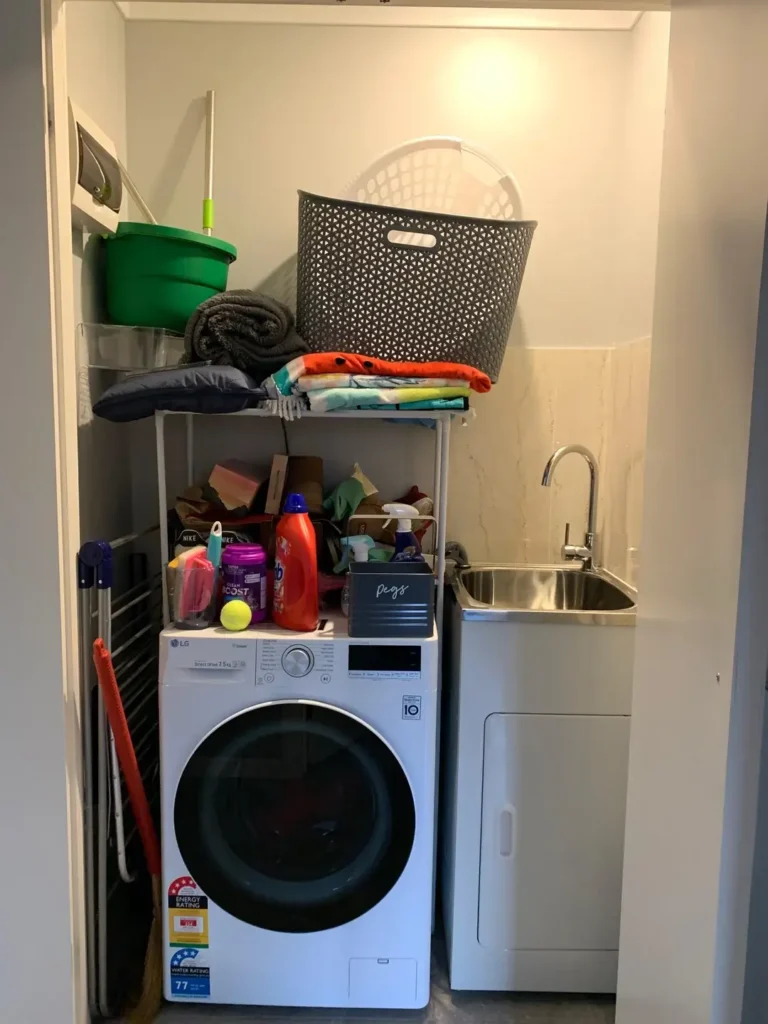
Okay, some of you aren’t dealing with “narrow.” You’re dealing with “is this even legal?” levels of tight. I feel you.
One setup I found features a single combo washer-dryer unit in a space barely wider than the machine itself. Wire shelving on the left wall and a tiny utility sink on the right squeeze every ounce of function out of the space. A white metal shelving unit holds folded items, cleaning supplies, and baskets. A broom tucked into the corner uses dead space that would otherwise sit empty.
Nothing in this room is decorative. Everything earns its spot. And that’s the whole point.
If you’re working with this kind of space:
- Keep daily-use items at eye level and stash bulk supplies higher or lower
- A combo washer-dryer eliminates the need for two machines side by side
- Wall-mount everything you possibly can to keep the floor clear
- Wire shelving units with adjustable shelves let you customize heights for what you actually store
Stacked Units with Open Shelving
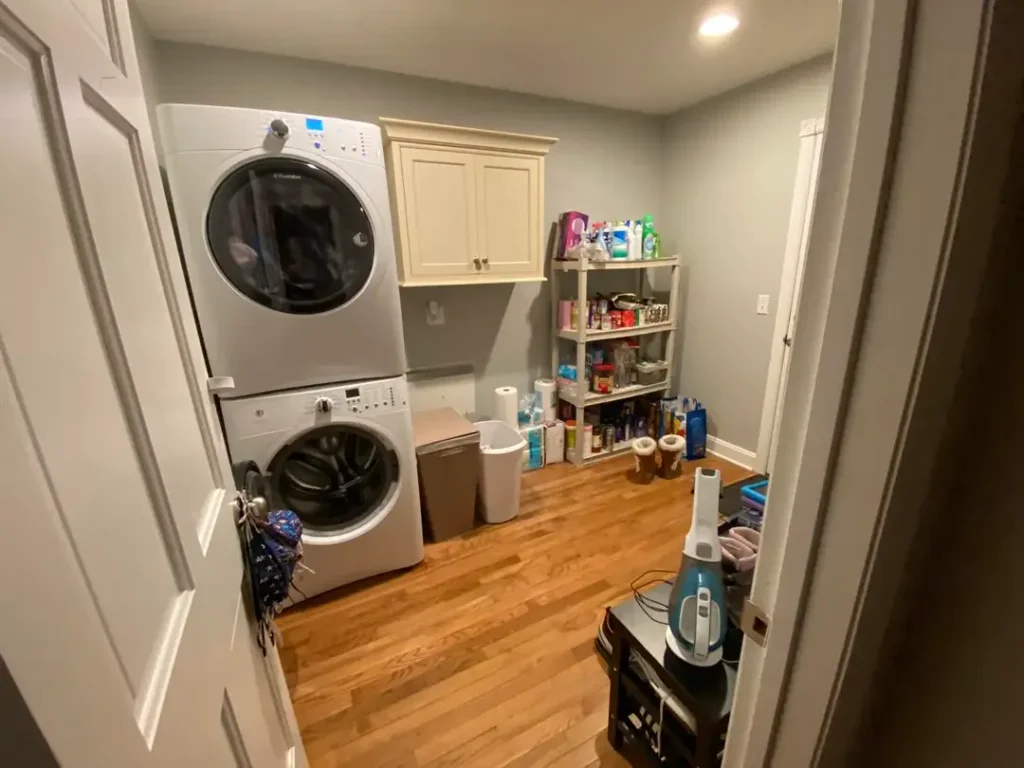
Stacking your washer and dryer frees up floor space, and that freed-up space can become storage, a folding area, or just breathing room. All good things.
One homeowner placed white stacked machines on one side of the room with a cream-colored open shelving unit on the other. Cleaning products, paper goods, and supplies line the shelves where everything stays visible and easy to grab. A single overhead cabinet handles items that don’t need to be on display.
The wood flooring runs lengthwise through the space, which makes the room feel longer. Smart move.
Things to know about stacked configurations:
- Put your most-used items on the middle shelves so you’re not constantly reaching or bending
- They work best in spaces narrower than five feet
- You need at least seven feet of ceiling clearance above the stacked units
- Open shelving should be sturdy because laundry supplies add weight quickly
Also Read: Small Laundry Room Makeovers: 15 Real-Life Stackable Setups
Floor-to-Ceiling Built-In Storage with Shiplap
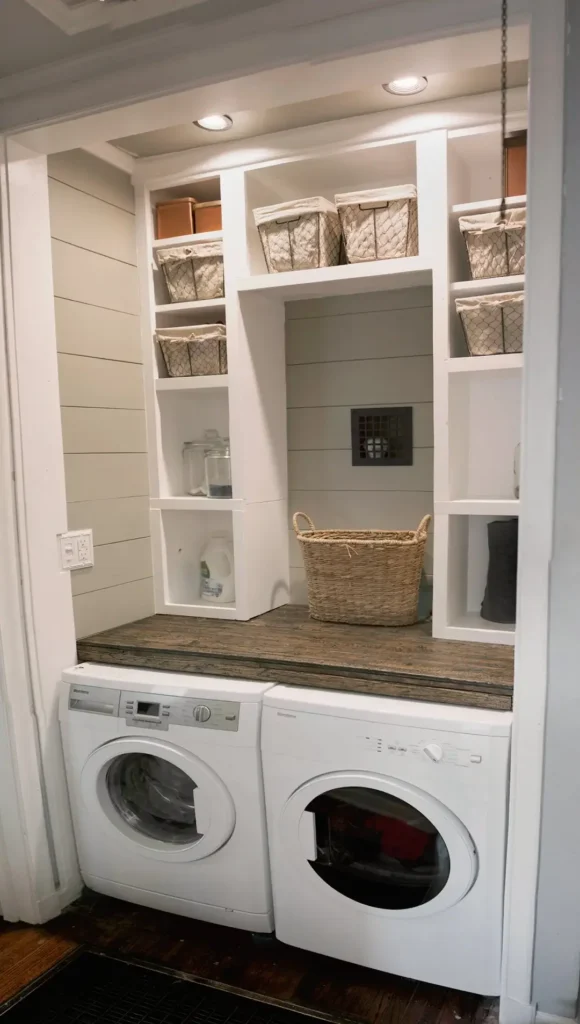
If you own your home and want something that looks like it belongs in a magazine, custom built-ins are the move. One homeowner converted a narrow corridor into a fully organized laundry space, and it looks like a professional designed it.
Pale gray shiplap covers the walls, giving the space a residential feel rather than a utility room vibe. Floor-to-ceiling shelving flanks both sides of the front-load machines, with a mix of open cubbies and woven basket storage. A dark wood counter spans across the machines for a continuous work surface. Recessed ceiling lights handle illumination without eating into the limited space.
Planning tips for custom built-ins:
- Map out everything you need to store before you build anything
- Choose your baskets first, then build cubbies to fit them (not the other way around)
- The counter should be one continuous piece or two pieces with a seamless joint
- Support the counter at the center so it doesn’t sag over time
This approach takes more effort and budget, but the result is a space that feels intentional and permanent instead of thrown together.
Warm Wood Tones with Traditional Cabinets
Not every narrow laundry room needs to look like a minimalist spa. If you’re into traditional style, lean into it.
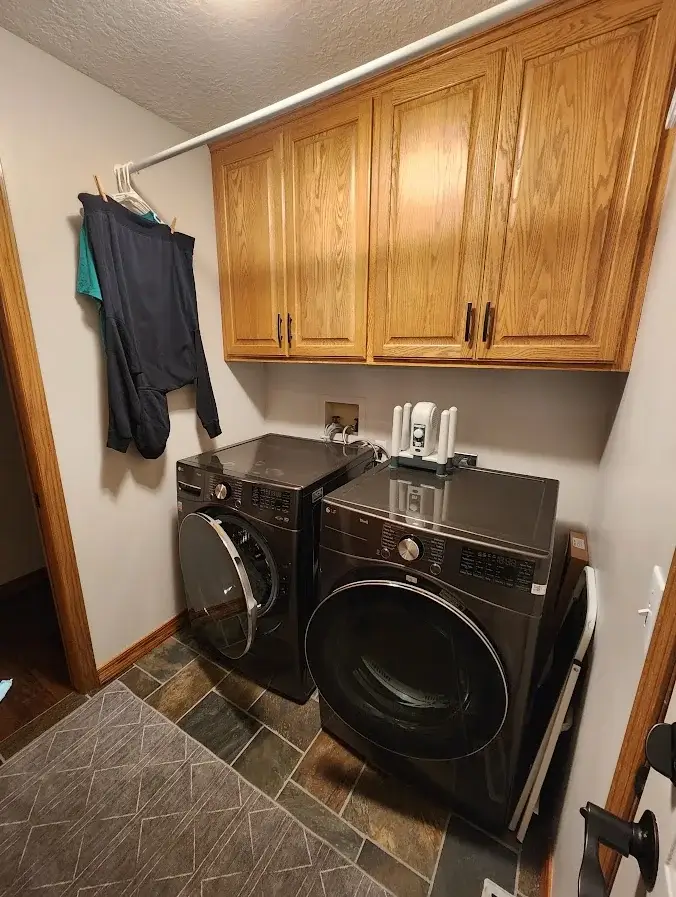
One homeowner installed honey oak cabinets across the entire upper wall, pairing them with black front-load LG appliances. The contrast between warm wood and dark machines looks surprisingly sharp. Diagonal slate-look floor tile hides dirt and lint (because let’s be honest, laundry rooms get messy). A simple wall hook provides a spot for hanging clothes without needing floor space.
Why traditional cabinets actually work in narrow spaces: They add architectural weight and substance, which makes the room feel more like a finished space and less like an afterthought. Choose a lighter wood tone if you’re worried about things feeling too dark, and install under-cabinet lighting to eliminate shadows on your work surface.
Run the floor tile lengthwise to emphasize the longest dimension of the room. Your eyes will follow the lines and perceive more space.
Basement Laundry with Smart Appliance Placement
Basement laundry rooms come with their own special challenges. Limited natural light. Potentially weird layouts. Support posts in inconvenient places. Fun times.
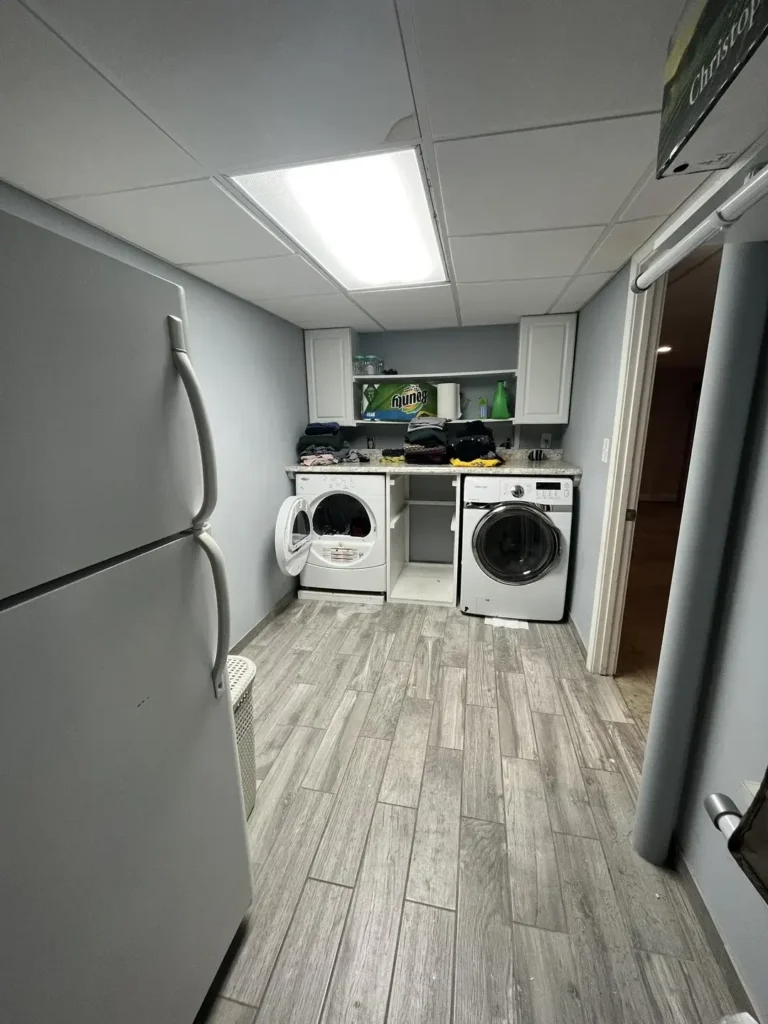
One below-grade setup uses pale gray walls to reflect fluorescent lighting effectively, keeping things brighter than you’d expect for a basement. Side-by-side white appliances sit against one wall with wire shelving above and a small corner cabinet. Wood-look vinyl plank flooring adds warmth that bare concrete never could.
Nothing here is decorative, but the room works efficiently. And isn’t that the whole point of a laundry room?
Basement-specific advice:
- If your basement feels cave-like, lighter wall colors and bright lighting make a massive difference
- Work with your existing infrastructure (posts, pipes, ducts) instead of fighting it
- A fluorescent shop light provides excellent task lighting for a fraction of the cost of fancy fixtures
- Luxury vinyl plank installs easily over concrete and handles moisture well
Also Read: 10 Blue Laundry Room Ideas That Prove Laundry Day Can Actually Look Good
Gray Walls with Efficient Counter Space
A folding surface above front-loaders changes the entire laundry experience. You go from piling clean clothes on top of machines (where they slide off constantly) to having an actual workspace. Game changer.
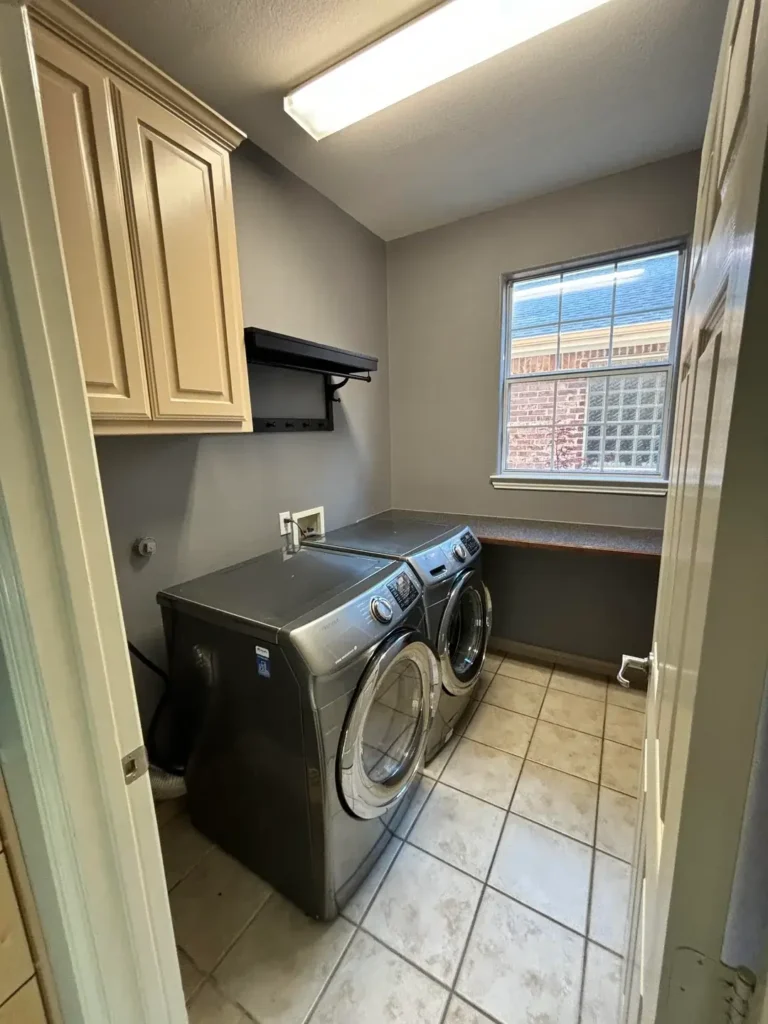
One homeowner built continuous countertops above front-load machines with a slight overhang, set against sophisticated gray walls. White machines and cream upper cabinets keep the space feeling bright. A window brings in natural light, which honestly matters more than you think when you’re sorting darks from lights.
A single upper cabinet and wall-mounted shelf provide enough storage without overwhelming the room. Sometimes less storage done right beats more storage crammed in.
Color tip: Gray walls work here because the window prevents the color from feeling oppressive. If your narrow laundry room has no windows, stick with lighter colors. Build countertops at least 24 inches deep for comfortable folding. Keep the overhang minimal, just enough to cover the front controls on the machines.
Dual-Tone Cabinetry with Laundry Basket Storage
Here’s a practical question. Where do your laundry baskets live when they’re not in use? Most people just shove them somewhere random. This setup gives baskets an actual home.
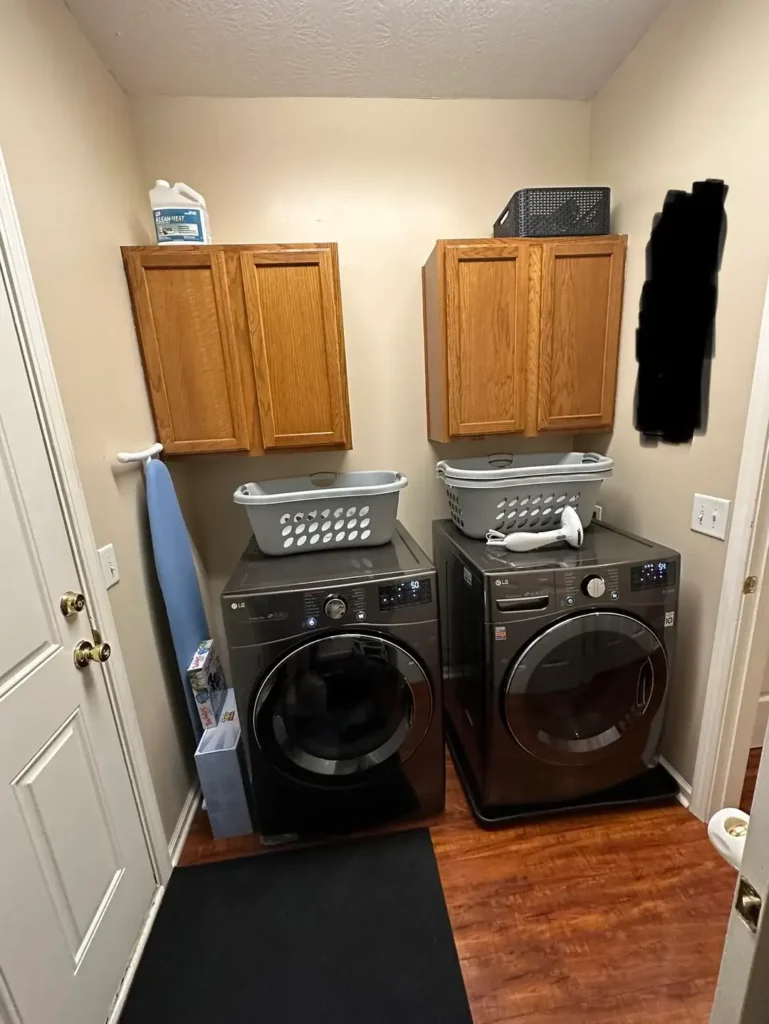
Dark LG front-loaders sit below oak wall cabinets, with gray plastic laundry baskets resting right on top of the machines. The gray walls match the basket color, creating a surprisingly cohesive look. Those oak cabinets add warmth to counter the industrial vibe of the dark machines.
This works especially well for families who need separate sorting baskets. Make sure your baskets fit the machine width with a little clearance so they don’t scratch anything. Choose cabinets with doors to keep stored supplies dust-free. And set the cabinet height high enough to account for the baskets so you can still reach everything comfortably.
Simple Shelving with Wire Racks
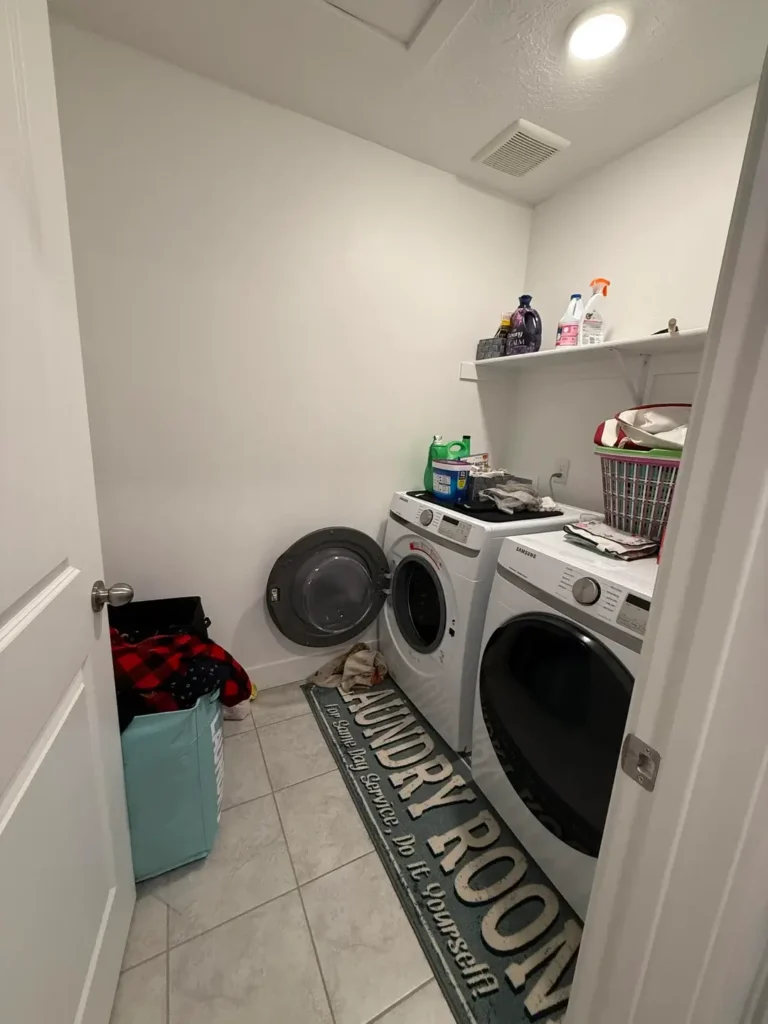
Custom built-ins are gorgeous, but they’re also expensive. If you want functional storage without dropping serious cash, white wire shelving mounted to the wall gets the job done.
One budget-friendly setup uses wire shelves mounted directly to gray walls, providing tiered storage above the machines. Supplies live on upper shelves, and immediate-access items stay lower. Dark machines practically blend into the gray walls, letting the white shelves stand out as the main organizational feature.
The narrow doorway in this space confirms it’s extremely tight. But everything needed for laundry has a designated spot. Function over aesthetics, and it works.
Wire shelving tips:
- This entire setup costs a fraction of custom cabinetry and installs in an afternoon
- Mount shelves directly into studs with heavy-duty brackets
- Space shelves 14 to 16 inches apart for standard detergent bottles
- Paint walls a medium to dark color when using white shelves to create contrast
Tight Closet Conversion with Personality
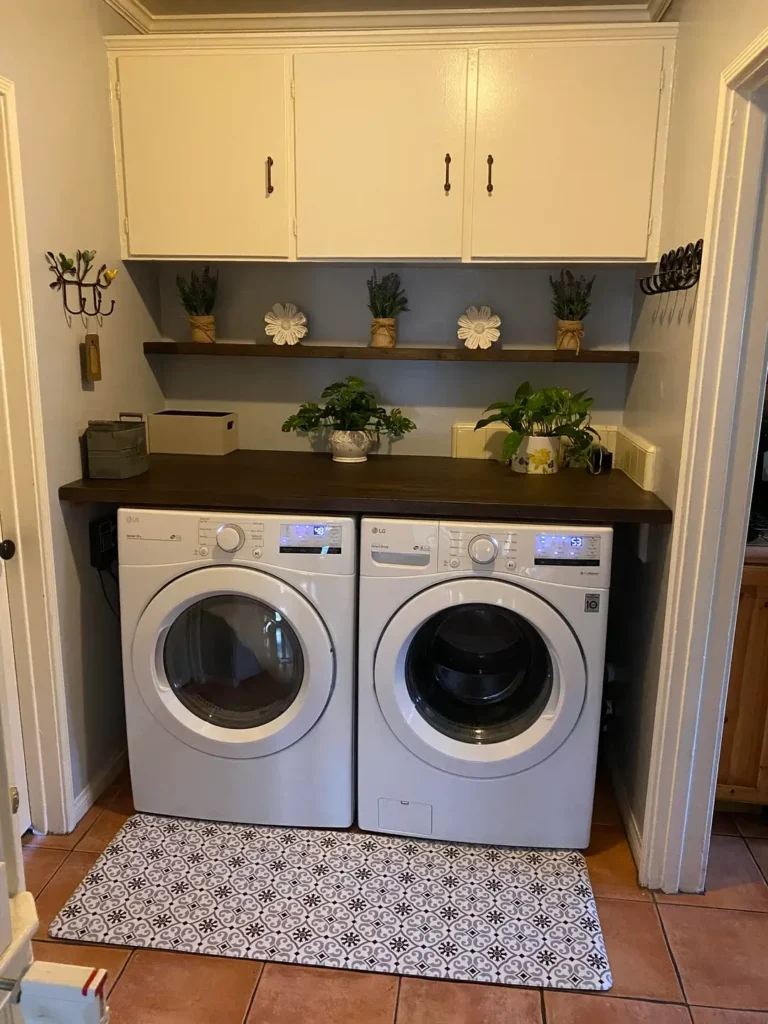
Converting a closet into a laundry area means accepting some limitations. But it also means you can pour all your creative energy into a tiny space and make it genuinely charming.
One homeowner fit white Samsung machines side by side in a former closet, painted the walls white, and added a dark wood floating shelf above. A decorative patterned rug on the floor brings character. Three potted plants on the counter add life without requiring depth. Wall-mounted hooks on both sides handle hanging items.
Cream upper cabinets with black hardware tie everything together. Even in this minimal footprint, the space feels intentional and warm.
Critical note for closet conversions: You absolutely need proper ventilation for dryer exhaust. That’s a safety requirement, not a suggestion. Add personality through small touches like rugs, plants, and hardware rather than large decorative pieces. Make sure floating shelves have proper blocking in the wall, especially if they span a wide distance.
Wire Rack Budget Solution
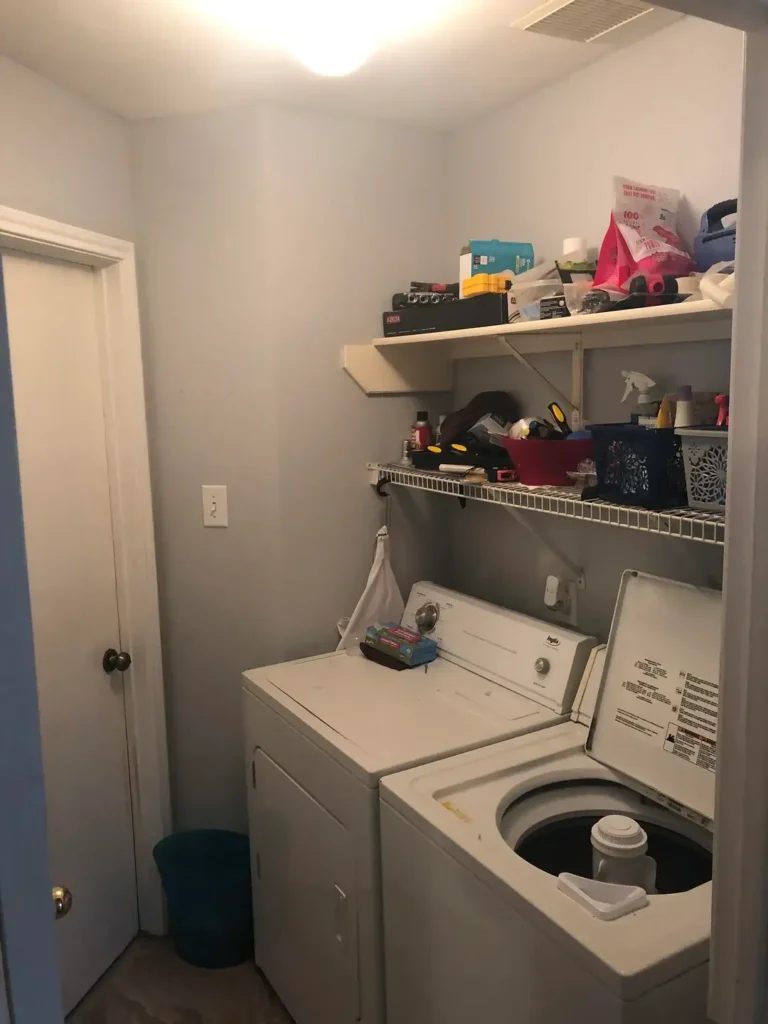
Renting? Don’t want to commit to permanent changes? This one’s for you.
One renter placed a stacked top-load washer and dryer in one corner and filled the opposite wall with wire shelving. Various bins and baskets on the shelves create organized zones for different supply categories. White walls and ceiling keep things bright despite the basic fixtures.
The best part? This entire configuration is removable. Nothing is permanent except the paint. Wire shelving mounts leave small holes you can patch in minutes when you move out.
Tips for renters:
- Top-load stacked units are less common than front-load stackables but work if that’s what you’ve got
- Wire shelving from home improvement stores comes in standard sizes but you can cut it to fit
- Group items by category in separate bins to maintain order
- Place heavy items on lower shelves, lighter stuff up high
Under-Stairs Laundry Nook
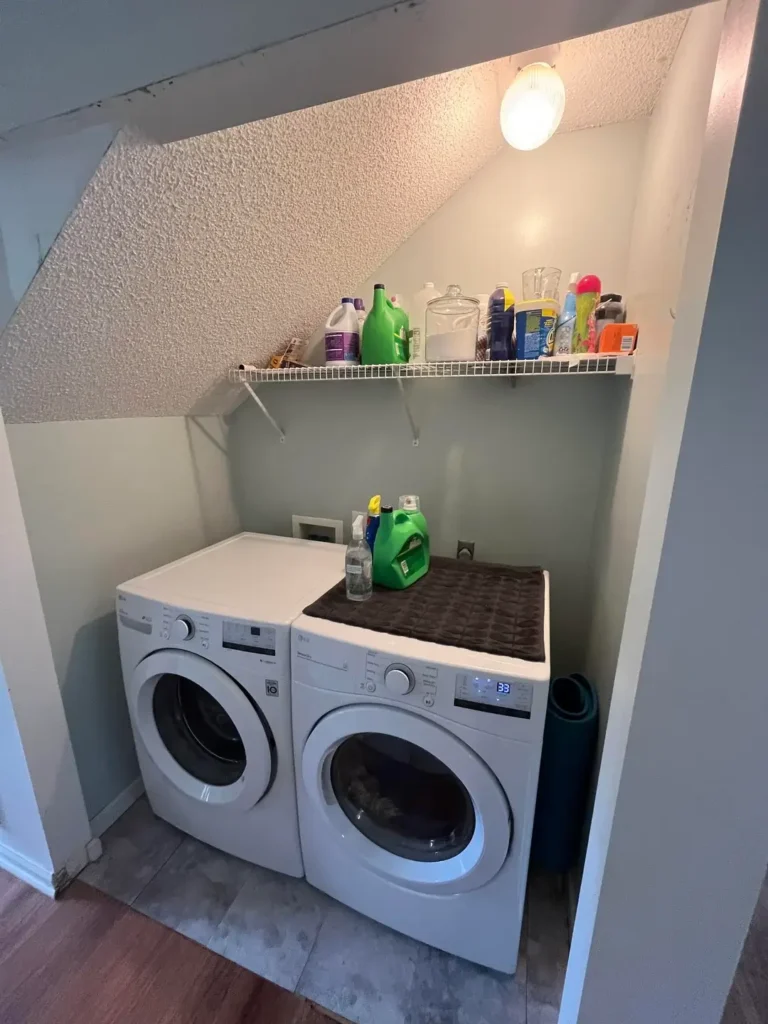
Got an awkward space under your stairs collecting dust and spiders? Turn it into a laundry area.
One homeowner tucked white LG front-loaders beneath the lowest point of a sloped ceiling, with a single wire shelf above for supplies. Gray walls on two sides and a white textured wall behind define the nook. A brown basket on top of the dryer serves as a folding spot.
The space feels tucked away but totally functional. Nothing fights against the architectural constraints.
Under-stair specifics:
- Paint the nook a different color than surrounding areas to define it as its own zone
- Measure carefully before buying appliances (that slope is unforgiving)
- Front-loaders work better than top-loaders because of height restrictions
- Mount the shelf low enough to be useful but high enough that you don’t smack your head
How to Make Any Narrow Laundry Room Work
After looking at all 15 of these setups, some clear patterns emerge. Here’s what the best narrow laundry rooms have in common.
Vertical storage is everything. When you can’t go wide, go up. Every functional setup uses walls aggressively for shelving, cabinets, or hooks.
Light colors expand the space visually. Even rooms with darker accent walls use white or light appliances and cabinetry to prevent that closed-in feeling.
Pattern works best at floor level. Bold tiles on the floor add interest without making the walls feel like they’re closing in.
The table below compares different storage approaches based on the setups I’ve shown:
| Storage Type | Best For | Installation |
|---|---|---|
| Custom Built-Ins | Permanent homes, homeowners | Professional required |
| Wire Shelving | Renters, temporary solutions | DIY-friendly |
| Floating Shelves | Medium-term solutions | Moderate DIY skills |
| Stacked Units | Spaces under 5 feet wide | Professional recommended |
| Under-Cabinet Storage | Counter space optimization | DIY-friendly |
The three non-negotiables for any narrow laundry room:
- Adequate storage for your supplies
- A work surface for folding and sorting
- Good lighting so you can actually see what you’re doing
Everything else is a bonus.
Measurements that matter: Standard washers run about 27 inches wide, and dryers are similar. You need roughly 30 inches per machine when placing them side by side, plus a few inches of wall clearance. That puts your minimum functional width for a side-by-side layout at about 65 inches. Anything tighter means stacking or going with a single combo unit.
Final Thoughts on Narrow Laundry Spaces
A narrow laundry room forces you to think harder about every single choice. And honestly? That’s not a bad thing. The tightest spaces in this roundup are also some of the most efficient because nothing gets wasted.
The best narrow laundry rooms don’t try to pretend they’re something they’re not. They embrace the utility, add a touch of personality, and just work. You don’t need your laundry room to go viral on social media. You need it to function when you’re hauling a 20-pound basket and just want to start a load without doing gymnastics.
So take what resonates from these 15 ideas, measure your space (for real, grab a tape measure), and start making your narrow laundry room work for you instead of against you. Your future self, mid-laundry-day, will thank you.